
Seattle Seahawks Sold for Record $9.6 Billion, Shattering NFL Franchise Valuation
A consortium of tech executives and institutional investors has purchased the Seattle Seahawks for $9.6 billion, eclipsing previous records and redefining the financial ceiling for global sports franchises.
By Xia Wu

- Sports Finance Analysts
- View the sale as a natural market correction driven by the NFL's media dominance and the new influx of private equity capital.
- NFL Ownership Circle
- Celebrate the valuation as proof of the league's unrivaled economic health and a rising tide that increases the equity of all 32 franchises.
- Fan Advocates
- Worry that institutional investors seeking high returns will pass costs onto fans through increased ticket and concession prices.
Perspectives this story doesn't cover
- Local Seattle small business owners near Lumen Field
- NFL Players Association representatives regarding salary cap implications
Key points
- The Seattle Seahawks sold for a record $9.6 billion, shattering the previous $6.05 billion mark.
- The buyer is a consortium of tech executives and institutional investors.
- Proceeds from the sale will go to philanthropic causes mandated by the late Paul Allen's trust.
- The NFL's recent decision to allow private equity investment helped drive the bidding war.
- The sale raises the financial floor for all 32 NFL franchises, boosting league-wide equity.
- $9.6 billion
- Seahawks sale price
- $6.05 billion
- Previous record (Commanders, 2023)
- $194 million
- Price Paul Allen paid in 1997
The Seattle Seahawks have officially entered a new stratosphere of sports capitalism, finalizing a sale for a staggering $9.6 billion. The transaction, executed by the Paul Allen Trust, shatters the previous North American sports franchise record set just three years ago and signals a monumental shift in how professional teams are valued as asset classes.[1]
For context, the Washington Commanders sold for $6.05 billion in 2023, a figure that many industry insiders believed would stand as the high-water mark for at least a decade. Instead, the Seahawks' valuation has leaped by more than 50 percent, fundamentally rewriting the economic playbook for the National Football League and global sports at large.[3]
The buyer is a sprawling consortium led by Pacific Northwest technology executives and backed by a coalition of institutional investors. This marks one of the first major stress tests of the NFL's recently relaxed ownership rules, which now permit select private equity firms to hold minority stakes in franchises, injecting massive new liquidity into the league.[1][2]
To understand how a football team reaches a valuation nearing $10 billion, one must look beyond the gridiron and into the league's structural financial guarantees. The NFL operates as a media and entertainment juggernaut, fortified by long-term broadcasting contracts that insulate franchises from localized economic downturns and guarantee year-over-year revenue growth.[3]
Currently, the league's media rights deals with major networks and streaming platforms distribute billions of dollars annually, ensuring that every team turns a substantial profit before a single ticket or hot dog is sold. The Seahawks, with their rabid fan base and prime geographic footprint, represent a premium, risk-averse asset within this closed ecosystem.[1]
The Seahawks, with their rabid fan base and prime geographic footprint, represent a premium, risk-averse asset within this closed ecosystem.
Furthermore, the sale encompasses more than just the roster and the brand. The transaction includes lucrative operational rights to Lumen Field and surrounding real estate developments in downtown Seattle, transforming the acquisition from a pure sports play into a diversified urban real estate and live-entertainment portfolio.
The mandate to sell the team originated from the trust of the late Paul Allen, the Microsoft co-founder who purchased the Seahawks in 1997 for $194 million to prevent the franchise from relocating to Southern California. Allen's meticulous estate planning required the eventual liquidation of his sports assets, with proceeds directed toward his philanthropic foundations.
This philanthropic angle adds a unique layer to the historic transaction. The $9.6 billion windfall will inject unprecedented capital into initiatives focused on ocean health, homelessness, and scientific research, fulfilling Allen's long-term vision for his wealth and leaving a lasting legacy in the Pacific Northwest.
For the broader NFL, this sale acts as a massive rising tide. Owners in major markets like Dallas, New York, and Los Angeles are now seeing their internal valuations recalibrated upward, with some sports finance analysts suggesting the Dallas Cowboys could now command a theoretical price tag exceeding $14 billion on the open market.[2][3]
The influx of institutional capital is the true engine behind this price surge. By allowing private equity to participate, the NFL has effectively expanded the pool of potential buyers, introducing bidding wars driven by funds that manage hundreds of billions in assets rather than relying solely on the finite wealth of individual billionaires.[2]
However, this financial evolution is not without friction. Fan advocacy groups have expressed concern that hyper-inflated franchise values will inevitably trickle down to the consumer, manifesting as higher ticket prices, increased merchandise costs, and more aggressive monetization of the game-day experience to satisfy institutional return thresholds.
Despite these consumer concerns, the league views the Seahawks' sale as a resounding validation of its global strategy. As the NFL continues to expand its footprint with international games in Europe and South America, the $9.6 billion price tag serves as a bold declaration of the league's unrivaled position in the global entertainment landscape.[1][3]
How we got here
1997
Microsoft co-founder Paul Allen purchases the Seahawks for $194 million to keep them in Seattle.
2018
Paul Allen passes away, leaving his assets in a trust with a mandate to eventually sell them for philanthropy.
2023
The Washington Commanders sell for $6.05 billion, setting a new North American sports record.
2024-2025
The NFL updates its ownership rules to allow select private equity firms to buy minority stakes in teams.
July 2026
The Paul Allen Trust finalizes the sale of the Seahawks for $9.6 billion.
Sources
Source coverage
3 outlets
3 viewpoints surfaced



- [1]ESPNNFL Ownership Circle
Seahawks sold for record $9.6B to tech and PE consortium
Read on ESPN → - [2]BloombergSports Finance Analysts
NFL's Embrace of Private Equity Fuels Record Seahawks Buyout
Read on Bloomberg → - [3]Wall Street JournalSports Finance Analysts
The NFL Is Now a $10 Billion Club
Read on Wall Street Journal →
Comments

More in Sports
See all →NFL Contracts
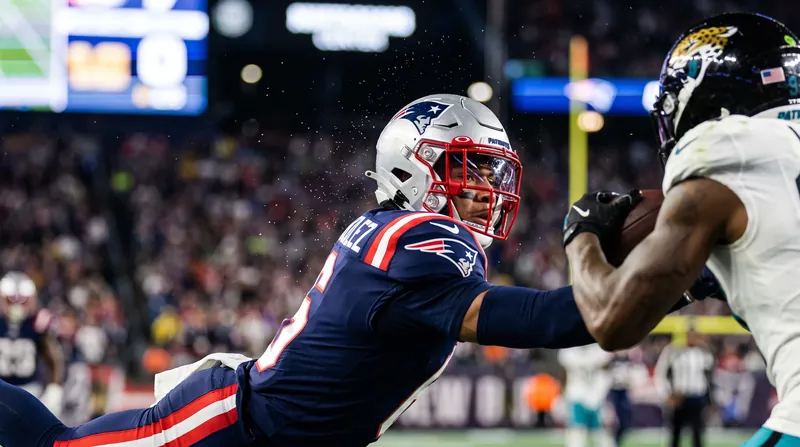
Patriots Make Christian Gonzalez the Highest-Paid Cornerback in NFL History
7 sources
Kansas City Current
Kansas City Current Part Ways With Sporting Director Vlatko Andonovski
6 sources

Power ranking
Global Chess Power Rankings: Praggnanandhaa and So Surge Heading Into the Samarkand Olympiad
4 sources

Preview
PSG Head Coach Stefan Madsen Returns to Aalborg as EHF Champions League Enters 24-Team Era
7 sources

Every angle. Every day.
Get Sports stories with full source coverage and perspective breakdowns delivered to your inbox.