
Santander Completes Webster Acquisition, Creating $327 Billion U.S. Banking Powerhouse
Banco Santander has finalized its $12.3 billion acquisition of Webster Financial, merging the institutions to create a top-tier U.S. retail and commercial bank. The combined entity boasts $327 billion in assets and serves nearly eight million customers nationwide.

Banco Santander has officially closed its $12.3 billion acquisition of Webster Financial Corporation, finalizing a merger that creates a $327 billion retail and commercial banking powerhouse in the United States. The transaction, which cleared its final regulatory hurdles earlier this month, merges Webster Bank into Santander Bank, N.A., catapulting the combined entity into the top 20 largest banks in the country by assets.
For the Spanish banking giant, the completion marks the culmination of a decades-long effort to achieve dominant scale in the highly fragmented U.S. market, expanding its reach to nearly eight million customers nationally.[1][2][3]
The financial mechanics of the cash-and-stock deal fundamentally alter Santander’s U.S. balance sheet. Based on year-end 2025 figures, the newly combined organization holds approximately $185 billion in loans and $172 billion in deposits. By absorbing Webster’s relationship-driven commercial banking portfolio, Santander significantly diversifies its domestic lending operations, which have historically been heavily weighted toward auto finance. The integration also brings Webster’s highly lucrative Healthcare Financial Services platform into the Santander ecosystem, providing a specialized revenue stream that analysts view as a key driver of the acquisition's premium valuation.[1][4][6]
For the eight million customers now under the combined umbrella, the immediate practical changes are minimal but positive. As of the August 20 closing date, clients of both institutions gained fee-free access to a vastly expanded network of ATMs across the United States. However, everyday banking operations—including account numbers, routing numbers, and digital banking platforms—remain entirely unchanged. Santander executives have emphasized a deliberate, phased approach to the merger, aiming to avoid the operational friction and customer lockouts that have plagued other recent large-scale bank integrations.[1][5]
That slow-walk strategy extends to the corporate branding. Webster Bank will continue to operate under its existing name and technology infrastructure for at least another year. According to Santander US CEO Christiana Riley, the banks are scheduled to consolidate onto a single technology platform and unify under the Santander brand by the end of 2027. This extended timeline is designed to ensure a seamless transition for Webster’s legacy client base, particularly its commercial depositors who require uninterrupted access to treasury management and payroll services.[2][5]
Behind the scenes, however, the financial targets demand aggressive integration. Santander has promised its shareholders that the merger will generate $800 million in annual cost synergies by 2028, equivalent to roughly 19% of the combined cost base. Achieving that figure will require substantial back-office consolidation, including the eventual elimination of duplicate roles across human resources, compliance, and IT departments. While executives have not provided specific estimates for job cuts, the eventual migration to a single technology platform makes significant headcount reductions inevitable over the next 18 months.[2][6]
Those cost savings are central to Santander’s ultimate profitability goal: achieving an 18% return on tangible equity (RoTE) in its U.S. operations by 2028. Prior to the acquisition, Santander’s U.S. unit struggled to match the high returns generated by its Latin American and European divisions. By acquiring Webster’s low-cost deposit base, Santander dramatically improves its domestic funding profile, lowering the cost of capital required to finance its lending operations. This improved efficiency ratio is expected to contribute 7% to 8% in earnings per share accretion within two years.[1][4][6]
The leadership structure of the newly formed powerhouse reflects a blending of the two corporate cultures. John Ciulla, the former CEO of Webster Bank, has been appointed as the new CEO of Santander Bank N.A., taking direct control of the combined retail and commercial banking operations.
Christiana Riley remains in her role as CEO of Santander US, overseeing the intermediate holding company that manages the bank’s broader portfolio of auto lending, wealth management, and corporate investment banking. This dual-leadership model aims to retain Webster’s local market expertise while leveraging Santander’s global scale.[2][3]
Geographically, the acquisition cements the Northeast as the epicenter of Santander’s U.S. strategy. Webster’s former headquarters in Stamford, Connecticut, has been designated as a major new corporate hub for Santander US, joining existing operational centers in Boston, New York, Miami, and Dallas. The Stamford facility will house key commercial lending and healthcare finance teams, ensuring that the institutional knowledge responsible for Webster’s historical growth remains anchored in its home state even as the corporate parentage shifts to Madrid.[1][2]
The sheer scale of the merger has inevitably triggered a competitive response across the New England banking sector. Smaller regional and community banks in Connecticut and Massachusetts have already launched aggressive marketing campaigns aimed at poaching Webster customers who may be wary of transitioning to a massive multinational institution. These local competitors are betting that the inevitable disruption of a core systems migration in 2027 will create a window of opportunity to capture lucrative commercial accounts and high-net-worth retail depositors.[2]
Santander’s leadership is acutely aware of this vulnerability. During the closing announcements, Riley explicitly addressed the competitive threat, stating her intention to disappoint rival banks hoping for an opening. By retaining Ciulla at the helm and delaying the brand transition, Santander is attempting to signal stability to the market. The limited geographic overlap between Santander’s existing branch network and Webster’s footprint also reduces the need for immediate, widespread branch closures, further mitigating the risk of customer alienation during the critical first year of integration.[2]
From a regulatory perspective, the transaction proceeded with surprising speed. The deal cleared the Federal Reserve and the Office of the Comptroller of the Currency in roughly 129 days, slightly faster than the 142-day national average for bank mergers recorded in 2025. This expedited approval process highlights a shifting regulatory stance in Washington, where regulators appear increasingly willing to approve combinations among mid-tier and regional banks, provided the resulting entity does not pose a systemic risk to the broader financial system.[3]
Ultimately, the Santander-Webster merger serves as a bellwether for the broader U.S. banking industry. As the sector faces margin pressure from elevated interest rates and the rising costs of digital transformation, mid-sized institutions are increasingly seeking scale through consolidation. For Santander, the successful execution of this $12.3 billion gamble will test whether a European banking giant can effectively leverage cross-border capital to build a dominant, highly profitable retail franchise in the world’s most competitive financial market.[3][4][6]
The integration of Webster’s Healthcare Financial Services platform is particularly critical to Santander’s long-term strategy. The healthcare sector represents nearly a fifth of the U.S. economy, and Webster had carved out a highly profitable niche providing specialized credit facilities, equipment financing, and treasury management to medical practices and regional hospital networks. By plugging this specialized lending engine into Santander’s massive balance sheet, the bank gains the capacity to underwrite significantly larger healthcare transactions, positioning it to compete directly with Wall Street’s largest commercial lenders.[1][4]
As the two institutions begin the complex work of merging their operations, the financial markets will be closely monitoring Santander’s capital ratios. The cash-and-stock transaction structure, which valued Webster at a 14% premium to its pre-announcement share price, was designed to preserve Santander’s Common Equity Tier 1 ratio.
Projections indicate the bank will maintain a ratio of 12.8% post-closing, keeping it well within its target operating range. If Santander can deliver its promised $800 million in synergies without triggering a mass exodus of Webster’s core depositors, the $327 billion powerhouse will fundamentally reshape the competitive hierarchy of American banking.[4][6]
Key points
- Santander has finalized its $12.3 billion acquisition of Webster Financial, creating a $327 billion U.S. banking entity.
- The combined organization now serves nearly eight million customers and holds $172 billion in deposits.
- Webster Bank will retain its branding and technology platforms until a full integration planned for late 2027.
- Customers of both institutions immediately gain fee-free access to a combined nationwide ATM network.
What we don’t know
- Exactly how many back-office jobs will be eliminated as Santander targets $800 million in cost synergies.
- Whether the delayed 2027 technology migration will successfully prevent commercial deposit flight to regional competitors.
How we got here
February 2026
Santander announces its agreement to acquire Webster Financial in a $12.3 billion cash-and-stock transaction.
June 2026
The Office of the Comptroller of the Currency (OCC) grants regulatory approval for the merger.
July 2026
The European Central Bank authorizes the cross-border acquisition.
August 4, 2026
The Federal Reserve Board of Governors issues its final regulatory approval for the deal.
August 20, 2026
Santander officially completes the acquisition, merging Webster Bank into Santander Bank N.A.
Late 2027
Target date for the complete migration of Webster accounts onto Santander's technology platform and unified branding.
- Santander Leadership
- Views the merger as a critical milestone to achieve scale, lower funding costs, and hit an 18% profitability target in the U.S.
- Financial Analysts
- Considers the deal a necessary strategic move for Santander to fix its domestic funding profile, provided it can execute the integration.
- Regional Competitors
- Sees the mega-merger and eventual systems integration as a prime opportunity to poach alienated local depositors.
- Legacy Customers
- Focused on the immediate practical impacts of the merger, such as fee-free ATMs and the preservation of existing account infrastructure.
Perspectives this story doesn't cover
- Bank Employees Facing Layoffs
- Consumer Advocacy Groups
Sources
Source coverage
7 outlets
4 viewpoints surfaced







- [1]Santander BankSantander Leadership
Santander Expands U.S. Presence with Completion of Webster Acquisition
Read on Santander Bank → - [2]Hartford Business JournalRegional Competitors
Santander's $12.3 billion Webster acquisition expands its Connecticut presence
Read on Hartford Business Journal → - [3]Dodd Frank UpdateFinancial Analysts
Santander, Webster complete expedited bank acquisition deal
Read on Dodd Frank Update → - [4]FF NewsFinancial Analysts
Santander Completes Webster Financial Acquisition to Create $327B U.S. Banking Powerhouse
Read on FF News → - [5]Webster BankLegacy Customers
Santander Acquisition FAQ
Read on Webster Bank → - [6]The PaypersFinancial Analysts
Santander completes Webster Financial acquisition in the US
Read on The Paypers → - [7]Pulse 2.0Legacy Customers
Santander Completes Webster Acquisition, Creating $327 Billion U.S. Bank Serving Nearly 8 Million Customers
Read on Pulse 2.0 →

More in Finance
See all →Sanctions Enforcement
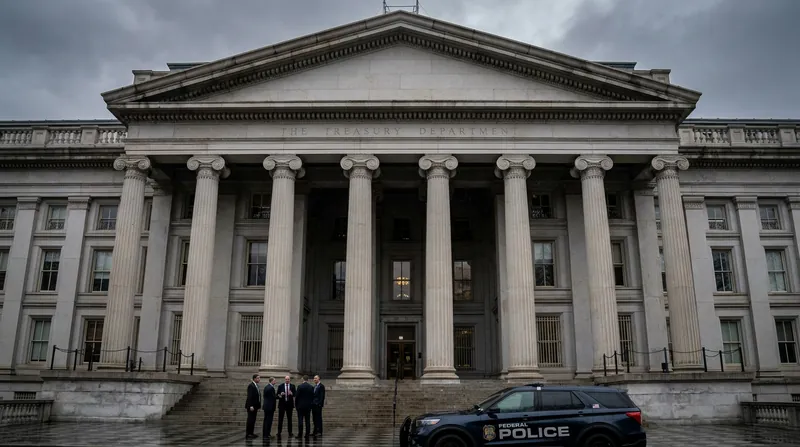
US Treasury Sanctions Iranian Crypto Exchange BitBank Over Hormuz Transit Payments
6 sources
Market Mechanics
How Market Depth and Price-Time Priority Dictate the Execution Price of a Large Market Order
6 sources

Portfolio Theory
How the Efficient Frontier and the Capital Allocation Line Optimize Portfolio Risk and Return
4 sources

Risk-Free Rate
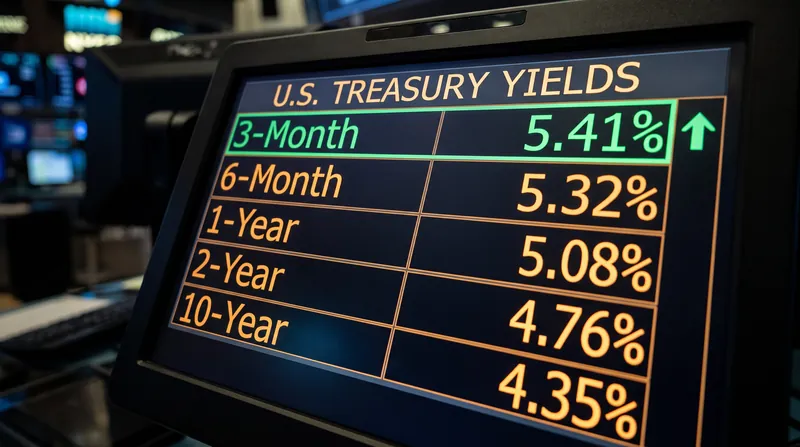
The Near-Zero Duration and Minimal Default Risk That Make the 3-Month Treasury Bill the Standard Risk-Free Rate Proxy
9 sources
Comments
Every angle. Every day.
Get Finance stories with full source coverage and perspective breakdowns, free every day.