
Paramount Closes $110 Billion Acquisition of Warner Bros. Discovery to Form Skydance
David Ellison's Skydance Media has officially completed its historic $110 billion merger with Paramount and Warner Bros. Discovery. The newly formed entertainment behemoth immediately began rebranding the Warner Bros. lot, signaling a rapid consolidation of Hollywood's legacy studios.
By Chen Wang

The ink is dry, the wire transfers have cleared, and David Ellison now controls the largest traditional entertainment conglomerate on the planet. Paramount has officially closed its $110 billion acquisition of Warner Bros. Discovery, finalizing a three-way merger that folds two century-old studios into the newly minted Skydance empire.[1][2]
The visual evidence arrived before the press releases even hit inboxes on Tuesday morning. High above the Burbank studio lot, painters had already updated the iconic Warner Bros. water tower.[9]
The landmark now reads "A Skydance Corporation" beneath the classic shield. It is a swift, unmistakable branding exercise that underscores just how quickly the new management intends to assert its presence over the combined legacy assets.[9]
Ellison wasted no time addressing his newly expanded workforce. Standing before a crowd on the Warner Bros. lot, the Skydance CEO acknowledged the grueling, months-long corporate battle that preceded the closing.[8]
"It wasn’t easy to get here," Ellison told the assembled employees in Burbank. "At times it was downright ugly. And at nearly every turn, someone told us it couldn’t be done. And here we are."[8]
The sheer scale of the transaction required a massive influx of institutional capital to get across the finish line. RedBird Capital Partners, led by Gerry Cardinale, stepped in with a crucial $4 billion investment to fund the final Warner Bros. Discovery takeover.[7]
That massive check comes on top of the $2 billion RedBird had already committed to Ellison’s initial takeover of Paramount Global. The combined $6 billion commitment highlights Wall Street's belief that consolidating these legacy libraries is the only viable path forward.[7]
The resulting entity now houses an unprecedented collection of intellectual property. Skydance controls the rights to everything from Top Gun and Mission: Impossible to the DC Universe, Harry Potter, and the sprawling HBO television catalog.[1][3]
Managing that portfolio will require ruthless efficiency, a reality that has the creative community bracing for impact. Merging two major theatrical distribution arms and overlapping television networks inevitably leads to significant redundancies.[2][6]
Analysts expect the new Skydance leadership to aggressively trim the combined workforce over the next 18 months. The goal is to strip out billions in operational costs while attempting to build a streaming service capable of rivaling Netflix and Disney.[3][5]
For the average consumer, the most immediate consequence of the $110 billion deal will appear on their monthly credit card statements. The merger brings Max and Paramount+ under a single corporate roof, setting the stage for an inevitable platform consolidation.[4][6]
Neither service has managed to achieve the standalone profitability required to survive the current streaming wars. By combining the HBO prestige library with Paramount's deep well of procedural television and live sports, Skydance hopes to create a definitive, must-have subscription.[1][5]
The regulatory environment that allowed this mega-merger to proceed remains a point of contention. A federal judge approved the necessary antitrust settlement in September, clearing the final legal hurdle despite objections from consumer advocacy groups.[2][3]
Those watchdogs argued that reducing the number of major Hollywood studios from five to four would stifle competition and drive up subscription prices. The court ultimately sided with the studios, accepting the argument that tech giants like Apple and Amazon represent the true competitive threat.[2][6]
Viewpoints in depth
Skydance Leadership
Views the merger as a necessary evolution to compete with tech giants, emphasizing scale and technological integration.
Executives driving the consolidation argue that legacy Hollywood studios can no longer survive as standalone entities in a landscape dominated by Apple, Amazon, and Netflix. By combining the intellectual property and production infrastructure of Paramount and Warner Bros., Skydance leadership believes they have finally achieved the scale required to build a profitable, sustainable streaming ecosystem.
Financial Backers
Sees massive long-term value in consolidating legacy IP and streaming infrastructure under unified management.
Institutional investors like RedBird Capital Partners view the $110 billion price tag as a necessary premium for acquiring irreplaceable cultural assets. Wall Street analysts generally support the merger, noting that the aggressive cost-cutting and operational synergies planned for the next 18 months will eventually yield a highly profitable media conglomerate, provided the integration is handled cleanly.
Industry Labor
Expresses deep concern over the inevitable redundancies and job losses that follow a mega-merger of this scale.
Hollywood guilds and below-the-line workers are bracing for a severe contraction in the job market. Merging two major theatrical distribution arms and overlapping television networks inevitably leads to significant layoffs, and labor advocates warn that the consolidation will result in fewer greenlit projects, reduced negotiating leverage for creatives, and a further hollowing out of the industry's middle class.
Regulatory Watchdogs
Remains skeptical of the consolidation's impact on consumer pricing and competitive practices in the streaming market.
Consumer advocacy groups and antitrust monitors argue that reducing the number of major Hollywood studios from five to four inherently stifles competition. Despite the federal judge's approval of the settlement, these watchdogs maintain that the merger will ultimately harm consumers by driving up subscription prices for the combined streaming services and reducing the overall diversity of content available in the marketplace.
Key points
- The $110 billion merger officially closed on Tuesday, finalizing the creation of the new Skydance conglomerate.
- RedBird Capital Partners injected $4 billion into the final deal, adding to their previous $2 billion Skydance investment.
- Skydance CEO David Ellison addressed employees on the Warner Bros. lot, acknowledging the difficult path to the merger's completion.
- The iconic Warner Bros. water tower in Burbank was immediately repainted to read 'A Skydance Corporation.'
What we don’t know
- How quickly the company will merge its flagship streaming platforms, Max and Paramount+, into a single service.
- The exact scale of the anticipated workforce reductions across the combined studio operations.
- Who will ultimately lead the merged theatrical distribution and television production divisions.
How we got here
Early 2026
Skydance Media initiates talks to acquire Shari Redstone's National Amusements and Paramount Global.
Mid 2026
Warner Bros. Discovery enters the fray, leading to a complex three-way merger agreement.
September 2026
A federal judge approves the antitrust settlement, clearing the final regulatory hurdle for the $110 billion takeover.
October 6, 2026
The transaction officially closes, and the combined entity begins operating under the Skydance banner.
- Skydance Leadership
- Views the merger as a necessary evolution to compete with tech giants.
- Financial Backers
- Sees massive long-term value in consolidating legacy IP and streaming infrastructure.
- Industry Labor
- Expresses deep concern over the inevitable redundancies and job losses.
- Regulatory Watchdogs
- Remains skeptical of the consolidation's impact on consumer pricing.
Perspectives this story doesn't cover
- Independent filmmakers
- Theater owners
Sources
Source coverage
9 outlets
4 viewpoints surfaced








- [1]The GuardianIndustry Labor
Paramount completes $111bn acquisition of Warner Bros to form new media empire Skydance
Read on The Guardian → - [2]ForbesFinancial Backers
Skydance Is Here: Paramount Closes $110 Billion Warner Bros. Merger After Months Of Controversy
Read on Forbes → - [3]CBS NewsRegulatory Watchdogs
Paramount closes $110 billion deal to acquire Warner Bros. Discovery, creating Skydance
Read on CBS News → - [4]QuartzRegulatory Watchdogs
Paramount completes $110 billion acquisition of Warner Bros. Discovery to form Skydance
Read on Quartz → - [5]LivemintSkydance Leadership
Paramount Skydance completes $110 billion Warner Bros Discovery deal: David Ellison takes control of new Hollywood giant
Read on Livemint → - [6]The IndependentRegulatory Watchdogs
Paramount and Warner Bros wrap up mega deal to create Skydance
Read on The Independent → - [7]VarietyFinancial Backers
RedBird Ponied Up $4 Billion to Fund Paramount’s Warner Bros. Discovery Takeover
Read on Variety → - [8]The Hollywood ReporterSkydance Leadership
David Ellison Rallies the Troops at Warner Bros.’ Lot
Read on The Hollywood Reporter → - [9]VarietyFinancial Backers
Warner Bros. Water Tower Already Repainted to Add ‘A Skydance Corporation’ After Merger Closes
Read on Variety →

More in Entertainment
See all →Hollywood Economics
The 10% Commission and the Packaging Fee: How Talent Agencies Actually Make Money
7 sources

78th Emmys
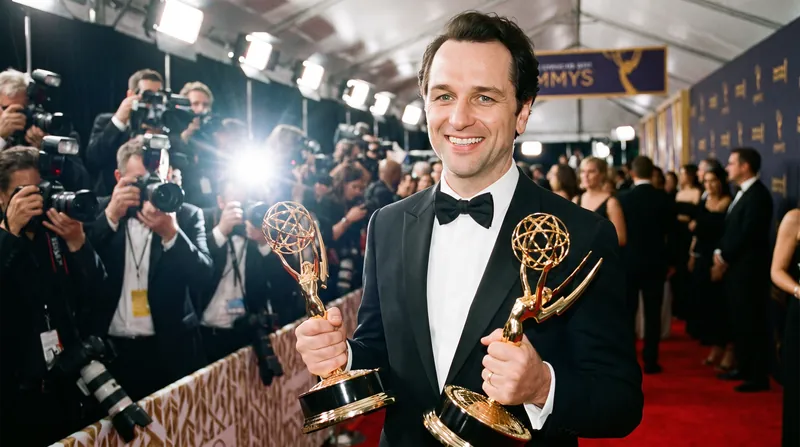
'Widow's Bay' Sweeps 78th Emmy Awards With Record 14 Wins as Matthew Rhys Makes History
5 sources
Drill Music
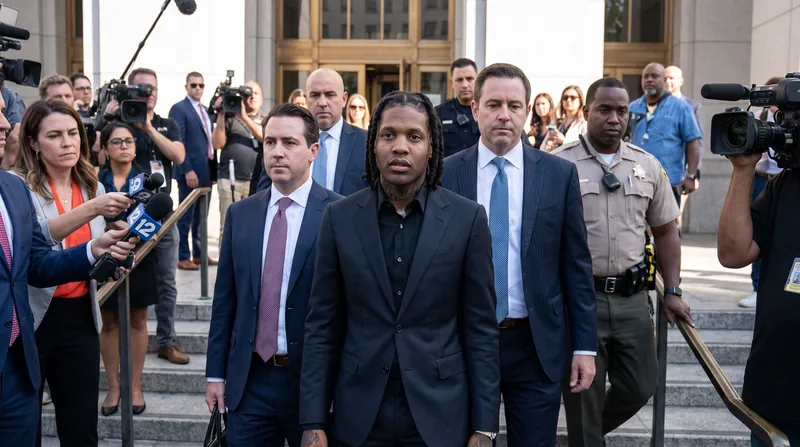
Grammy-Winning Rapper Lil Durk Acquitted in Los Angeles Murder-for-Hire Trial
7 sources
Hollywood Finance
The 15% Overhead Charge and the Interest Rate: How Hollywood Accounting Defines 'Net Profits' to Report a Loss
7 sources
Comments
Every angle. Every day.
Get Entertainment stories with full source coverage and perspective breakdowns, free every day.