
SailGP Power Rankings: Australia's Flying Roos Dominate as US Team Climbs the Leaderboard
Following a dramatic New York Sail Grand Prix, Tom Slingsby's Australian crew has cemented its status as the team to beat in SailGP Season 6, while Emirates GBR and a resilient US squad round out the top three.
By Ryder James

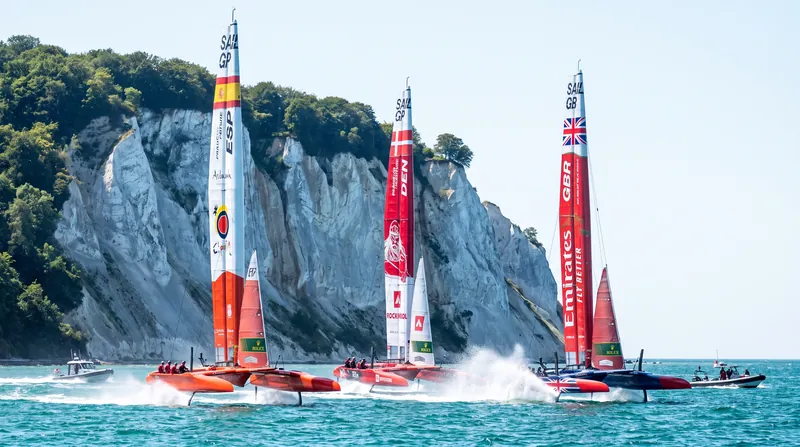
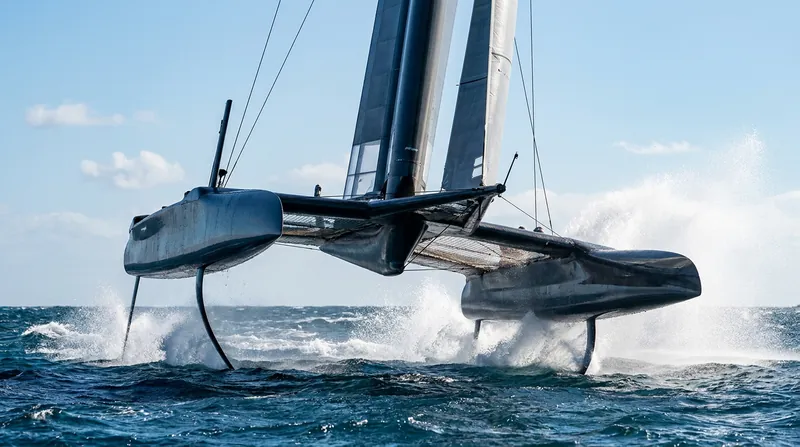
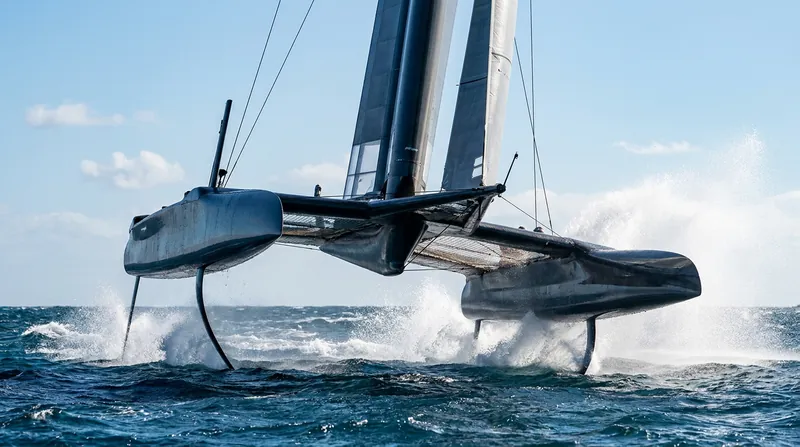
The 2026 SailGP Championship has reached its midpoint, and the global foiling circuit is delivering on its promise of high-speed chaos and shifting hierarchies. With the fleet now featuring over a dozen national teams, the competition for the $2 million Grand Final has never been tighter, demanding flawless execution from crews managing highly sensitive, identical F50 catamarans.[3][4]
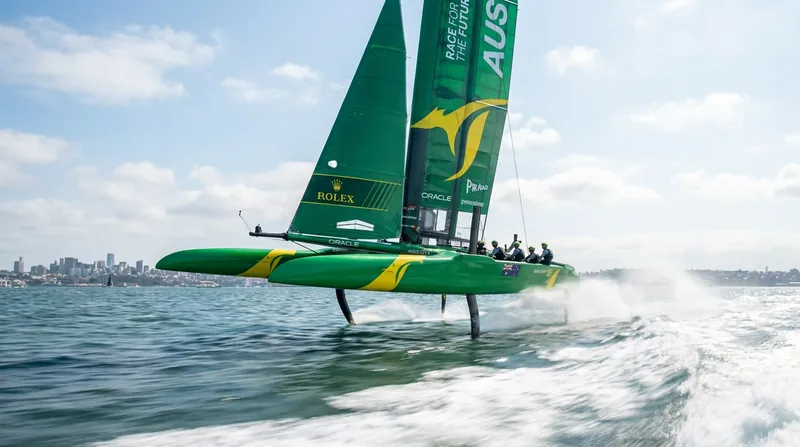
At the absolute pinnacle of the power rankings sits the BONDS Flying Roos. The Australian syndicate, driven by three-time champion Tom Slingsby, has been the undeniable form team of the season, amassing 55 championship points to sit 11 points clear of their nearest rivals.[4]
Australia's dominance was on full display at the recent Mubadala New York Sail Grand Prix. Slingsby's crew secured their third consecutive event final victory, edging out Great Britain in a finish so tight that Chief Umpire Craig Mitchell had to review a last-leg collision before officially confirming the result.
The New York triumph followed a commanding performance at the inaugural Rio Sail Grand Prix in April, where the Australians won four straight races—an unprecedented feat in the league's six-season history that firmly established their current momentum.[1]
Occupying the second spot in the rankings is Emirates GBR, helmed by Dylan Fletcher. As the defending Season 5 champions, the British squad entered 2026 with a massive target on their backs and currently sit on 44 points, proving their pedigree remains intact despite roster adjustments.[5]
Despite a disastrous last-place finish in Rio, Fletcher's crew rebounded spectacularly in Bermuda and New York. Their ability to consistently navigate the chaotic fleet races and punch their ticket to the three-boat finals keeps them firmly in the championship hunt.[1]
The biggest upward mover in the form guide is the U.S. SailGP Team, driven by Taylor Canfield. Sitting third overall with 38 points, the Americans have quietly built one of the most consistent and resilient campaigns of the year, steadily accumulating points while rivals falter.[4]
The US team's composure was severely tested in New York during a dramatic Race 3 start. A collision involving Brazil and Italy resulted in the Americans being handed a heavy seven-point penalty for causing serious damage, yet their underlying pace allowed them to maintain their podium position in the season standings.
Just outside the top three, Spain's Los Gallos (34 points) remains a dangerous wildcard. Driven by Diego Botin, the Spanish crew delivered what observers called a "masterclass" during the New York fleet races, proving they can dominate in mixed conditions even when they narrowly miss the event final.
Further down the rankings, the narrative is defined by ambitious new entrants and shocking absences. The newly formed Swedish Artemis team, driven by SailGP veteran Nathan Outteridge, has impressed early, scoring a podium in Rio and proving they can mix it with established dynasties right out of the gate.[1][2]
Conversely, New Zealand's Black Foils—historically a powerhouse—languish at the bottom of the table with just two points. Their season was derailed by a significant racing incident earlier in the year that forced them to miss multiple events and triggered a chain of crew movements, including loaning out key grinders to rival teams.[1][4]
As the F50 fleet packs up and looks ahead to the Canada Sail Grand Prix in Halifax later this month, the central question is whether anyone can close the gap to Slingsby's Australians. With flat water and reliable breeze expected, the racing skills of the chasing pack will be pushed to their absolute limits.[1]
The essentials
- Australia's BONDS Flying Roos lead the SailGP Season 6 standings with 55 points.
- Tom Slingsby's crew has won three consecutive event finals, including Rio and New York.
- Defending champions Emirates GBR sit in second place with 44 points.
- The U.S. SailGP Team holds third place despite a severe seven-point penalty in New York.
- New entrant Artemis Racing has impressed early, currently sitting in sixth place.
- New Zealand's Black Foils sit at the bottom of the table after missing events due to boat damage.
Timeline
March 2026
SailGP Season 6 begins with a shaken-up grid of 13 international teams.
April 2026
Australia wins an unprecedented four straight races in Rio to take the championship lead.
May 2026
The fleet heads to Bermuda's Great Sound for high-speed flat-water racing.
June 1, 2026
Australia edges out Great Britain in New York to secure their third consecutive event win.
- Championship Leaders
- Focused on maintaining consistency, executing clean starts, and managing the immense pressure of the three-boat finals.
- The Chasing Pack
- Emphasizing aggressive fleet racing, overcoming penalties, and finding the raw boat speed needed to disrupt the established leaders.
- Rebuilding Squads
- Focused on survival, integrating new crew members, and recovering from catastrophic boat damage to salvage their seasons.
Perspectives this story doesn't cover
- Local organizing committees managing the logistics of hosting the massive F50 fleet
- The umpires who have to make split-second penalty decisions in 100 km/h races
Sources
Source coverage
5 outlets
3 viewpoints surfaced





- [1]Sail-World.comRebuilding Squads
SailGP: Australia win four straight in Rio as top teams topple
Read on Sail-World.com → - [2]Spencer.clubThe Chasing Pack
SailGP Bermudes 2026 — Sail GP F 50
Read on Spencer.club → - [3]WikipediaRebuilding Squads
2026 SailGP championship
Read on Wikipedia → - [4]SailGP OfficialThe Chasing Pack
Rolex SailGP Championship Standings
Read on SailGP Official → - [5]Scuttlebutt Sailing NewsChampionship Leaders
Great Britain wins SailGP Season 5
Read on Scuttlebutt Sailing News →
More in Sports
See all →Injury
SailGP Fleet Heals: France Reunites Full Crew as Black Foils Press Forward After Auckland Crash
6 sources
Standings
Spain's Los Gallos Claim Back-to-Back SailGP Victories, Narrowing Australia's Championship Lead
4 sources
Injury
SailGP Injury Report: Sinclair Begins Recovery as Fleet Confronts the Physical Toll of Foiling
3 sources
Injury
SailGP Injury Report: Jensen Returns to Australian Lineup as Ashby Suffers Setback
4 sources
Comments
Every angle. Every day.
Get Sports stories with full source coverage and perspective breakdowns, free every day.