
Rowing Injury Report: McCarthy Returns in New Class, Ntouskos Manages Back Issues
As the 2026 World Rowing Cup series gets underway, Olympic champions Fintan McCarthy and Stefanos Ntouskos are navigating back injuries, while late withdrawals have forced successful crew reshuffles for New Zealand and Great Britain.
By Ryder James

The grueling nature of elite rowing pushes athletes to the absolute edge of their physical capabilities, and the early 2026 season has starkly highlighted this reality. As the international circuit converges on the World Rowing Cup series—drawing nearly 500 athletes to venues like Seville—several high-profile injuries have forced champions to adapt and emerging rowers to step up.
Unlike contact sports where acute trauma dominates the medical tent, rowing injuries are overwhelmingly overuse conditions. The repetitive load placed on the body during the stroke cycle means that managing physical breakdowns is as much a part of the sport as perfecting blade work.[1]
Lower back pain is the most pervasive adversary in the boat park. Sports medical data indicates that between 30 and 50 percent of rowers will experience a significant episode of low back pain within any given 12-month period.
This staggering prevalence is driven by the immense force generated through the legs and transferred across the spine to the oars. For elite competitors, an inflamed disc or a muscular spasm isn't just a temporary inconvenience; it is a fundamental threat to their stroke mechanics that requires immediate load reduction and careful rehabilitation.
Irish Olympic champion Fintan McCarthy is currently navigating exactly this challenge. Following two highly successful Olympiads dominating the lightweight men's double sculls, McCarthy has been battling a persistent back injury. Rather than allowing the setback to derail his 2026 campaign, he has used the enforced downtime as a catalyst for evolution. He is making a bold transition into the openweight single sculls, a move that fundamentally changes his training demands and race strategy.[1]
For McCarthy, the injury prompted a deep dive into the science of his stroke. He and his coaching team have meticulously analyzed his biomechanics and physiology to maximize his power output while protecting his spine.
The Irish sculler noted that stepping away from the rigid weight restrictions of the lightweight category and focusing on mechanical efficiency has given him a new lease of life in the sport. His return to the water in Seville served as a crucial early marker of how well this anatomical adaptation is translating to boat speed.[1]
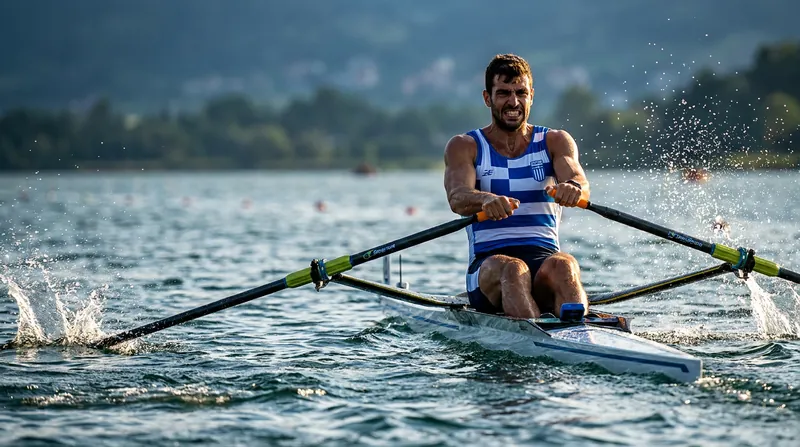
Greek sculler and world champion Stefanos Ntouskos has also found his early-season ambitions curtailed by back issues. The injury severely limited his training volume in the crucial weeks leading up to the World Rowing Cup I. In elite rowing, missing high-intensity mileage usually spells disaster for a regatta, but Ntouskos opted for a pragmatic approach. Instead of withdrawing entirely, he utilized the event to test his body under controlled race conditions.
Knowing he lacked the fitness to contend for the podium, Ntouskos raced through the lower brackets, ultimately securing a victory in his D-final. While a D-final is far from the standard expected of an Olympic gold medalist, the performance was a masterclass in load management. By securing valuable race repetitions without pushing his compromised spine into the red zone against the world's fastest scullers, he kept his competitive instincts sharp while prioritizing his long-term recovery for the World Championships.
While single scullers can adjust their own race plans, injuries in team boats send shockwaves through an entire national squad. When one athlete goes down, the delicate chemistry and synchronized timing of a crew are instantly shattered. New Zealand's national team faced this exact scenario when Alice Fahey was forced to withdraw with an injury just days before the squad departed for their European tour. The late scratch required an immediate reshuffle of the roster to ensure the remaining athletes could still compete.
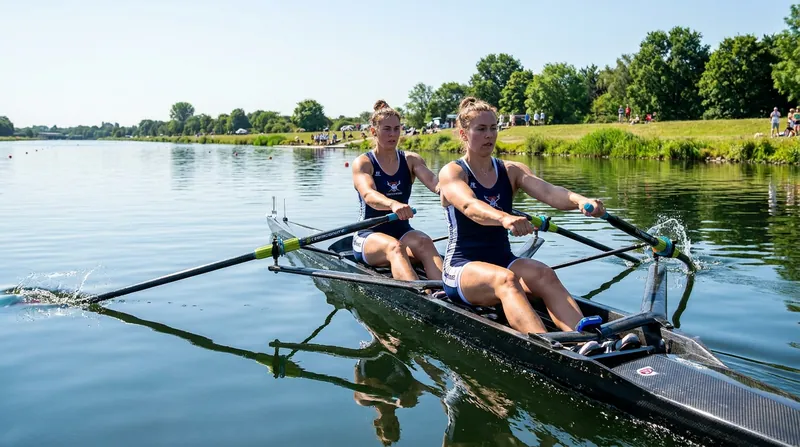
The withdrawal thrust Katie Lush and Juliette Lequeux into a newly formed pair with virtually no time to establish their rhythm. Transitioning from domestic training to the international stage is daunting enough, but doing so in a scratch combination requires immense trust and adaptability. Despite the disrupted preparation, the Kiwi duo embraced the challenge. They put out a massive effort in Seville, challenging established crews and ultimately securing a resilient victory in the B Final, proving that tactical flexibility can salvage a compromised regatta.
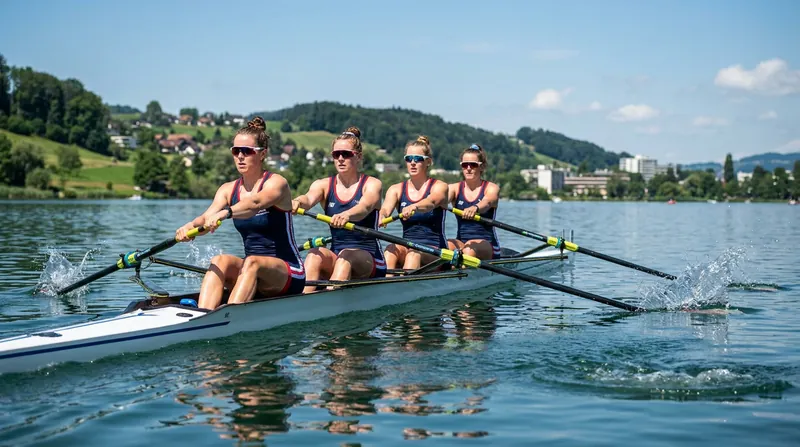
A similar narrative unfolded within the Great Britain camp. The GB Women's Quadruple Sculls, a boat with a storied history of international success, suffered an interrupted preparation due to an undisclosed injury in the lineup. To fill the void, national selectors called upon Finn Stratton, who stepped up from the development ranks to take the crucial stroke seat. Setting the rhythm for a boat containing Olympic and World medalists is a massive responsibility for a rising athlete.[2]
The newly formed British crew settled remarkably well, producing excellent performances in training and validating the depth of the national talent pool. This seamless transition highlights how top-tier rowing federations prepare for the inevitable attrition of a long season. By ensuring that development athletes are exposed to the same rigorous technical standards as the senior squad, teams can absorb sudden injuries without sacrificing competitive viability.[2]
This resilience in the face of physical setbacks extends far beyond the elite circuit. At the grassroots and collegiate levels, injuries routinely reshape the sport. During Oxford University's recent Summer Eights, rowers sidelined by hand injuries pivoted to crucial coaching and bank-support roles, maintaining team morale. Meanwhile, USRowing has highlighted athletes like Lori Boersma, who utilized survivor rowing to recover from a coma and sepsis, ultimately completing the grueling 4,700-meter Head of the Charles regatta.[3][4]
Whether it is an Olympic champion adjusting their stroke mechanics to protect a vulnerable spine, a national team rapidly reorganizing a quadruple scull, or a club rower cheering from the bank, the 2026 season is proving that an injury in rowing is rarely the end of the road. Instead, it serves as a catalyst for adaptation, pushing athletes and coaches to find new ways to generate speed, foster trust, and build resilience on the water.
Key points
- Olympic champion Fintan McCarthy has transitioned to the openweight single sculls to adjust his biomechanics and manage a back injury.
- Greek sculler Stefanos Ntouskos utilized the D-final at the World Rowing Cup to gain race repetitions without overloading his compromised spine.
- Late injury withdrawals forced New Zealand and Great Britain to rapidly reshuffle their team boats, testing the depth of their development squads.
- At the grassroots level, rowing continues to serve as a powerful rehabilitation tool for athletes recovering from severe health crises.
How we got here
Late 2025
Fintan McCarthy begins his transition to the openweight single sculls to manage his physical load.
May 2026
Alice Fahey withdraws from the New Zealand squad due to injury, forcing a late pair reshuffle.
May 30, 2026
Stefanos Ntouskos wins the D-final at the World Rowing Cup in Seville, managing his back injury.
June 2026
USRowing highlights the comeback of survivor rowers completing major domestic regattas.
- Elite Competitors
- Focus on biomechanical adjustments, load management, and maintaining speed despite physical setbacks.
- National Team Selectors
- Prioritize squad depth, adapting to late withdrawals, and testing new combinations under pressure.
- Grassroots & Survivor Rowers
- View the sport as a vehicle for physical rehabilitation and psychological resilience following severe health crises.
Perspectives this story doesn't cover
- Sports Physiotherapists
- Boat Manufacturers
Sources
Source coverage
4 outlets
3 viewpoints surfaced




- [1]Row-360Elite Competitors
2026 World Rowing Cup I Seville Preview
Read on Row-360 → - [2]British RowingNational Team Selectors
The GB Rowing Team to race World Rowing Cup I, Seville
Read on British Rowing → - [3]USRowingGrassroots & Survivor Rowers
From Hospital Bed to Head of the Charles
Read on USRowing → - [4]The Oxford StudentGrassroots & Survivor Rowers
Summer 8s in review
Read on The Oxford Student →

More in Sports
See all →Injury
Imogen Grant Returns From Injury to Anchor Great Britain's Open-Weight Quad to Gold in Lucerne
6 sources
Standings
The Men's Double Sculls Championship Picture: Belgium's Rise and the Sinkovic Brothers' Return Set the Stage for Amsterdam
5 sources
Standings
The Women's Pair Championship Picture: USA, Chile, and Czechia Locked in Three-Way Battle Ahead of Amsterdam
3 sources
Injury
Rowing Injury Report: Olympic Champion Stefanos Ntouskos Battles Back Injury Ahead of Amsterdam World Championships
3 sources
Comments
Every angle. Every day.
Get Sports stories with full source coverage and perspective breakdowns, free every day.