
Record Beef Prices Sizzle for Grilling Season as U.S. Cattle Herd Hits 75-Year Low
The American cattle inventory has shrunk to its lowest level since 1951, driving retail beef prices to record highs just as summer cookouts begin.

Share this story
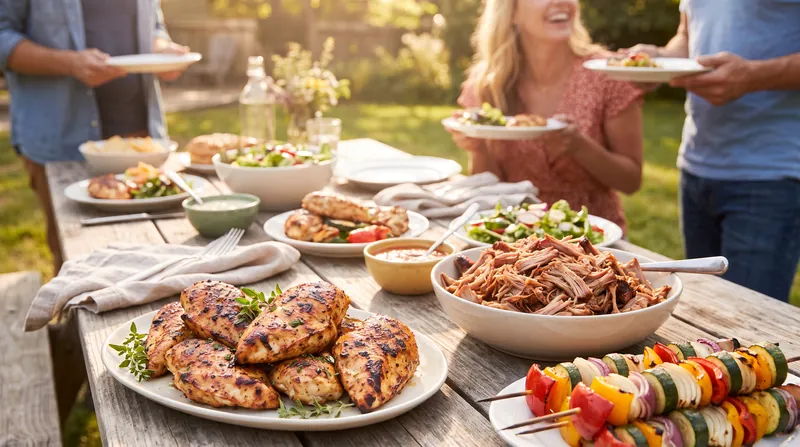
The summer grilling season is in full swing, but the centerpiece of the American cookout is arriving with unprecedented sticker shock. Retail beef prices have surged to record highs in 2026, with the average cost of lean ground beef eclipsing $8.60 per pound in May. For consumers accustomed to throwing a few extra burgers on the grill, the checkout total has become a stark reminder of a shifting agricultural economy.
The price spike is not a temporary blip or a simple case of seasonal demand inflation. Instead, it is the visible result of a structural supply crisis that has been quietly building in the nation's pastures for years, fundamentally rewiring the economics of the meat counter.
At the heart of the price surge is a historic contraction in the domestic livestock supply. According to the U.S. Department of Agriculture's latest inventory report, the national cattle herd has shrunk to 86.2 million head. This marks the smallest American cattle inventory since 1951, representing a 75-year low.
The sheer scale of the decline has caught even seasoned market watchers off guard, as the industry marks its eighth consecutive year of herd contraction. With millions of fewer animals available for processing, the fundamental laws of supply and demand have taken over, pushing wholesale and retail prices to levels that are reshaping how Americans shop for protein.[1]
This 75-year low represents the culmination of a multi-year crisis driven by severe environmental and economic pressures. Prolonged droughts across the Great Plains—particularly in major cattle-producing states like Texas, Oklahoma, and Nebraska—have decimated the natural pasturelands that ranchers rely on to graze their herds. Without adequate grass, producers are forced to purchase supplemental feed to keep their animals healthy.
However, with feed, fuel, and fertilizer costs remaining stubbornly high, many ranchers faced a stark economic choice: operate at a steep loss, or liquidate their herds. Over the past six years, thousands chose the latter, sending breeding cows to slaughter and steadily shrinking the foundation of the national supply.[4]
To understand why prices will not drop anytime soon, one must understand the biological reality of the "cattle cycle." The cattle cycle is a well-documented 10- to 12-year pattern of expansion and contraction driven by producer profitability and weather conditions. Unlike poultry or pork, which can be scaled up relatively quickly in controlled environments, cattle have a long biological timeline.
When ranchers finally decide it is profitable to rebuild their herds, they must practice "heifer retention"—the process of holding back young female cattle for breeding rather than sending them to feedlots for slaughter. This biological necessity creates a unique market dynamic.[4]
Ironically, the very act of rebuilding the herd removes animals from the immediate beef supply chain, pushing retail prices even higher in the short term. "We've got record high cattle prices to provide incentives for rebuilding the herd, but at this point in time, we're not seeing that happen," noted Derrell Peel, an extension livestock specialist at Oklahoma State University.
The biological timeline dictates that even if widespread expansion began today, the resulting new calves would not reach the consumer market for at least 18 to 24 months. This built-in lag ensures that the current supply constraints are locked in for the foreseeable future.[4]
Domestic supply constraints have been further exacerbated by sudden international trade disruptions. Historically, United States beef producers imported Mexican cattle to fatten in American feedlots, providing a crucial relief valve when domestic numbers dipped. However, the recent spread of the flesh-eating New World screwworm parasite in Mexico forced Washington to strictly block those imports.
This border closure effectively cut off more than 1.2 million head of annual feeder cattle, removing a vital source of inventory just as domestic pastures were emptying out. Without this supplementary supply, feedlots are forced to bid even higher for the dwindling number of domestic calves.
The supply crunch has triggered intense political scrutiny and regulatory action in Washington. The Trump administration recently ordered the Department of Justice to launch an antitrust investigation into the "Big Four" meatpackers—JBS, Cargill, Tyson Foods, and National Beef. Together, these four corporations control the vast majority of United States meat processing.
Policymakers and consumer advocates are questioning whether corporate consolidation is artificially inflating retail prices beyond what the tight cattle supply dictates. They argue that highly consolidated meatpackers might be capturing excess profits, leaving both independent ranchers and everyday consumers to bear the financial burden of the supply crisis.
Simultaneously, the administration has expanded low-tariff import quotas for Argentine beef in a direct attempt to cool domestic prices. This move has drawn sharp criticism from American cattle producers, who argue that flooding the market with foreign beef undermines domestic ranchers just as they need high prices to finance the expensive process of herd rebuilding.
Farm advocacy groups warn that relying on an import-driven strategy fails to address the underlying structural challenges facing the United States cattle sector. They caution that it merely increases dependence on foreign supply chains during a period of heightened global food security concerns.
For everyday consumers, these macroeconomic forces translate directly to the grocery checkout line. The Wells Fargo Agri-Food Institute estimates that the cost of a standard summer barbecue for ten people has risen to $161, driven largely by a 14 percent year-over-year increase in the price of hamburger meat alone.
Despite the intense sticker shock, consumer demand for beef has remained surprisingly resilient across the country. While some shoppers are actively trading down to cheaper proteins like chicken or pork to save money, overall beef consumption has not plummeted enough to force retailers to slash their prices.
This inelastic demand means that wholesale buyers are pulling their purchases forward, anticipating even tighter supplies later in the year. The Choice beef cutout value—a key wholesale benchmark representing the value of a beef carcass—surged past $400 per hundredweight this spring, defying typical seasonal patterns.
When supplies are tight and demand holds steady, wholesale prices respond with tremendous volatility. Grocery stores and restaurants are left with little choice but to pass these elevated costs directly on to the end consumer, ensuring that the premium on beef remains a fixture of the retail landscape.[3]
Beyond the immediate economic pressures, the beef industry is also grappling with long-term environmental scrutiny that complicates future expansion. As Fast Company notes, cattle farming is highly resource-intensive, requiring immense levels of land and water use.
In regions where multi-year droughts are becoming the norm rather than the exception, the ecological carrying capacity for large herds is fundamentally shrinking. Some agricultural experts suggest that the 75-year low might not just be a cyclical trough, but a permanent recalibration of how much beef the American landscape can sustainably support in an era of shifting climate patterns.[2]
Agricultural economists warn that the industry will likely remain in the contraction phase of the cattle cycle through the end of the year. The American Farm Bureau Federation projects that meaningful herd expansion will not begin until 2028 at the earliest.
Until then, American consumers will have to navigate a new normal at the meat counter. Whether by exploring alternative cuts, stretching ground beef with other ingredients, or simply absorbing the higher costs, the 2026 grilling season offers a masterclass in how global weather patterns and biological cycles eventually land on the dinner plate.[2]
Key points
- The U.S. cattle herd has shrunk to 86.2 million head, marking the smallest national inventory since 1951.
- Multi-year droughts and high feed costs forced ranchers to liquidate their herds over the past six years.
- Rebuilding the herd requires 'heifer retention,' which temporarily removes animals from the supply chain and keeps prices high.
- The suspension of Mexican cattle imports due to a parasite outbreak has further tightened domestic supply.
What we don’t know
- Whether the DOJ antitrust investigation will uncover actual collusion among the 'Big Four' meatpackers or if prices are purely supply-driven.
- How long the Mexican border will remain closed to feeder cattle imports due to the screwworm outbreak.
- At what price point American consumers will finally experience 'demand destruction' and significantly reduce their beef consumption.
How we got here
2020–2025
Multi-year droughts across the Great Plains and high feed costs force ranchers to liquidate their herds.
Nov 2025
The U.S. suspends Mexican cattle imports due to a New World screwworm outbreak, cutting off a key supply source.
Jan 2026
The USDA reports the U.S. cattle herd has fallen to 86.2 million head, the lowest since 1951.
May 2026
Retail prices for lean ground beef hit a record $8.62 per pound ahead of the summer grilling season.
July 2026
The DOJ launches an antitrust investigation into the 'Big Four' meatpackers amid soaring consumer costs.
- Ranchers & Producers
- Producers emphasize that extreme weather and high input costs forced the herd liquidation.
- Consumer Advocates
- Advocates point to corporate consolidation as a key driver of retail price inflation.
- Agricultural Economists
- Market analysts focus on the biological constraints of the cattle cycle and inelastic demand.
Perspectives this story doesn't cover
- Restaurant owners struggling to maintain profit margins without alienating customers.
- International beef producers in countries like Argentina benefiting from expanded U.S. import quotas.
Sources
Source coverage
4 outlets
3 viewpoints surfaced




- [1]U.S. Department of AgricultureAgricultural Economists
United States cattle inventory down slightly to 86.2 million head
Read on U.S. Department of Agriculture → - [2]Fast CompanyAgricultural Economists
Why beef prices are still hovering around record highs
Read on Fast Company → - [3]DroversRanchers & Producers
Grilling Season 2026: Will Record Beef Prices Cool Summer Demand?
Read on Drovers → - [4]Talk Business & PoliticsAgricultural Economists
Beef prices to rise, cattle herd numbers to remain low
Read on Talk Business & Politics →
More in Food & Drink
See all →Air Quality
How the EPA's Proposed Air Quality Rules Could Change Wood and Charcoal Grilling
6 sources

Supply Chain
New Global Maritime Rule Classifies Charcoal as 'Dangerous Goods,' Reshaping the BBQ Supply Chain
8 sources
Commodity Markets
How Record Inventories Are Driving Down Propane Prices for the 2026 Grilling Season
5 sources

Supply Chain
Mandatory Global Shipping Rules Reclassify Charcoal as 'Dangerous Goods,' Rewiring the Supply Chain
4 sources
Comments
Every angle. Every day.
Get Food & Drink stories with full source coverage and perspective breakdowns, free every day.