
Qualcomm Confirms Dual 2nm Flagship Strategy with Snapdragon 8 Elite and Extreme Gen 6
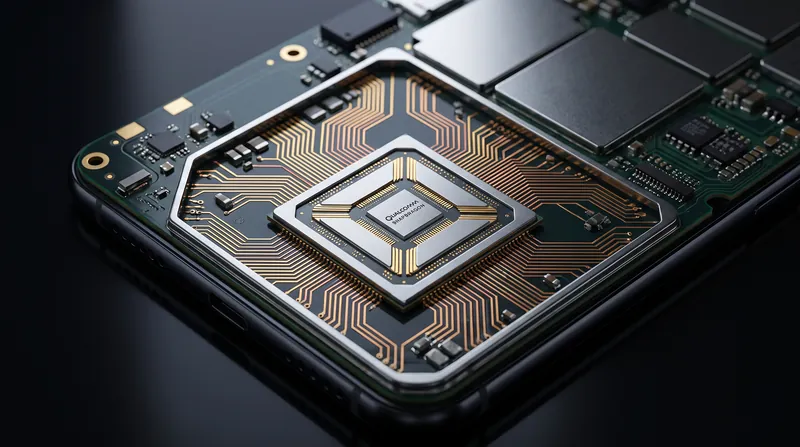
Qualcomm is splitting its premium mobile processor lineup into two distinct tiers, introducing the Snapdragon 8 Elite Gen 6 and the higher-end Extreme Gen 6 to manage the rising costs of 2nm silicon.
By Lila Morgan

The common assumption is that smartphone processors simply get faster every year in a straight, predictable line. But the rising cost of advanced silicon is forcing a structural split in the market. Qualcomm's latest move suggests the era of the single, one-size-fits-all flagship chip is officially over.[8]
Qualcomm has confirmed a dual-chip strategy for its next generation of premium mobile processors, teasing a "Dual 8 Elites" lineup ahead of its September Snapdragon Summit. According to widespread industry leaks, the new processors will be named the Snapdragon 8 Elite Gen 6 and the higher-tier Snapdragon 8 Elite Extreme Gen 6. Both are expected to be built on TSMC's cutting-edge 2nm manufacturing process.[1][2][5][6][9][10]
The "Extreme" branding replaces the previously rumored "Pro" tag, borrowing nomenclature directly from Qualcomm's high-end laptop chips. The standard chip, carrying the internal model number SM8950, will serve as the baseline flagship, while the SM8975 will take on the Extreme title. This marks a significant departure from Qualcomm's historical approach of releasing a single primary flagship system-on-chip each year.[5][7][9]
While marketing materials will inevitably tout revolutionary power efficiency from the 2nm node, the actual real-world gains require a skeptical eye. A smaller manufacturing node theoretically improves battery life and reduces heat, but final performance will depend heavily on how phone makers handle thermal management and clock speeds. A smaller node does not automatically guarantee a cooler device if manufacturers push the silicon to its absolute limits.[1]
The technical divergence between the two chips appears centered on graphics and memory bandwidth. The standard Gen 6 is expected to feature an Adreno 845 GPU with 12MB of graphics cache and support for LPDDR5X memory. The Extreme variant, however, steps up to an Adreno 850 GPU with 18MB of dedicated graphics memory and support for the faster LPDDR6 memory standard.[1][7][10]
This split is fundamentally an economic maneuver. The 2nm fabrication process is highly expensive, and if Qualcomm only offered a single top-tier chip, standard flagships would either see massive price hikes or be forced to use older silicon. The Extreme variant alone could reportedly add $150 to $200 to the retail price of a high-end Android phone.[8][9][10]
A dual-flagship strategy provides crucial flexibility for original equipment manufacturers. Brands can equip their standard flagships with the base Gen 6 chip, maintaining acceptable margins, while reserving the Extreme processor for ultra-premium models, gaming phones, and high-end foldables where consumers are already conditioned to pay a premium.[5][8][10]
The strategy also raises questions about Samsung's traditional arrangement with Qualcomm. Historically, Samsung has utilized custom, overclocked "for Galaxy" Snapdragon chips in its flagship devices. With the Extreme variant now existing as a distinct, off-the-shelf ultra-premium product, it remains to be seen whether the upcoming Galaxy S27 Ultra will simply adopt the Extreme chip or demand a further customized version of it.[3][4]
It is important to distinguish what has actually shipped from what is merely circulating in the rumor mill. While engineering samples of the SM8975 have reportedly surfaced on Chinese second-hand platforms, final clock speeds, sustained performance metrics, and thermal throttling thresholds remain unverified. The raw benchmark scores leaking out are based on unfinished hardware and should not be taken as definitive proof of real-world capability.[7][10]
The industry will receive its official answers when Qualcomm takes the stage in Maui from September 22 to 24. Until then, the dual-chip announcement serves as a clear indicator that the definition of a "flagship" Android phone is permanently bifurcating, driven as much by the harsh economics of semiconductor manufacturing as by the pursuit of raw performance.[6][8][9][10]
Viewpoints in depth
Smartphone Manufacturers
A dual-chip strategy provides crucial flexibility in pricing and component sourcing.
For original equipment manufacturers (OEMs), the rising cost of advanced silicon is a constant threat to profit margins. A dual-flagship strategy allows brands to equip their standard $800 devices with the base Gen 6 chip, maintaining the 'flagship' marketing label without absorbing the full cost of the highest-end silicon. The Extreme processor can then be reserved for ultra-premium models and gaming phones, where consumers are already conditioned to pay well over $1,000.
Mobile Power Users
Enthusiasts are focused on the Extreme variant's potential for sustained high-framerate gaming and on-device AI.
For mobile gamers and power users, the standard chip's specifications are less relevant than the ceiling of the Extreme variant. Leaks indicating an Adreno 850 GPU with 18MB of dedicated graphics memory and LPDDR6 support suggest a device capable of handling sustained heavy workloads without aggressive thermal throttling. However, this demographic remains cautious about whether the 2nm node will actually deliver cooler operating temperatures or simply be pushed to run hotter at higher clock speeds.
Industry Analysts
The split is viewed primarily as an economic maneuver rather than a purely technological one.
Market watchers note that the transition to TSMC's 2nm process is incredibly expensive. If Qualcomm only offered a single top-tier chip, the resulting component costs would force massive retail price hikes across the entire Android flagship ecosystem. Analysts argue that the 'Extreme' branding is a clever way to segment the market, masking the economic reality that true top-tier performance is becoming too costly for standard flagship devices.
Key points
- Qualcomm has teased a "Dual 8 Elites" strategy for its upcoming Snapdragon Summit in September.
- The two chips are expected to be named the Snapdragon 8 Elite Gen 6 and the Snapdragon 8 Elite Extreme Gen 6.
- Both processors will be built on TSMC's advanced 2nm manufacturing node.
- The "Extreme" variant will reportedly feature a larger GPU cache and support for faster LPDDR6 memory.
- Smartphone Manufacturers
- A dual-chip strategy provides crucial flexibility in pricing and component sourcing.
- Mobile Power Users
- Enthusiasts are focused on the Extreme variant's potential for sustained high-framerate gaming and on-device AI.
- Industry Analysts
- The split is viewed primarily as an economic maneuver rather than a purely technological one.
Perspectives this story doesn't cover
- Cost-conscious consumers
- Independent thermal testing labs
Sources
Source coverage
10 outlets
3 viewpoints surfaced









- [1]NokiaMobIndustry Analysts
Snapdragon 8 Elite Extreme Gen 6: Because “Elite” Apparently Wasn't Dramatic Enough
Read on NokiaMob → - [2]BeebomMobile Power Users
Qualcomm's next Flagship Chipset May Get a Surprising New Name
Read on Beebom → - [3]SammyFansSmartphone Manufacturers
Snapdragon 8 Elite Extreme Gen 6 Processor
Read on SammyFans → - [4]SammyGuruSmartphone Manufacturers
Leak reveals Galaxy S27 Ultra's potential “Extreme” Snapdragon chip
Read on SammyGuru → - [5]TechNetBookSmartphone Manufacturers
Qualcomm Snapdragon 8 Elite Gen 6 and Extreme Edition 2nm Names Revealed
Read on TechNetBook → - [6]TechnobezzMobile Power Users
Qualcomm unveils Snapdragon 8 Elite Gen 6 and Extreme Gen 6, its first 2nm chips
Read on Technobezz → - [7]NotebookcheckMobile Power Users
A new leak suggests Qualcomm is borrowing the "Extreme" branding
Read on Notebookcheck → - [8]Global SourcesSmartphone Manufacturers
Qualcomm announces dual flagship chips for Snapdragon Summit 2026
Read on Global Sources → - [9]GagadgetIndustry Analysts
Qualcomm is launching two flagship chips at once this September
Read on Gagadget → - [10]91mobilesIndustry Analysts
Qualcomm officially teases dual flagship chips for Snapdragon Summit 2026
Read on 91mobiles →
More in Technology
See all →OLED Technology
The Mechanism of OLED Displays: Why Dark Pixels Save Power but Accelerate Burn-In
6 sources

Device Lifecycles
Samsung Ends Guaranteed Security Updates for Galaxy Z Fold 3 and Z Flip 3 After Five Years
5 sources

Camera Sensors
How Photon Shot Noise and Pixel Binning Erase the Advantage of 200-Megapixel Smartphone Sensors
6 sources

Foldable Hardware
Huawei Releases Mate XT 2 Tri-Fold, Debuting LogicFolding Tau Chip Architecture
7 sources

Comments
Every angle. Every day.
Get Technology stories with full source coverage and perspective breakdowns, free every day.