
The Era of Glued-In Batteries is Ending: How the EU's 2027 Mandate is Reshaping Smartphones
A sweeping European Union regulation taking effect in February 2027 will require all new smartphones to feature user-replaceable batteries, forcing a global redesign of consumer electronics.
By Wei Zhang

The era of the glued-in, sealed-glass smartphone is officially coming to a close, marking one of the most profound shifts in consumer technology in recent memory. By February 2027, a sweeping European Union regulation will force a fundamental redesign of consumer electronics, requiring all new smartphones, tablets, and cordless mobile devices to feature user-replaceable batteries.
The mandate represents a direct legislative strike against the prevailing design philosophy of the past decade, effectively outlawing the heavy industrial adhesives, proprietary screws, and tightly sealed chassis that have made modern devices notoriously difficult to repair. For years, the tech industry has prioritized ultra-thin aesthetics and seamless glass slabs over modularity, resulting in beautiful but ultimately disposable hardware. The impending EU rules are set to reverse this trend, forcing the world's largest technology companies to return to the drawing board and prioritize longevity and repairability from the ground up.[1][2]
At the heart of the shift is Regulation (EU) 2023/1670, a comprehensive legislative package designed to overhaul how portable batteries are manufactured, utilized, and ultimately recycled. Under the new rules, manufacturers must ensure that batteries can be removed and replaced safely by end-users without the need for specialized training, heat guns, or chemical solvents to dissolve glue. The replacement process must be achievable using basic, commercially available tools—or ideally, no tools at all.
If a manufacturer insists that a specific, proprietary tool is required to open the device safely, they are legally obligated to provide that tool free of charge in the box with the product. Furthermore, the regulation stipulates that replacing the battery must not result in damage to the device or compromise its core functionality, ensuring that consumers aren't penalized with software locks or degraded performance for choosing to repair their own hardware.[1]
For everyday consumers, this legislative shift addresses the single most common and frustrating point of failure in mobile technology. A degrading lithium-ion battery is overwhelmingly the primary reason users choose to replace an otherwise perfectly functional smartphone. As batteries chemically age, they lose their ability to hold a charge and deliver peak power, leading to sluggish performance and devices that die halfway through the day.
By making battery swaps cheap, safe, and easily accessible, the mandate promises to extend the practical lifespan of flagship smartphones by several years. Instead of spending upwards of a thousand dollars on a brand-new device when the battery inevitably degrades, users will be able to spend a fraction of that cost on a replacement cell, saving hundreds of dollars and breaking the costly cycle of forced, incremental hardware upgrades.[3]
The environmental stakes driving this aggressive legislation are massive, reflecting a growing crisis in global waste management. The European Union currently generates approximately five million tonnes of electronic waste annually, with official figures indicating that only about 40 percent of that volume is properly collected and recycled. Millions of smartphones, tablets, and wireless earbuds are discarded into landfills simply because their sealed batteries have lost capacity and the cost of professional repair rivals the price of a new device.
The toxic materials inside these discarded electronics pose severe environmental hazards, while the constant demand for new devices drives ecologically destructive mining for rare earth metals, lithium, and cobalt. The EU's mandate is a direct attempt to sever this unsustainable loop by keeping existing hardware in circulation for as long as possible.[2]
To ensure the legislation achieves its environmental goals, the regulation goes far beyond just mandating hardware design changes. It imposes strict, escalating recycling targets on the industry, mandating a 63 percent collection rate for waste portable batteries by 2027, which will scale up to an ambitious 73 percent by 2030.
Manufacturers are also required to achieve specific material recovery rates, ensuring that 50 percent of lithium is recovered by 2027, increasing to 80 percent by 2031. Additionally, new batteries will eventually be required to contain minimum levels of recycled content, including 16 percent for cobalt and 6 percent for lithium. By forcing companies to take responsibility for the entire lifecycle of their products, the EU is attempting to build a truly circular economy for consumer electronics.[3]
For smartphone manufacturers and their hardware engineering teams, the mandate presents a formidable and complex design challenge. Over the past ten years, companies have heavily relied on strong adhesives not just to thwart third-party repairs, but to achieve ultra-thin device profiles, maximize internal space for larger battery cells, and provide robust water resistance.
Now, hardware teams must figure out how to build modular, accessible battery compartments without sacrificing the premium feel, structural integrity, or the IP67 dust and water resistance that consumers have come to expect from high-end devices. Engineering a waterproof seal that can be easily opened and resealed by an untrained user is significantly more difficult than simply gluing two pieces of glass together, requiring innovative gasket designs and precision-machined locking mechanisms.[1]
However, the legislation does include a narrow, highly demanding exemption that some manufacturers are already racing to exploit. Devices can legally bypass the user-replaceable requirement if their batteries are engineered to an exceptionally high standard of durability—specifically, maintaining at least 80 percent of their original capacity after 1,000 full charge cycles. For context, most current smartphone batteries are rated to maintain 80 percent capacity after just 500 cycles.
Additionally, manufacturers utilizing this "Ecodesign" loophole must guarantee at least five years of operating system updates and ensure the device passes rigorous EU-standard drop tests and IP67 water resistance certifications. This exemption provides a pathway for companies to maintain sealed designs, but only if they can prove the device is built to last half a decade without needing a battery swap.
This stringent exemption threshold has triggered a quiet arms race in battery chemistry and power management across the tech industry. Companies like Apple and Samsung are reportedly investing heavily in high-density, high-cycle battery technologies to meet the 1,000-cycle requirement for their ultra-premium flagship models.
Recent developments in silicon-anode technology and early implementations of solid-state battery components are being fast-tracked to ensure that top-tier devices can legally remain sealed. Meanwhile, these same manufacturers are actively redesigning their mid-range and budget smartphone lineups—which operate on tighter margins and cannot absorb the cost of advanced battery chemistry—to feature fully compliant modular designs with tool-less entry.[3]
While the law technically only applies to devices sold within the 27 member states of the European Union, its impact will undoubtedly dictate global hardware standards. The EU represents the second-largest smartphone market in the world, and technology giants operate on economies of scale.
It is highly inefficient and cost-prohibitive to design, manufacture, and support completely separate hardware chassis for Europe and the rest of the world. Just as the EU's previous mandate forced Apple to abandon its proprietary Lightning port in favor of the universal USB-C standard globally, the 2027 battery regulation will almost certainly become the baseline design standard for the entire mobile industry, regardless of geographic borders.[2][3]
As a result, the "Brussels Effect"—where EU regulations inadvertently set global standards—is poised to benefit consumers in the United States, Asia, and emerging markets. Right-to-repair advocates worldwide are celebrating the impending changes, noting that local legislative efforts in states like New York and California laid the groundwork, but the sheer economic weight of the EU was required to force the hands of trillion-dollar tech companies.
The shift represents a massive democratization of hardware maintenance, ensuring that anyone, anywhere, can keep their digital lifeline running without being forced into an expensive upgrade cycle by an artificially degrading power source.[1][2]
As the February 2027 enforcement date steadily approaches, the late-2026 flagship release cycle will serve as the first major wave of compliance and a preview of the industry's future. Consumers can expect a fascinating era of hardware experimentation as companies debut their solutions to the mandate.
Consumers can expect a fascinating era of hardware experimentation as companies debut their solutions to the mandate.
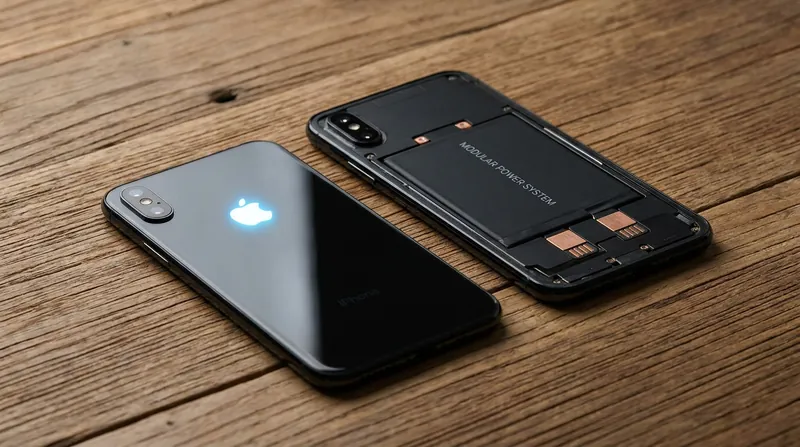
From modernized, premium removable back plates utilizing hidden latches, to innovative slide-out battery trays and advanced high-cycle power cells, the next generation of smartphones will look and function differently. After a decade of sealed, disposable glass slabs, ownership and repairability are finally returning to the hands of the user, marking a triumphant new chapter for sustainable consumer technology.
Key points
- Starting February 2027, the EU will require all new smartphones to feature user-replaceable batteries.
- Batteries must be removable with basic, commercially available tools, effectively banning heavy industrial adhesives.
- The legislation aims to curb the five million tonnes of electronic waste generated annually in the European Union.
- Manufacturers can bypass the rule only if their batteries maintain 80 percent capacity after 1,000 charge cycles.
What we don’t know
- How major manufacturers will balance the requirement for easy battery access with consumer demands for ultra-thin profiles and high-end water resistance.
- Whether giants like Apple and Samsung will rely heavily on the 1,000-cycle exemption for their flagship models rather than redesigning them to be fully modular.
How we got here
2023
The European Union officially drafts and passes Regulation 2023/1670, setting the framework for sustainable batteries.
2025
Ecodesign regulations take effect, forcing manufacturers to provide longer software support and official spare parts.
Late 2026
The first wave of fully compliant flagship smartphones is expected to hit the global market.
Feb 18, 2027
The strict user-replaceable battery mandate officially takes effect for all new devices sold in the EU.
- Consumer & Repair Advocates
- Celebrate the mandate as a historic victory against planned obsolescence, empowering users to extend device lifespans.
- Environmental Policymakers
- Focus on the macro impact of the legislation, prioritizing the reduction of the 5 million tonnes of annual e-waste and enforcing strict recycling targets.
- Hardware Engineers & Manufacturers
- Focus on the immense engineering challenges of maintaining premium aesthetics and water resistance while complying with modular design rules.
Perspectives this story doesn't cover
- Independent repair shop owners
- Battery recycling facility operators
Sources
Source coverage
3 outlets
3 viewpoints surfaced



- [1]Business StandardEnvironmental Policymakers
This EU rule may let you replace your phone battery yourself from 2027
Read on Business Standard → - [2]The VergeConsumer & Repair Advocates
User-replaceable batteries are coming back in a big way
Read on The Verge → - [3]PhoneArenaHardware Engineers & Manufacturers
EU Mandates Removable Batteries in All New Smartphones
Read on PhoneArena →
More in Technology
See all →Right to Repair
The 'Right to Repair' Revolution Hits Mainstream Smartphones
6 sources
Mobile Hardware
Qualcomm Brings Data-Center Chip Stacking to Smartphones for Always-On AI
4 sources

Camera Sensors
Sony Unveils LYTIA L910 Sensor, Bringing 16.6 Stops of Single-Exposure Dynamic Range to Smartphones
2 sources

Display Tech
The End of Screen Glare: How Anti-Reflective Displays Became the Standard in 2026 Smartphones
2 sources

Comments
Every angle. Every day.
Get Technology stories with full source coverage and perspective breakdowns, free every day.