
Qualcomm Brings Data-Center Chip Stacking to Smartphones for Always-On AI
Qualcomm has unveiled a new vertical chip-stacking architecture for its next-generation mobile processors, adapting data-center technology to enable continuous, on-device AI processing without draining battery life.
By Lila Morgan

Share this story
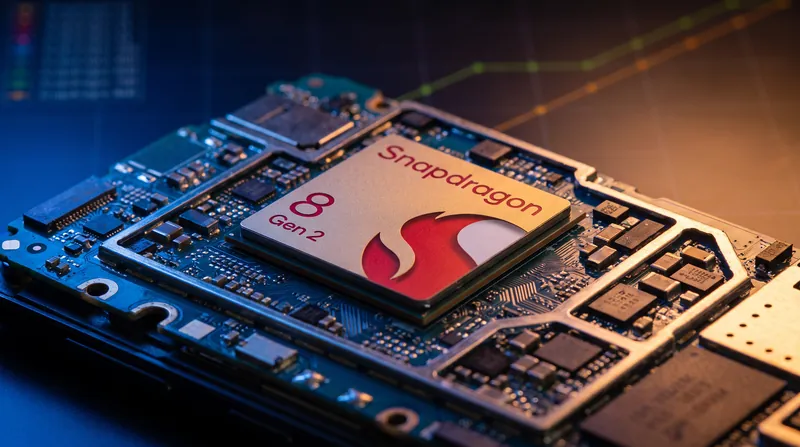
Qualcomm has fundamentally reimagined the internal geography of the smartphone. In a move that bridges the gap between massive data centers and pocket-sized devices, the company announced it is bringing vertical chip-stacking architecture to its next generation of Snapdragon mobile processors. This 3D packaging technique layers memory directly on top of the computing cores, a radical departure from the traditional side-by-side layout that has defined mobile hardware for decades.[1][3]
The architectural shift is designed to solve the most pressing bottleneck in modern consumer technology: the massive power drain caused by artificial intelligence. As smartphone makers have rushed to integrate large language models and generative AI directly into their devices, they have run headfirst into the physical limits of memory bandwidth. Fetching data from a separate memory chip across a microscopic motherboard takes time and, more importantly, consumes a tremendous amount of battery life.
By stacking the memory vertically atop the Neural Processing Unit (NPU) and Central Processing Unit (CPU), Qualcomm drastically shortens the distance data must travel. This server-grade approach, previously utilized in high-end data center hardware by companies like AMD and Intel, effectively eliminates the traffic jam between the processor and its memory pool. The result is a staggering 3x increase in memory bandwidth, allowing complex AI models to run seamlessly without choking the system.[2][4]
The immediate consumer benefit of this engineering feat is a dramatic reduction in power consumption. Qualcomm estimates that the new vertical architecture reduces the energy required for AI workloads by up to 40 percent. For the average user, this means that advanced, always-on AI assistants can run continuously in the background—listening for context, analyzing screen contents, and anticipating needs—without requiring a midday battery recharge.
Implementing 3D packaging in a smartphone, however, presented a monumental thermal challenge. Data center chips rely on massive industrial cooling systems to dissipate the heat generated by stacked silicon. Smartphones, by contrast, are sealed glass and metal slabs with zero active airflow. Qualcomm engineers had to develop novel thermal dissipation pathways, utilizing microscopic graphene layers within the chip package to pull heat laterally away from the stacked cores before it could throttle performance.
This hardware breakthrough fundamentally changes the trajectory of mobile AI, shifting it from a cloud-dependent novelty to a truly local utility. Currently, most complex AI requests made on a smartphone are beamed to a remote server for processing, introducing latency and requiring a constant internet connection. With the new Snapdragon architecture, devices will have the sheer bandwidth required to run multi-billion-parameter models entirely on-device, responding instantly to user commands.[3]
Beyond speed and battery life, the shift to local processing represents a massive victory for consumer privacy. When an always-on AI agent can process voice transcripts, read personal emails, and analyze photos directly on the silicon without ever transmitting that data to the cloud, the security risks associated with data interception or server breaches plummet. Industry analysts note that this privacy-first capability will likely become a major selling point for next-generation Android flagships.[1]
The announcement also reshapes the competitive landscape of the semiconductor industry. Qualcomm is locked in a fierce battle with Apple's custom silicon division and Taiwan's MediaTek for dominance in the premium smartphone market. By being the first to successfully commercialize vertical stacking for mobile thermal envelopes, Qualcomm aims to secure a definitive hardware advantage, particularly as Apple pushes its own aggressive on-device AI roadmap.[2]
Bringing this architecture from the laboratory to mass production relies heavily on advanced manufacturing partners. Qualcomm is leveraging TSMC's cutting-edge 3D SoIC (System on Integrated Chips) packaging technology to physically bond the silicon layers. This highly complex manufacturing process is currently scaling up, with foundries investing billions to increase yield rates and ensure the stacked chips can be produced reliably at the massive volumes required by the global smartphone market.[4]
Consumers won't have to wait long to experience the shift. Qualcomm confirmed that the vertical stacking architecture has moved past the prototyping phase and is currently sampling with major Android smartphone manufacturers. The first wave of flagship devices featuring the new 3D-packaged Snapdragon chips is slated to hit store shelves in early 2027, promising a new era of devices where artificial intelligence is a persistent, invisible, and battery-friendly companion.[1]
Perspectives explored
Hardware Engineers
Focus on the thermal and manufacturing challenges of 3D packaging.
For silicon engineers, the primary focus is on the thermal dynamics of placing hot memory directly on top of a hot processor. In a data center, massive fans and liquid cooling systems manage this heat. In a smartphone, the heat must dissipate passively through the device's frame. Engineers are closely watching Qualcomm's use of microscopic graphene layers to pull heat laterally out of the stack, viewing it as a critical test of whether high-performance 3D packaging can survive in consumer mobile environments.
Privacy Advocates
Celebrate the shift away from cloud-dependent AI processing.
Privacy experts view the hardware bottleneck as the primary reason tech companies have historically hoovered up user data into the cloud. By providing the memory bandwidth necessary to run complex models locally, Qualcomm's architecture removes the technical excuse for off-device processing. Advocates argue this hardware shift could fundamentally change the privacy landscape, allowing users to benefit from highly personalized AI agents without sacrificing their data to remote servers.
Market Analysts
Analyze the strategic impact on the global semiconductor race.
Financial and market analysts see this announcement as a direct counter-offensive against Apple's dominance in custom mobile silicon. Apple has historically held an advantage in memory bandwidth due to its unified memory architecture, but Qualcomm's move to vertical stacking could leapfrog that advantage. Analysts predict this will trigger an arms race among foundries like TSMC and Samsung to secure the advanced packaging capacity needed to supply the broader Android ecosystem.
Key points
- Qualcomm is adapting 3D chip packaging, previously reserved for servers, for mobile processors.
- The vertical design stacks memory directly on the processor, drastically reducing the distance data must travel.
- This architecture cuts AI power consumption by up to 40%, enabling always-on local AI models.
- First consumer devices featuring the new architecture are expected in early 2027.
Open questions
- Exactly how much this advanced packaging will increase the manufacturing cost of flagship smartphones.
- Whether thermal management will hold up under sustained heavy gaming loads combined with background AI tasks.
Timeline
2022
Apple and AMD popularize advanced 3D packaging in desktop and server chips.
Late 2024
Mobile AI models begin hitting memory bandwidth bottlenecks on traditional smartphone architectures.
June 2026
Qualcomm officially unveils its vertical stacking architecture for next-generation Snapdragon mobile platforms.
Early 2027
First commercial Android smartphones utilizing the new chips are slated to hit the market.
- Mobile Hardware Engineers
- Focus on the technical achievement of bringing server-grade packaging into a thermally constrained smartphone chassis.
- Consumer Tech Analysts
- Emphasize the user experience benefits, particularly the battery life improvements and privacy gains of local AI.
- Market Strategists
- View the development through the lens of Qualcomm's competitive positioning against Apple and MediaTek.
Perspectives this story doesn't cover
- Smartphone Manufacturers (OEMs)
- App Developers
Sources
Source coverage
4 outlets
3 viewpoints surfaced




- [1]ReutersMarket Strategists
Qualcomm adapts server chip tech for next-gen AI smartphones
Read on Reuters → - [2]BloombergMarket Strategists
Qualcomm Targets Always-On AI With Vertical Chip Design
Read on Bloomberg → - [3]The VergeConsumer Tech Analysts
Would you host part of an AI data center in your home?
Read on The Verge → - [4]EE TimesMobile Hardware Engineers
Qualcomm Brings 3D Stacking to Mobile for Edge AI
Read on EE Times →
More in Technology
See all →Foldable Tech
Samsung Overhauls Foldable Strategy, Adopting Wider 4:3 Galaxy Z Fold 8 Design to Counter Apple
2 sources

Camera Sensors
Sony Unveils LYTIA L910 Sensor, Bringing 16.6 Stops of Single-Exposure Dynamic Range to Smartphones
1 sources
Display Tech
The End of Screen Glare: How Anti-Reflective Displays Became the Standard in 2026 Smartphones
2 sources

Satellite Connectivity
The End of the Dead Zone: How 2026 Became the Year Smartphones Connected Directly to Space
2 sources

Comments
Every angle. Every day.
Get Technology stories with full source coverage and perspective breakdowns, free every day.