
Prince Harry Loses Final Privacy Lawsuit Against Daily Mail Publisher
The UK High Court has dismissed a sweeping privacy and unlawful information-gathering lawsuit brought by Prince Harry and six other high-profile figures against Associated Newspapers. The ruling likely concludes the Duke of Sussex's long-running legal campaign against the British tabloid press and leaves the claimants facing an estimated £50 million legal bill.
By Chen Wang

Share this story
The UK High Court has dismissed a sweeping privacy lawsuit brought by Prince Harry, Sir Elton John, and five other high-profile figures against Associated Newspapers Ltd (ANL), the publisher of the Daily Mail and Mail on Sunday. The ruling, delivered on Tuesday by Justice Matthew Nicklin, marks a decisive defeat in the Duke of Sussex's years-long legal campaign against the British tabloid press.[1]
The claimants—who also included Baroness Doreen Lawrence, actors Elizabeth Hurley and Sadie Frost, David Furnish, and former politician Simon Hughes—had alleged that ANL engaged in widespread unlawful information gathering. They accused the publisher of utilizing methods such as phone hacking, intercepting voicemails, and hiring private investigators to source dozens of articles published over a two-decade period.[1]
However, in a comprehensive 436-page judgment, Justice Nicklin dismissed all 97 claims brought before the court. The judge ruled that the group had failed to provide sufficient evidence that any of the information in question was actually obtained through illegal means, noting that suspicion alone was not enough to secure a finding in their favor.[2]
Justice Nicklin explicitly rejected the claimants' core legal argument: that because the published information was highly private and the newspaper could not definitively prove its source, the court should automatically infer unlawful activity. "In substance, the claimants' case invites the Court to conclude that, because the information was private and because Associated cannot positively explain how it was sourced, the article must have been unlawfully sourced," Nicklin wrote. "That is not a permissible approach."
The defeat leaves the claimants facing a massive financial burden. Associated Newspapers estimates that the legal costs for both sides, accumulated over years of complex case preparation and an 11-week trial, exceed £50 million ($67 million). A separate costs hearing will determine exactly how much of the publisher's legal fees the claimants will be ordered to pay.[1]
Associated Newspapers celebrated the ruling as an "overwhelming victory" and a "magnificent vindication" of its journalism. The publisher has consistently maintained throughout the proceedings that the articles in question were based on legitimate sources, including publicists, royal aides, and friends who willingly offered information to reporters.
Former Daily Mail editor-in-chief Paul Dacre, who was accused by the claimants of misleading the 2011 Leveson Inquiry into press ethics, was fully exonerated by the judge. Following the verdict, Dacre characterized the lawsuit as a "conspiracy... to destroy a paper," while the publisher condemned the action as a "politically motivated campaign to muzzle the free press."[1][2]
Prince Harry and co-claimant Doreen Lawrence issued a joint statement condemning the decision. They called the ruling a "complete and obvious whitewash, but sadly not altogether unexpected," and expressed shock at the lengths the court went to exonerate the publisher. The Duke of Sussex had previously testified in person, growing emotional as he described the impact the coverage had on his family.
Legal experts noted that this case differed significantly from Harry's previous courtroom victories. Media lawyer Mark Stephens described it as a "mosaic case," where the claimants' legal team attempted to piece together inferences rather than presenting hard documentary evidence or securing admissions of guilt from the publisher.[1]
The ruling likely represents the final chapter in the historical phone-hacking litigation era that has shadowed the British press for over a decade. While Harry previously secured a £140,600 judgment against Mirror Group Newspapers in 2023 and a substantial settlement from the publisher of The Sun in 2025, the High Court has now drawn a firm line on the evidentiary standards required to sustain such historical allegations.[2]
Viewpoints in depth
The Claimants' View
Prince Harry and his co-claimants argue the ruling is a failure of justice that ignores the realities of historical press abuses.
The claimants maintain that the lack of hard documentary evidence is a result of publishers deliberately concealing their methods, rather than proof of innocence. In their joint statement, Prince Harry and Baroness Doreen Lawrence characterized the judgment as a 'whitewash,' arguing that the court set an impossibly high evidentiary bar for historical privacy claims. They believe the ruling unjustly protects a tabloid culture that systematically invaded the private lives of public figures for commercial gain.
The Publisher's View
Associated Newspapers views the lawsuit as a baseless, politically motivated attack on press freedom.
The publisher and its editorial leadership have consistently argued that the lawsuit was a 'fishing expedition' designed to muzzle the free press. They maintain that all 97 articles scrutinized during the trial were sourced through legitimate journalistic practices, relying on publicists, royal aides, and personal contacts rather than unlawful surveillance. Former editor Paul Dacre and the company's legal team view the complete dismissal of the claims as a total vindication of their reporters' integrity and a necessary rebuke to what they described as a coordinated conspiracy against the paper.
Legal Analysts' View
Independent legal experts emphasize that the ruling strictly enforces the burden of proof required in UK civil courts.
Media lawyers observing the case note that Prince Harry's legal team attempted to build a 'mosaic case'—asking the judge to infer unlawful behavior based on the private nature of the published information and the publisher's inability to definitively name historical sources. Analysts point out that Justice Nicklin's ruling firmly rejects this approach, reinforcing that suspicion, however reasonable it may seem to the claimants, cannot substitute for concrete evidence. Industry observers widely view this judgment as the definitive end to the wave of historical phone-hacking litigation that began over a decade ago.
Key points
- The UK High Court dismissed all 97 privacy claims brought by Prince Harry and six others against the Daily Mail's publisher.
- Justice Matthew Nicklin ruled the claimants failed to provide sufficient evidence of unlawful information gathering.
- The judge rejected the argument that unlawful sourcing could be inferred simply because the published information was private.
- Associated Newspapers celebrated the ruling as an 'overwhelming victory' and a vindication of its journalism.
What we don’t know
- The exact financial penalty the claimants will face, which will be determined in a subsequent costs hearing.
- Whether Prince Harry or any of the other claimants will attempt to appeal the High Court's decision.
- How the £50 million in estimated legal costs will be divided among the seven high-profile claimants.
How we got here
2011–2012
The Leveson Inquiry investigates the culture and ethics of the British press following the initial phone-hacking scandal.
December 2023
Prince Harry wins a High Court judgment against Mirror Group Newspapers, proving instances of phone hacking.
January 2025
Harry settles a separate privacy lawsuit with News Group Newspapers, publisher of The Sun, receiving an apology and substantial damages.
Early 2026
An 11-week trial takes place in the High Court regarding the claims against Associated Newspapers.
July 7, 2026
Justice Matthew Nicklin dismisses all claims against Associated Newspapers, handing Prince Harry a definitive legal defeat.
- The Publisher
- Views the lawsuit as a baseless, politically motivated attack on press freedom and maintains all reporting was legitimately sourced.
- The Claimants
- Argue the ruling is a failure of justice that ignores the realities of historical press abuses and sets an impossibly high evidentiary bar.
- Legal Analysts
- Emphasize that the ruling strictly enforces the burden of proof required in civil courts and marks the end of the phone-hacking litigation era.
Perspectives this story doesn't cover
- Working tabloid journalists who rely on legitimate confidential sources
- Advocates for press regulation and media reform
Sources
Source coverage
2 outlets
3 viewpoints surfaced


- [1]The GuardianThe Claimants
Sunbed group in hot seat over false claims that tanned skin protects against sunburn
Read on The Guardian → - [2]Press GazetteThe Publisher
Judgment in publisher's favour follows 11-week trial
Read on Press Gazette →

More in Entertainment
See all →Youth Mental Health
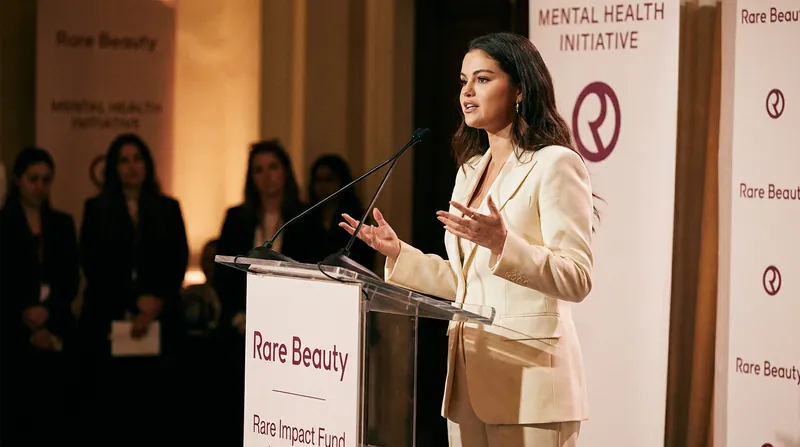
Selena Gomez's Rare Impact Fund Crosses $100 Million Goal Four Years Early, Launches Global School Initiative
2 sources
Music Business
BMG and Concord Agree to $7 Billion Merger, Creating the World's Largest Independent Music Company
1 sources

Music Legacy
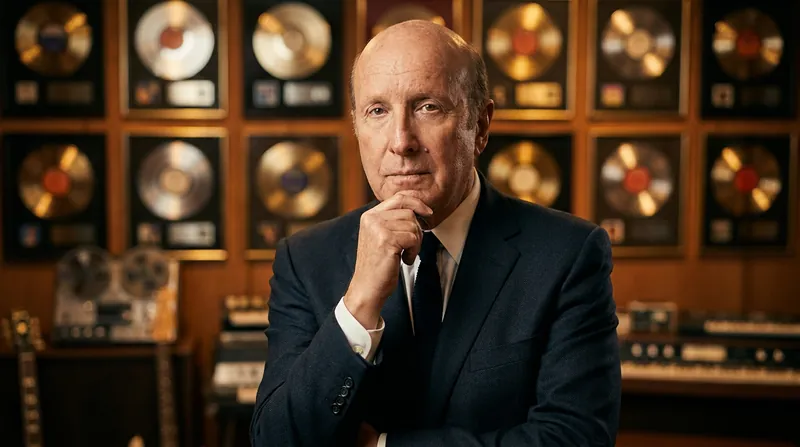
Legendary Music Executive Clive Davis Dies at 94, Leaving a Half-Century Legacy of Pop Innovation
2 sources
Hollywood Marketing
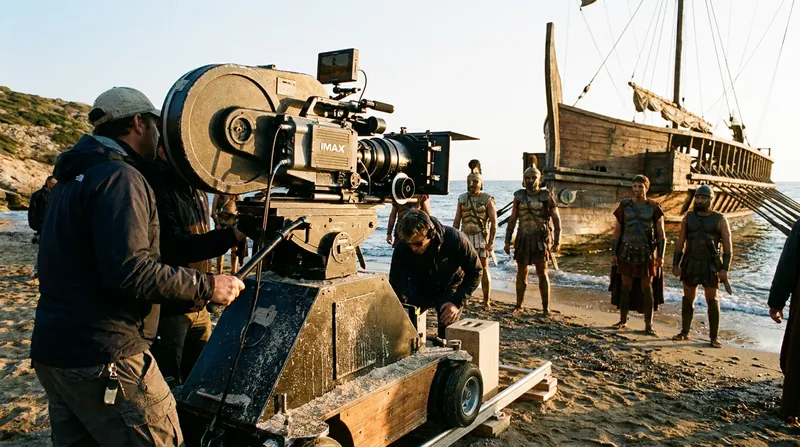
Christopher Nolan's 'The Odyssey' Skips Influencer Screenings in Bold Break From Hollywood Trend
3 sources
Comments
Every angle. Every day.
Get Entertainment stories with full source coverage and perspective breakdowns, free every day.