
Pizza Hut CEO Aaron Powell Resigns as Yum Brands Completes $2.7 Billion Divestiture
Aaron Powell has stepped down as global chief executive of Pizza Hut following the chain's acquisition by LongRange Capital and Yum China. The departure marks the beginning of a private-equity turnaround effort for the legacy pizza brand.
Share this story
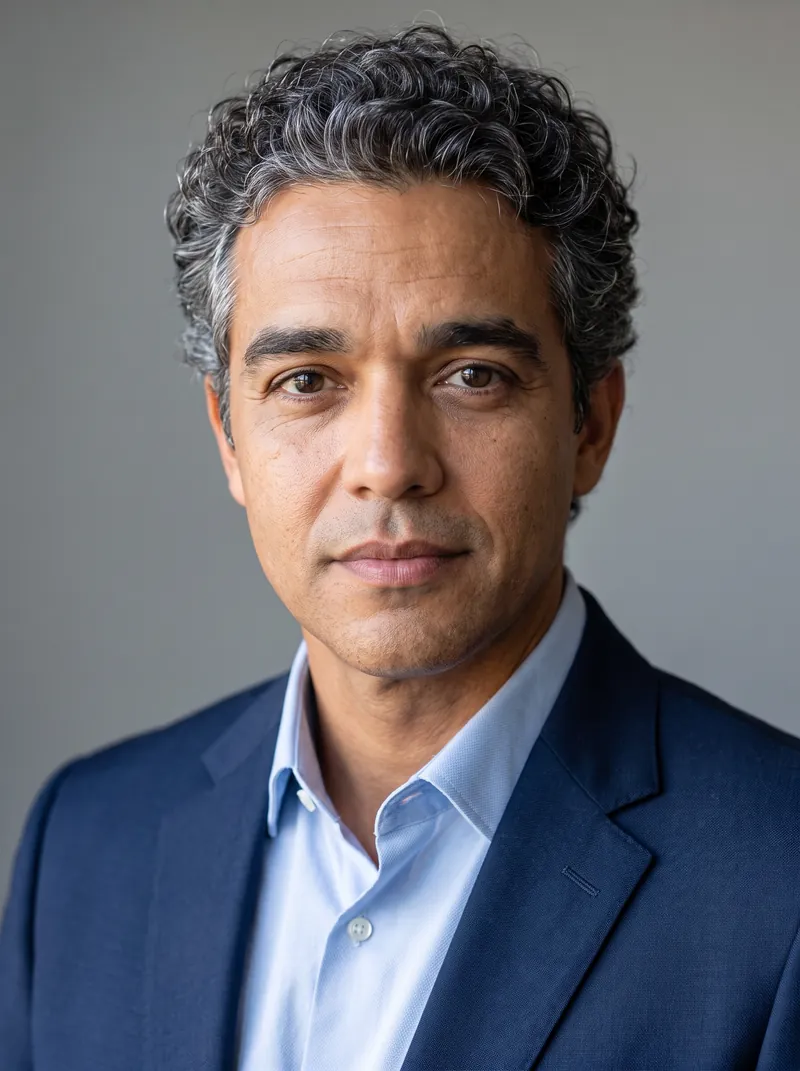
Aaron Powell has officially stepped down as global chief executive of Pizza Hut, effective September 1, finalizing a leadership transition that coincides with Yum Brands' $2.7 billion divestiture of the 68-year-old restaurant chain. The resignation closes out Powell's three-year tenure at the helm of the pizza giant, marking a definitive break as the company shifts from a publicly traded conglomerate asset to a privately held enterprise.
The departure was formalized in a regulatory filing by Yum Brands, which confirmed that Powell relinquished his role and all other positions within the parent company upon the transaction's close. The move signals a clean slate for the incoming ownership group as they prepare to restructure the brand's global footprint.[1][4][5]
The executive turnover is the direct mechanical result of a dual-track sale process executed by Yum Brands to offload the legacy pizza business. The parent company, which continues to operate KFC and Taco Bell, split the divestiture into two distinct transactions. The global operations of Pizza Hut, encompassing the United States and most international markets outside of mainland China, were acquired by private equity firm LongRange Capital for $1.5 billion in cash.
Simultaneously, the mainland China business was sold to Yum China Holdings for $1.2 billion. Together, the deals generate $2.7 billion in aggregate value for Yum Brands, fundamentally reshaping its corporate portfolio and triggering the leadership change at the top of the Pizza Hut hierarchy.[1][3][4]
Powell's exit was a voluntary decision rather than a mandate from the new ownership. In a public statement preceding the formal transition, the outgoing chief executive disclosed that LongRange Capital had offered him a continuing role to lead the business through its next phase.
Powell declined the offer, stating that the closing of the acquisition presented the right natural moment to step away. He pointed to the stabilization of the brand during his tenure, noting that he leaves the franchise with positive transaction momentum in the domestic market and a stronger international growth trajectory than when he inherited the position in 2021.[2][5]
Prior to taking the top job at Pizza Hut, Powell built his executive resume over a 14-year career at Kimberly-Clark, eventually serving as the president of its Asia-Pacific consumer business, following earlier leadership stints at Procter & Gamble and Bain & Company. His mandate at Yum Brands was to modernize the pizza chain's digital infrastructure, streamline operations, and reverse a long-term trend of market share erosion.
While the brand made strides in digital ordering capabilities and international unit expansion under his watch, it continued to face intense structural headwinds in the quick-service restaurant sector. These challenges included aggressive discounting from delivery-optimized competitors, an aging domestic store base, and shifting consumer dietary preferences that persistently pressured traditional pizza sales volumes.[2]
With Powell's departure, the immediate operational focus shifts to the executive search and transition strategy initiated by LongRange Capital. The private equity firm must now install a new leadership team to guide Pizza Hut on an interim and long-term basis as it adjusts to its new corporate reality.
The incoming executive suite inherits a sprawling network of over 19,000 global locations that must be managed without the centralized corporate support and shared services previously provided by the Yum Brands ecosystem. This transition period will require the new leadership to rapidly establish standalone administrative functions while simultaneously executing the turnaround playbook demanded by their private equity backers.[1][3]
For Yum Brands, the completion of the sale and the associated executive departures represent a strategic victory in its effort to optimize its balance sheet. By shedding Pizza Hut, the conglomerate removes a persistently underperforming asset that frequently dragged down the blended same-store sales metrics of its broader portfolio.
The divestiture allows Yum to move forward as a more focused enterprise, concentrating its capital allocation, digital investments, and development resources entirely on the higher-margin, faster-growing KFC and Taco Bell properties. The $2.7 billion in aggregate proceeds also provides the parent company with significant liquidity to reinvest in its core operations or pursue targeted growth initiatives.[3][4]
The transition to private equity ownership fundamentally alters the financial and operational stakes for Pizza Hut's vast network of franchise operators. Operating as a standalone, privately held entity shields the brand from the relentless 90-day earnings cycle of Wall Street.
This structural shift provides LongRange Capital and the incoming executive team with the necessary runway to implement drastic turnaround measures—such as accelerating the closure of underperforming dine-in locations and aggressively renegotiating supply chain contracts—without having to manage the immediate optics for public shareholders. The strategy relies on absorbing short-term disruption to rebuild the unit economics of the remaining franchise base.[1][3]
As the ink dries on the $1.5 billion LongRange Capital transaction, the broader restaurant industry is closely monitoring the viability of the private equity rescue model for legacy fast-food brands. The success of Pizza Hut's next chapter will depend heavily on whether the new, leaner corporate structure can move nimbly enough to recapture market share from dominant delivery players.
Key points
- Aaron Powell has officially resigned as global CEO of Pizza Hut, effective September 1, 2026.
- The resignation coincides with Yum Brands completing the $2.7 billion divestiture of the pizza chain.
- Private equity firm LongRange Capital acquired the global business outside of China for $1.5 billion.
- Powell declined an offer to remain with the company under its new private equity ownership.
How we got here
August 2021
Aaron Powell is appointed as global CEO of Pizza Hut, joining from Kimberly-Clark.
June 2026
Yum Brands announces its intention to divest the Pizza Hut brand to focus on its core portfolio.
August 2026
Yum Brands completes the $1.2 billion sale of the mainland China business to Yum China Holdings.
August 2026
Powell announces his intention to step down via LinkedIn, declining a continuing role with the new ownership.
September 1, 2026
The $1.5 billion sale to LongRange Capital closes, and Powell officially resigns from his post.
- Corporate Parent
- Focuses on streamlining the portfolio and reallocating capital to high-growth brands.
- Private Equity Acquirers
- Focuses on the opportunity to restructure and revitalize a legacy brand outside of public markets.
- Outgoing Executive Leadership
- Emphasizes the stabilization of the business and the natural transition point created by the sale.
Perspectives this story doesn't cover
- Franchisee Operators
- Frontline Restaurant Workers
Sources
Source coverage
5 outlets
3 viewpoints surfaced





- [1]BusinessToday MalaysiaPrivate Equity Acquirers
Pizza Hut CEO Resigns After US$2.7 Billion Sale
Read on BusinessToday Malaysia → - [2]BestMediaInfo.comOutgoing Executive Leadership
Aaron Powell steps down as Pizza Hut CEO
Read on BestMediaInfo.com → - [3]BigGo FinanceCorporate Parent
Yum Brands Completes $1.5 Billion Pizza Hut Sale to LongRange Capital
Read on BigGo Finance → - [4]Stock TitanCorporate Parent
Yum Brands nets $2.7B in Pizza Hut divestitures
Read on Stock Titan → - [5]TradingViewOutgoing Executive Leadership
Aaron Powell resigns as Pizza Hut CEO at Yum Brands
Read on TradingView →

More in Careers & Work
See all →Organizational Psychology
The 0.71 Correlation: How Idealized Influence and Inspirational Motivation Drive Leader Effectiveness
5 sources

Personnel Records
New York Mandates Employee Access to Personnel Files and 10-Day Notice for Negative Entries
6 sources

Leadership Dynamics
The 0.34 Correlation: How Leader-Member Exchange (LMX) Quality Drives Citizenship Behavior and Reduces Turnover
6 sources

Post-Incarceration Hiring
Former Alameda CEO Caroline Ellison Hired by Philanthropic Nonprofit Manifund Following Prison Release
8 sources

Comments
Every angle. Every day.
Get Careers & Work stories with full source coverage and perspective breakdowns, free every day.