
North America Readies for Historic 2026 World Cup Kickoff as Record Volunteers Converge
With three days until the opening match at Mexico City's Estadio Azteca, the expanded 48-team World Cup is set to break records for volunteer participation and cross-border cultural celebrations.
By Factlen Editorial Team
- Tournament Organizers
- Focusing on the unprecedented logistical scale and cross-border cooperation required to host the event.
- Local Host Communities
- Emphasizing civic pride, cultural exchange, and the massive grassroots volunteer turnout.
- Football Traditionalists
- Celebrating the historic legacy of iconic venues and the romance of the sport returning to North America.
What's not represented
- · Traveling International Fans
- · Local Business Owners
Why this matters
The 2026 World Cup represents the largest coordinated peacetime event in North American history. Beyond the pitch, the unprecedented cross-border cooperation and massive civic engagement highlight a unifying cultural moment for the continent.
Key points
- The 2026 World Cup kicks off on June 11 at Mexico City's Estadio Azteca.
- Estadio Azteca will become the first stadium in history to host three World Cup opening matches.
- FIFA selected 65,000 volunteers from a record-breaking pool of over one million applicants.
- Synchronized 'Countdown Concerts' will take place in Mexico City, Toronto, and Los Angeles on June 10.
- The expanded 48-team tournament will feature 104 matches across 16 North American cities.
The wait is nearly over for the billions of fans who follow the beautiful game. In just three days, the largest and most ambitious sporting event in human history will officially kick off as the 2026 FIFA World Cup opens in Mexico City. After years of meticulous planning, infrastructure upgrades, and cross-border negotiations, the spotlight finally shifts from the boardroom to the pitch. The atmosphere across North America is reaching a fever pitch as national teams arrive at their base camps and vibrant waves of international supporters begin flooding into the host cities, transforming the continent into a massive, interconnected festival of global culture.[1]
Spanning three massive nations—the United States, Canada, and Mexico—the expanded 48-team tournament is entirely unprecedented in its logistical and cultural scale. Over the course of 39 action-packed days, a staggering 104 matches will be played across 16 distinct host cities, drawing millions of international fans to North America. This marks a significant departure from previous iterations of the tournament, requiring a level of coordination between border agencies, transportation networks, and local municipalities that has never been attempted for a peacetime event. Organizers have spent the better part of a decade ensuring that the infrastructure can handle the immense influx of global travelers.[5]
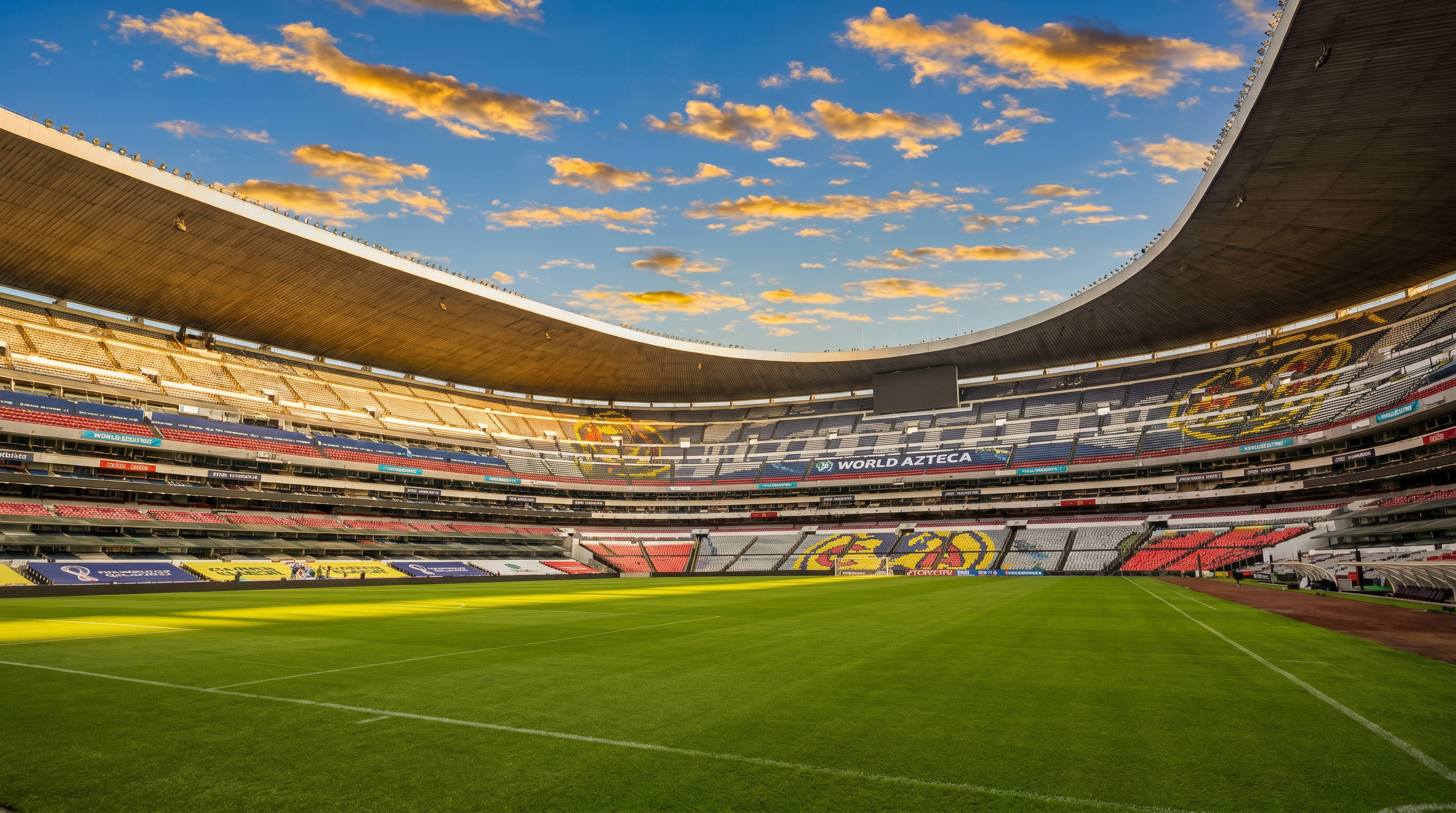
The opening match on Thursday, June 11, will see host nation Mexico take the pitch at the iconic Estadio Azteca, a venue that is deeply steeped in football lore and revered by fans around the world. The atmosphere inside the stadium is expected to be nothing short of electric, with over 80,000 passionate supporters roaring for El Tri as they begin their quest for glory on home soil. For the millions of Mexicans watching across the country, the opening whistle will represent a moment of immense national pride and a celebration of their enduring love for the sport.[2][3]
By hosting the inaugural match of the 2026 tournament, Estadio Azteca will make history as the first stadium to ever host three World Cup opening matches, having previously done so in 1970 and 1986. It was on this very pitch that a triumphant Pelé lifted the Jules Rimet trophy with Brazil's unforgettable 1970 squad, and where Diego Maradona scored both his infamous "Hand of God" and his legendary "Goal of the Century" against England in 1986. For football traditionalists, returning to this hallowed ground bridges the modern, hyper-commercialized era of the sport with its deeply romanticized twentieth-century history.[3]

To prepare for this modern milestone and ensure the venue meets contemporary international standards, the 83,000-seat coliseum underwent significant and highly publicized renovations over the past year. Upgrades to the historic structure include the installation of a state-of-the-art hybrid grass pitch designed to withstand the rigors of tournament play, modernized locker rooms relocated to the center of the stadium for better pitch access, and vastly expanded hospitality zones. The renovations were carefully managed to preserve the stadium's intimidating acoustic environment and historic facade while providing the premium amenities expected at a modern mega-event.[2]
But the excitement surrounding the tournament's kickoff isn't limited to the action on the pitch. Across the continent, host cities are launching synchronized "Countdown Concerts" designed to unite fans through music, art, and culture before a single ball is even kicked. These massive public celebrations are intended to set a festive, inclusive tone for the tournament, blending the universal languages of music and football to welcome the millions of visitors arriving from every corner of the globe, ensuring that even those without match tickets can participate in the historic moment.[1]
Mexico City's flagship "México Vibra" event, held at the renowned Auditorio Nacional, will feature top Latin artists including Los Ángeles Azules, Belinda, and Elena Rose. In a first-of-its-kind technological feat, the concert will connect via live broadcast with simultaneous celebrations happening in Toronto and Los Angeles. Organizers designed this tri-city synchronized concert to reflect the cultural richness, hospitality, and shared enthusiasm of the three host nations, effectively shrinking the vast geography of North America into a single, unified celebration of the beautiful game.[1]
In a first-of-its-kind technological feat, the concert will connect via live broadcast with simultaneous celebrations happening in Toronto and Los Angeles.
This cross-border harmony and ambitious scale is perfectly mirrored by the massive logistical effort powering the tournament behind the scenes, most notably its record-breaking volunteer program. Recognizing that a tournament of this magnitude would require an army of dedicated individuals to run smoothly, FIFA launched the largest volunteer recruitment drive in the history of international sports. The response from the public was nothing short of staggering, highlighting the deep civic pride and enthusiasm present in the host communities.[5][6]
FIFA initially sought 65,000 volunteers to run the sprawling 104-match tournament—a figure that is more than triple the number of volunteers utilized during the World Cup in Qatar four years ago. The call to action shattered all previous records for a sporting event, with over one million initial applications pouring in from eager fans around the globe. The sheer volume of interest forced organizers to implement a rigorous selection and tryout process, ensuring that the final cohort of volunteers was fully prepared for the demanding weeks ahead.[4][5]

The global FIFA Volunteer Community has now swelled to an astonishing two million registered members, with North Americans enthusiastically leading the charge. According to official figures, United States citizens account for over 400,000 members of the community, while Mexico follows closely in second place with over 210,000 registered volunteers. This massive mobilization of everyday citizens underscores the unique ability of the World Cup to inspire grassroots participation and foster a sense of shared purpose among diverse populations.[7]
Canada has also seen a massive and unprecedented surge in civic engagement ahead of the tournament. Toronto and Vancouver ranked among the very top host cities for volunteer applications, with over 180,000 people applying to work the Canadian leg of the competition. Local organizers noted that the overwhelming response is a testament to Canada's long-standing tradition of embracing international events and its vibrant, multicultural society, which is eager to welcome the world to its doorstep.[6]
These 65,000 selected volunteers will serve as the essential "heartbeat" of the competition over the next six weeks. Stationed across 23 distinct functional areas, they will be the first faces that international fans see when they arrive. Their duties will range from greeting weary travelers at airports and assisting teams at official training sites, to providing crucial translation services, managing media centers, and offering logistical support at the stadiums on match days.[5][6]

As millions of fans descend on the continent, the collaborative spirit between the United States, Canada, and Mexico is setting a new, highly ambitious standard for how international mega-events are hosted. The seamless integration of security protocols, transportation networks, and fan experiences across three sovereign borders is a testament to years of diplomatic and operational cooperation. For the organizers, the success of this tri-country model could pave the way for future multi-nation bids in global sports.[1][5]
From the historic, echoing concrete bowls of Estadio Azteca to the modern, sprawling fan festivals taking shape from Vancouver to Miami, the stage is meticulously set for a tournament unlike any other. The host cities have transformed their downtown cores into vibrant hubs of international culture, complete with massive viewing screens, interactive exhibits, and endless culinary offerings designed to cater to the diverse palates of the global fanbase.[2][6]
When the referee's whistle finally blows on Thursday afternoon in Mexico City, it will mark much more than just the start of a football tournament. It will represent the culmination of a decade of planning, the realization of a massive logistical triumph, and the beginning of a continent-wide celebration of global unity. For the next 39 days, North America will be the undisputed center of the sporting universe, united by a shared passion for the beautiful game.[1][3]
How we got here
June 2018
The 'United 2026' joint bid from the US, Canada, and Mexico wins the hosting rights over Morocco.
May 2025
Mexico City's Estadio Azteca closes to the public to undergo massive modernization renovations.
August 2025
FIFA launches the largest volunteer recruitment drive in sporting history, seeking 65,000 helpers.
October 2025
Organizers announce that over one million volunteer applications have been received globally.
June 10, 2026
Synchronized Countdown Concerts take place in Mexico City, Toronto, and Los Angeles.
June 11, 2026
The opening match of the expanded 48-team tournament kicks off at Estadio Azteca.
Viewpoints in depth
Tournament Organizers
Focusing on the unprecedented logistical scale and cross-border cooperation.
For FIFA and local organizing committees, the 2026 tournament represents a massive leap in operational complexity. Expanding from 32 to 48 teams means coordinating 104 matches across three massive nations, requiring seamless integration of security, transportation, and hospitality. Organizers view the record-breaking volunteer turnout and synchronized cultural events as proof that the tri-country hosting model can successfully unite diverse populations under a single operational umbrella.
Local Host Communities
Emphasizing civic pride, cultural exchange, and grassroots participation.
Host cities from Vancouver to Mexico City are treating the tournament as a generational opportunity to showcase their local cultures on the global stage. The overwhelming response to the volunteer program—particularly in Canada and Mexico—reflects a deep desire among residents to serve as cultural ambassadors. For these communities, the World Cup is less about the matches themselves and more about the festive atmosphere, economic influx, and the chance to welcome the world to their backyards.
Football Traditionalists
Celebrating the historic legacy of iconic venues and the romance of the sport.
While much of the 2026 tournament focuses on modern NFL-style stadiums in the United States, traditionalists are captivated by the return to Estadio Azteca. The venue is considered hallowed ground in world football, having hosted legendary performances by Pelé and Diego Maradona. For purists, Azteca becoming the first stadium to host three opening matches bridges the modern, hyper-commercialized era of the sport with its deeply romanticized twentieth-century history.
What we don't know
- How the newly installed hybrid pitch at Estadio Azteca will hold up to the rigors of tournament play.
- Whether the massive logistical coordination between the US, Canada, and Mexico border agencies will result in smooth travel for the millions of international fans.
Key terms
- Estadio Azteca
- An iconic football stadium in Mexico City, renowned for hosting the 1970 and 1986 World Cup finals.
- Hybrid Pitch
- A playing surface that combines natural grass with synthetic reinforcing fibers to increase durability.
- FIFA Fan Festival
- Official public viewing events in host cities featuring live match broadcasts, music, and cultural entertainment.
Frequently asked
When and where is the first match of the 2026 World Cup?
The opening match will take place on June 11, 2026, at Estadio Azteca in Mexico City.
How many teams are participating in this tournament?
The 2026 World Cup is the first to feature an expanded format with 48 national teams, up from the traditional 32.
Are the World Cup volunteers paid for their work?
No, the 65,000 volunteer roles are unpaid, though local transportation costs within the host city may be covered.
How many matches will be played in total?
There will be 104 matches played across 16 host cities in the US, Canada, and Mexico over 39 days.
Sources
Source coverage
7 outlets
3 viewpoints surfaced






[1]Inside FIFATournament Organizers
Mexico City line-up announced as FIFA World Cup 2026™ Countdown Concert series builds across Canada, Mexico and United States
Read on Inside FIFA →[2]AP NewsFootball Traditionalists
Azteca Stadium to feature hybrid field, modern amenities for 2026 World Cup
Read on AP News →[3]beIN SPORTSFootball Traditionalists
Estadio Azteca and the historic record of three World Cup opening matches
Read on beIN SPORTS →[4]Inside World FootballLocal Host Communities
FIFA wants volunteer numbers TRIPLED at World Cup 2026
Read on Inside World Football →[5]Sports Business JournalTournament Organizers
FIFA seeking record 65,000 volunteers for 2026 World Cup
Read on Sports Business Journal →[6]CBC SportsLocal Host Communities
Canada leading the way when it comes to applications to volunteer at 2026 World Cup
Read on CBC Sports →Gianni Infantino thanks world's “most diverse community” as FIFA Volunteer Community reaches two million members
Read on FIFA Official →

More in sports
See all 13 stories →Olympic Sustainability
How the LA 2028 Olympics Will Run Entirely on Existing Stadiums
0 sources
NBA Finals
New York Knicks Win 2026 NBA Finals, Ending 53-Year Championship Drought
0 sources

NBA Finals
New York Knicks Capture First NBA Championship Since 1973
0 sources

Hockey Strategy
How the PWHL's 'Jailbreak' and 'No Escape' Rules Are Rewriting Hockey Strategy
0 sources

Every angle. Every day.
Get sports stories with full source coverage and perspective breakdowns delivered to your inbox.