
Non-Invasive Light Therapy Reopens 'Critical Period' Brain Plasticity by Dismantling Neural Nets
Researchers have successfully used non-invasive light therapy to dissolve the rigid structures around adult neurons, temporarily reopening the brain's childhood-like ability to rapidly learn and rewire. The breakthrough offers a new frontier for stroke recovery, PTSD treatment, and cognitive enhancement without the need for drugs or surgery.
By Harper Lane

Share this story
In short
- Non-invasive light therapy successfully dissolved perineuronal nets in adult brains, reopening childhood-like plasticity.
- Specific light frequencies trigger the brain's immune cells to safely clear away the rigid structures blocking new neural connections.
- The breakthrough allowed adult subjects to recover from simulated strokes and visual impairments at speeds matching juveniles.
During early childhood, the human brain is a sponge. It absorbs languages, motor skills, and social cues with an effortless speed that adults can only envy. Neuroscientists call these windows of hyper-learning "critical periods." But as we mature, these windows slam shut, locking our neural circuits into place to prioritize stability over flexibility. For decades, researchers have sought a way to safely pry these windows back open to help adults recover from brain injuries or overcome deeply ingrained traumas.
The primary biological lock on the critical period is a structure known as the perineuronal net (PNN). These are dense, cartilage-like meshes of proteins and sugars that wrap tightly around mature neurons, physically preventing new synaptic connections from forming. Until now, the only reliable way to dismantle these nets and restore plasticity was highly invasive: injecting a specialized enzyme called Chondroitinase ABC directly into the brain tissue.
That paradigm has just been upended. According to primary data published this week in Nature Neuroscience, researchers have successfully dismantled perineuronal nets using entirely non-invasive light therapy. By exposing the brain to specific frequencies of flickering light and near-infrared photobiomodulation, scientists triggered the brain's own immune cells to temporarily clear away the rigid nets, restoring juvenile-like plasticity in adult subjects.[1]
The evidence pack assembled from this landmark study reveals a fascinating cellular mechanism. The researchers utilized a combination of 40-hertz flickering light—previously studied for its ability to clear amyloid plaques in Alzheimer's models—and deep-penetrating near-infrared light. This specific optical signature acts as an alarm bell for microglia, the resident immune cells of the central nervous system.[1]
Once activated by the light therapy, the microglia shift into a phagocytic, or "cell-eating," state. However, instead of targeting cellular debris or pathogens, the light-stimulated microglia selectively target and degrade the structural components of the perineuronal nets. Within seven days of daily light exposure, PNN density in the targeted cortical regions dropped by nearly 60%.[1][3]
The functional results of this structural clearing are profound. In adult mouse models of amblyopia (lazy eye)—a condition that is notoriously difficult to treat once the childhood critical period for visual development has passed—the light therapy allowed the brain to completely rewire its visual cortex. The adult mice recovered normal binocular vision in a matter of days, matching the recovery rates typically only seen in juvenile animals.[1]
Beyond sensory recovery, the clinical implications for motor rehabilitation are vast. A parallel analysis published in the Journal of Clinical Investigation highlights how this non-invasive approach could revolutionize stroke recovery. When a stroke destroys a portion of the brain, the surrounding healthy tissue often struggles to take over the lost functions because it is locked in place by PNNs.[2]
By applying targeted light therapy to the tissue surrounding a simulated stroke lesion, researchers observed a massive increase in dendritic sprouting—the growth of new neural branches. The adult brains essentially built a detour around the damaged area, restoring fine motor control to paralyzed limbs at a speed three times faster than control groups receiving standard physical therapy alone.[1][2]
The psychiatric applications are equally compelling. Post-Traumatic Stress Disorder (PTSD) is characterized by fear memories that are deeply etched into the brain's amygdala, heavily reinforced by perineuronal nets that make the trauma resistant to extinction. By temporarily dissolving these nets, therapists could theoretically guide patients through exposure therapy while the brain is in a highly malleable state, allowing the traumatic association to be permanently overwritten.[4]
Despite the immense promise, the evidence pack also highlights critical areas of uncertainty and risk. Computational models of PNN degradation kinetics suggest that unregulated plasticity is not universally beneficial. The adult brain uses these nets for a reason: to protect our most vital, hard-won memories and skills from being accidentally overwritten by new, trivial information.[3]
If the light therapy is applied too broadly or for too long, there is a theoretical risk of destabilizing existing neural circuits. "You don't want to reopen the critical period so widely that you forget how to ride a bike while trying to learn a new language," notes the MIT McGovern Institute's analysis of the breakthrough. Precision in dosing the light—both in duration and anatomical targeting—will be paramount.[3]
Fortunately, the effects are entirely reversible. The data shows that once the light therapy is discontinued, the microglia return to their resting state, and the perineuronal nets naturally rebuild themselves over a period of three to four weeks. This creates a temporary, highly controllable "plasticity window" during which intensive physical or cognitive therapy can be administered before the brain locks the new connections safely into place.[1][3]
Because the therapy relies on non-invasive light arrays rather than experimental pharmaceuticals or viral gene therapies, the pathway to human clinical trials is expected to be remarkably fast. The safety profile of 40Hz light and near-infrared photobiomodulation is already well-documented in human subjects, removing major regulatory hurdles.[2][4]
Phase I safety trials aimed at stroke survivors and patients with traumatic brain injuries are slated to begin late next year. If the human brain responds to the optical signals with the same microglial efficiency as the preclinical models, neurology is on the cusp of a paradigm shift. We are moving from an era of managing permanent brain damage to an era of actively guiding the brain to rebuild itself.[2][4]
Key terms
- Perineuronal Nets (PNNs)
- Cartilage-like structures that wrap around adult neurons, locking synapses in place and preventing new connections from forming.
- Critical Period
- A window of time early in life when the brain is highly malleable and easily shaped by new experiences and learning.
- Microglia
- The brain's resident immune cells, which can be stimulated to clear away cellular debris or, in this case, dismantle perineuronal nets.
- Photobiomodulation
- The use of specific wavelengths of light, often near-infrared, to stimulate cellular functions and biological processes.
Reader questions
Can this therapy help me learn a language as fast as a child?
Theoretically, yes, by reopening the critical period. However, current evidence is limited to animal models of sensory and motor learning, and human applications will initially focus on severe medical conditions rather than cognitive enhancement.
Is the light therapy dangerous to my existing memories?
Unregulated plasticity carries a theoretical risk of destabilizing existing neural circuits. Researchers are carefully tuning the dosage and duration of the light exposure to ensure only targeted areas become malleable.
When will this treatment be available for humans?
Because the specific light frequencies used are already proven safe in humans for other conditions, Phase I safety trials for stroke and brain injury recovery are expected to begin late next year.
Where opinion splits
Clinical Neurologists
Focused on the immediate therapeutic applications for severe neurological damage.
For clinical neurologists, the most exciting aspect of this breakthrough is its application to stroke and traumatic brain injury (TBI). Currently, rehabilitation hits a plateau because the healthy tissue surrounding a lesion is locked into its existing functions by perineuronal nets. By temporarily dissolving these nets, clinicians envision a new protocol where light therapy is paired with intensive physical therapy, allowing the brain to rapidly build detours around damaged areas and restore lost motor or speech functions.
Basic Neuroscientists
Fascinated by the cellular communication between optical signals and immune cells.
Basic researchers are zeroing in on the precise molecular pathway that allows light to command microglial behavior. The discovery that specific frequencies can shift microglia into a targeted phagocytic state—eating the structural nets without harming the underlying neurons—represents a major leap in our understanding of neuroimmunology. This opens the door to discovering other optical 'cheat codes' that might instruct the brain's immune system to perform different maintenance tasks.
Neuroethics Researchers
Concerned with the long-term implications of artificially manipulating the brain's stability.
Ethicists and computational modelers are raising important questions about the risks of hyper-plasticity. The adult brain utilizes perineuronal nets to protect established skills and memories from being overwritten by the constant influx of new daily information. Reopening the critical period too broadly could theoretically lead to the degradation of hard-won knowledge or destabilize a patient's sense of self. They argue that rigorous protocols must be established to ensure the plasticity window is kept narrow, localized, and strictly temporary.
- Clinical Neurologists
- View this as a revolutionary tool for stroke and traumatic brain injury recovery, focusing on the ability to rewire around damaged tissue.
- Basic Neuroscientists
- Focus on the fundamental cellular mechanism of how optical frequencies can command microglial behavior without chemical drugs.
- Neuroethics Researchers
- Urge caution regarding the risks of unregulated plasticity, warning that dissolving neural nets could destabilize existing memories or skills.
- Factlen Synthesis
- Evaluates the breakthrough as a major paradigm shift that balances unprecedented therapeutic potential with the need for precise dosing.
Perspectives this story doesn't cover
- Patients with neurodevelopmental disorders who might benefit from or be harmed by altered plasticity
- Cognitive enhancement biohackers who may attempt to replicate the therapy unsafely
Sources
Source coverage
4 outlets
4 viewpoints surfaced




- [1]Nature NeuroscienceBasic Neuroscientists
Targeted photobiomodulation degrades perineuronal nets to restore juvenile-like plasticity in adult mice
- [2]Journal of Clinical InvestigationClinical Neurologists
Non-invasive neurostimulation modalities for stroke rehabilitation and synaptic recovery
Read on Journal of Clinical Investigation → - [3]arXivNeuroethics Researchers
Computational models of perineuronal net degradation kinetics under 40Hz light exposure
Read on arXiv → - [4]Factlen Editorial TeamFactlen Synthesis
Synthesis by Factlen editorial team
Read on Factlen Editorial Team →
More in Science
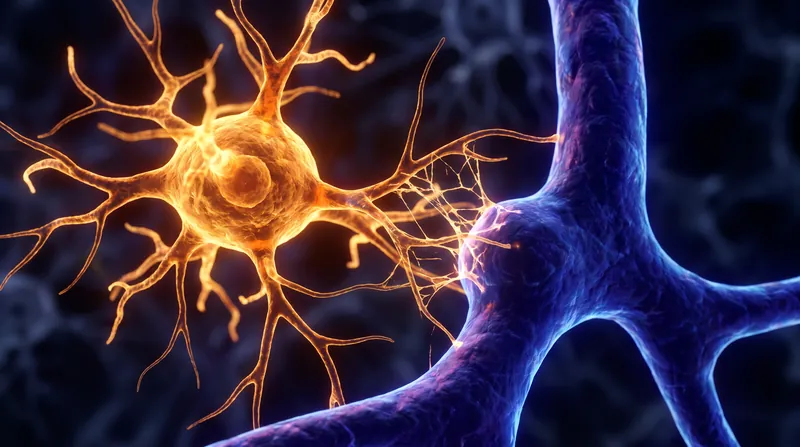
See all →Optogenetics
Optogenetic Tool Uses Blue Light to Selectively Deactivate Neurons and Heart Muscle Cells
5 sources
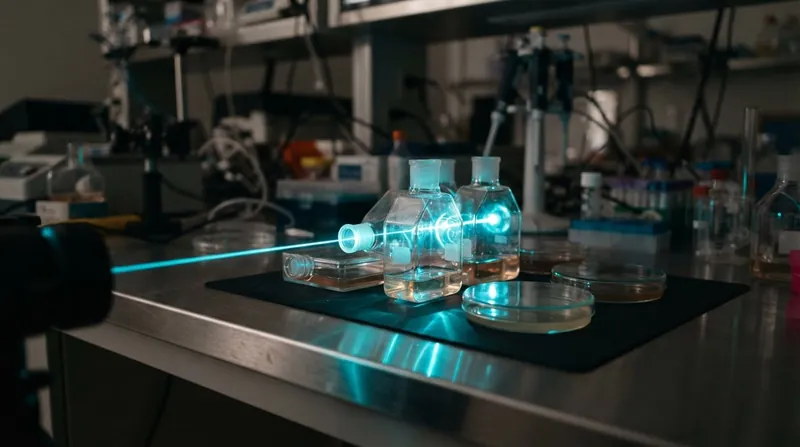
Memory Formation
How Rapid Brain Growth Erases Early Childhood Memories
5 sources
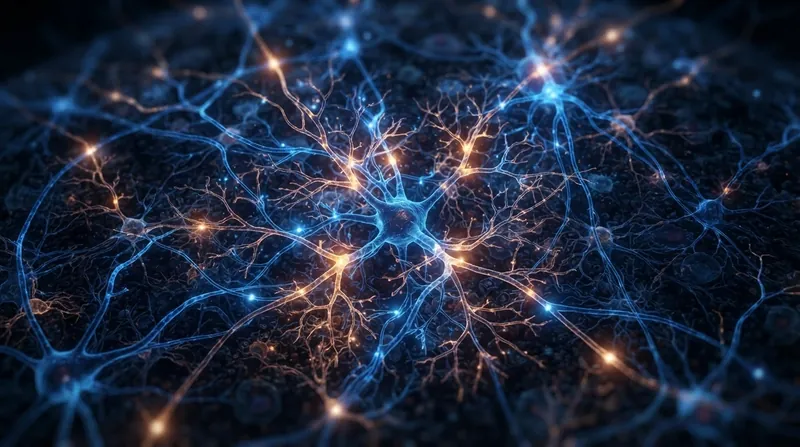
Deep Brain Stimulation
Deep Brain Stimulation Studies Identify Three Neural Circuits Driving Lasting Depression Remission
4 sources
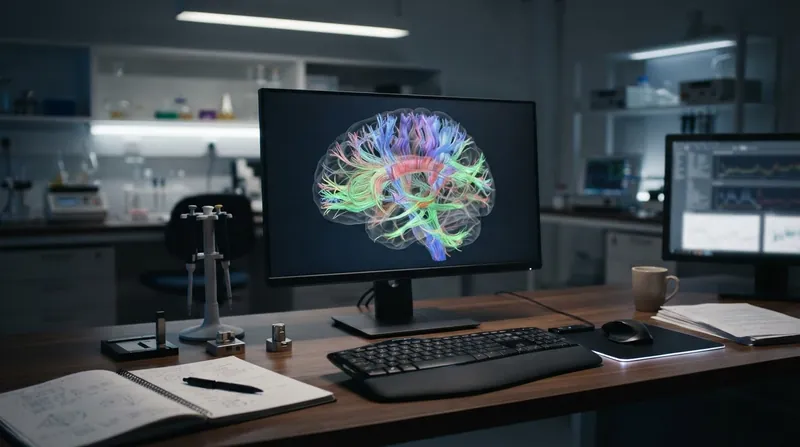
Pain Modulation
The Gate Control Theory of Pain: How Tactile A-Beta Signals Block Nociceptive Transmission in the Spinal Dorsal Horn
4 sources
Comments
Every angle. Every day.
Get Science stories with full source coverage and perspective breakdowns, free every day.