
NHTSA Orders Tesla to Detail Cybercab Safety Certification and Temporary Manual Controls
Federal regulators have ordered Tesla to answer detailed questions under oath regarding the safety compliance of its upcoming Cybercab, specifically targeting the use of temporary manual controls.
By Derya Kaplan

How this story has developed
This report is part of a developing story — read the earlier chapters below.
- NHTSA Audits Tesla Cybercab's Radical Design: No Steering Wheel, Pedals, or Hydraulic Brake Lines
- NHTSA Orders Tesla to Detail Cybercab Safety Certification and Temporary Manual Controls (this article)
- Regulatory Compliance
- Focuses on ensuring new vehicle designs meet established federal safety standards before public deployment.
- Industry Innovation
- Emphasizes the need to update legacy regulations to accommodate autonomous technology and mass production.
Perspectives this story doesn't cover
- Municipal transit authorities
- Consumer safety advocacy groups
Tesla has aggressively positioned its upcoming Cybercab as a vehicle ready to redefine local transit, claiming the steering-wheel-less robotaxi is on the verge of commercial deployment. But that timeline now faces a hard federal checkpoint. The National Highway Traffic Safety Administration (NHTSA) has ordered the automaker to answer detailed questions under oath about how exactly it plans to certify a vehicle that lacks traditional manual controls.[1][2]
The agency's special order, issued this week, demands that Tesla explain its compliance with Federal Motor Vehicle Safety Standards (FMVSS). Specifically, regulators are scrutinizing Tesla's proposed use of temporary manual controls—joysticks or plug-in steering devices used to maneuver the vehicles around lots or during emergencies—and whether those temporary systems meet federal safety definitions.[1][4][5]
For the average commuter waiting to hail a driverless pod, this regulatory friction dictates when the technology will actually arrive on local streets. Automakers are currently limited to producing just 2,500 exempted vehicles per year that do not comply with traditional FMVSS rules. If Tesla intends to mass-produce the Cybercab for widespread public transit, it must either secure a massive legislative expansion of that cap or prove to NHTSA that its unconventional design somehow satisfies existing standards.[3][5]
The current inquiry forces the company to put its engineering rationale on the official record. The order requires Tesla to provide extensive documentation, including internal communications and engineering assessments, detailing how the Cybercab will handle fundamental safety tasks without a human driver present to intervene. NHTSA has given the company a strict deadline to respond, with the threat of substantial daily fines for non-compliance.[1][2][3][4]
The current inquiry forces the company to put its engineering rationale on the official record.
Because the full text of NHTSA's special order has not been publicly released in its entirety, direct quotations from the agency's specific engineering demands remain unavailable in current reporting. However, the scope of the inquiry makes it clear that federal regulators are not willing to take the automaker's safety claims at face value.[1][2]
This regulatory hurdle represents a critical test case for the entire autonomous vehicle industry. How NHTSA handles Tesla's temporary manual controls will likely set the precedent for competing robotaxi services aiming to remove physical steering wheels from their own future models.[4][5]
The agency's final determination will dictate whether the Cybercab remains a limited-run prototype or becomes a viable option for everyday urban transit. Until Tesla provides satisfactory answers under oath, the timeline for a fully autonomous, steering-wheel-less fleet remains firmly in the hands of federal regulators.[1][5]
The outcome of this inquiry will also signal to municipal transit authorities how soon they might need to integrate these vehicles into their broader transportation planning. A swift resolution could accelerate deployment, while a prolonged regulatory battle could push the reality of widespread robotaxis further into the decade.[5]
The stakes
For consumers anticipating a driverless ride-hailing network in their city, this federal intervention clarifies the timeline. The deployment of steering-wheel-less robotaxis depends not just on software capability, but on navigating a strict federal safety framework designed for human drivers.
The essentials
- NHTSA has ordered Tesla to answer questions under oath regarding the Cybercab's safety certification.
- Regulators are specifically scrutinizing Tesla's proposed use of temporary manual controls for the steering-wheel-less vehicle.
- Current federal law limits automakers to producing 2,500 non-compliant autonomous vehicles annually.
- Tesla must prove its design meets Federal Motor Vehicle Safety Standards to achieve mass production.
Perspectives explored
Federal Regulators
NHTSA prioritizes strict adherence to existing safety standards before allowing novel vehicle designs on public roads.
The National Highway Traffic Safety Administration operates under a mandate to ensure all vehicles sold in the United States meet established Federal Motor Vehicle Safety Standards. For regulators, the absence of a steering wheel and pedals is not just a design choice, but a fundamental challenge to decades of safety regulations. Their demand for sworn answers reflects a cautious approach, ensuring that temporary manual controls do not create new hazards during maintenance or emergency interventions.
Autonomous Vehicle Developers
Companies like Tesla argue that outdated regulations are slowing the deployment of life-saving autonomous technology.
For Tesla and other robotaxi developers, the requirement to comply with standards written for human drivers is viewed as a regulatory bottleneck. They argue that autonomous systems, which do not rely on human reaction times or physical controls, should be evaluated on their overall safety record rather than their adherence to legacy hardware requirements. The push to mass-produce the Cybercab hinges on convincing regulators that software and temporary controls offer equivalent or superior safety.
Open questions
- It remains unclear how Tesla plans to legally bypass the 2,500-vehicle annual cap for non-compliant autonomous vehicles.
- NHTSA has not indicated whether it will accept temporary manual controls as a substitute for permanent steering wheels.
- The exact timeline for the Cybercab's commercial deployment is unknown pending the resolution of this regulatory inquiry.
Sources
Source coverage
5 outlets
2 viewpoints surfaced





- [1]ElectrekRegulatory Compliance
NHTSA orders Tesla to prove its Cybercab is legal to sell, under oath
Read on Electrek → - [2]tippinsightsRegulatory Compliance
NHTSA Orders Tesla To Answer Questions Over Cybercab Safety
Read on tippinsights → - [3]Seeking AlphaRegulatory Compliance
NHTSA compels Tesla to answer questions about Cybercab
Read on Seeking Alpha → - [4]Venture AtlasRegulatory Compliance
NHTSA orders Tesla to answer Cybercab certification questions
Read on Venture Atlas → - [5]The Road to AutonomyIndustry Innovation
Will NHTSA Ground Cybercab? - The Road to Autonomy
Read on The Road to Autonomy →
Comments
More in Automotive & Transportation
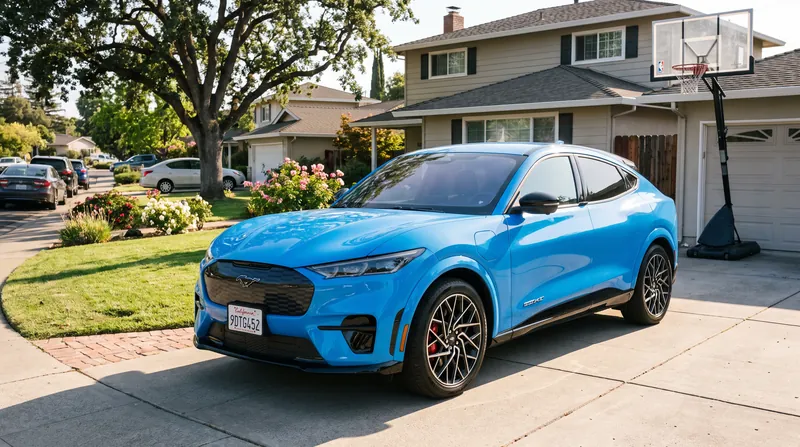
See all →EV Safety Recalls
Ford Recalls 86 Mustang Mach-E EVs Over Battery Software Fire Risk
6 sources
Auto Industry
Volkswagen Takes €6 Billion Writedown on Porsche Stake Amid Sales and Margin Declines
4 sources
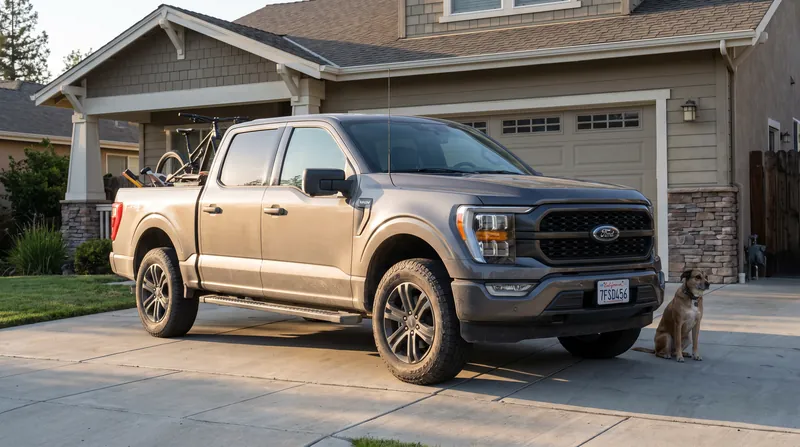
F-150 Recall
Ford Begins Mailing Recall Letters to 223,000 F-150 Owners Over Fuel Tank Detachment Risk
5 sources
Vehicle Depreciation
The Economics of Ultra-Luxury Car Depreciation: Why $250,000 Vehicles Lose Half Their Value in Three Years
7 sources
Every angle. Every day.
Get Automotive & Transportation stories with full source coverage and perspective breakdowns delivered to your inbox.