
Next-Generation Nuclear: How Small Modular Reactors Could Power the AI Revolution
As artificial intelligence drives an unprecedented surge in data center energy demand, tech giants are investing billions in Small Modular Reactors (SMRs) to secure 24/7, carbon-free power.

In short
- AI data centers are driving a massive surge in electricity demand, straining the grid.
- Tech giants are investing billions in Small Modular Reactors (SMRs) for 24/7, carbon-free power.
- SMRs are prefabricated in factories and shipped as modules, theoretically lowering construction costs.
The artificial intelligence revolution has a voracious appetite for electricity. As tech giants race to build increasingly sophisticated large language models, the infrastructure required to train and run them is straining the global power grid.
A standard data center might consume 32 megawatts of power, but modern AI-focused campuses are demanding 80 to 100 megawatts—and some planned hyperscale facilities are projected to require over 500 megawatts. In the United States alone, energy demand from data centers is expected to more than double, surging from 17 gigawatts in 2022 to 35 gigawatts by 2030.
This unprecedented spike in energy consumption presents a critical dilemma for an industry that has publicly committed to aggressive decarbonization goals. Wind and solar power are clean, but their intermittent nature—generating electricity only when the wind blows or the sun shines—cannot support the 24/7, mission-critical operations of an AI data center. Furthermore, connecting massive new facilities to the traditional power grid can involve interconnection queues that stretch up to a decade.
To solve this bottleneck, the world's largest technology companies are turning to an unlikely savior: a new generation of nuclear technology known as Small Modular Reactors, or SMRs. Over the past year, companies including Google, Amazon, Microsoft, and Meta have committed more than $10 billion to nuclear partnerships, aiming to bring the first commercial SMR-powered data centers online by the early 2030s.
Small Modular Reactors represent a fundamental reimagining of how nuclear power is designed, built, and deployed. Traditional nuclear power plants are massive, bespoke infrastructure projects that generate upwards of 1,000 megawatts of electricity. They are custom-built on-site over the course of five to ten years, a process historically plagued by severe delays and multi-billion-dollar cost overruns.
SMRs, by contrast, are defined by their modest electrical output—typically producing up to 300 megawatts per unit. But the true innovation lies in the word "modular." Rather than constructing the reactor from scratch in the field, SMR components are manufactured in controlled factory environments. These standardized modules are then shipped by truck, train, or barge to the installation site, where they are assembled.[2]
This factory-fabrication approach is intended to bring the economies of scale and serial production to the nuclear industry. By standardizing the design and minimizing on-site construction, developers hope to reduce the build time to just 24 to 36 months. If a customer requires more power, they can simply add additional modules to the site, scaling their energy generation incrementally to match demand.[3]
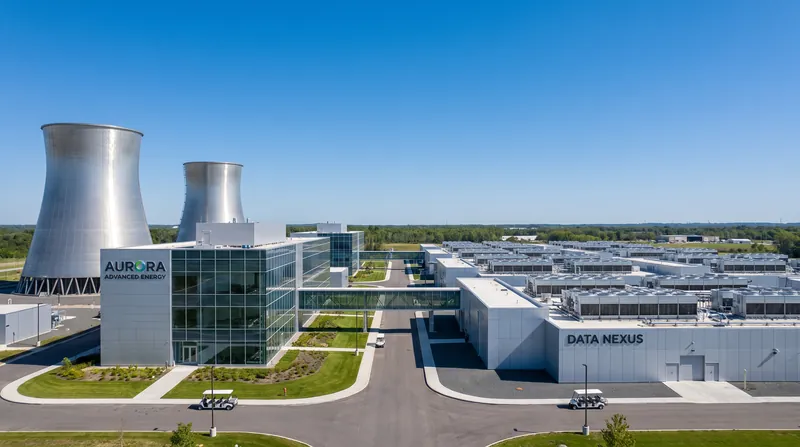
The physical footprint of an SMR is also a fraction of a conventional plant. While a traditional nuclear facility might require hundreds of acres and a massive nearby body of water for cooling, an SMR can be sited on as little as 50 acres. This compact size allows them to be deployed in locations previously unsuitable for nuclear power, such as retiring coal plants, remote industrial clusters, or directly adjacent to massive data center campuses.[2]
By placing an SMR "behind the meter"—meaning the power flows directly to the data center without passing through the public utility grid—tech companies can secure a dedicated, uninterrupted supply of carbon-free electricity. This bypasses the grid interconnection delays entirely, insulating the operators from volatile energy markets and ensuring the continuous baseload power required for high-performance computing.[3]
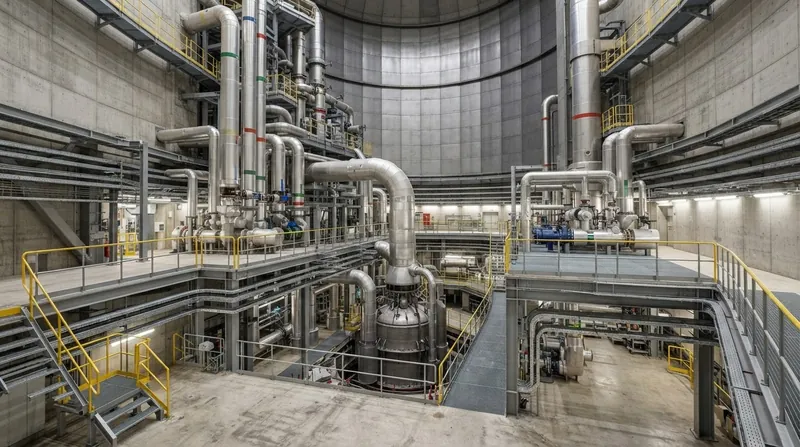
Beyond economics and logistics, SMRs incorporate advanced safety features that represent a generational leap over older light-water reactors. Many proposed designs rely on passive safety systems and inherent physical characteristics to prevent accidents. Instead of requiring external power and active human intervention to pump cooling water during an emergency, these reactors utilize natural circulation, gravity, and convection to cool themselves down safely.[2][3]
Several developers are pioneering advanced coolants to achieve this. While some SMRs are scaled-down versions of traditional water-cooled reactors, others use liquid metals, such as sodium or lead, or molten salts. For example, TerraPower, a nuclear innovation company co-founded by Bill Gates, utilizes liquid sodium in its Natrium reactor. Sodium can absorb massive amounts of heat without boiling, allowing the reactor to operate at lower, safer pressures than water-cooled systems.[5]
The race to commercialize this technology is already well underway, with several key milestones achieved in recent years. TerraPower currently holds one of the most advanced regulatory positions in the United States. In 2024, the company broke ground on a demonstration plant in Kemmerer, Wyoming, located on the site of a retiring coal-fired power plant. The U.S. Nuclear Regulatory Commission completed its final safety evaluation of the Natrium design in late 2025, paving the way for the plant to potentially open by 2030.
Other major players are also advancing rapidly. Oklo, another prominent startup, is developing its Aurora powerhouse line of microreactors, which are designed to produce between 15 and 50 megawatts using molten sodium coolant. Meanwhile, established aerospace and engineering firms are entering the fray; Rolls-Royce has established a dedicated SMR business aiming to deploy factory-built 470-megawatt power stations across Europe to support both grid electricity and the production of green hydrogen.[4][5]
Despite the immense capital influx and technological promise, the path to widespread SMR deployment is fraught with significant hurdles. The most pressing concern is economic viability. While the theoretical cost savings of factory production are compelling, early projects have struggled to deliver on those promises. The industry faced a stark reality check in late 2023 when NuScale Power, the first company to receive design certification from the U.S. Nuclear Regulatory Commission, abruptly canceled its flagship Carbon Free Power Project in Utah.
The NuScale project, originally envisioned to generate 600 megawatts for an estimated $3 billion, saw its projected costs balloon to $9.3 billion before it was ultimately terminated. This high-profile failure highlighted the inherent risks of pioneering first-of-a-kind nuclear technology and provided ammunition for critics who argue that SMRs remain too expensive and slow to deploy compared to rapidly falling prices for renewable energy and battery storage.[5]
Supply chain vulnerabilities also pose a critical bottleneck. Many advanced SMR designs, including TerraPower's Natrium reactor, require a specialized fuel known as High-Assay Low-Enriched Uranium (HALEU). Historically, the primary commercial supplier of HALEU was Russia. Following geopolitical shifts and the invasion of Ukraine, Western developers have been forced to scramble to establish domestic enrichment capabilities, a delay that has already pushed back several project timelines.
Regulatory frameworks, too, are playing catch-up. Nuclear regulatory bodies worldwide were built to oversee massive, bespoke light-water reactors. Adapting these rigorous safety standards to evaluate factory-built modules, novel coolants, and passive safety systems requires a paradigm shift in oversight. While agencies are working to streamline the process, the sheer volume of new designs seeking approval threatens to create a regulatory logjam.[2]
Even with these challenges, the momentum behind Small Modular Reactors appears to be accelerating, driven by the inescapable math of the AI boom. The technology sits at the intersection of two defining global imperatives: the race for artificial intelligence supremacy and the urgent need to decarbonize the global economy.
Even with these challenges, the momentum behind Small Modular Reactors appears to be accelerating, driven by the inescapable math of the AI boom.
If developers can successfully navigate the "valley of death" between prototype and commercial serial production, SMRs could fundamentally reshape the energy landscape. They offer a tantalizing vision of the future: compact, safe, and reliable nuclear batteries that can replace retiring coal plants, decarbonize heavy industry, and provide the immense, uninterrupted power required to fuel the next generation of human innovation.[1]
Definitions
- Small Modular Reactor (SMR)
- A class of nuclear fission reactors smaller than conventional reactors, designed to be built in factories and transported as modules for on-site assembly.
- Baseload Power
- The minimum amount of electric power needed to be supplied to the electrical grid at any given time, requiring energy sources that can run continuously 24/7.
- High-Assay Low-Enriched Uranium (HALEU)
- A specialized nuclear fuel enriched to between 5% and 20% uranium-235, required by many advanced SMR designs to operate efficiently.
- Passive Safety Systems
- Safety mechanisms in a reactor that rely on natural physical laws, such as gravity or natural circulation, rather than active mechanical components or human intervention.
- Behind the Meter
- An energy generation system that provides power directly to a facility (like a data center) without the electricity passing through the public utility grid.
Questions & answers
What is a Small Modular Reactor (SMR)?
An SMR is an advanced nuclear reactor with a power capacity of up to 300 megawatts. They are designed to be manufactured in factories as standardized modules and shipped to installation sites, reducing construction time and costs.
Why do AI data centers need nuclear power?
AI data centers require massive amounts of continuous, 24/7 electricity. Nuclear power provides this reliable "baseload" energy without the carbon emissions of fossil fuels or the intermittency of wind and solar.
Are SMRs safer than traditional nuclear plants?
Many SMR designs incorporate "passive safety" features. Instead of relying on external power to pump cooling water during an emergency, they use natural forces like gravity and convection to cool down automatically.
When will the first SMRs be operational?
Several developers, including TerraPower, are aiming to have their first commercial demonstration plants operational by 2030, though regulatory and supply chain hurdles could affect these timelines.
What happened to the NuScale project?
NuScale, the first company to receive U.S. regulatory certification for an SMR design, canceled its flagship project in Utah in 2023 after projected costs ballooned from $3 billion to $9.3 billion.
Analysis by camp
Tech & AI Industry
Tech giants view SMRs as the only viable path to secure 24/7, carbon-free baseload power for massive data centers.
For hyperscalers like Google, Amazon, and Microsoft, the energy math of the AI revolution is unforgiving. Wind and solar cannot guarantee the uninterrupted uptime required for mission-critical computing, and waiting up to a decade for grid interconnection is incompatible with the rapid pace of AI development. By deploying SMRs "behind the meter," these companies believe they can secure dedicated, carbon-free power, insulate themselves from volatile energy markets, and meet their aggressive corporate sustainability goals.
Nuclear Innovators
Developers argue that factory-built modularity will finally solve the cost-overrun and safety issues that plagued traditional nuclear.
The nuclear engineering community sees SMRs as a necessary paradigm shift. By moving construction from muddy, unpredictable field sites into controlled factory environments, developers believe they can achieve the economies of serial production that have eluded the industry for decades. Furthermore, they emphasize that advanced coolants and passive safety systems make these new reactors fundamentally safer than their predecessors, eliminating the risk of catastrophic meltdowns even in total power-loss scenarios.
Economic Skeptics
Critics point to recent cancellations as evidence that SMRs may still be too expensive and slow to deploy.
Energy economists and renewable advocates warn that the nuclear industry has a long history of overpromising and underdelivering. They point to the 2023 cancellation of NuScale's flagship project—where costs tripled from initial estimates—as proof that the theoretical savings of modular construction have yet to materialize in the real world. Skeptics argue that by the time SMRs are commercially viable in the 2030s, advancements in battery storage and geothermal energy may have already provided cheaper, faster solutions for baseload power.
- Tech & AI Industry
- Views SMRs as the only viable path to secure 24/7, carbon-free baseload power for massive data centers without waiting a decade for grid interconnection.
- Nuclear Innovators
- Argues that factory-built modularity and passive safety features will finally solve the cost-overrun and safety issues that plagued traditional nuclear.
- Economic Skeptics
- Points to recent cancellations and rising cost estimates as evidence that SMRs may still be too expensive and slow to deploy compared to renewables.
- Regulatory & Policy Bodies
- Focuses on adapting rigorous safety standards to evaluate factory-built modules and novel coolants while supporting decarbonization.
Perspectives this story doesn't cover
- Local communities hosting retiring coal plants
- Renewable energy advocates favoring battery storage
Sources
Source coverage
6 outlets
4 viewpoints surfaced






- [1]European CommissionRegulatory & Policy Bodies
Small modular reactors explained
Read on European Commission → - [2]International Atomic Energy AgencyNuclear Innovators
What are Small Modular Reactors (SMRs)?
Read on International Atomic Energy Agency → - [3]WikipediaRegulatory & Policy Bodies
Small modular reactor
Read on Wikipedia → - [4]Rolls-RoyceNuclear Innovators
Small Modular Reactors: Clean affordable energy for all
Read on Rolls-Royce → - [5]ForbesTech & AI Industry
Desalination: The Critical Global Technology That Needs Nuclear Power
Read on Forbes → - [6]Factlen Editorial Team
Synthesis by Factlen editorial team
Read on Factlen Editorial Team →
More in Energy
See all →Nuclear Physics
Why Commercial Nuclear Reactors Cannot Explode Like Atomic Bombs
3 sources
Nuclear Safety
The 0-to-7 Scale That Classifies the Severity of Nuclear Accidents and Incidents
6 sources
Waste Classification
The Low-Level, Intermediate-Level, and High-Level Categories That Define Nuclear Waste Disposal and Isolation
7 sources
Nuclear Policy
Taiwan Clears First Regulatory Hurdle to Restart Maanshan Nuclear Plant Amid Chipmaker Demand
3 sources

Comments
Every angle. Every day.
Get Energy stories with full source coverage and perspective breakdowns, free every day.