
New Construction vs. Existing Homes: The 2026 Trade-Off Analysis
For the first time in decades, the traditional price premium for newly built homes has vanished, forcing buyers to weigh predictable maintenance against established neighborhoods. This side-by-side analysis breaks down the real costs, timelines, and lifestyle trade-offs of both paths.
By Factlen Editorial Team
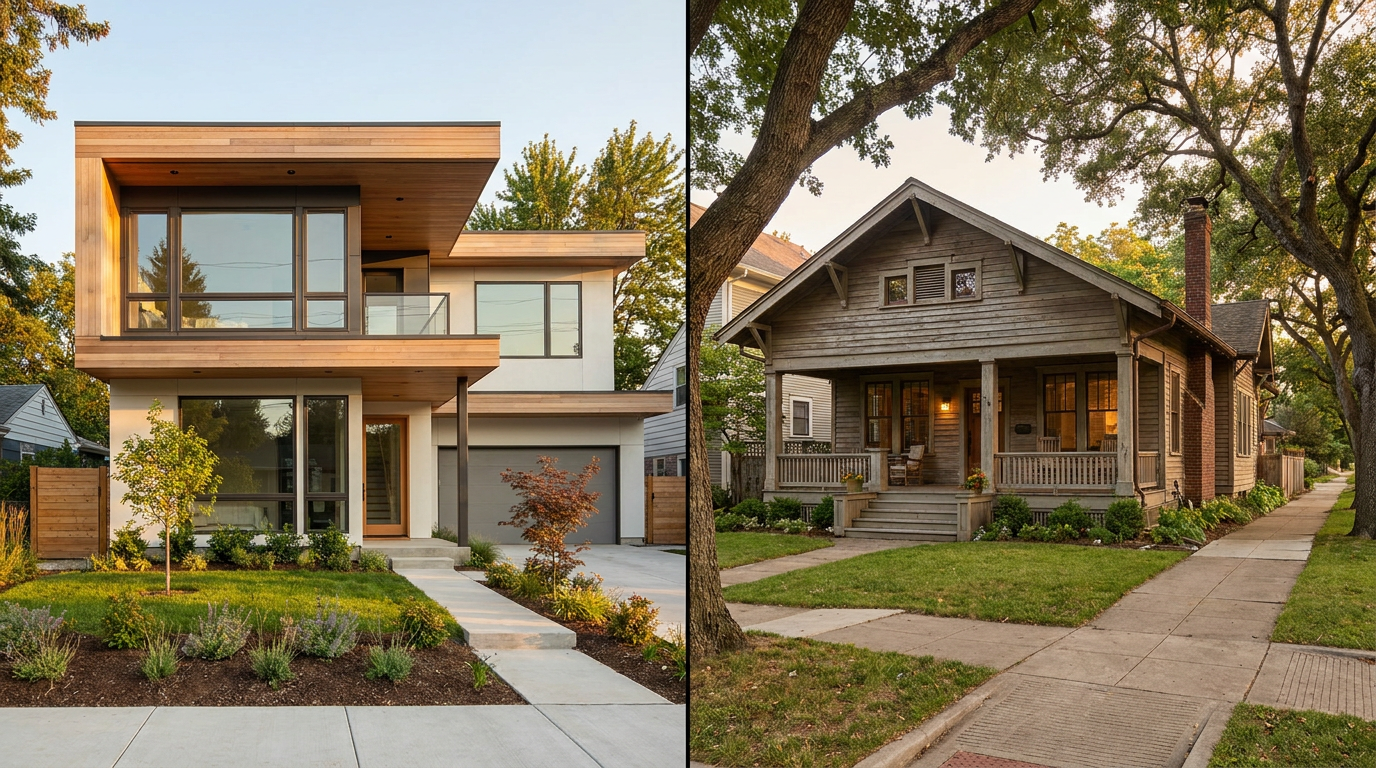
- New Construction Advocates
- Value predictable maintenance, energy efficiency, modern layouts, and builder incentives like rate buydowns.
- Existing Home Proponents
- Prioritize established neighborhoods, mature landscaping, shorter commutes, and immediate move-in readiness.
- Market Economists
- Focus on the macroeconomic drivers, noting that the historic price inversion is driven by tight resale inventory and builder adaptations.
What's not represented
- · Renters priced out of both markets
- · Local municipal planners managing suburban sprawl
Why this matters
Housing is the largest financial commitment most people make. With existing home prices historically exceeding new builds in 2026, buyers have a rare opportunity to choose modern efficiency without the usual markup—provided they understand the hidden costs of construction delays and fringe locations.
Key points
- The historic price premium for new construction has vanished in 2026, with existing homes now costing slightly more on average.
- New builds offer predictable maintenance, 1-2-10 warranties, and utility bills that are 30% to 50% lower than older homes.
- Existing homes provide established neighborhoods, mature landscaping, shorter commutes, and immediate move-in readiness.
- The lock-in effect of sub-4% pandemic mortgages continues to restrict the supply of existing homes, keeping their prices elevated.
- Buyers must weigh the financial predictability of a new build against the location advantages and architectural character of an older property.
The conventional wisdom of real estate has always dictated that brand-new homes carry a hefty premium. For decades, buyers expected to pay 10% to 20% more for the privilege of being the first to live in a property. But in 2026, the housing market has delivered a historic anomaly: the new-construction premium has effectively vanished, fundamentally changing the math for prospective buyers.[1][2]
Data from the first quarter of 2026 reveals a stunning inversion. The median price for a new single-family home sat at $403,200, slightly below the $404,600 median price of an existing home. This marks the fourth consecutive quarter where resale homes have outpriced new builds on a national level, a dynamic that has only occurred a handful of times in modern history.[3][8]
Economists point to two colliding forces driving this flip. On the resale side, the lock-in effect remains powerful; homeowners holding mortgages with sub-4% interest rates from the pandemic era are hesitant to sell, severely restricting the supply of existing homes and keeping prices elevated. Meanwhile, builders have adapted to affordability challenges by constructing slightly smaller footprints, building in lower-cost areas, and aggressively offering incentives to move inventory.[2][3]

With purchase prices now roughly at parity, the decision between new construction and an existing home is no longer a simple question of upfront budget. Instead, it requires a rigorous side-by-side trade-off analysis of total ownership costs, timelines, and lifestyle preferences. Buyers must weigh the predictable maintenance of a new build against the established character of an older neighborhood.[4][5]
The case for new construction centers heavily on financial predictability and modern efficiency. When buyers purchase a new build, they are acquiring a property with zero deferred maintenance. Everything from the roof to the HVAC system is brand new, shielding the owner from the sudden, catastrophic repair bills that frequently plague older homes in their first few years of occupancy.[6][7]
The evidence for this predictability is codified in the standard 1-2-10 builder warranty. This structure typically covers workmanship for one year, mechanical systems like plumbing and electrical for two years, and major structural defects for a decade. Combined with modern building codes, high-efficiency insulation, and advanced HVAC systems, new homes routinely generate utility bills that are 30% to 50% lower than comparable homes built before 2010.[4][6]

Against new construction, however, are the realities of location and timeline. Because land near city centers is largely developed, new communities are frequently built on the fringes of metropolitan areas, translating to longer commutes and a lack of walkable amenities. Furthermore, buyers purchasing in the early phases of a development must tolerate living in an active construction zone, dealing with noise, dust, and heavy machinery for years until the neighborhood is complete.[5][7]
Against new construction, however, are the realities of location and timeline.
The evidence also points to significant timeline risks for new builds. While purchasing an existing home usually involves a 30-to-45-day closing period, building a home from the ground up can take anywhere from six to eighteen months. Supply chain hiccups, weather delays, and labor shortages can push move-in dates back repeatedly, creating logistical nightmares for buyers trying to time the end of a lease or the sale of their previous home.[4][7]
The case for existing homes rests on context, character, and immediate gratification. Resale homes offer something that no builder can manufacture overnight: an established environment. Buyers can walk the sidewalks, observe the traffic patterns, and see exactly what the neighborhood feels like on a Tuesday afternoon. The trees are mature, the landscaping is finished, and the community dynamics are already in place.[5][7]

The evidence supporting existing homes also highlights location advantages. Older homes are typically situated closer to urban cores, established school districts, and major employment hubs. For buyers who prioritize a short commute or want to live in a specific, highly rated school catchment area, the existing housing stock is often the only viable option. Furthermore, older homes frequently feature unique architectural details, larger lots, and solid-wood construction that are prohibitively expensive to replicate today.[4][5]
Against existing homes is the ever-present trap of deferred maintenance and bidding wars. Because inventory remains historically tight, buyers of existing homes often find themselves competing in multi-offer scenarios, sometimes waiving inspection contingencies to win the deal. This exposes them to significant financial risk. An aging roof, an outdated electrical panel, or a failing water heater can easily add tens of thousands of dollars to the true cost of the home within the first five years.[6][8]
Financing also presents a distinct trade-off. Existing homes require a straightforward, single mortgage secured by the property. New construction, if custom-built, may require a complex construction-to-permanent loan with variable interest rates during the building phase. However, production builders in 2026 are countering this by offering massive financing incentives, including permanent mortgage rate buydowns that can lower a buyer's interest rate by a full percentage point, saving hundreds of dollars a month.[6][8]

Ultimately, new construction fits well when buyers prioritize predictable monthly costs over immediate location. It is the ideal path for those who want modern, open floor plans, value high energy efficiency, and have the flexibility to wait out construction delays. It is especially advantageous for buyers who want to avoid the weekend projects and sudden repair bills associated with older properties.[4][6]
Conversely, new construction does not fit when buyers are on a strict timeline, require a specific established school district, or desire the architectural charm and mature canopy of a historic neighborhood. If a buyer cannot tolerate the uncertainty of moving dates or the sterile feeling of a brand-new subdivision, the new-build route will likely lead to frustration.[5][7]
Existing homes fit well when location is the absolute highest priority. They are perfect for buyers who want immediate integration into a functioning community, prefer shorter commutes, and have the cash reserves necessary to handle occasional maintenance surprises. In the 2026 market, choosing between the two is no longer about which is inherently cheaper, but which set of trade-offs best aligns with a buyer's life.[4][5]
How we got here
Late 2022
The price premium for new construction peaks, with new homes costing roughly $64,000 more than existing homes.
Mid 2023
Builders begin aggressively shrinking floor plans and offering mortgage rate buydowns to combat rising interest rates.
Early 2024
For the first time in recent history, the median price of an existing home surpasses the median price of a new build.
Q1 2026
The price inversion stabilizes, with existing homes maintaining a slight edge over new construction prices nationally.
Viewpoints in depth
New Construction Advocates
Value predictable maintenance, energy efficiency, modern layouts, and builder incentives.
This camp, heavily populated by builders and buyers burned by past renovation nightmares, argues that the true cost of a home extends far beyond the purchase price. They emphasize that modern energy codes and high-efficiency HVAC systems can slash utility bills by up to 50%. Furthermore, the peace of mind provided by a 1-2-10 builder warranty means buyers aren't hit with a $15,000 roof replacement in their first year of ownership. For these advocates, the wait time and fringe locations are small prices to pay for financial predictability.
Existing Home Proponents
Prioritize established neighborhoods, mature landscaping, shorter commutes, and immediate move-in readiness.
Real estate traditionalists and urbanists champion the existing housing stock for its irreplaceable context. They argue that new developments, often built on clear-cut land miles from city centers, force buyers into car-dependent lifestyles with grueling commutes. This camp values the architectural diversity, mature tree canopies, and established school districts that only time can create. They also point out that buying an existing home locks in a fixed price and a 30-day move-in timeline, avoiding the stress of construction delays and builder cost overruns.
Market Economists
Focus on the macroeconomic drivers behind the historic price inversion.
Analysts tracking the broader housing market view the current dynamic as a fascinating anomaly driven by supply constraints. They note that the lock-in effect—where homeowners refuse to abandon their 3% pandemic-era mortgages—has artificially choked the supply of resale homes, keeping prices high. Simultaneously, builders have aggressively adapted to high interest rates by offering mortgage buydowns and shrinking floor plans to move inventory. Economists warn that once interest rates drop significantly, a flood of existing inventory could restore the traditional new-home premium.
What we don't know
- How quickly the price gap will widen again once interest rates drop and existing homeowners finally decide to sell.
- Whether the long-term appreciation of homes in newly developed fringe suburbs will match the historical appreciation of established urban neighborhoods.
- The exact timeline for when pandemic-era supply chain and labor shortages in the construction industry will fully normalize.
Key terms
- Lock-in Effect
- A market dynamic where homeowners refuse to sell because they do not want to give up the historically low mortgage rates they secured in the past.
- 1-2-10 Warranty
- A standard builder warranty covering workmanship for one year, mechanical systems for two years, and structural defects for ten years.
- Rate Buydown
- A financing incentive where a builder or seller pays a lump sum upfront to lower the buyer's mortgage interest rate for a set period or permanently.
- Deferred Maintenance
- Necessary repairs or upgrades that previous owners postponed, which the new buyer will eventually have to pay for.
Frequently asked
Why are existing homes currently more expensive than new builds?
Homeowners with low pandemic-era mortgage rates are hesitant to sell, creating a severe shortage of existing homes. Meanwhile, builders are offering incentives and building smaller homes to keep prices competitive.
Do new construction homes save money on utilities?
Yes. Thanks to modern building codes, better insulation, and high-efficiency HVAC systems, new homes typically have utility bills 30% to 50% lower than older homes.
What are the hidden costs of buying new construction?
Hidden costs often include expensive design center upgrades, lot premiums, window coverings, and the cost of installing initial landscaping or fencing.
How long does it take to build a new home in 2026?
While production homes in established communities can be ready in a few months, building a custom home from the ground up typically takes between 6 and 18 months.
Is it harder to get a mortgage for a new build?
If you buy a finished production home, the mortgage process is similar to buying an existing home. However, custom builds require specialized construction-to-permanent loans.
Sources
Source coverage
8 outlets
3 viewpoints surfaced








[1]National Association of Home BuildersNew Construction Advocates
New and Existing Home Price Gap Shrinking
Read on National Association of Home Builders →[2]National Association of RealtorsMarket Economists
A Q&A with the chief economist at the National Association of Home Builders
Read on National Association of Realtors →[3]Eye on HousingMarket Economists
Existing Home Prices Exceed New Home Prices in Q1 2026
Read on Eye on Housing →[4]ZillowNew Construction Advocates
New Construction vs Existing Homes: The Pros and Cons of Both
Read on Zillow →[5]RedfinExisting Home Proponents
New Construction vs. Existing Home: Which Should You Buy?
Read on Redfin →[6]AmeriSaveMarket Economists
Buying a House in 2026: 7 Essential Cost Comparisons
Read on AmeriSave →[7]Homes.comExisting Home Proponents
Old house or new construction: What to consider
Read on Homes.com →[8]EmpowerMarket Economists
Buyers usually pay a big premium for brand new homes, but not these days
Read on Empower →
Every angle. Every day.
Get real estate stories with full source coverage and perspective breakdowns delivered to your inbox.