
NASA Pivots to Nuclear Propulsion with 2028 Mars Spacecraft Announcement
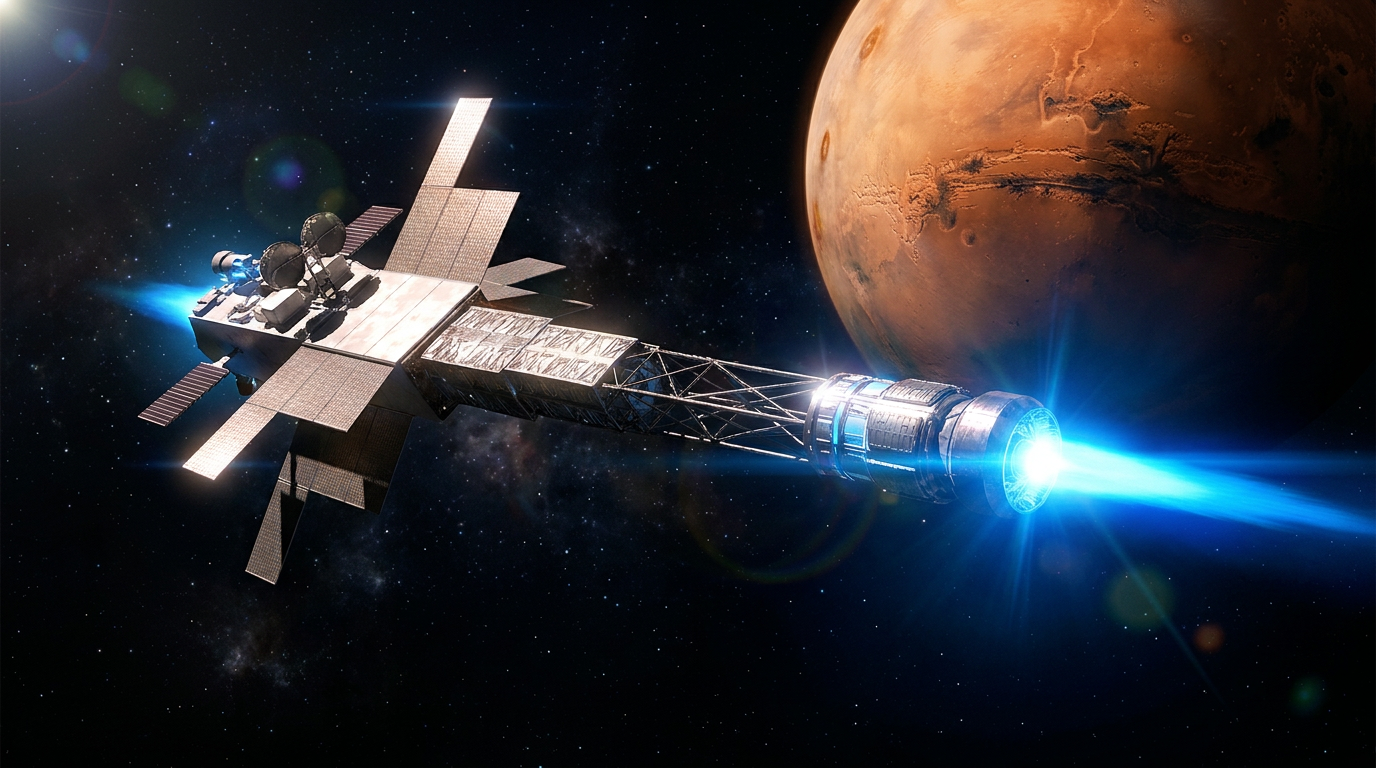
NASA's newly unveiled 'Ignition' initiative accelerates deep-space exploration by pausing the Lunar Gateway to fund Space Reactor-1 Freedom, the first nuclear-powered interplanetary spacecraft.
By Factlen Editorial Team
- Deep Space Advocates
- Enthusiastic about the scientific leaps enabled by nuclear propulsion and the Skyfall Mars helicopters.
- Commercial & Defense Sector
- Focused on activating the industrial base, cislunar logistics, and maintaining US space superiority.
- Budget & Policy Realists
- Concerned about the high costs, shifting programmatic priorities, and NASA's workforce attrition.
What's not represented
- · International space agencies (ESA, CNSA) reacting to the U.S. mandate for space nuclear superiority.
- · Environmental advocacy groups concerned about the precedent of launching fission reactors.
Why this matters
By breaking the speed and weight limits of traditional chemical rockets, nuclear electric propulsion paves the way for a permanent human presence on the Moon and faster, safer crewed missions to Mars. This shift transforms deep space from an expeditionary frontier into a sustainable logistics network.
Key points
- NASA's 'Ignition' initiative accelerates deep-space exploration by prioritizing permanent lunar surface infrastructure over the orbital Lunar Gateway.
- Space Reactor-1 Freedom will launch in 2028 as the first interplanetary spacecraft powered by a nuclear fission reactor.
- The spacecraft utilizes Nuclear Electric Propulsion (NEP) to power highly efficient ion thrusters for the journey to Mars.
- SR-1 Freedom will carry 'Skyfall,' a fleet of autonomous helicopters designed to map subsurface water ice on Mars.
- Data from the mission will inform the 2030 deployment of Lunar Reactor-1, which will power a permanent Moon base through the lunar night.
- The $20 billion initiative faces scrutiny over budget constraints and recent NASA workforce attrition.
For decades, the dream of using nuclear power to traverse the solar system has been trapped in a cycle of ambitious proposals and inevitable budget cuts. That paradigm shifted dramatically in March 2026, when NASA Administrator Jared Isaacman unveiled the 'Ignition' initiative—a sweeping realignment of the agency's deep-space strategy. The centerpiece of this pivot is Space Reactor-1 Freedom (SR-1 Freedom), a spacecraft slated to launch in December 2028 that will serve as the world's first nuclear-powered interplanetary vehicle. This announcement signals a new era of high-efficiency space logistics.[1][4]
The Ignition initiative marks a fundamental departure from the expeditionary model of the early Artemis missions. Instead of focusing solely on short-term lunar sorties, NASA is pivoting toward establishing a permanent, sustainable human presence on the Moon and building the high-efficiency logistics network required to reach Mars. To fund this rapid acceleration, the agency is pausing development of the orbital Lunar Gateway station, redirecting those critical resources toward heavy surface infrastructure and advanced propulsion technologies. This strategic reallocation aims to deliver tangible surface assets rather than orbital waystations.[3][5]
At the heart of this new logistics network is Nuclear Electric Propulsion (NEP). For over half a century, deep-space exploration has been bound by the limits of chemical rockets, which rely on the explosive combustion of liquid fuels. While chemical engines provide the massive bursts of thrust necessary to escape Earth's gravity, they burn through their propellant in a matter of minutes. NEP offers a radically different approach, trading the violent sprint of chemical rockets for a highly efficient, continuous marathon across the vacuum of space.[1][2]
It is crucial to distinguish NEP from the nuclear technology that has historically flown in space. Iconic probes like Voyager and the Perseverance rover rely on Radioisotope Thermoelectric Generators (RTGs), which passively harvest the heat of decaying plutonium to trickle-charge scientific instruments. RTGs do not provide propulsion. SR-1 Freedom, by contrast, will carry an active, closed-loop fission reactor fueled by High-Assay Low-Enriched Uranium (HALEU), operating much like a terrestrial nuclear power plant to generate massive amounts of usable energy. This represents a massive leap in onboard power generation.[1][7]

This reactor will generate more than 20 kilowatts of continuous electrical power. That electricity is then fed into a suite of advanced Hall-effect ion thrusters—specifically, units developed by Busek, Aerojet Rocketdyne, and NASA. Inside these thrusters, the electrical energy ionizes a noble gas propellant and accelerates it out the back of the spacecraft using magnetic fields. The resulting thrust is incredibly gentle—often compared to the weight of a piece of paper resting on a hand—but because it can fire continuously for months or years, the spacecraft can eventually reach blistering top speeds.[2][7]
'Nuclear-powered electric propulsion spacecraft will move cargo in space like railroads move freight on Earth, with incredibly high efficiency compared to chemical propulsion,' explained Steve Sinacore, NASA's program executive for fission surface power. This efficiency allows NEP vehicles to carry significantly heavier payloads across vast interplanetary distances, fundamentally altering the economics of deep-space logistics. By reducing the mass dedicated to fuel, engineers can pack more scientific instruments and life-support systems into every launch. This capability is essential for sustaining human outposts far from Earth.[2]
The development of SR-1 Freedom relies heavily on repurposing existing hardware. In a bid to save both time and money, NASA is utilizing the Power and Propulsion Element (PPE) originally constructed by Intuitive Machines for the now-paused Lunar Gateway. By mating this existing solar-electric chassis with a newly developed fission reactor, the agency hopes to bypass years of preliminary engineering and meet the aggressive 2028 launch window, transforming a stranded orbital asset into an interplanetary pathfinder. This pragmatic approach underscores the agency's new mission-first culture.[3][7]
The development of SR-1 Freedom relies heavily on repurposing existing hardware.
This NEP strategy represents a sharp pivot from NASA's recent propulsion efforts. Just a few years ago, NASA and the Defense Advanced Research Projects Agency (DARPA) were heavily invested in the DRACO program, which aimed to test Nuclear Thermal Propulsion (NTP)—a system that uses a reactor to directly heat and expand liquid hydrogen propellant. However, after proposed budget cuts zeroed out NTP development in 2025, the agency shifted its focus toward the NEP architecture of SR-1 Freedom, which leverages more mature ion-thruster technology and avoids the complexities of super-chilled hydrogen.[8]
SR-1 Freedom is not merely an empty testbed; it is carrying a highly anticipated scientific payload to Mars. Tucked aboard the spacecraft is 'Skyfall,' a fleet of autonomous, dual-rotor drones modeled after the wildly successful Ingenuity helicopter. When SR-1 Freedom reaches the Red Planet, it will deploy the Skyfall capsule into the Martian atmosphere, where the helicopters will deploy in mid-air and fly to their designated landing zones, marking the first time a swarm of aircraft will operate on another world.[1][4]

Once on the surface, the Skyfall drones will serve as advanced scouts for future human missions. Equipped with ground-penetrating radar, the helicopters will map subsurface water ice, identifying critical resources that astronauts could eventually harvest for drinking water and rocket fuel. This combination of a pathfinding propulsion system and a cutting-edge scientific payload makes the 2028 mission one of the most ambitious in NASA's history, bridging the gap between robotic exploration and human colonization. The data returned will be instrumental in selecting the first Martian basecamp.[1][2]
The technology demonstrated by SR-1 Freedom will have immediate applications closer to home. Data gathered during the Mars transit will directly inform the design of Lunar Reactor-1, a scaled-up fission system slated for deployment at the lunar south pole by 2030. Solar power is highly constrained in the deep craters of the lunar poles, and a permanent base must survive the grueling 354-hour lunar night. A continuous 20-kilowatt nuclear power supply is considered the only viable way to keep habitats warm and life-support systems running during these freezing, two-week periods of darkness.[2][5]
The Ignition initiative is also deeply intertwined with national security and geopolitical strategy. In late 2025, Executive Order 14369 established a formal U.S. policy to deploy nuclear reactors in orbit and on the Moon by the end of the decade, aimed at ensuring American space superiority. This was followed by the National Initiative for American Space Nuclear Power (NSTM-3) in April 2026, which directed federal agencies to catalyze the private sector's involvement in space nuclear deployment, framing the effort as a critical national imperative.[6]

By activating commercial partners like BWX Technologies, Lockheed Martin, and X-energy, the government hopes to de-risk the technology and build a robust industrial base. The goal is to transition from bespoke, government-built reactors to a commercial ecosystem where scalable fission systems can be purchased for a variety of orbital and surface applications. This public-private partnership model mirrors the successful commercial cargo and crew programs that revolutionized access to low Earth orbit over the past decade. Now, that model is expanding into deep space.[6][7]
Despite the soaring ambitions, the Ignition initiative faces formidable terrestrial hurdles. The $20 billion price tag for the broader lunar robotic push and the rapid development of SR-1 Freedom comes at a time of intense budgetary scrutiny. Following proposed cuts to NASA's science directorate in previous fiscal years, it remains unclear if Congress will fully fund the accelerated 2028 timeline, leaving the program vulnerable to the same political headwinds that grounded previous nuclear propulsion efforts. Advocates are lobbying hard to secure the necessary appropriations.[2]

Furthermore, NASA is grappling with significant workforce challenges. Recent reorganizations and attrition have left the agency with a depleted roster of experienced personnel, raising concerns among space policy experts about the agency's ability to execute such a complex, high-stakes mission on a compressed schedule. Internal surveys indicate that a substantial portion of the workforce feels strained by the new mandates, highlighting the tension between visionary leadership goals and the practical realities of aerospace engineering. Rebuilding this institutional expertise will be critical to the mission's success.[2]
Launching a nuclear reactor also requires navigating a labyrinth of regulatory and safety protocols. To mitigate the risk of a launch failure spreading radioactive material, SR-1 Freedom's reactor will launch completely inert. The fission process will not be initiated until the spacecraft has safely escaped Earth's orbit, ensuring that any anomaly on the launchpad would only involve cold, stable uranium. This safety-first architecture is designed to reassure both the public and international regulators about the viability of space nuclear power. Strict oversight will govern every phase of the launch.[1][7]
If successful, SR-1 Freedom will do more than just deliver helicopters to Mars. It will establish the flight heritage, regulatory precedents, and industrial supply chains necessary to scale nuclear power from tens of kilowatts to the megawatt-class systems required for crewed Martian expeditions. After decades of remaining firmly in the realm of science fiction, the atomic age of space exploration is finally preparing for liftoff, promising to unlock the outer solar system for the next generation of explorers. The countdown to a nuclear-powered future has officially begun.[1][4][5]
How we got here
Mid-2025
Proposed budget cuts halt development of the DRACO Nuclear Thermal Propulsion program.
Dec 2025
Executive Order 14369 mandates the deployment of U.S. nuclear reactors in space by the end of the decade.
March 2026
NASA announces the Ignition initiative, pausing the Lunar Gateway to fund SR-1 Freedom.
Dec 2028
Target launch window for the SR-1 Freedom spacecraft to Mars.
2030
Planned deployment of Lunar Reactor-1 to power a permanent base at the Moon's south pole.
Viewpoints in depth
Deep Space Advocates
Enthusiastic about the scientific leaps enabled by nuclear propulsion and the Skyfall Mars helicopters.
For planetary scientists and exploration advocates, the SR-1 Freedom mission represents the breaking of a decades-old bottleneck. Chemical rockets have severely limited the mass and speed of interplanetary missions, forcing engineers to miniaturize instruments and accept multi-year transit times. By proving that Nuclear Electric Propulsion (NEP) is viable, this camp believes NASA is unlocking the ability to send massive, power-hungry scientific payloads—like the Skyfall helicopter fleet—across the solar system. They view the reallocation of Gateway hardware not as a setback for lunar science, but as a necessary sacrifice to achieve true deep-space mobility.
Commercial & Defense Sector
Focused on activating the industrial base, cislunar logistics, and maintaining US space superiority.
Aerospace contractors and defense strategists view the Ignition initiative through the lens of infrastructure and geopolitics. Recent executive orders have mandated the deployment of U.S. nuclear systems in space to counter rival nations' cislunar ambitions. For this camp, SR-1 Freedom is less about Mars science and more about establishing a 'railroad' of high-efficiency cargo transport. By funding private companies to develop High-Assay Low-Enriched Uranium (HALEU) reactors and advanced ion thrusters, the government is de-risking the technology so that commercial entities can eventually sell scalable fission power for orbital stations, lunar mining camps, and military satellites.
Budget & Policy Realists
Concerned about the high costs, shifting programmatic priorities, and NASA's workforce attrition.
Policy analysts and budget watchdogs urge caution amid the soaring rhetoric of the Ignition announcement. They point to the abrupt cancellation of the DRACO Nuclear Thermal Propulsion program in 2025 as evidence of how quickly space nuclear initiatives can fall victim to budget cuts. With the broader lunar robotic push estimated at $20 billion, and NASA facing significant workforce attrition following recent reorganizations, this camp questions whether Congress will sustain the funding required for a 2028 launch. They argue that constantly pivoting between architectures—such as pausing the Lunar Gateway to fund SR-1—wastes previously invested capital and delays long-term goals.
What we don't know
- Whether Congress will fully fund the $20 billion Ignition initiative amid proposed cuts to NASA's science directorate.
- How quickly the commercial sector can scale High-Assay Low-Enriched Uranium (HALEU) production to meet the 2028 timeline.
- If the repurposed Lunar Gateway Power and Propulsion Element will seamlessly integrate with the new fission reactor.
Key terms
- Nuclear Electric Propulsion (NEP)
- A propulsion system where a nuclear reactor generates electricity to power ion thrusters, rather than heating propellant directly.
- Nuclear Thermal Propulsion (NTP)
- A propulsion system that uses a nuclear reactor to directly heat a liquid propellant, expanding it into a gas to create thrust.
- Radioisotope Thermoelectric Generator (RTG)
- A passive power system that converts the heat from decaying radioactive material into electricity, used to power instruments but not propulsion.
- High-Assay Low-Enriched Uranium (HALEU)
- A type of nuclear fuel enriched to between 5% and 20% uranium-235, providing more power than traditional reactor fuel while remaining below weapons-grade.
- Hall-effect thruster
- A type of ion thruster that uses a magnetic field to accelerate ionized gas, producing highly efficient but low-force continuous thrust.
Frequently asked
Is it safe to launch a nuclear reactor into space?
Yes. The reactor is launched completely inert and cold. The nuclear fission process is not initiated until the spacecraft has safely reached a stable orbit, preventing radioactive contamination in the event of a launch failure.
How fast will SR-1 Freedom travel?
While ion thrusters provide very gentle acceleration, they can fire continuously for months. Over time, this allows the spacecraft to build up massive top speeds, significantly reducing transit times compared to coasting chemical rockets.
What happened to the Lunar Gateway?
NASA has paused development of the orbital Lunar Gateway station to redirect funds toward surface infrastructure and the SR-1 Freedom mission. The Gateway's Power and Propulsion Element is being repurposed for the Mars spacecraft.
What are the Skyfall helicopters?
Skyfall is a fleet of autonomous drones, based on the successful Ingenuity Mars helicopter, that will deploy from SR-1 Freedom to map subsurface water ice on Mars.
Sources
Source coverage
8 outlets
3 viewpoints surfaced








[1]Space.comDeep Space Advocates
NASA's '1st nuclear powered interplanetary spacecraft' will send Skyfall helicopters to Mars in 2028
Read on Space.com →[2]Science NewsBudget & Policy Realists
NASA unveils plans for a permanent moon base and nuclear-powered spacecraft
Read on Science News →[3]BBC Sky at Night MagazineDeep Space Advocates
NASA announces Space Reactor-1 Freedom, a nuclear spacecraft heading to Mars
Read on BBC Sky at Night Magazine →[4]EarthSkyDeep Space Advocates
NASA announces Ignition initiative and nuclear Mars mission
Read on EarthSky →[5]SatNewsCommercial & Defense Sector
NASA Administrator Details “Ignition” Initiative and Nuclear Power Roadmap
Read on SatNews →[6]OrrickCommercial & Defense Sector
The National Initiative for American Space Nuclear Power (NSTM-3)
Read on Orrick →[7]WikipediaCommercial & Defense Sector
Space Reactor-1 Freedom
Read on Wikipedia →[8]Aviation WeekBudget & Policy Realists
Proposed NASA Budget Zeros Out Nuclear Thermal Propulsion Tech
Read on Aviation Week →
Every angle. Every day.
Get transportation stories with full source coverage and perspective breakdowns delivered to your inbox.