
Microsoft Cuts 4,800 Jobs, Divests Four Studios in Major Xbox Restructuring
Microsoft is eliminating roughly 2% of its global workforce and restructuring its Xbox division as the company addresses declining console sales and shifts capital toward enterprise AI.
By Omar Haddad

How this story has developed
This report is part of a developing story — read the earlier chapters below.
- Microsoft Cuts 4,800 Jobs, Divests Four Studios in Major Xbox Restructuring (this article)
- Microsoft Transfers Halo Development to Activision in Major Xbox Studio Restructuring
- Corporate Strategy & AI Focus
- Views the restructuring as a necessary margin correction to free up capital for enterprise AI investments.
- Labor & Developer Advocacy
- Highlights the human cost of the layoffs and the instability caused by corporate consolidation.
- Market & Financial Analysis
- Focuses on the steep decline in hardware sales and the broader economic correction in the gaming industry.
Perspectives this story doesn't cover
- Independent game publishers seeking acquisitions
- Consumers heavily invested in the Xbox hardware ecosystem
Fast facts
- Microsoft is cutting 4,800 jobs globally, with 3,200 reductions hitting the Xbox division.
- Four game studios are being divested, including Double Fine and Compulsion Games.
- Xbox CEO Asha Sharma cited unsustainable margins and heavy development losses.
- Xbox hardware sales plummeted 29% in the recently concluded fiscal year.
- The restructuring frees up capital for Microsoft's massive investments in AI infrastructure.
Why this matters
The gaming industry is undergoing a massive economic correction following years of rapid consolidation. Understanding Microsoft's pivot reveals how tech giants are ruthlessly reallocating capital from high-cost entertainment divisions into enterprise AI infrastructure.
Microsoft has initiated one of the most sweeping corporate restructurings in its recent history, announcing the elimination of approximately 4,800 jobs globally. Representing roughly 2% of the technology giant's total workforce, the cuts are disproportionately concentrated within its Xbox gaming division, which will absorb 3,200 of the reductions over the coming fiscal year. The move marks a dramatic reversal for a gaming unit that spent the last several years aggressively expanding through high-profile acquisitions. According to internal communications, 1,600 roles are being eliminated immediately, with the remainder scheduled to be phased out by the summer of 2027. The broader corporate downsizing also affects Microsoft's sales and consulting operations, reflecting a company-wide mandate to control operating expenses amid a broader shift in market priorities.[1][5]
The restructuring fundamentally alters Xbox's first-party studio ecosystem, reversing several notable acquisitions. Four game development studios are being divested from the Microsoft portfolio entirely. Compulsion Games, the Montreal-based developer behind South of Midnight, and Double Fine Productions, the acclaimed studio responsible for Psychonauts, will regain their independence and operate as standalone entities. Meanwhile, Ninja Theory and Undead Labs are being spun off to be acquired by new ownership groups as they continue development on their respective franchises. A fifth studio, Arkane Studios in France, has reportedly entered a consultation period to review its strategic options, a process that could potentially lead to closure. Microsoft executives confirmed that despite the studio spin-offs, no publicly announced first-party games are being canceled.[6][8]
The financial rationale behind the drastic cuts was laid bare in a stark internal memo from Xbox CEO Asha Sharma, who described the division's current economic model as unsustainable. Sharma revealed that the gaming unit has been operating at profit margins three to ten times lower than comparable platform and publishing businesses across the industry. Most alarmingly, the memo disclosed that Xbox studios had been losing 64 cents for every dollar invested in development and publishing. The aggressive expansion strategy of the past half-decade—characterized by massive studio acquisitions and heavy investments in the Game Pass subscription service—successfully built market share but failed to generate the rapid revenue growth required to justify the ballooning costs.[4][7]
Microsoft's recently concluded fiscal year 2026 earnings report provides further context for the gaming division's struggles. While Microsoft as a whole saw corporate revenue increase by 18% to $331.8 billion, the Xbox division experienced a 7% decline, bringing its annual revenue down to $21.79 billion. The drop was primarily driven by a steep 29% plummet in console and gaming hardware sales, indicating a faster-than-expected deterioration of the traditional hardware market. Revenue from gaming content and services also slipped by 5%, which the company attributed to weaker first-party game sales compared to the previous year's record highs. While the Game Pass subscription service continued to provide a stabilizing revenue floor, its growth was not sufficient to offset the steep declines in hardware and traditional software purchasing.[3]
Microsoft's recently concluded fiscal year 2026 earnings report provides further context for the gaming division's struggles.
Beyond the gaming sector, the layoffs reflect a massive internal reallocation of capital and human resources toward artificial intelligence. Microsoft is currently undertaking record capital expenditures to build out its AI infrastructure, and Wall Street has increasingly pressured the company to demonstrate that its AI monetization is scaling fast enough to cover those costs. In the commercial and consulting divisions, roles are being eliminated to make way for a $2.5 billion initiative to embed 6,000 specialized engineers directly inside enterprise client operations. This push aims to accelerate the adoption of Microsoft's AI tools among reluctant corporate customers. Company leadership emphasized that while automation is reshaping workflows, the eliminated roles are not simply being replaced by AI, but rather restructured to align with the company's new strategic imperatives.[1][5]
The human cost of the restructuring has sent shockwaves through the game development community, particularly affecting unionized workers. WARN notices filed in multiple states confirmed significant layoffs across legacy studios that Microsoft acquired in recent years. ZeniMax Online Studios in Maryland saw 213 jobs cut, while id Software in Texas lost 136 developers. Obsidian Entertainment in California and Bethesda Game Studios in Austin also suffered substantial reductions. Labor advocates noted that the overwhelming majority of the affected workers in Texas were members of the Communications Workers of America (CWA) union. The phased nature of the layoffs—with 1,600 more cuts looming over the next twelve months—has created an atmosphere of profound uncertainty for the remaining developers, who must now navigate ongoing projects under the shadow of future reductions.[2]
During a recent conference call with investors, Microsoft CEO Satya Nadella framed the painful cuts as a necessary reset to position the gaming business for long-term viability. Nadella expressed confidence that the restructuring, while severe, will ultimately return the Xbox division to growth by fiscal year 2027. By shedding underperforming assets, spinning off studios that require heavy capital investment, and streamlining operations, Microsoft aims to transform Xbox from a sprawling, low-margin hardware and publishing ecosystem into a leaner, more profitable software and services platform. The strategy relies heavily on leveraging the company's remaining top-tier intellectual property while reducing the financial risk associated with maintaining a massive portfolio of mid-sized development studios.[3][4]
The Xbox overhaul serves as a stark bellwether for the broader video game industry, which is currently undergoing a painful economic correction following the boom years of the early 2020s. As development budgets for blockbuster titles routinely exceed hundreds of millions of dollars, and consumer spending on traditional consoles softens, major publishers are being forced to reevaluate their risk tolerance. Microsoft's decision to divest established studios rather than continue funding them internally signals a definitive end to the era of unchecked consolidation. For the wider tech sector, the move illustrates how even the most profitable mega-corporations are ruthlessly pruning legacy entertainment divisions to free up capital for the ongoing artificial intelligence arms race.[6][8]
Sources
Source coverage
8 outlets
3 viewpoints surfaced








- [1]The GuardianMarket & Financial Analysis
Microsoft cuts 4,800 jobs in sweeping restructuring of Xbox division
Read on The Guardian → - [2]GamesIndustry.bizLabor & Developer Advocacy
Xbox layoffs: Jobs lost at Obsidian, Bethesda, Id and Zenimax Online Studios
Read on GamesIndustry.biz → - [3]Game World ObserverMarket & Financial Analysis
Microsoft concludes FY26 with Xbox revenue down 7%, console sales plummet 29%
Read on Game World Observer → - [4]Xbox WireCorporate Strategy & AI Focus
A Message to Team Xbox
Read on Xbox Wire → - [5]GeekWireCorporate Strategy & AI Focus
Microsoft cutting 4,800 jobs, overhauling Xbox business in push for profitability
Read on GeekWire → - [6]TechRepublicLabor & Developer Advocacy
Microsoft Guts Xbox in Biggest Shake-Up Yet, Cuts 4,800 Jobs Companywide
Read on TechRepublic → - [7]Seeking AlphaCorporate Strategy & AI Focus
Microsoft to cut 4,800 jobs globally, including major Xbox restructuring
Read on Seeking Alpha → - [8]CBCMarket & Financial Analysis
Microsoft to cut 4,800 jobs, overhaul Xbox unit
Read on CBC →
Comments

More in Gaming & Esports
See all →Thermal Dynamics
The Arrhenius Equation and Thermal Design Power (TDP): How Heat Limits a Processor's Sustained Clock Speed
5 sources

Game Reviews
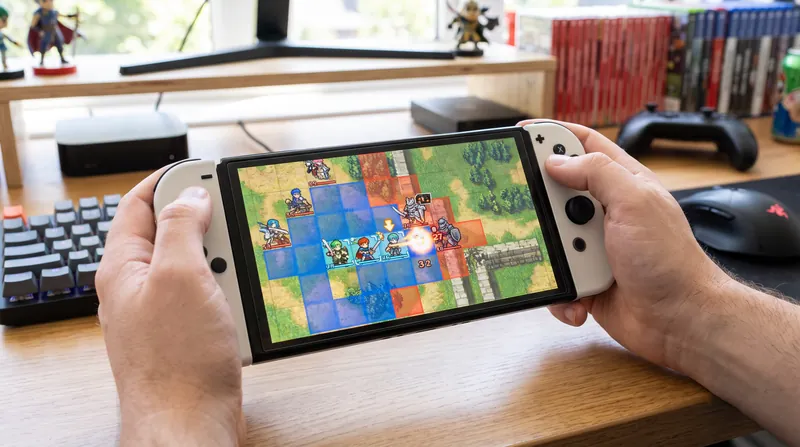
Fire Emblem: Fortune's Weave Secures 89 Metacritic Score as Act 3 Unit Handouts Divide Players
5 sources
Procedural Animation
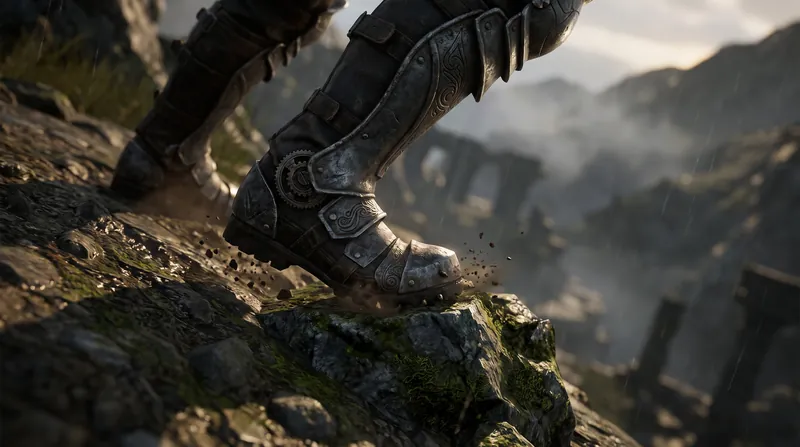
The Inverse Kinematics (IK) Chain: How Game Engines Calculate Joint Angles to Place a Character's Foot on Uneven Terrain
6 sources
Tournament Formats
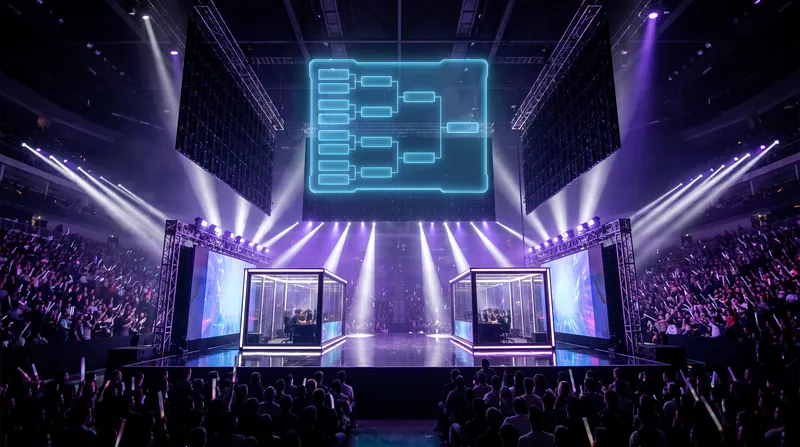
The Upper and Lower Bracket: How the Double Elimination Format Guarantees a True Finalist
4 sources
Every angle. Every day.
Get Gaming & Esports stories with full source coverage and perspective breakdowns delivered to your inbox.