
Meta Llama 4 vs. OpenAI GPT-5: The Open vs. Closed AI Debate in 2026
As open-weight models close the performance gap with proprietary giants, the choice for developers now hinges on privacy, cost, and control rather than raw intelligence.
By Factlen Editorial Team
- Pragmatic Hybrid Adopters
- Advocate for a middle-ground approach that routes tasks based on complexity and cost.
- Open-Weight Advocates
- Argue that true innovation and enterprise security require owning the underlying model weights.
- Proprietary Ecosystem Defenders
- Emphasize that the absolute frontier of reasoning and multimodal polish still belongs to closed systems.
What's not represented
- · Hardware Providers profiting from the self-hosting boom
- · Regulators concerned about the safety of unrestricted open-weight models
Why this matters
Choosing the right AI architecture dictates a company's data privacy, operating margins, and vendor independence. For developers and businesses, understanding when to self-host and when to rent intelligence is the most consequential technical decision of 2026.
Key points
- The performance gap between open-weight and proprietary AI models has largely closed for standard enterprise tasks.
- Open-source models like Llama 4 offer up to 85% cost savings at scale and ensure absolute data privacy.
- Proprietary models like GPT-5.2 still maintain a measurable lead in complex scientific reasoning and multimodal integration.
- Most sophisticated engineering teams now use a hybrid approach, routing routine tasks to open models and complex tasks to proprietary APIs.
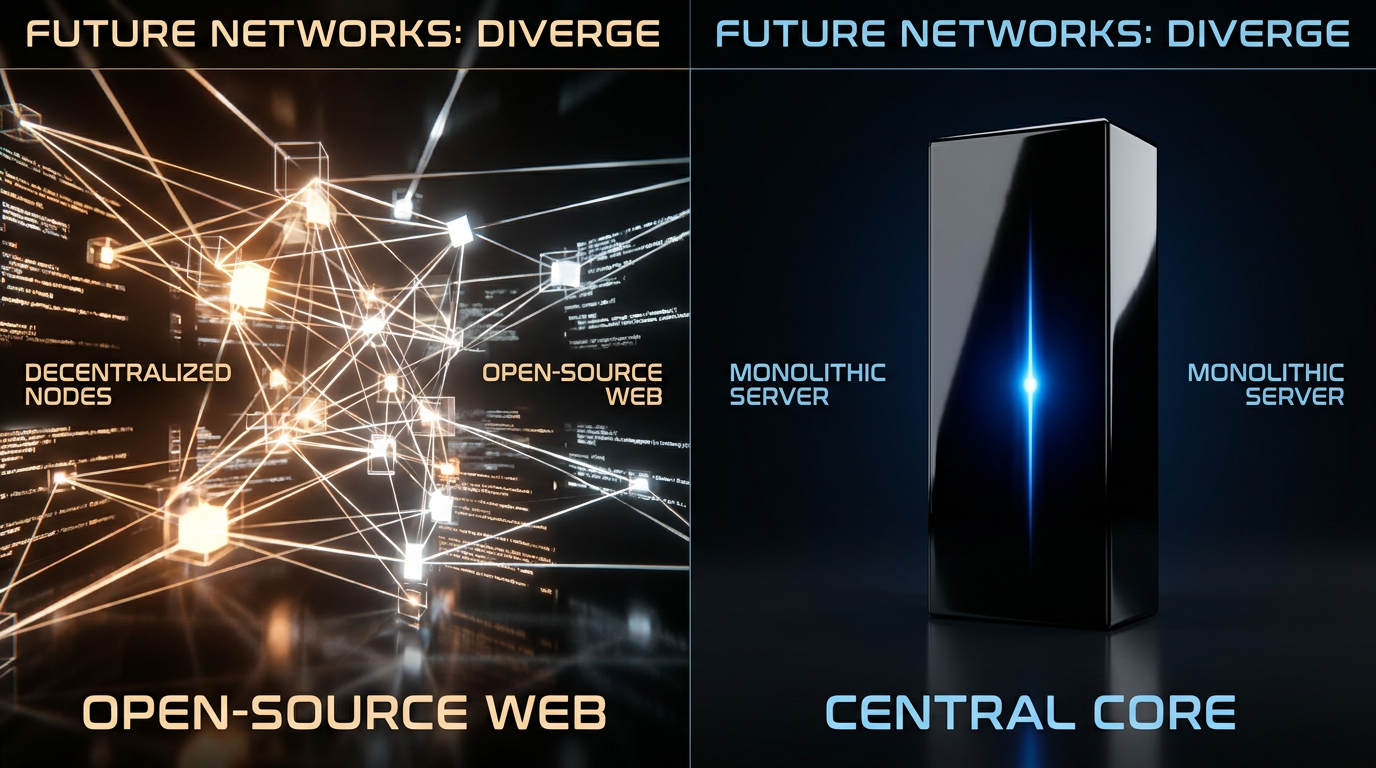
In 2026, the long-held assumption that proprietary artificial intelligence models hold an insurmountable lead over the rest of the industry has finally shattered. The release of Meta's Llama 4 family and OpenAI's GPT-5 generation has transformed the technological landscape from a monopoly of closed systems into a genuinely competitive two-front market. This is no longer a theoretical debate about which model is objectively smarter, but a practical, strategic calculation about system architecture. Developers and enterprise leaders are now forced to choose between renting highly polished intelligence by the token or taking ownership of the underlying infrastructure to build their own.[1][2][4][5]
The terminology itself dictates the fundamental trade-offs involved in this decision. Proprietary models, such as OpenAI's GPT-5.2 and Google's Gemini 3, operate as closed ecosystems where the underlying weights, training data, and architectural blueprints remain strictly hidden behind an API. Conversely, open-weight models like Meta's Llama 4 allow developers to freely download the core architecture, host it on their own private servers, and fine-tune the parameters to their exact specifications. This fundamental difference in access shapes every subsequent engineering decision regarding operating costs, data privacy, and the level of operational overhead a team is willing to shoulder.[2][4][5][6]
The case for relying on proprietary models rests heavily on absolute frontier performance and unmatched operational simplicity. OpenAI's GPT-5.2 remains the undisputed leader for complex, multi-step reasoning tasks, scoring an unprecedented 93.2% on the doctoral-level GPQA Diamond benchmark. For engineering teams without dedicated DevOps personnel, these closed models offer a frictionless, out-of-the-box experience that simply works. The managed APIs are highly stable, and their multimodal integration—seamlessly blending voice, vision, and text processing in real-time—is vastly more polished and reliable than what is currently achievable with self-hosted open-source alternatives.[1][5][6]

However, the arguments against relying exclusively on proprietary models are mounting rapidly, driven primarily by long-term economics and strict data sovereignty requirements. Renting intelligence scales linearly; every single token processed incurs a micro-transaction fee, which can quickly become financially prohibitive for high-volume enterprise applications. Furthermore, sending sensitive corporate data, proprietary legal documents, or confidential patient records to a third-party cloud server introduces significant compliance risks. Users of closed APIs are entirely dependent on the vendor's unannounced pricing changes, server uptime, and opaque data retention policies, creating a severe vulnerability widely known as vendor lock-in.[2][4][6]
The counter-case for open-weight models is firmly anchored in cost efficiency and absolute architectural control. Meta's Llama 4 Maverick has definitively proven that open models can compete at the highest levels, scoring 69.8% on the GPQA Diamond test and actually outperforming the older, widely used GPT-4o. When deployed at scale, running an open-source model on rented cloud GPUs can reduce inference costs by up to 85% compared to proprietary API billing. More importantly, self-hosting ensures zero data egress, meaning highly sensitive information never leaves the company's secure boundary or gets absorbed into a vendor's future training runs.[1][3][4][5][6]

The counter-case for open-weight models is firmly anchored in cost efficiency and absolute architectural control.
The primary argument against adopting open-weight models is the hidden cost of infrastructure and the intense technical friction required to maintain them in production. While the model weights themselves are free to download, the immense compute power required to run a 400-billion parameter model is substantial and expensive to rent. Setting up reliable load balancing, managing complex GPU clusters, and fine-tuning the architecture demands highly specialized, expensive engineering talent. Additionally, while open models have closed the gap on general business tasks, they still noticeably trail the absolute bleeding edge of proprietary models in highly complex coding and advanced scientific reasoning.[1][3][4][5][6]
Rather than treating this architectural choice as a zero-sum war, the most sophisticated engineering teams in 2026 have universally adopted a hybrid routing architecture. This pragmatic approach leverages the unique strengths of both paradigms to optimize overall system performance and protect the budget. In a hybrid system, a custom orchestration layer evaluates incoming user queries in real-time and dynamically directs them to the most appropriate model based on the query's complexity, required context length, and strict privacy requirements.[4][6]
Under this highly efficient hybrid model, cheap and entirely private open-source models handle the vast majority of routine, daily workloads. Tasks like basic customer service interactions, large-scale document classification, and internal data retrieval are routed directly to a self-hosted Llama 4 instance, keeping the 80% of high-volume queries highly cost-effective and secure. The expensive proprietary APIs are kept strictly in reserve, triggered only for the remaining 20% of tasks that genuinely require maximum precision, creative nuance, or the frontier-level reasoning capabilities that only a model like GPT-5.2 can provide.[6]

Ultimately, proprietary models fit best when maximum reasoning quality is absolutely non-negotiable, when the engineering team lacks the bandwidth to manage complex GPU infrastructure, or when the application relies heavily on real-time, multimodal voice and vision inputs. They remain the ideal choice for rapid prototyping, low-volume queries, and consumer-facing applications where out-of-the-box polish and immediate reliability are the primary differentiators for the end user. For startups trying to find product-market fit quickly without getting bogged down in server maintenance, renting a world-class API is still the most logical starting point.[3][5][6]
Conversely, open-weight models fit best when data privacy and regulatory compliance are strict, non-negotiable requirements, or when a company is processing millions of tokens daily and needs to break the linear cost curve of API billing. They are the mandatory choice for enterprise teams that need to deeply fine-tune a model on highly proprietary data to create a specialized, domain-specific tool that they fully own and control. As the open-source ecosystem continues to mature, the ability to run frontier-level intelligence on private hardware is rapidly shifting from a niche developer experiment to a foundational pillar of modern enterprise software.[2][4][6]
How we got here
Early 2023
Proprietary models like GPT-4 establish a massive intelligence lead, leaving open-source models as a distant second tier.
Mid 2024
Meta releases Llama 3, proving that open-weight models can match the performance of early proprietary systems.
April 2025
Llama 4 Maverick crosses the 1,400 ELO mark, officially outperforming GPT-4o on human preference benchmarks.
December 2025
OpenAI releases GPT-5.2, re-establishing the proprietary lead on the absolute hardest scientific reasoning tasks.
Early 2026
The hybrid routing architecture becomes the industry standard for enterprises balancing cost and capability.
Viewpoints in depth
Open-Weight Advocates
Argue that true innovation and enterprise security require owning the underlying model weights.
This camp, heavily populated by enterprise developers and privacy-conscious startups, believes that renting intelligence is a strategic liability. They point to the fact that sending proprietary data to a third-party API introduces unacceptable security risks and vendor lock-in. For them, the ability to fine-tune a model like Llama 4 on internal company data without external oversight is worth the added friction of managing GPU infrastructure.
Proprietary Ecosystem Defenders
Emphasize that the absolute frontier of reasoning and multimodal polish still belongs to closed systems.
Proponents of proprietary models argue that the hidden costs of self-hosting—such as hiring specialized DevOps engineers and renting cloud GPUs—often negate the perceived savings of open-source. They highlight that models like GPT-5.2 still dominate the hardest scientific and mathematical benchmarks. For this group, the frictionless, out-of-the-box reliability of a managed API allows teams to focus on building their product rather than maintaining infrastructure.
Pragmatic Hybrid Adopters
Advocate for a middle-ground approach that routes tasks based on complexity and cost.
The emerging consensus among mid-sized enterprises is that the open-versus-closed debate is a false dichotomy. Hybrid adopters build orchestration layers that automatically direct simple, high-volume tasks to cheap, self-hosted open models, while reserving expensive proprietary APIs for edge cases that require deep reasoning. This camp prioritizes unit economics and practical utility over architectural purity.
What we don't know
- Whether future open-source models will be able to match the massive, multi-billion dollar training runs of the next proprietary generation.
- How upcoming AI regulations might restrict the distribution of powerful open-weight models.
- If the cost of cloud GPU rentals will drop enough to make self-hosting viable for even smaller startups.
Key terms
- Open-Weight Model
- An AI model where the trained parameters are publicly released, allowing anyone to download, host, and fine-tune the system locally.
- Proprietary API
- A closed AI system where the underlying code is hidden, and users interact with the model by sending data over the internet and paying per request.
- Context Window
- The maximum amount of text or data an AI model can process and remember in a single prompt.
- Inference
- The process of running live data through a trained AI model to generate a response or prediction.
- Vendor Lock-in
- A situation where a customer becomes overly dependent on a single cloud or API provider, making it difficult or expensive to switch to an alternative.
Frequently asked
What does 'open-weight' actually mean?
Open-weight means the underlying mathematical parameters of the AI model are publicly available to download. While not strictly 'open-source' in the traditional software sense, it allows developers to run and modify the model on their own hardware.
Is Llama 4 smarter than ChatGPT?
It depends on the version. Llama 4 Maverick outperforms the older GPT-4o on several reasoning benchmarks, but OpenAI's newer GPT-5.2 still holds a significant lead on the most complex, doctoral-level tasks.
Why is self-hosting an AI model cheaper?
Proprietary APIs charge a markup on every token processed to cover their research and profit margins. Self-hosting an open model means you only pay for the raw server compute time, which becomes vastly cheaper at high volumes.
Can I run Llama 4 on my laptop?
Smaller variants of open models can run on high-end consumer laptops, but enterprise-grade models like Llama 4 Maverick require dedicated cloud GPU clusters to process requests quickly.
Sources
Source coverage
6 outlets
3 viewpoints surfaced






[1]Inference.netPragmatic Hybrid Adopters
Open-Source AI Has Reached a Turning Point
Read on Inference.net →[2]Towards AIOpen-Weight Advocates
Beyond GPT: The Rise of Open Source AI
Read on Towards AI →[3]WhatLLMPragmatic Hybrid Adopters
Here's what the benchmarks actually show
Read on WhatLLM →[4]DeepInfraOpen-Weight Advocates
Open vs Closed Source AI Models: Intelligence, Price & Speed Compared
Read on DeepInfra →[5]CoderseraProprietary Ecosystem Defenders
Llama 4 vs GPT-4.5: A Comprehensive Comparison
Read on Codersera →[6]Navel DigitalPragmatic Hybrid Adopters
Proprietary AI: Which is Best for Your SME in 2026
Read on Navel Digital →


Every angle. Every day.
Get meta stories with full source coverage and perspective breakdowns delivered to your inbox.