
Malaria Vaccine Rollout Averts 1 in 8 Child Deaths in Initial African Zones
New real-world data confirms that the widespread rollout of two malaria vaccines is drastically reducing child mortality across Africa, though funding shortfalls threaten future expansion.
By Factlen Editorial Team
- Global Health Agencies
- Focused on the macro success of the rollout and securing the funding needed to reach 50 million children by 2030.
- National Health Ministries
- Focused on the immediate reduction in hospitalizations and the logistical challenge of delivering the fourth booster dose.
- Health Researchers
- Focused on the clinical data, vaccine efficacy, and the biological mechanism of targeting the parasite.
What's not represented
- · Parents in rural communities navigating the logistics of the four-dose schedule.
- · Local community health workers tasked with tracking down families for the booster dose.
Why this matters
After decades of failed attempts, the successful rollout of two malaria vaccines is fundamentally altering the survival odds for millions of African children. Beyond saving hundreds of thousands of lives, the resulting drop in hospitalizations is freeing up massive economic and healthcare resources across the continent.
Key points
- The RTS,S malaria vaccine has averted 1 in 8 child deaths in its initial rollout zones across Ghana, Kenya, and Malawi.
- Over 52 million doses have been delivered across 25 African countries since 2023.
- Burkina Faso saw a 50% drop in malaria-related child deaths after expanding the vaccine nationwide.
- A November 2025 agreement lowered the price of the R21 vaccine to $2.99 per dose.
- A 30% funding shortfall threatens the goal of reaching 50 million children by 2030.
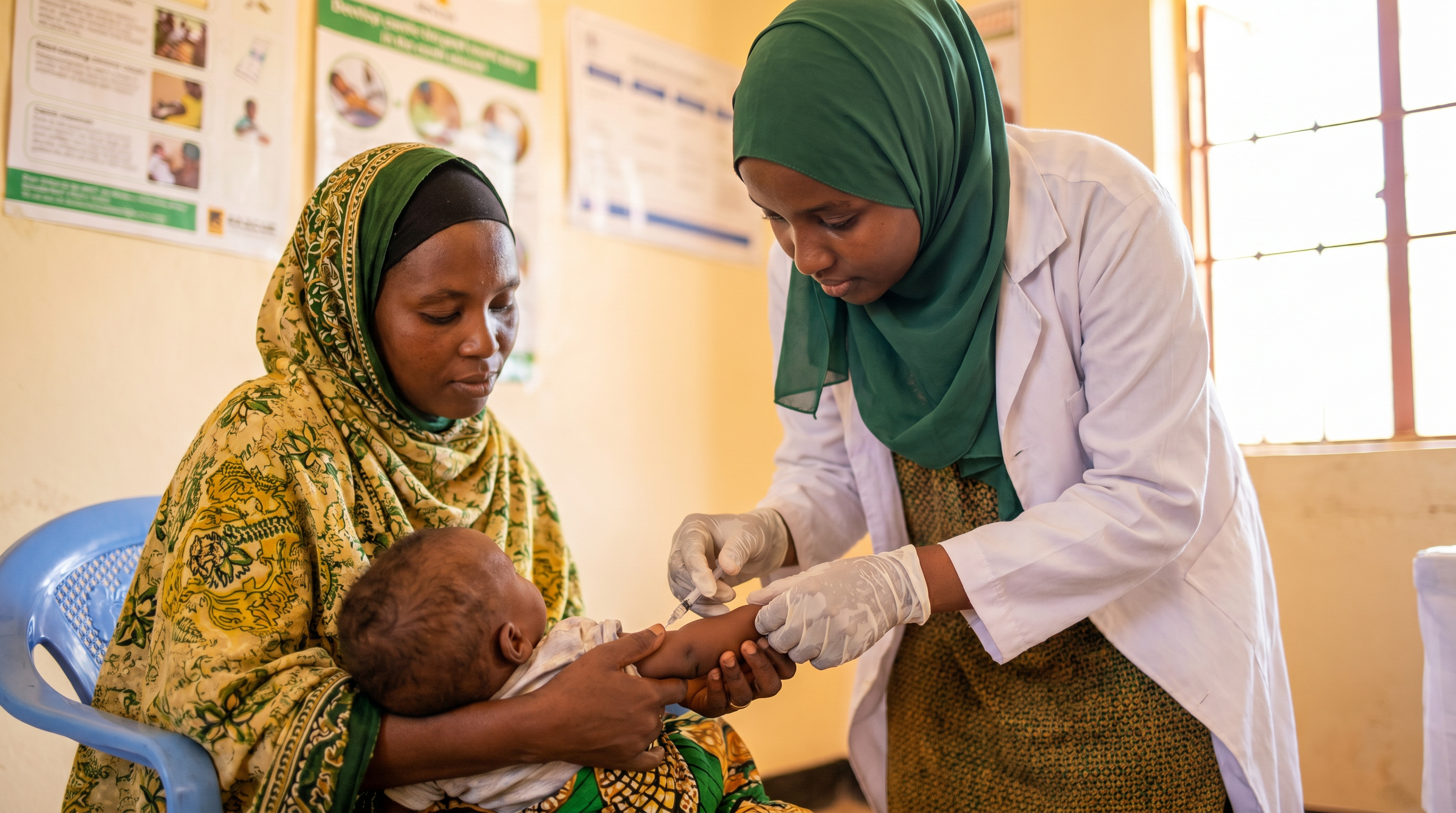
For decades, a highly effective malaria vaccine was considered the holy grail of global health—a scientific puzzle that frustrated researchers while the disease claimed hundreds of thousands of children each year. Now, in 2026, the data from the largest public health rollout in African history is in, and the results are exceeding expectations.[1][7]
A landmark evaluation published in The Lancet in May 2026 confirmed that the RTS,S vaccine has fundamentally altered child mortality in its initial rollout zones. Across Ghana, Kenya, and Malawi, the vaccine averted an estimated one in eight deaths among eligible children over a four-year period.[1][4]
This 13.2% reduction in all-cause mortality provides concrete proof that the vaccine works in the messy reality of rural clinics and seasonal rains, not just in highly controlled clinical trials. Severe malaria infections plummeted by over 21%, easing the burden on local clinics and proving the intervention's durability.[4][7]
The initiative has rapidly scaled beyond its pilot phase. As of early 2026, 25 African countries have integrated malaria vaccines into their routine childhood immunization schedules. Over 52 million doses have been delivered across the continent since 2023, marking the fastest vaccine rollout in the history of Gavi, the Vaccine Alliance.[2][5]

The arrival of a second World Health Organization-recommended vaccine, R21/Matrix-M, broke early supply bottlenecks. A pivotal November 2025 agreement executed by UNICEF drove the price of the R21 vaccine down to just $2.99 per dose, generating $90 million in savings and allowing health ministries to stretch their budgets further.[3]
The real-world impact is most visible in countries that have achieved nationwide scale. In Burkina Faso, which expanded the vaccine to all 70 of its health districts, reported malaria cases fell by 32% between 2024 and 2025. More strikingly, malaria-related child deaths in the country dropped by 50%.[2][5]
To understand why this is a scientific triumph, one must look at the parasite itself. Plasmodium falciparum is a complex, shape-shifting organism that is far harder to target than a standard virus. The RTS,S and R21 vaccines are designed to attack the parasite at the sporozoite stage—striking immediately after a mosquito bite, before the parasite can travel to the liver to multiply and hide.[1][7]

To understand why this is a scientific triumph, one must look at the parasite itself.
However, maintaining this biological shield requires a strict and demanding schedule. The regimen consists of four doses, typically beginning when an infant is five months old. The first three doses are given in rapid succession, but the critical fourth booster dose is administered in the child's second year of life.[4][7]
This timeline presents a severe logistical hurdle for rural health systems. While uptake for the first dose has been strong—reaching nearly 83% in the pilot regions—compliance drops sharply over time. Only about 40% of children return for the crucial fourth dose, leaving a gap in protection just as they enter their second year of exposure.[4]
Public health officials emphasize that the vaccine is not a standalone cure. It is designed to be layered over existing defenses, such as insecticide-treated bed nets and seasonal chemoprevention. Data shows that the vaccine provides vital protection to children who slip through the cracks of bed-net distribution, creating a robust dual-layered defense.[1][6]
Beyond the immediate preservation of life, the economic ripple effects of the rollout are massive. Burkina Faso's health ministry estimates that the reduction in severe cases saved families and the state over $26.6 million in direct healthcare costs in a single year. Emptying pediatric wards of malaria patients allows doctors to focus on other pressing health crises.[2]

Yet, despite the undeniable scientific and operational success, the rollout faces a critical threat. Gavi and the WHO have warned of a looming 30% funding shortfall for their 2026–2030 strategic period. While lower-income countries are mobilizing record domestic financing, the sheer scale of the continent-wide demand is outpacing global donor commitments.[2][5]
The stakes of this financial gap are existential. Gavi estimates that if the funding shortfall forces countries to scale back their vaccination targets, it could result in 600,000 fewer lives saved by the end of the decade.[2]
How we got here
2019
Ghana, Kenya, and Malawi begin pilot introductions of the RTS,S malaria vaccine.
Oct 2021
The World Health Organization officially recommends the RTS,S vaccine for widespread use.
Oct 2023
The WHO recommends a second malaria vaccine, R21/Matrix-M, easing global supply constraints.
Nov 2025
UNICEF secures an agreement to drop the price of the R21 vaccine to $2.99 per dose.
May 2026
The Lancet publishes data confirming the vaccine averted 1 in 8 child deaths in the initial rollout zones.
Viewpoints in depth
Global Health Agencies
Organizations like the WHO and Gavi view the rollout as a historic triumph that requires urgent, sustained funding.
For global health leaders, the Lancet data validates decades of investment. They emphasize that the 13% drop in all-cause mortality is a staggering achievement in public health. However, their primary focus has shifted from proving the science to sounding the alarm on a 30% funding gap, warning that hundreds of thousands of lives will be lost if donor fatigue stalls the rollout.
National Health Ministries
African governments are focused on the immediate relief to their healthcare systems and the logistical hurdles of the four-dose schedule.
Local health officials in countries like Burkina Faso and Kenya celebrate the sudden drop in pediatric hospital admissions, which frees up scarce beds and medical staff. Their primary concern is operational: bridging the gap between the 83% first-dose uptake and the 40% fourth-dose completion rate. They advocate for integrating the malaria booster with other routine second-year health interventions to keep parents engaged.
Health Economists
Financial analysts highlight the market-shaping success of the R21 vaccine and the massive return on investment.
Economists point to the November 2025 UNICEF agreement that drove the R21 vaccine price down to $2.99 as a textbook example of successful market shaping. They argue that the upfront cost of the vaccines is dwarfed by the economic benefits, citing Burkina Faso's $26.6 million savings in direct healthcare costs in a single year as proof that malaria eradication is a highly profitable economic investment for developing nations.
What we don't know
- Whether health ministries can successfully redesign their outreach programs to improve the 40% completion rate for the crucial fourth dose.
- How quickly the 30% funding shortfall can be closed by international donors to prevent a slowdown in the 2026-2030 rollout.
- The exact impact that shifting climate patterns and expanding mosquito habitats will have on the long-term efficacy of the vaccination campaign.
Key terms
- Plasmodium falciparum
- The deadliest species of malaria parasite globally, and the most prevalent across the African continent.
- Sporozoite
- The early stage of the malaria parasite that is injected into the bloodstream by a mosquito bite, which the vaccines are designed to target.
- RTS,S and R21
- The two malaria vaccines currently recommended by the World Health Organization for use in children.
- Seasonal Chemoprevention
- The administration of antimalarial medicines during peak transmission seasons to prevent infections.
Frequently asked
How effective is the malaria vaccine?
Real-world data shows the vaccine reduces all-cause child mortality by 13.2% and severe malaria cases by over 21% when deployed in high-transmission areas.
Why are there two different vaccines?
Both RTS,S and R21 target the same stage of the parasite. Having two approved vaccines ensures a reliable global supply and helps drive down prices through competition.
Does the vaccine replace bed nets?
No. The vaccine is designed to be used alongside insecticide-treated bed nets and other preventative measures to create a multi-layered defense against the disease.
Why is the fourth dose so important?
The fourth booster dose, given in a child's second year of life, is critical for prolonging the vaccine's protection during their most vulnerable years.
Sources
Source coverage
7 outlets
3 viewpoints surfaced






[1]World Health OrganizationGlobal Health Agencies
New evidence confirms malaria vaccine saves child lives and will have high impact in wider rollout
Read on World Health Organization →[2]Gavi, the Vaccine AllianceGlobal Health Agencies
Malaria vaccines deliver early impact across Africa
Read on Gavi, the Vaccine Alliance →[3]UNICEFGlobal Health Agencies
New agreement to make R21 malaria vaccine more accessible and affordable
Read on UNICEF →[4]CIDRAPHealth Researchers
Malaria vaccine saved 1 in 8 eligible children in first 3 African nations
Read on CIDRAP →[5]Peoples GazetteNational Health Ministries
Malaria vaccines expand across Africa as Gavi warns of funding issues
Read on Peoples Gazette →[6]XinhuaNational Health Ministries
Gavi urges investment in vaccines to attain malaria-free status in Africa
Read on Xinhua →[7]UN NewsGlobal Health Agencies
Fresh hope for African children as malaria vaccine proves highly effective
Read on UN News →
Every angle. Every day.
Get world stories with full source coverage and perspective breakdowns delivered to your inbox.