
Local Governments Brace for 'Fiscal Cliff' as $550 Billion Federal Infrastructure Funding Set to Expire
Municipalities across the United States are preparing for a dual funding expiration in 2026, as pandemic-era relief and the bipartisan infrastructure law reach their statutory deadlines. City leaders are shifting toward local tax revenues and AI-driven efficiencies to maintain public services and complete ongoing public works projects.
By Factlen Editorial Team
- Municipal Leaders
- Advocates for continued federal partnership to meet long-term infrastructure demands and prevent local tax spikes.
- Fiscal Watchdogs
- Analysts emphasizing the need for cities to return to sustainable, locally generated revenue models and right-size their budgets.
- Infrastructure Sector
- Contractors and utility operators warning that a lapse in federal funding will disrupt the pipeline of critical modernization projects.
What's not represented
- · Local Taxpayers and Ratepayers
- · Public Sector Labor Unions
Why this matters
As historic federal funding expires, the financial burden for roads, water systems, and public services is shifting back to local taxpayers. Understanding this transition helps residents anticipate changes in local property taxes, municipal bond measures, and the timeline for neighborhood public works projects.
Key points
- The $1.2 trillion Infrastructure Investment and Jobs Act (IIJA) is set to expire on September 30, 2026.
- Local governments have until December 31, 2026, to fully expend their share of the $350 billion ARPA recovery funds.
- Tier 1 cities and counties have successfully obligated 100% of their ARPA allocations, avoiding federal clawbacks.
- Water industry groups are urging Congress to maintain funding to address a $1.2 trillion backlog in drinking and wastewater needs.
- Cities are increasingly relying on AI and modernized tax collection to bridge budget gaps without raising property taxes.
- Despite the looming deadlines, 2026 remains a massive execution year for infrastructure projects already underway.
Municipal governments across the United States are navigating a historic financial transition in 2026 as two of the largest federal funding streams in modern history simultaneously reach their statutory expiration dates. City councils, county commissioners, and public works directors are bracing for a dual "fiscal cliff" that will fundamentally reshape how local infrastructure and public services are funded for the next decade.[1][6]
The first deadline arrives on September 30, when the bipartisan Infrastructure Investment and Jobs Act (IIJA) expires. Signed in 2021, the legislation authorized $1.2 trillion in total spending, including $550 billion in new investments above baseline levels for roads, bridges, broadband, and water systems. Just three months later, on December 31, the American Rescue Plan Act (ARPA) State and Local Fiscal Recovery Funds program will reach its final expenditure deadline, closing out a $350 billion lifeline that stabilized municipal payrolls during the pandemic.[3][7]
For local finance directors, the ARPA deadline presents an immediate administrative hurdle. While funds had to be obligated by the end of 2024, the December 2026 deadline requires all money to be fully expended—meaning goods must be delivered, services completed, and final payments cleared. According to a joint tracking project by the National Association of Counties and the Brookings Institution, Tier 1 cities and counties successfully obligated 100% of their allocations and are currently on track to spend the remaining balances without facing federal clawbacks.[2][5]

However, the structural impact on local budgets is profound. The Volcker Alliance and municipal finance analysts note that many local governments used ARPA funds to cover recurring operating costs or to delay property tax increases. With that federal cushion disappearing, 69% of mayors surveyed by the National League of Cities indicated that the end of ARPA will negatively impact their budget management, forcing a return to traditional, cash-based local financing.[1][7][8]
To bridge the gap without drastically raising taxes, municipalities are increasingly turning to technological modernization. Cybersecurity and artificial intelligence have become top priorities for local chief information officers, who are deploying AI as a "workforce multiplier" to augment human services and streamline administrative overhead. Cities are also upgrading legacy tax collection software to capture the 2% to 5% of authorized property tax levies that typically go uncollected each year.[6][7]
To bridge the gap without drastically raising taxes, municipalities are increasingly turning to technological modernization.
While the ARPA expiration affects municipal operations, the IIJA expiration threatens the pipeline of future capital projects. The 2021 infrastructure law provided unprecedented formula funding for the Clean Water State Revolving Fund and the Drinking Water State Revolving Fund, allocating $50 billion specifically for water infrastructure over five years. Those enhanced funding levels are set to revert to pre-2021 baselines in October unless Congress acts.[3][4]
Water industry organizations and municipal leaders are urgently lobbying federal lawmakers to reauthorize these core programs. The Environmental Protection Agency estimates that drinking water systems will require $625 billion in investments over the next 20 years, while wastewater and stormwater systems will need an additional $630 billion to maintain operations and meet regulatory requirements regarding lead pipes and PFAS contamination.[3][4]

Industry groups warn that the expiration of the IIJA's supplemental funding, combined with proposed reductions in the fiscal year 2027 federal budget, could create a severe funding gap for utilities. Without continued federal support, the burden of financing multi-million-dollar treatment plant upgrades and pipeline replacements will fall squarely on local ratepayers through increased utility bills and municipal bond issuances.[3][4]
The shifting financial landscape is also sparking legislative tension between city halls and state capitols. As local costs rise, cities are fighting for greater fiscal autonomy to levy "local-option taxes"—such as dedicated municipal sales or property taxes—to fund essential services like fire departments and transit. In several states, legislatures have moved to cap or preempt these local taxing powers, creating high-stakes battles over municipal revenue generation.[6]
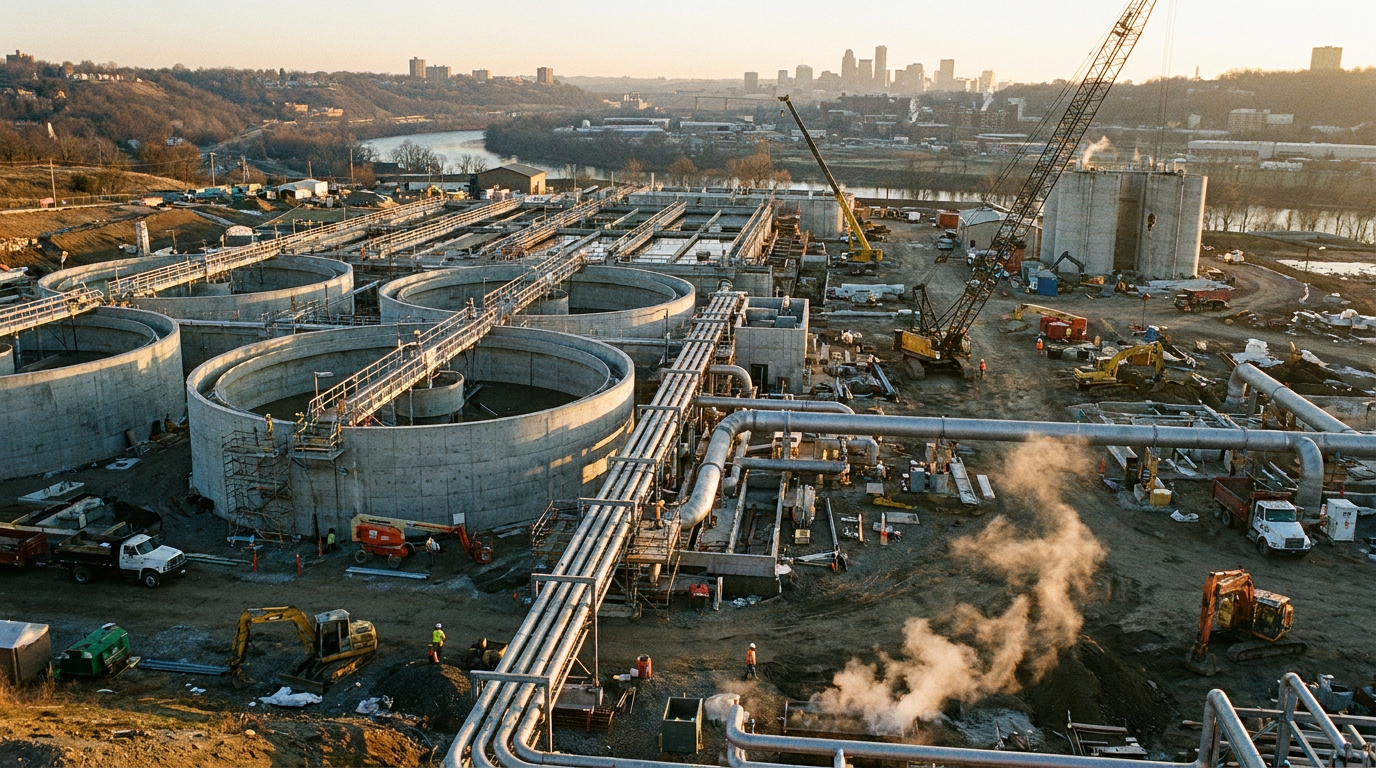
Despite the looming deadlines, 2026 is largely defined as an "execution year" for local infrastructure. Because federal funding was authorized on a multi-year clock, the money obligated between 2022 and 2024 is currently flowing into active construction sites. Cranes remain in the sky, and large-scale projects—from ferry terminal electrifications to regional broadband deployments—are breaking ground at a historic pace.[6]

The 2026 Municipal Infrastructure Conditions Survey reveals that local priorities remain focused on core systems that support daily operations and public safety, including streets, water, and sewer systems. Public buildings, parking facilities, and transit remain lower priorities for many communities, reflecting a cautious approach to long-term maintenance liabilities in a constrained fiscal environment.[1]
Ultimately, the expiration of ARPA and IIJA marks the end of an era of unprecedented federal intervention in local government finance. As municipalities transition back to relying on property taxes, municipal bonds, and local utility fees, they are doing so with a modernized infrastructure baseline and a renewed focus on operational efficiency. The challenge for the next decade will be maintaining these upgraded assets without the safety net of federal relief.[1][8]
How we got here
March 2021
Congress passes the American Rescue Plan Act, allocating $350 billion in State and Local Fiscal Recovery Funds.
November 2021
The Infrastructure Investment and Jobs Act is signed, authorizing $1.2 trillion for public works over five years.
December 2024
Deadline passes for local governments to officially obligate all ARPA funds to specific projects or contracts.
September 30, 2026
Statutory expiration date for the IIJA, threatening to revert infrastructure formula funding to pre-2021 baselines.
December 31, 2026
Final deadline for all ARPA funds to be fully expended, meaning goods delivered and payments cleared.
Viewpoints in depth
Municipal Leaders
City and county officials emphasize the need for continued federal partnership to meet long-term infrastructure demands.
Organizations like the National League of Cities and the National Association of Counties argue that while local governments have responsibly managed pandemic-era funds, the underlying structural deficits in American infrastructure remain. They point out that formula funding cannot change a state's long-term maintenance obligations. Municipal leaders are actively lobbying Congress to reauthorize the IIJA's enhanced funding levels, warning that reverting to pre-2021 baselines will force cities to either delay critical upgrades or pass the costs directly to residents through steep property tax and utility rate hikes.
Fiscal Watchdogs
Financial analysts caution that cities must return to sustainable, locally generated revenue models.
Groups analyzing municipal finance, such as the Volcker Alliance, highlight the risks of using one-time federal cash to paper over structural budget deficits. These analysts argue that the "fiscal cliff" is a necessary correction, forcing local governments to right-size their operations and align recurring expenditures with recurring local revenues. From this perspective, the expiration of ARPA funds should prompt cities to modernize their tax collection systems, leverage AI for administrative efficiency, and make difficult but necessary choices about which public services to prioritize.
Infrastructure & Engineering Sector
Contractors and utility operators warn of a disrupted project pipeline if federal funding lapses.
The engineering and construction industries view the 2026 deadlines with concern over project continuity. Water sector advocates and public works contractors note that large-scale capital improvements—such as replacing lead service lines or building hybrid-electric transit facilities—require years of planning and guaranteed multi-year funding. They argue that a sudden drop in federal support will shrink the pipeline of projects entering the environmental review and design phases, leading to a boom-and-bust cycle that ultimately drives up construction costs and delays critical modernization.
What we don't know
- Whether Congress will reauthorize the IIJA's enhanced water and transportation funding levels before the September deadline.
- How many mid-sized and smaller municipalities might face federal clawbacks if they fail to fully expend their ARPA funds by December 31.
- The extent to which state legislatures will preempt or allow new 'local-option taxes' to help cities cover budget shortfalls.
Key terms
- Fiscal Cliff
- A sudden drop in available revenue that occurs when temporary funding programs expire, forcing a government to cut services or raise taxes.
- Obligated Funds
- Money that a government has legally committed to spend via a contract, purchase order, or specific budget assignment, even if it hasn't been paid out yet.
- Expended Funds
- Money that has been completely spent and disbursed, with the associated goods delivered or services rendered.
- State Revolving Fund (SRF)
- A federal-state partnership that provides communities with low-cost financing for a wide range of water quality infrastructure projects.
- Local-Option Tax
- A tax that a state allows a local government to levy, such as a municipal sales tax, to generate revenue for local needs.
Frequently asked
Will cities have to return unspent ARPA money?
Yes. Any ARPA State and Local Fiscal Recovery Funds that are not fully expended by December 31, 2026, are subject to clawback by the U.S. Treasury. However, data shows most large cities are on track to spend their funds.
How does the infrastructure cliff affect local drinking water?
The IIJA provided $50 billion in supplemental funding for water systems. If it expires in September 2026, federal support for replacing lead pipes and upgrading treatment plants will drop significantly, likely shifting costs to local utility ratepayers.
Are property taxes going to increase because of this?
It depends on the municipality. Cities that used federal funds to cover recurring operating costs may need to raise property taxes or cut services, while others are trying to bridge the gap by improving tax collection efficiency and using AI to reduce administrative costs.
Sources
Source coverage
8 outlets
3 viewpoints surfaced








[1]National League of CitiesMunicipal Leaders
The 2026 Municipal Infrastructure Conditions (MIC) Survey
Read on National League of Cities →[2]National Association of CountiesMunicipal Leaders
Looking Ahead to the 2026 Spending Deadline: Local Government Investment Tracker
Read on National Association of Counties →[3]Smart Cities DiveInfrastructure Sector
Cities push Congress to avert water infrastructure funding cliff
Read on Smart Cities Dive →[4]Underground InfrastructureInfrastructure Sector
Cities warn of water infrastructure funding cliff as IIJA programs near expiration
Read on Underground Infrastructure →[5]Brookings InstitutionInfrastructure Sector
Local Government ARPA Investment Tracker Update
Read on Brookings Institution →[6]QuorumInfrastructure Sector
Top 10 Local Government Policy Issues in 2026
Read on Quorum →[7]CentralSquareFiscal Watchdogs
What the ARPA Deadline Means for Your Budget
Read on CentralSquare →[8]Volcker AllianceFiscal Watchdogs
On the Edge: Balancing Budgets in a Postpandemic World
Read on Volcker Alliance →
Every angle. Every day.
Get community stories with full source coverage and perspective breakdowns delivered to your inbox.