
Chess Medical Report: Awake Brain Surgery, Neuralink, and the Cognitive Return to the Board
From a 1950-ELO player undergoing awake brain surgery to preserve his skills, to quadriplegic Neuralink patient Noland Arbaugh's digital return, chess is emerging as a powerful tool in medical recovery. Recent clinical symposiums highlight how players are overcoming severe health challenges to get back to the board.
By Jackson Reed

While the global chess community often focuses on the minor ailments and tournament withdrawals of top grandmasters, a quiet revolution is happening at the intersection of the sport and neuroscience. Players facing life-threatening conditions are using the 64 squares not just for recreation, but as a critical component of their medical rehabilitation and cognitive preservation.[4]
The most striking example of this medical synergy was presented at the recent FIDE "Chess & AI" Congress in Menorca, Spain, where Dr. Cristóbal Blanco detailed a groundbreaking awake brain surgery. An amateur player with a 1950 ELO rating required the removal of a tumor in his left parietal lobe, but pleaded with his surgical team to preserve his ability to play competitive chess.[1]
To achieve this unprecedented request, the surgical team at Bellvitge University Hospital utilized electrical stimulation mapping while the patient was fully conscious in the operating room. The patient verbally announced chess moves without seeing the board, allowing neurologists to monitor his memory, concentration, and decision-making in real time as they navigated around healthy brain tissue.[2]
The procedure successfully identified a crucial functional point in the left supramarginal gyrus responsible for rule retrieval and visual search on the board. Following the successful extraction of the tumor, the patient returned to his daily life and maintained his 1950 ELO rating, proving that complex cognitive passions can be surgically safeguarded even during highly invasive procedures.[2]
Beyond the operating table, brain-computer interfaces (BCI) are redefining what it means to return to the board after catastrophic physical injury. In June 2026, FIDE representatives attended the BCI Clinical Application Symposium at the Chinese University of Hong Kong, Shenzhen, to discuss the game's evolving role in neurotechnology.[1]
The symposium heavily featured the ongoing progress of Noland Arbaugh, who was left quadriplegic after a 2016 swimming accident. Arbaugh became the first human patient to receive a Neuralink implant, a coin-sized device featuring over 1,000 electrode threads that track neural intent and bypass severed spinal connections.[1]
Unable to physically move pieces, Arbaugh made a triumphant return to the game by controlling a digital cursor with his thoughts, playing live matches on Chess.com. Neurologists at the Shenzhen symposium noted that chess—with its discrete grid and deep cognitive multitasking—serves as the perfect real-world benchmark for testing and calibrating next-generation medical hardware.[1][3]
For other players, the healing power of the board is deeply psychological rather than strictly neurological. In June 2026, ChessBase profiled Bhavesh Vyas, a 22-year-old chemical engineer and FIDE 1525-rated player who underwent grueling surgery and treatment for cancer.
During his recovery, Vyas found himself trapped in an exhausting cycle of hospital visits, chemotherapy medicines, and anxious waiting for medical reports. He turned to the 2026 Candidates Tournament broadcasts and online blitz games as an active escape mechanism, finding solace in the predictable geometry of the board.
"For a few moments every day, I was not a cancer patient," Vyas explained regarding his recovery process. "I was simply a chess player." Vyas has since recovered and returned to organizing local chess café events in Gurugram, India, demonstrating the game's ability to provide routine and hope when life becomes uncertain.
Together, these cases highlight a profound shift in how the medical community views competitive mind sports. Whether it is mapping the supramarginal gyrus to save a player's rating, translating neural spikes into digital pawn moves, or providing psychological refuge during chemotherapy, chess is proving to be a powerful medicine.[4]
As FIDE continues to collaborate with clinical researchers and hospitals worldwide, the governing body is cementing the game's status not just as a test of intellect, but as a testament to human resilience. For players facing the toughest medical battles of their lives, the board remains a place where they are always in control of their next move.[1][4]
The essentials
- A 1950-ELO chess player successfully underwent awake brain surgery while playing chess to preserve his cognitive skills.
- The procedure allowed surgeons at Bellvitge Hospital to map the brain and safely remove a tumor without affecting his rating.
- Quadriplegic Neuralink patient Noland Arbaugh's return to chess was highlighted at a major FIDE neurotech symposium in Shenzhen.
- Cancer survivor Bhavesh Vyas credited the game with providing psychological refuge and a sense of control during his grueling treatments.
- Neurologists increasingly view chess as an ideal benchmark for testing brain-computer interfaces and cognitive preservation.
Timeline
2016
Noland Arbaugh suffers a severe swimming accident, leaving him quadriplegic.
October 2024
Researchers at Bellvitge Hospital successfully perform awake brain surgery on a 1950-ELO player.
September 2025
Arbaugh becomes the first Neuralink patient to play chess online using a brain-computer interface.
April 2026
Dr. Cristóbal Blanco presents the awake brain surgery findings at the FIDE Chess & AI Congress in Menorca.
June 2026
FIDE attends the BCI Clinical Application Symposium in Shenzhen, highlighting chess's role in neuro-recovery.
- Neurologists & Surgeons
- Focus on using chess as a cognitive benchmark during complex brain surgeries and rehabilitation.
- Neurotech Innovators
- View chess as the ideal testing ground for brain-computer interfaces due to its discrete, grid-based cognitive demands.
- Recovering Players
- Emphasize the psychological comfort, routine, and motivation that chess provides during grueling medical treatments.
Perspectives this story doesn't cover
- Physical Therapists
- Oncology Nurses
Sources
Source coverage
4 outlets
3 viewpoints surfaced




- [1]FIDENeurotech Innovators
FIDE attends Brain-Computer Interface Clinical Application Symposium in Shenzhen
Read on FIDE → - [2]University of BarcelonaNeurologists & Surgeons
Mapping the chess brain during tumor surgery
Read on University of Barcelona → - [3]The GuardianNeurotech Innovators
Japanese manga fans urge Trump to stop using characters in his online posts
Read on The Guardian → - [4]Factlen Editorial TeamRecovering Players
Synthesis by Factlen editorial team
Read on Factlen Editorial Team →
More in Sports
See all →Injury
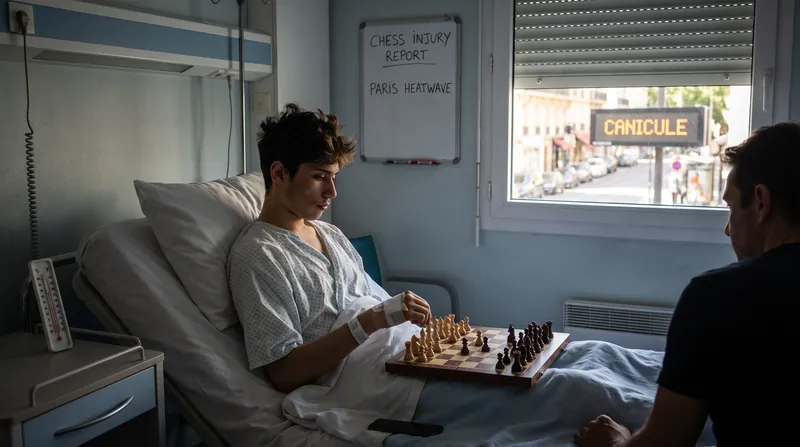
Chess Injury and Health Report: Imran's Fever-Ridden GM Norm, Indjic's Medical Emergency, and the Spirit of the Board
3 sources
Injury
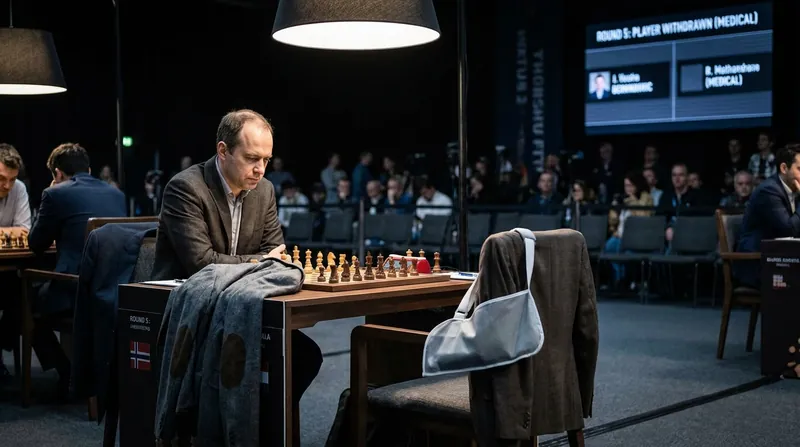
Chess Health Report: World Champion Gukesh Withdraws From Tata Steel India to Focus on Mental Recovery
4 sources
Injury
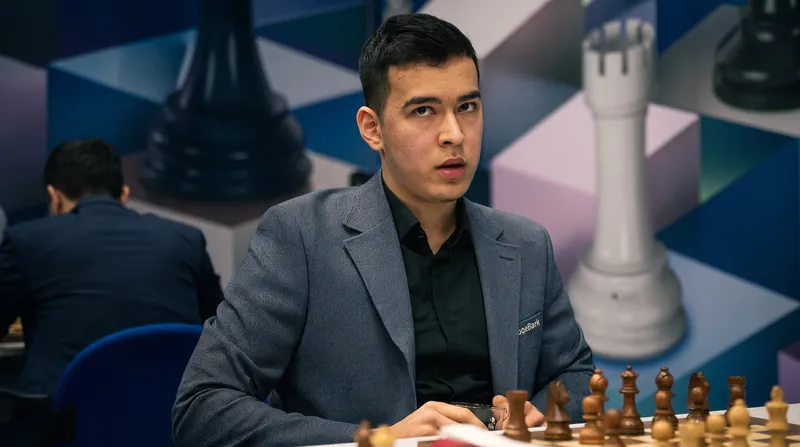
From Medical Blunder to World No. 4: How India's Shubhi Gupta Overcame a Vision Scare to Conquer the Chess Board
4 sources
Standings
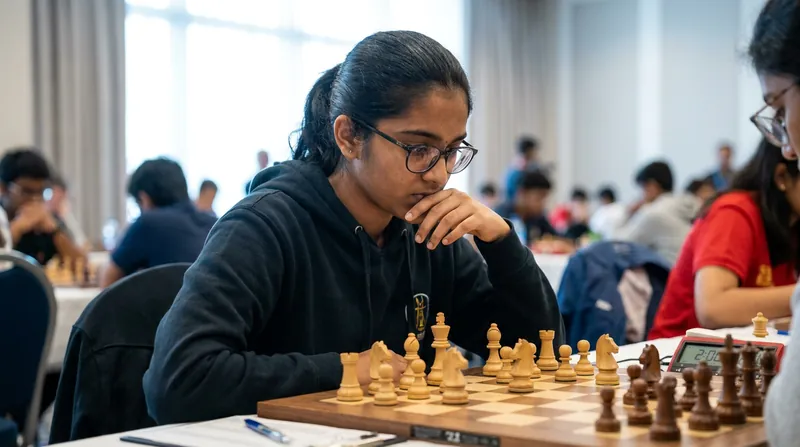
Grand Chess Tour 2026 Standings: Caruana Holds Lead as Keymer and Firouzja Surge Ahead of Saint Louis Finale
4 sources
Comments
Every angle. Every day.
Get Sports stories with full source coverage and perspective breakdowns, free every day.