
Linda Noskova Captures Maiden Grand Slam Title in Thrilling All-Czech Wimbledon Final
Twenty-one-year-old Linda Noskova recovered from a dramatic second-set collapse to defeat compatriot Karolina Muchova and claim her first major title.
By Ryder James

- Noskova Supporters
- Focus on her youth, immense power, and the mental resilience required to reset after a near-collapse.
- Muchova Supporters
- Highlight her tactical variety, resilience, and spectacular mid-match comeback despite the ultimate loss.
- Tennis Historians
- Emphasize the Czech Republic's systemic dominance on grass and the historical youth milestone.
Perspectives this story doesn't cover
- Grass-court specialists analyzing the tactical shifts during the match
- Other top-10 players reacting to the new champion joining their ranks
Twenty-one-year-old Linda Noskova has etched her name into tennis history, capturing her maiden Grand Slam title by defeating compatriot Karolina Muchova in a thrilling all-Czech Wimbledon final on Saturday. The ninth seed triumphed 6-2, 5-7, 6-3 on Centre Court, overcoming a dramatic mid-match collapse to secure the Venus Rosewater Dish. The victory not only marks a career-defining milestone for the young star but also cements a generational changing of the guard in women's tennis. Noskova's aggressive baseline game and immense composure under pressure proved just enough to outlast the seasoned tactical variety of Muchova, who was competing in her second career major final. The result sends Noskova into the upper echelons of the sport, fulfilling the immense promise she has shown since her junior days.[1][3]
For the first hour of the match, Noskova appeared entirely unbothered by the weight of the occasion. She dictated play with destructive, clean ball-striking, racing through the opening set 6-2 in just 32 minutes. When she broke Muchova's serve to take a commanding 5-2 lead in the second set, a swift coronation seemed inevitable. However, the immense pressure of closing out a first major title suddenly materialized. Noskova squandered five championship points across two service games, her previously impenetrable serve faltering as tension visibly set in. Muchova, sensing the shift in momentum, mounted an extraordinary fightback. The 29-year-old veteran capitalized on her younger opponent's sudden vulnerability, winning five consecutive games to snatch the second set 7-5 and drag the final into a deciding third set.[2][3][4]
As the reality of her squandered lead set in, Noskova retreated to her chair and physically plugged her index fingers into her ears, attempting to block out the roaring Centre Court crowd and her own fatalistic thoughts. The momentum had entirely shifted to Muchova, whose bloodthirsty comeback had the crowd on its feet. Yet, in a remarkable display of psychological resilience, the 21-year-old managed to reset. Rather than crumbling under the weight of her missed opportunities, Noskova rediscovered the aggressive first-strike tennis that had earned her the early lead. She broke Muchova's serve early in the decider, re-establishing her dominance and proving that her mental fortitude was equal to her physical talent.[3]
With the shadows creeping across Centre Court, Noskova forged a 5-2 lead in the final set, once again finding herself serving for the championship. Muchova managed to hold serve to force Noskova to close it out on her own racket, but this time, the youngster made no mistake. Bringing up her sixth championship point—more than an hour after her first—Noskova unleashed an unreturnable serve down the T to seal the 6-3 final set. She immediately collapsed to the pristine grass in a mixture of sheer joy and profound relief, having navigated one of the most scenic and dramatic routes to a major title in recent memory.[3][4][5]
With the shadows creeping across Centre Court, Noskova forged a 5-2 lead in the final set, once again finding herself serving for the championship.
For Karolina Muchova, the defeat marks a heartbreaking second loss in a major final, following her runner-up finish at the 2023 French Open. Despite the disappointment, the 10th seed's run to the Wimbledon final was nothing short of spectacular, highlighted by a stunning semi-final victory over Coco Gauff. Muchova's ability to battle back from the brink of defeat in the second set of the final showcased her trademark grit and tactical intelligence. During the trophy presentation, an emotional Muchova expressed deep appreciation for her team and the Centre Court crowd, vowing to continue fighting for her breakthrough major title. Her performance throughout the fortnight reaffirmed her status as one of the most versatile and resilient players on the WTA Tour.[2]
Noskova's triumph is the latest chapter in an era of unprecedented dominance by the Czech Republic on the grass courts of SW19. She becomes the third Czech woman to win the Wimbledon singles title in the past four years, following Marketa Vondrousova in 2023 and Barbora Krejcikova in 2024. The final itself was the first all-Czech women's singles championship match at a Grand Slam in the professional era, underscoring the extraordinary depth of the nation's tennis development program. With a population of just over 10 million, the Czech Republic continues to produce an outsized number of elite female players, combining technical excellence with an undeniable affinity for grass-court tennis.[4][5]
At just 21 years old, Noskova is the youngest Wimbledon women's singles champion since her compatriot Petra Kvitova lifted the trophy in 2011. Kvitova herself was in attendance to witness the historic moment, alongside Czech-born tennis legend Martina Navratilova, who watched from the Royal Box as Kate, the Princess of Wales, presented the Venus Rosewater Dish. Noskova's victory represents the culmination of a steady rise that began with her 2021 French Open girls' singles title. By breaking through on the sport's biggest stage, she has firmly established herself at the forefront of the WTA's next generation, ready to challenge the established hierarchy of Iga Swiatek, Aryna Sabalenka, and Coco Gauff.[1][3][5]
Adding a layer of emotional complexity to the final was the close relationship between the two competitors. Noskova and Muchova are not just compatriots but former doubles partners, having teamed up to represent the Czech Republic at the 2024 Paris Olympics, where they narrowly missed a medal, finishing fourth. That shared experience fostered a deep mutual respect, which was evident in their warm embrace at the net following the match. As they both look ahead to the hard-court swing and the upcoming US Open, their intertwined journeys highlight the camaraderie and fierce competitive spirit that define the current golden age of Czech women's tennis.[5][6]
Key points
- Linda Noskova defeated Karolina Muchova 6-2, 5-7, 6-3 to win her first Grand Slam title.
- Noskova squandered five match points in the second set before recovering to win the decider.
- At 21, Noskova is the youngest Wimbledon women's champion since Petra Kvitova in 2011.
- The match marked the first all-Czech women's singles Grand Slam final in the professional era.
- Noskova is the third Czech woman to win the Wimbledon singles title in the past four years.
How we got here
June 2021
Linda Noskova wins the French Open girls' singles title, signaling her immense potential.
July 2023
Marketa Vondrousova wins Wimbledon, beginning a dominant stretch for Czech women on grass.
July 2024
Barbora Krejcikova claims the Wimbledon title, while Noskova and Muchova team up for a fourth-place Olympic doubles finish.
July 11, 2026
Noskova defeats Muchova in an all-Czech final to capture her maiden Grand Slam title.
Sources
Source coverage
6 outlets
3 viewpoints surfaced






- [1]ESPNNoskova Supporters
Noskova outlasts Muchova in Wimbledon final
Read on ESPN → - [2]BBC SportMuchova Supporters
Noskova holds off extraordinary Muchova fightback to win Wimbledon
Read on BBC Sport → - [3]The GuardianNoskova Supporters
Wimbledon 2026: Muchova v Gauff, Kostyuk v Noskova semi-final updates – live
Read on The Guardian → - [4]Al JazeeraTennis Historians
Noskova defeats Muchova in Wimbledon final to record first Grand Slam title
Read on Al Jazeera → - [5]SportsnetTennis Historians
Linda Noskova tops fellow Czech Karolina Muchova in Wimbledon final
Read on Sportsnet → - [6]Olympics.comTennis Historians
Wimbledon: Muchová and Nosková meet in all-Czechia women's final
Read on Olympics.com →
Comments

More in Sports
See all →Managerial Shift
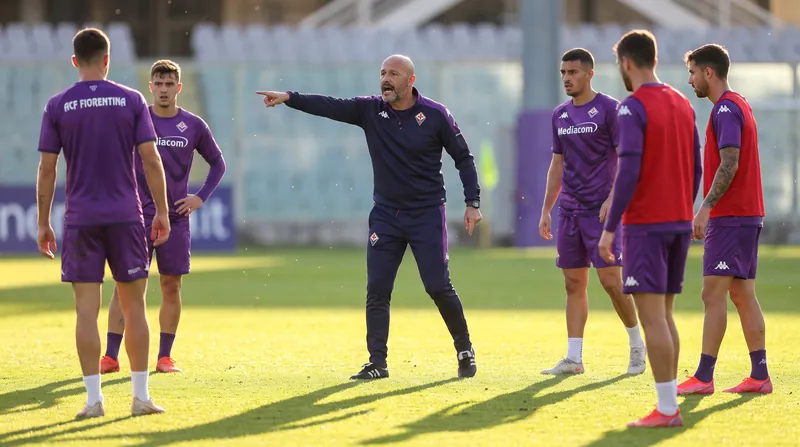
Fiorentina Re-Hire Paolo Vanoli as Head Coach After Sacking Fabio Grosso Three Matches Into Season
6 sources
Revenue Distribution
The €853 Million 'Value Pillar': How UEFA's New Champions League Revenue Engine Actually Works
7 sources

Mount Mizhirgi
Avalanche Kills 11 Climbers and Leaves Six Missing on Russia's Mount Mizhirgi
6 sources

WSL Rules
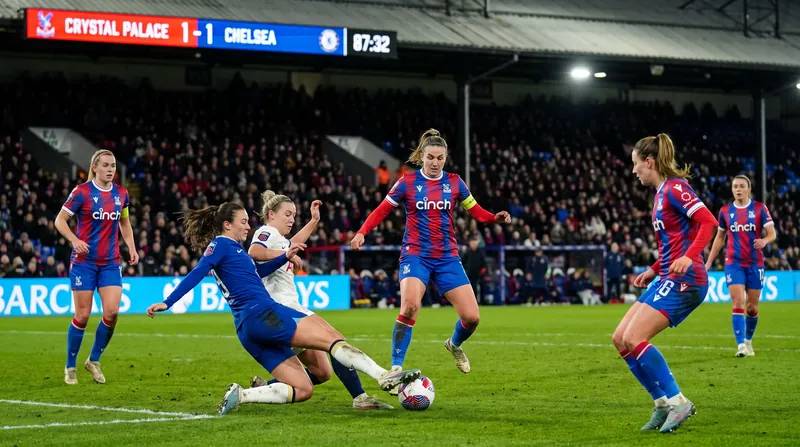
Crystal Palace Faces Points Deduction After Using Four Substitution Windows in WSL Opener Win
6 sources
Every angle. Every day.
Get Sports stories with full source coverage and perspective breakdowns delivered to your inbox.