
Key U.S. Surveillance Power Set to Lapse Amid Political Standoff Over Intelligence Chief
Section 702 of the Foreign Intelligence Surveillance Act will expire Friday at midnight after the House rejected a short-term extension. The lapse stems from a bipartisan standoff over President Trump's temporary appointment of a loyalist to lead the intelligence community, though actual surveillance operations are expected to continue temporarily under a prior court order.
By Factlen Editorial Team
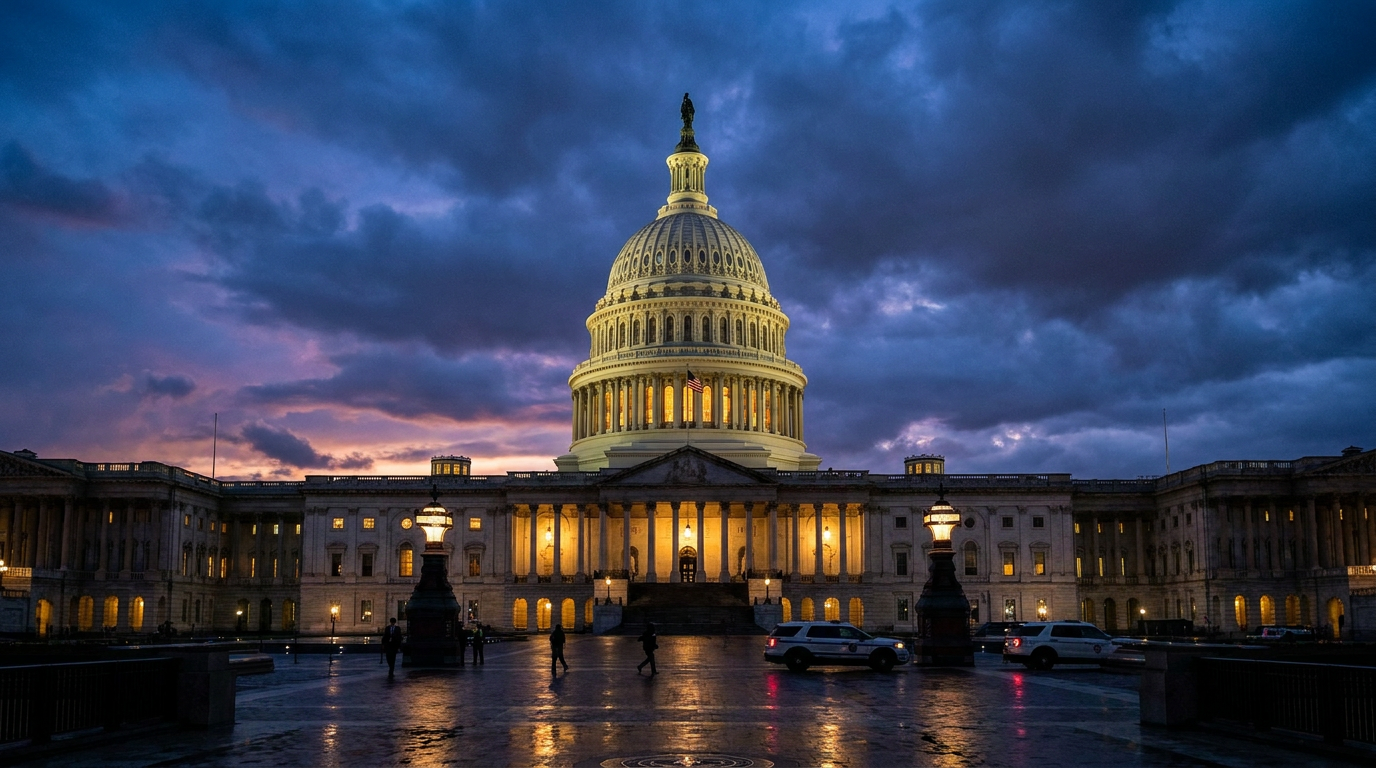
- National Security Establishment
- Views Section 702 as an existential necessity for protecting the homeland from foreign threats.
- Privacy Reformers
- Demands strict warrant requirements to prevent the warrantless surveillance of American citizens.
- Political Pragmatists
- Focuses on resolving the immediate leadership standoff to restore the intelligence community's statutory authority.
What's not represented
- · Foreign nationals whose communications are routinely collected without constitutional protections
- · Frontline intelligence analysts who rely on the database for daily threat assessments
Why this matters
Section 702 allows the U.S. government to intercept international communications without a warrant, forming the backbone of modern counterterrorism and counterespionage. Its expiration creates legal uncertainty that could force telecom companies to stop cooperating with intelligence agencies, potentially blinding the U.S. to foreign threats.
Key points
- Section 702 of FISA will expire at midnight Friday after the House rejected a temporary extension in a 218-198 vote.
- The lapse was triggered by bipartisan backlash over President Trump's appointment of loyalist Bill Pulte as acting intelligence chief.
- Trump subsequently nominated former SEC Chair Jay Clayton for the permanent role, but the House had already recessed.
- Surveillance operations can technically continue until March 2027 under a prior court order, mitigating immediate intelligence drop-offs.
- Telecom companies may still refuse to cooperate with data requests, fearing legal liability without an active congressional statute.
- Privacy advocates are using the lapse as leverage to demand a warrant requirement for searching Americans' communications.
A cornerstone of the American intelligence apparatus is set to go dark at midnight on Friday, the casualty of a bitter partisan standoff over the leadership of the nation's spy agencies. Section 702 of the Foreign Intelligence Surveillance Act, which allows the government to intercept the international communications of foreign targets without a warrant, will lapse after the House of Representatives rejected a last-ditch, short-term extension. The 218-198 vote on Thursday saw 19 Republicans join nearly all Democrats in torpedoing the measure, guaranteeing the expiration of a tool that intelligence officials say forms the backbone of modern counterterrorism and counterespionage.[1][6]
The immediate catalyst for the legislative collapse was not the surveillance program itself, but a revolt over President Donald Trump's decision to install a political loyalist atop the intelligence community. Earlier in the month, Trump tapped Bill Pulte—a federal housing finance regulator and major Republican donor with no national security experience—to serve as the acting Director of National Intelligence. Democrats, who were initially expected to support a clean extension of the FISA authority, balked at handing sweeping warrantless surveillance powers to an acting director they viewed as a partisan operative.[3][4]
Section 702, first enacted in 2008, was designed to modernize the government's ability to track terrorists and spies in the digital age. It permits the National Security Agency and the FBI to compel U.S. telecommunications companies to hand over the emails, text messages, and phone records of non-U.S. citizens located abroad. However, because the internet is borderless, the dragnet routinely sweeps up the communications of Americans who happen to be in contact with those foreign targets. Intelligence agencies can subsequently query that database for the names or identifiers of U.S. citizens—a practice critics deride as a "backdoor search" loophole.[7][8]
The intelligence community has spent weeks warning of catastrophic consequences if the statute is allowed to expire. The government estimates that more than 60 percent of the President's daily intelligence briefing relies on information collected under Section 702. The FBI credits the database with disrupting foreign assassination plots on U.S. soil, identifying Chinese state-sponsored hackers infiltrating American transportation hubs, and tracking ransomware syndicates. Allowing the law to lapse, officials argue, effectively blinds the United States to incoming threats during a period of acute global instability.[2][7]

Despite the midnight deadline, the intelligence community will not face an immediate, total blackout on Saturday morning. A legal failsafe is currently in place: the secretive Foreign Intelligence Surveillance Court (FISC), which oversees the program, recertified the government's Section 702 procedures in March. Because that court order operates on an annual basis, the Department of Justice maintains that surveillance operations can legally continue uninterrupted through March 2027, even without an active congressional statute.[4][6]
Despite the midnight deadline, the intelligence community will not face an immediate, total blackout on Saturday morning.
However, that judicial safety net may not be enough to keep the data flowing. The U.S. government relies entirely on the cooperation of major telecommunications and tech companies to execute the intercepts. Industry analysts and lawmakers have warned that some of these carriers are privately threatening to halt their compliance once the statute lapses. Without the explicit legal shield provided by an active act of Congress, corporate general counsels fear their companies could face massive civil liability for handing over user data to the government.[6]
For a vocal coalition of privacy advocates, the expiration is not a crisis, but a long-overdue opportunity for reform. Organizations like the American Civil Liberties Union and the Electronic Privacy Information Center have spent years documenting instances where the FBI improperly used the 702 database to search for the communications of political activists, journalists, and ordinary citizens. They argue that the program has morphed into a tool for domestic surveillance, fundamentally violating the Fourth Amendment.[8]
This privacy push has forged one of the most unusual alliances in Washington, uniting progressive Democrats with far-right Republicans. Both factions have demanded that any long-term reauthorization of Section 702 include a strict warrant requirement before the FBI can search the database for an American's communications. The intelligence community has fiercely resisted this amendment, arguing that forcing analysts to obtain a warrant would fatally slow down investigations in fast-moving national security crises.[3][6]

The FBI has also pointed to recent internal overhauls to argue that a warrant requirement is unnecessary. Following a series of highly publicized compliance failures, the bureau implemented strict new auditing and training protocols for analysts accessing the database. According to the Department of Justice, those remedial measures have resulted in a 98 percent compliance rate for U.S. person queries over the past year, a figure cited by the FISC in its most recent reauthorization.[7]
In a bid to salvage the program, the White House attempted a dramatic pivot late Thursday. Acknowledging the insurmountable opposition to his acting intelligence chief, President Trump officially nominated former Securities and Exchange Commission Chair Jay Clayton to serve as the permanent Director of National Intelligence. The nomination of Clayton, a respected Wall Street lawyer who served in Trump's first term, was widely seen as an olive branch to moderate lawmakers demanding a conventional, confirmable figure at the helm.[5]
But the concession came too late to prevent the Friday night lapse. By the time the Clayton nomination was announced, the House of Representatives had already adjourned for a week-long recess. When lawmakers return to Washington on June 23, they will face a fractured landscape. The intelligence community will be operating on borrowed time under the FISC order, telecoms will be weighing their legal exposure, and the bipartisan coalition of privacy hawks will have maximum leverage to force a vote on the warrant requirement that has eluded them for over a decade.[1][6]
How we got here
2008
Congress enacts Section 702 of the Foreign Intelligence Surveillance Act, codifying post-9/11 surveillance programs.
March 2026
The Foreign Intelligence Surveillance Court (FISC) recertifies the Section 702 program for another year, through March 2027.
June 2, 2026
President Trump appoints Bill Pulte as acting Director of National Intelligence, sparking bipartisan backlash.
June 11, 2026
The House rejects a short-term extension of Section 702 in a 218-198 vote; Trump nominates Jay Clayton as permanent DNI.
June 12, 2026
Section 702 is set to expire at midnight as lawmakers leave Washington for a recess.
Viewpoints in depth
National Security Establishment
Argues that Section 702 is an indispensable tool for preventing terrorism and cyberattacks.
Intelligence officials and allied lawmakers view the expiration as a critical vulnerability. They point to the fact that 60 percent of the President's daily intelligence briefing is derived from Section 702 data, which has been used to thwart assassination plots and track state-sponsored hackers. From this perspective, adding a warrant requirement would fatally slow down investigations during fast-moving crises, and the recent 98 percent compliance rate proves that internal FBI reforms are already working.
Privacy & Civil Liberties Advocates
Argues the program is a backdoor for warrantless surveillance of American citizens.
A bipartisan coalition of progressive Democrats and conservative Republicans, backed by groups like the ACLU, view the lapse as necessary leverage. They argue that because the dragnet inevitably sweeps up the communications of Americans interacting with foreigners, the FBI's ability to query that data without a warrant violates the Fourth Amendment. They are demanding a strict warrant requirement as the price of reauthorization, dismissing internal FBI compliance metrics as insufficient protection against domestic surveillance abuses.
Telecommunications Providers
Caught in the middle, prioritizing legal protection over intelligence gathering.
While not driving the political debate, the tech and telecom companies that physically execute the government's wiretaps are a crucial variable. Without an active congressional statute shielding them from liability, corporate general counsels fear that complying with data requests—even those backed by a FISC court order—could expose them to massive civil lawsuits from users. Their potential refusal to cooperate is the primary reason the intelligence community fears 'going dark' this weekend.
What we don't know
- Whether major telecommunications companies will actually halt their cooperation with intelligence agencies this weekend.
- If the nomination of Jay Clayton will be enough to win back Democratic support for a clean reauthorization when Congress returns.
- Whether the bipartisan coalition demanding a warrant requirement has enough leverage to force the amendment into the final bill.
Key terms
- Section 702
- A provision of the Foreign Intelligence Surveillance Act that allows U.S. agencies to collect communications of non-Americans abroad without a warrant.
- Foreign Intelligence Surveillance Court (FISC)
- A secretive federal court established to oversee requests for surveillance warrants against foreign spies inside the United States.
- Backdoor Search
- The practice of intelligence agencies querying the Section 702 database for the communications of American citizens without obtaining a traditional warrant.
- Director of National Intelligence (DNI)
- The cabinet-level official who serves as the head of the U.S. Intelligence Community and principal advisor to the President on intelligence matters.
Frequently asked
Will all foreign surveillance stop on Saturday?
No. A secret intelligence court already certified the program's procedures through March 2027, providing a legal basis for collection to continue temporarily.
Why did the House vote fail?
Democrats and some Republicans revolted over the appointment of a political loyalist with no intelligence experience to lead the nation's spy agencies.
Does Section 702 target Americans?
By law, it only targets foreigners abroad. However, it routinely sweeps up the communications of Americans who interact with those foreign targets, which agencies can then search.
What happens when Congress returns?
Lawmakers will have to negotiate a new reauthorization bill, which will likely include a fierce debate over whether to require a warrant to search for Americans' data.
Sources
Source coverage
8 outlets
3 viewpoints surfaced







[1]The New York TimesPolitical Pragmatists
A Key Spying Power Is Expiring. Will Foreign Surveillance Go Dark?
Read on The New York Times →[2]NPRNational Security Establishment
A key U.S. spy tool is set to lapse on Friday — now what?
Read on NPR →[3]The GuardianPrivacy Reformers
A powerful US surveillance law is set to expire – what happens now?
Read on The Guardian →[4]Associated PressNational Security Establishment
A key US government surveillance program is set to expire. A look at what that means
Read on Associated Press →[5]ForbesPolitical Pragmatists
Trump Nominates Jay Clayton For Director Of National Intelligence After Interim Pick Pulte Derailed Congress
Read on Forbes →[6]AxiosPrivacy Reformers
House rejects last-ditch FISA extension ahead of Friday deadline
Read on Axios →[7]FBINational Security Establishment
Foreign Intelligence Surveillance Act (FISA) and Section 702
Read on FBI →[8]ACLUPrivacy Reformers
Warrantless Surveillance Under Section 702 of FISA
Read on ACLU →



Every angle. Every day.
Get news politics stories with full source coverage and perspective breakdowns delivered to your inbox.