
J.D. Power 2026 Study: Vehicle Quality Rises, but Touchscreen Frustration Peaks
While overall mechanical reliability in new vehicles has reached historic highs, the 2026 J.D. Power Initial Quality Study reveals that complex infotainment systems and the removal of physical buttons remain the primary source of owner complaints.
By Factlen Editorial Team
- Automakers & Tech Integrators
- Prioritize software-defined vehicles, manufacturing cost reduction, and the ability to deliver post-purchase updates via screens.
- Safety & Usability Advocates
- Argue that burying core functions in digital sub-menus creates dangerous cognitive load and distracted driving.
- Consumer Reviewers
- Value seamless smartphone integration but express deep frustration with system lag and the loss of tactile muscle memory.
What's not represented
- · Used Car Buyers
- · Component Suppliers
Why this matters
For consumers shopping for a new vehicle in 2026, the defining factor in daily satisfaction is no longer engine reliability, but digital usability. Understanding the trade-offs between screen-heavy interfaces and traditional tactile controls can prevent years of daily commuting frustration.
Key points
- Overall mechanical vehicle quality reached a historic high in the 2026 J.D. Power Initial Quality Study.
- Infotainment systems, specifically complex touchscreens and connectivity drops, account for the largest share of consumer complaints.
- Automakers favor screens to reduce manufacturing costs and enable over-the-air software updates.
- Consumers and safety advocates are demanding a return to physical buttons for core functions like climate and volume control.
- Several major brands are now reversing the 'screen-only' trend, reintroducing tactile dials in their upcoming models.
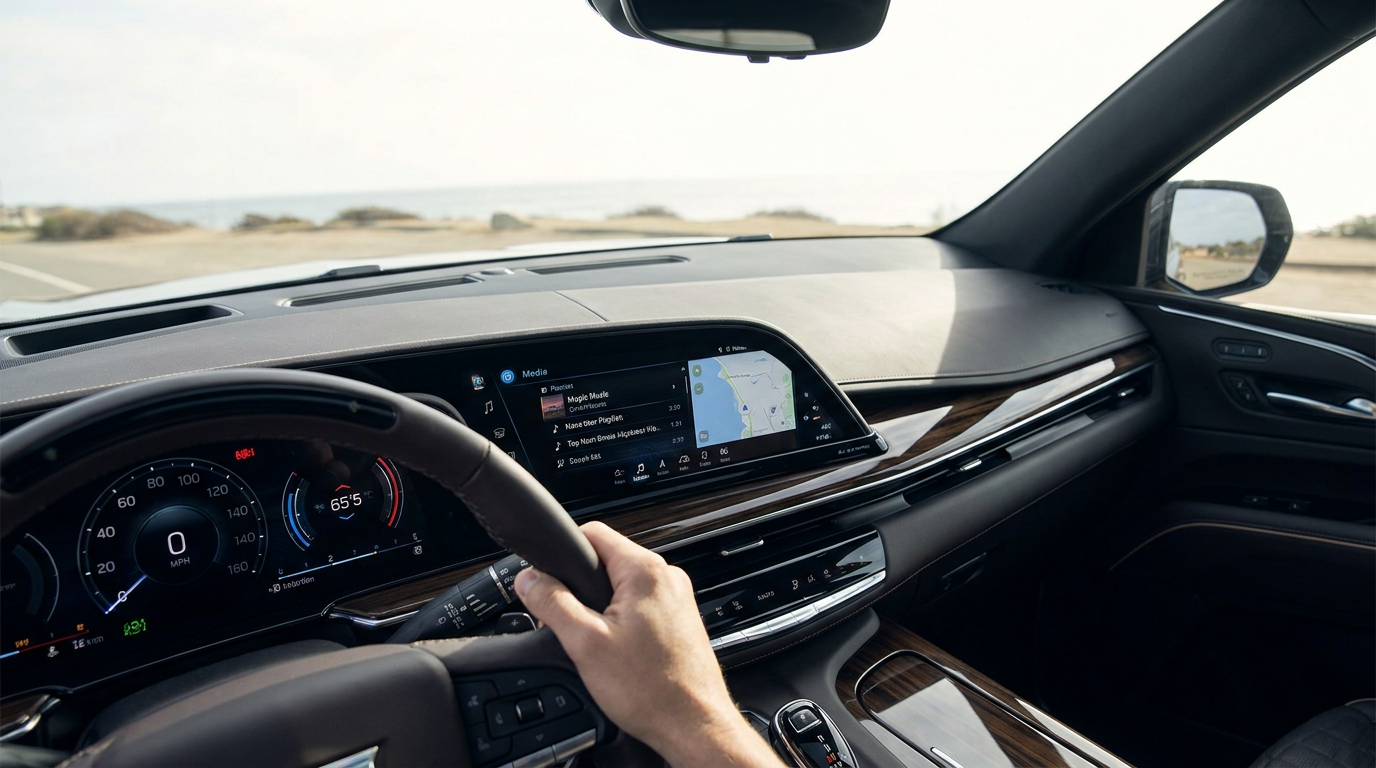
The golden age of automotive reliability has quietly arrived, but it is being overshadowed by a glowing, 15-inch rectangle in the center of the dashboard. According to the 2026 J.D. Power Initial Quality Study (IQS) released this week, mechanical problems—ranging from engine knock to transmission hesitation—have dropped to historic lows. Yet, overall consumer satisfaction remains bottlenecked by a single, persistent category: infotainment systems and the digital user experience.[1][2]
The IQS measures vehicle quality by tracking problems per 100 vehicles (PP100) during the first 90 days of ownership. For 2026, the data reveals a stark divergence. While traditional hardware defects improved by 12 PP100 across the industry, complaints related to software lag, dropped smartphone connectivity, and confusing touchscreen menus surged, accounting for more than a quarter of all reported issues.[1]

This data crystallizes a decade-long industry debate: the trade-off between the sleek, software-defined cabin and the traditional, tactile dashboard. Automakers have spent the last several years aggressively migrating core vehicle functions—climate control, windshield wipers, heated seats, and audio volume—into centralized touchscreens, fundamentally altering how drivers interact with their vehicles.[3][5]
The case for the screen-centric cabin is rooted heavily in manufacturing efficiency and future-proofing. From an engineering perspective, replacing dozens of physical switches with a single glass panel drastically reduces wiring harness complexity, cutting both weight and assembly costs. Furthermore, a digital interface allows automakers to deploy over-the-air (OTA) updates, adding new features, fixing bugs, or even selling subscription services long after the car has left the dealership lot.[2][6]
Tech-forward consumers also find value in this approach. A massive, high-definition display allows for immersive, full-screen navigation, seamless integration with Apple CarPlay and Android Auto, and a minimalist aesthetic that mimics modern consumer electronics. When parked, these screens double as entertainment hubs for streaming video or gaming—a feature increasingly relevant in the era of EV fast-charging.[5]
When parked, these screens double as entertainment hubs for streaming video or gaming—a feature increasingly relevant in the era of EV fast-charging.
However, the case against the all-touchscreen approach is mounting, driven primarily by usability and safety concerns. Physical buttons offer haptic certainty; a driver can reach out, feel a dial, and adjust the cabin temperature purely through muscle memory without taking their eyes off the road. Touchscreens, devoid of physical boundaries, demand visual confirmation for every interaction.[3][4]
Safety advocates highlight that burying core functions in digital sub-menus creates dangerous cognitive load. Studies cited by consumer watchdogs indicate that adjusting climate settings via a touchscreen can take a driver's eyes off the road for up to 3.5 seconds longer than using a traditional tactile dial. At highway speeds, that equates to traveling the length of a football field entirely blind.[4]

Beyond safety, daily drivability suffers when software fails to match the instant response of hardware. Consumers report immense frustration with system lag upon vehicle startup, glare washing out digital controls in direct sunlight, and the complete loss of HVAC control if the central computer crashes or reboots while driving.[1][3]
Conversely, the traditional physical button layout is not without its own trade-offs. A dashboard laden with single-function switches can feel cluttered and dated. More importantly, hardware is immutable; if an automaker designs a better way to manage battery pre-conditioning or audio equalization, they cannot easily retrofit a physical button to older models, leaving those vehicles technologically stagnant.[5][6]
The regulatory landscape is now forcing a middle ground. European safety regulators recently announced that future safety ratings will penalize vehicles that lack physical controls for essential functions like turn signals, hazard lights, and windshield wipers. This has prompted a global rethink among automotive designers.[4]

Industry analysts suggest that 2026 marks the end of "Peak Screen." Several major automakers are actively reversing course, utilizing a blended approach for their next-generation interiors. This hybrid philosophy retains large, high-resolution displays for mapping and media, but reintroduces premium, tactile dials and toggle switches for climate, volume, and drive modes.[2][3]
Ultimately, the choice between these design philosophies dictates the daily ownership experience. A screen-heavy, minimalist cabin fits well for tech-forward early adopters who prioritize OTA updates and a smartphone-like aesthetic. However, it does not fit well for pragmatic commuters who prioritize immediate, eyes-free operation and view their vehicle primarily as a tool for transportation rather than a rolling computer.[1][5]
How we got here
2012
Tesla introduces the Model S with a 17-inch central touchscreen, sparking an industry-wide race toward digital cabins.
2020
Mainstream automakers begin aggressively removing physical climate and volume controls to cut costs and mimic tech aesthetics.
2023
Euro NCAP announces future safety ratings will penalize cars lacking physical buttons for basic driving functions.
June 2026
J.D. Power confirms infotainment remains the primary drag on new vehicle satisfaction despite record mechanical reliability.
Viewpoints in depth
Automakers & Tech Integrators
Viewing the vehicle as a software platform rather than purely mechanical hardware.
For automotive engineers and tech integrators, the transition to screens is an irreversible evolution. By consolidating controls into a central computer, manufacturers eliminate miles of heavy copper wiring and hundreds of failure-prone physical switches. More importantly, a screen-centric architecture allows the vehicle to improve over time. Through over-the-air updates, automakers can refine battery management, update navigation interfaces, and deploy new safety features without requiring the owner to visit a dealership or buy a new car.
Safety & Usability Advocates
Focusing on the immediate cognitive and physical demands of operating a vehicle at speed.
Safety watchdogs and usability experts argue that the automotive industry has conflated consumer electronics with heavy machinery. While a smartphone demands full visual attention, a car demands that attention be kept on the road. Advocates point to studies showing that navigating a flat pane of glass for basic functions—like turning on the windshield wipers or adjusting the defroster—removes the driver's eyes from the road for critical seconds. They argue that tactile, haptic controls are not a relic of the past, but a fundamental requirement for safe operation.
Everyday Consumers
Caught between the desire for modern connectivity and the frustration of daily usability.
The consumer perspective is highly pragmatic. Buyers overwhelmingly want the benefits of modern screens, specifically the seamless integration of Apple CarPlay and Android Auto for navigation and podcasts. However, they draw a hard line at core driving functions. The J.D. Power data reflects a deep frustration with system lag, software crashes, and the daily annoyance of tapping through three sub-menus just to turn on a heated seat. Consumers are increasingly voting with their wallets for vehicles that offer a hybrid approach: big screens for media, physical dials for comfort.
What we don't know
- Whether upcoming AI-driven voice assistants will become reliable enough to effectively replace the need for physical buttons.
- How the long-term durability and replacement costs of massive cabin screens will compare to traditional analog components over a 10-to-15-year vehicle lifespan.
Key terms
- PP100
- Problems Per 100 vehicles, the standard metric used by J.D. Power to measure initial vehicle quality and consumer complaints.
- Haptic Feedback
- The use of touch-based sensations, such as a physical click or resistance, to confirm a user has successfully interacted with a control.
- Over-the-Air (OTA) Updates
- Software updates delivered wirelessly via cellular connection, allowing automakers to patch bugs or add features without requiring a dealership visit.
- Cognitive Load
- The total amount of mental effort being used in the working memory, which increases dangerously when a driver must navigate complex digital menus.
Frequently asked
Why do automakers prefer touchscreens over physical buttons?
Touchscreens reduce manufacturing costs by eliminating complex wiring harnesses and physical switches. They also allow automakers to update the car's interface and add new features over-the-air after purchase.
Are touchscreens actually more dangerous to use while driving?
Safety studies indicate that navigating touchscreen menus requires drivers to take their eyes off the road significantly longer than reaching for a physical dial, increasing the risk of distraction.
Will physical buttons make a comeback in future cars?
Yes. In response to consumer backlash and new safety rating criteria from European regulators, several major automakers are reintroducing physical dials and switches for core functions in their upcoming models.
Sources
Source coverage
6 outlets
3 viewpoints surfaced






[1]J.D. PowerConsumer Reviewers
2026 U.S. Initial Quality Study: Mechanical Quality Soars as Infotainment Frustrations Persist
Read on J.D. Power →[2]Automotive NewsAutomakers & Tech Integrators
Automakers see mechanical quality gains, but software bugs drag down IQS scores
Read on Automotive News →[3]Car and DriverConsumer Reviewers
J.D. Power 2026: Why Your Car's Touchscreen is Still Driving You Crazy
Read on Car and Driver →[4]Consumer ReportsSafety & Usability Advocates
The Usability Crisis: Why Physical Buttons Are Making a Comeback
Read on Consumer Reports →[5]The VergeConsumer Reviewers
Cars are becoming smartphones, and buyers are pushing back
Read on The Verge →[6]WardsAutoAutomakers & Tech Integrators
Interior Design Trade-offs: The Cost of Screen-Centric Cabins
Read on WardsAuto →
Every angle. Every day.
Get automotive stories with full source coverage and perspective breakdowns delivered to your inbox.