
The Dead-Ball Revolution: How Set-Piece Specialists Became the World Cup's Most Valuable Coaches
Set pieces account for nearly a third of all goals in international tournaments, prompting national teams to hire dedicated dead-ball specialists to engineer marginal gains. This tactical shift has transformed corners and free kicks from hopeful crosses into highly choreographed, data-driven offensive schemes.
By Factlen Editorial Team
- Data Analysts & Tacticians
- Argue that set pieces are the most controllable, mathematically exploitable situations in football and require dedicated specialist coaching.
- Underdog Nations
- View set pieces as the ultimate equalizer, allowing teams with less technical talent to compete against global powerhouses through discipline and rehearsal.
- Football Traditionalists
- Acknowledge the effectiveness of set pieces but worry that an over-reliance on rehearsed dead balls detracts from the spontaneous, flowing beauty of open play.
What's not represented
- · Goalkeeping Coaches
- · Match Officials
Why this matters
In a knockout tournament where open-play goals are notoriously difficult to engineer against elite, organized defenses, a single rehearsed corner routine often dictates who advances and who goes home. Understanding this hidden tactical battle changes how fans watch every dead-ball situation.
Key points
- Nearly 30% of goals in major international tournaments originate from set pieces.
- Elite national teams now employ dedicated set-piece coaches to design highly choreographed routines.
- Modern corners utilize basketball-style screens and decoy runs to create space.
- Data analytics have driven a massive shift toward dangerous, in-swinging deliveries.
- For underdog nations, mastering the dead ball is the most effective way to bridge the talent gap against heavy favorites.
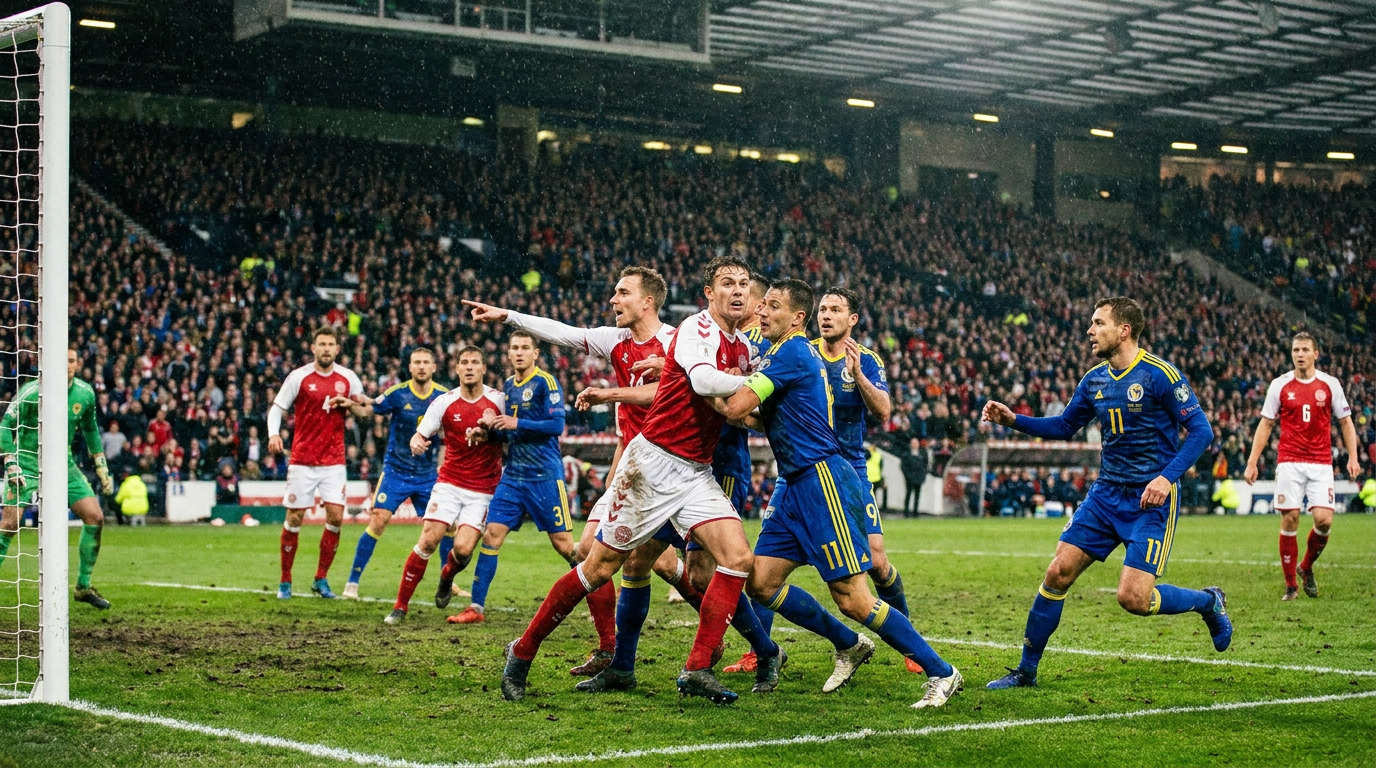
For decades, the corner kick was treated with a mixture of hope and brute force. A team would send their tallest central defenders into the opponent's penalty area, a designated taker would loft the ball into the 'mixer,' and everyone would cross their fingers. It was a lottery of deflections, physical mismatches, and chaos. But in the modern era of international football, that chaos has been meticulously tamed. The dead ball is no longer a roll of the dice; it is a highly choreographed set play, designed by specialized coaches who treat the penalty box like a chessboard.[1][4]
The catalyst for this revolution is simple mathematics. Across recent major international tournaments, roughly 30 percent of all goals have originated from set pieces—corners, free kicks, penalties, and even long throw-ins. In the pressure-cooker environment of a World Cup, where national teams have mere weeks to develop the kind of open-play chemistry that club teams spend years refining, the set piece is the ultimate equalizer. It is a closed, controllable environment in a sport defined by fluidity and unpredictability.[2][6]
This statistical reality has birthed a new, highly coveted role within national team backrooms: the set-piece specialist. Once viewed with skepticism by football purists who believed the game should be won through open-play brilliance, these coaches are now the secret weapons of the world's elite. They spend hundreds of hours analyzing opponent marking schemes, calculating the exact trajectory of deliveries, and designing routines that exploit microscopic gaps in a defensive block.[1][5]

The anatomy of a modern corner routine is a study in deception and spatial manipulation. It rarely relies on a single player simply out-jumping an opponent. Instead, routines involve 'blockers'—players whose sole job is to legally impede the run of an opponent's best header of the ball, much like a pick in basketball. Simultaneously, 'decoy' runners drag zonal markers out of position, creating a vacuum of space for the 'target' player to attack. Every run is timed to the fraction of a second, triggered by a subtle hand signal from the taker.[4][5]
A major shift driven by these specialists is the overwhelming preference for the in-swinging corner. Historically, out-swingers (curling away from the goalkeeper) were favored to prevent the keeper from easily catching the cross. However, data analytics revealed a different truth: in-swingers are significantly more dangerous. Because the ball is curving toward the goal, any touch—from an attacker or a panicked defender—is highly likely to result in a shot on target. Today, nearly 70 percent of corners taken by elite teams are in-swingers, delivered with vicious pace rather than looping height.[3][6]
England's national team has been at the forefront of this international revolution. Dating back to their deep run in 2018, where they scored a record number of goals from dead balls, the Three Lions have consistently treated set pieces as a primary offensive weapon rather than an afterthought. Under Thomas Tuchel, this philosophy has only deepened, with specialized analysts breaking down the exact defensive tendencies of group-stage opponents months in advance, tailoring specific routines to exploit those exact weaknesses.[1][5]
The United States Men's National Team has similarly embraced the marginal gains of the dead ball. Recognizing the sheer athleticism and aerial dominance of players like Weston McKennie and Chris Richards, the USMNT backroom staff has integrated dedicated set-piece modules into every training camp. For a team that sometimes faces deeply entrenched low blocks in CONCACAF qualifying and on the global stage, the ability to manufacture a goal from a static situation is a vital tactical safety net.[1][7]

The United States Men's National Team has similarly embraced the marginal gains of the dead ball.
Defending set pieces has evolved just as rapidly, creating a fascinating cat-and-mouse game between coaches. The debate between man-to-man marking (assigning a defender to follow a specific attacker everywhere) and zonal marking (defending specific areas of space) has largely been settled by a hybrid approach. Elite teams like Argentina deploy a mix: their most dominant aerial defenders guard the most dangerous zones (typically the near post and the center of the six-yard box), while designated 'stoppers' man-mark the opponent's biggest threats to disrupt their momentum.[2][4]
This hybrid defensive system is designed to protect the goalkeeper above all else. By placing a physical presence right on the edge of the six-yard box, teams prevent attackers from crowding the keeper, allowing shot-stoppers like Emiliano Martínez the freedom to command their area. The set-piece coach's job is to constantly find ways to crack this hybrid code, often by overloading one specific zone with three or four attackers simultaneously to overwhelm the zonal defender.[4][6]
The psychological warfare surrounding the dead ball is equally intense. Teams now routinely employ delay tactics—arguing with the referee, adjusting the ball multiple times, or having two players stand over a free kick in deep conversation. These are rarely genuine disputes; they are calculated moves designed to break the concentration of the defensive line and the goalkeeper, forcing them to hold their mental focus and physical tension for an uncomfortable length of time before the delivery.[1][5]
Even the humble throw-in has been weaponized. Pioneered by specialists like Thomas Grønnemark, teams now recognize that retaining possession from a throw-in under pressure is statistically difficult. By teaching players specific techniques to increase throwing distance and designing movement patterns to create passing triangles, teams transform throw-ins from a 50-50 battle for a loose ball into a reliable method of progressing up the pitch or, in the attacking third, a dangerous cross into the box.[4][7]

The impact of this revolution extends to squad selection itself. In the past, a player's ability to deliver a world-class dead ball was a nice bonus. Today, it can be the sole reason a player earns a spot on a 26-man World Cup roster. A full-back who lacks elite recovery pace but possesses a mathematically perfect in-swinging delivery is often deemed more valuable than a superior athlete who cannot consistently hit the 'delivery zone' from a corner flag.[3][5]
For the expanded 48-team format, the set-piece takes on an even greater significance. For emerging football nations and tournament debutants facing off against traditional powerhouses, dominating open play is often an unrealistic goal. The talent disparity in midfield possession can be overwhelming. However, a meticulously rehearsed corner routine requires discipline, timing, and one excellent delivery—traits that do not require a roster of Champions League superstars to execute.[1][6]
Nations like Panama, Haiti, and Curacao view the set piece as the great equalizer. By dedicating outsized portions of their training camps to dead-ball situations, underdog teams can bridge the technical gap. If they can maintain a solid defensive shape and force a few corners or attacking free kicks, they know they have a mathematically sound chance of stealing a result against a heavily favored opponent.[2][7]

Ultimately, the rise of the set-piece specialist represents the maturation of international football. As the margins between victory and defeat shrink ever smaller, relying on spontaneous moments of individual brilliance is no longer a viable strategy for sustained success. The World Cup is increasingly won in the classroom and on the training pitch, where data analysts and specialist coaches turn the game's static moments into its most lethal weapons.[1][4][5]
Viewpoints in depth
Data Analysts & Tacticians
Argue that set pieces are the most controllable, mathematically exploitable situations in football.
For the data-driven tactician, football is a game of uncontrollable variables—except when the ball is dead. Analysts view set pieces as the only moments in a match where a coach has total control over player positioning and ball trajectory. By utilizing xG (Expected Goals) models, they have proven that specific delivery zones and in-swinging trajectories yield mathematically higher scoring probabilities. To this camp, ignoring set-piece optimization is akin to leaving free points on the board, and the employment of a specialist coach is a baseline requirement for any serious World Cup contender.
Underdog Nations
View set pieces as the ultimate equalizer against technically superior opponents.
For emerging football nations and tournament debutants, the set piece is a lifeline. Coaches of underdog teams recognize that going toe-to-toe in midfield possession against giants like France, Argentina, or Spain is a losing battle. However, a corner kick requires no sustained possession. It demands only discipline, a well-rehearsed routine, and one accurate delivery. By dedicating outsized portions of their limited training camps to dead-ball situations, these nations use set pieces to bridge the massive technical gap, turning a single foul won near the corner flag into a genuine opportunity for a historic upset.
Football Traditionalists
Acknowledge the effectiveness of set pieces but worry about the over-mechanization of the sport.
While traditionalists cannot argue with the statistical success of set-piece specialists, they often lament the aesthetic shift it brings to the game. This camp, often comprising former players from earlier eras, believes that an over-reliance on rehearsed, basketball-style screens and stop-start dead-ball routines detracts from the spontaneous, flowing beauty of open-play football. They express concern that the modern game is becoming too mechanized, where the chaotic, individual brilliance that historically defined the World Cup is being replaced by algorithmic efficiency and choreographed set plays.
What we don't know
- Whether the expanded 48-team format will result in a statistically higher percentage of set-piece goals due to increased mismatches.
- How referees at the 2026 tournament will officiate the increasingly aggressive blocking and screening tactics used inside the penalty area.
Key terms
- Set Piece
- A situation where the ball is returned to open play following a stoppage, such as a corner kick, free kick, penalty, or throw-in.
- Low Block
- A defensive strategy where a team positions all its players deep in their own half to restrict space and frustrate the opponent's attack.
- Zonal Marking
- A defensive system where players are assigned to protect specific areas of the penalty box rather than following individual opponents.
- xG (Expected Goals)
- A statistical metric that assesses the quality of a scoring chance, calculating the likelihood that a specific shot will result in a goal.
- The Mixer
- A colloquial term for the crowded, chaotic area in the center of the penalty box during a cross or dead-ball delivery.
Frequently asked
What is the difference between an in-swinging and out-swinging corner?
An in-swinging corner curves toward the goal, making any touch highly dangerous. An out-swinging corner curves away from the goal and the goalkeeper, requiring the attacker to generate all the power for a header.
Why are set pieces so important in international football?
National teams have very little training time together compared to club teams, making it hard to develop complex open-play chemistry. Set pieces offer a controllable, rehearsed way to score.
What does a set-piece coach actually do?
They analyze opponent marking structures, design specific offensive routines (like blocks and decoy runs), and organize the team's defensive setup for corners and free kicks.
What is a hybrid marking system?
A defensive setup where a team's best aerial players guard specific high-danger zones, while other players are assigned to man-mark the opponent's most dangerous attackers.
Sources
Source coverage
7 outlets
3 viewpoints surfaced







[1]Factlen Editorial Team
Synthesis by Factlen editorial team
Read on Factlen Editorial Team →[2]FIFA Training CentreUnderdog Nations
The Impact of Set Plays in International Football
Read on FIFA Training Centre →[3]Opta AnalystData Analysts & Tacticians
Why In-Swinging Corners Rule the Modern Game
Read on Opta Analyst →[4]Coaches' VoiceData Analysts & Tacticians
Mastering the Dead Ball: The Rise of the Set-Piece Coach
Read on Coaches' Voice →[5]The AthleticFootball Traditionalists
How set-piece coaches went from football's laughing stock to its secret weapon
Read on The Athletic →[6]StatsBombData Analysts & Tacticians
Analyzing Set-Piece xG in International Tournaments
Read on StatsBomb →[7]ESPNUnderdog Nations
Why national teams are obsessing over throw-ins and corners
Read on ESPN →
More in sports
See all 25 stories →Standings
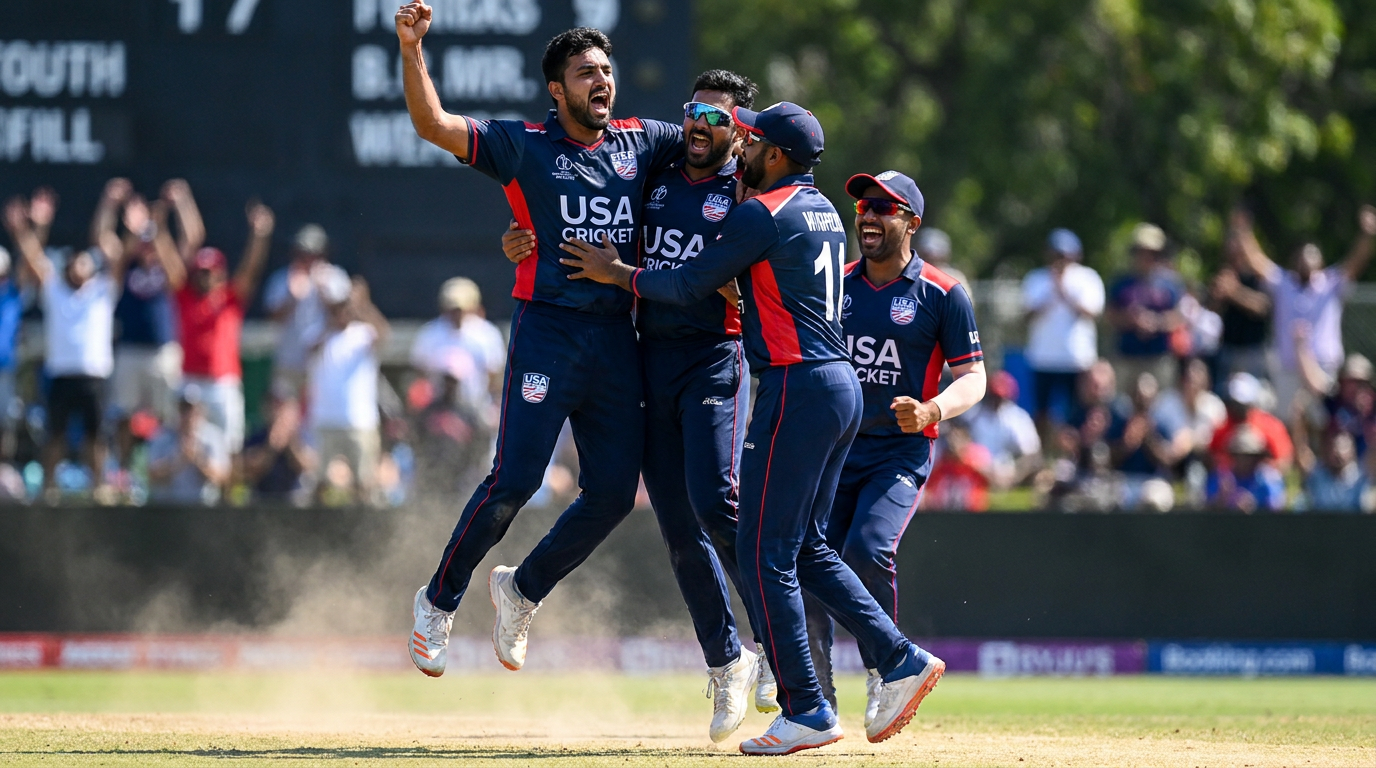
USA and Scotland Dominate World Cup League 2 Standings as Race for Qualifier Spots Intensifies
6 sources
Injury
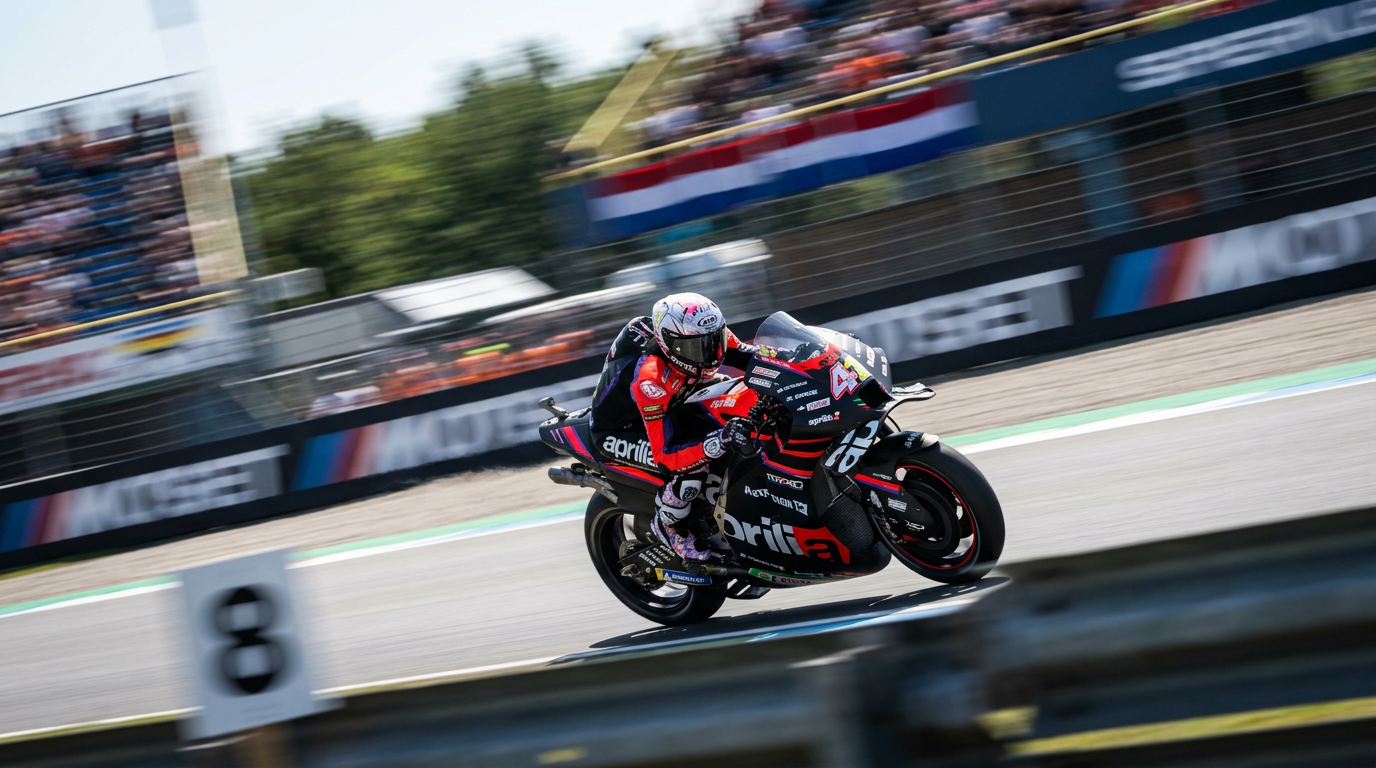
Marco Bezzecchi Cleared of Serious Injury Following Violent Assen Crash as Fermin Aldeguer Faces Summer Recovery
6 sources
Standings
Pato O'Ward Seizes IndyCar Championship Lead as Mid-Season Battle Tightens
6 sources
Injury
Falcons Edge Rusher Bralen Trice Cleared for 11-on-11 Drills After Missing First Two NFL Seasons
6 sources
Every angle. Every day.
Get sports stories with full source coverage and perspective breakdowns delivered to your inbox.