
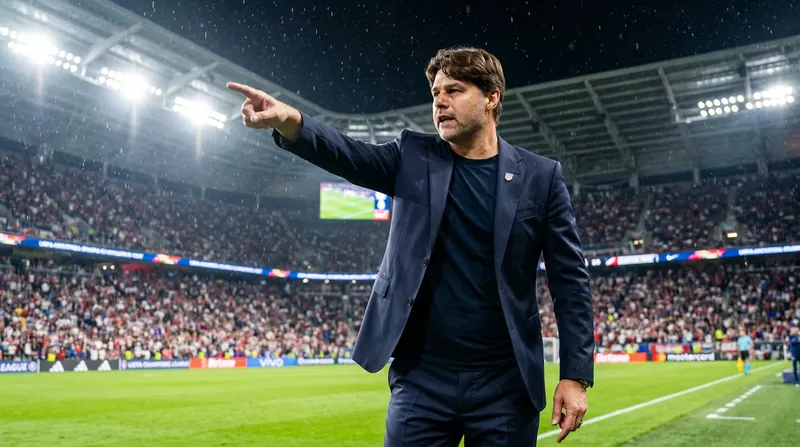
The 5-Second Rule: How Mauricio Pochettino Rewired the USMNT's Tactical DNA for the 2026 World Cup
By implementing a relentless high press and a fluid 3-2-5 possession structure, Mauricio Pochettino has transformed the United States Men's National Team into an aggressive, vertical force.
By Ryder James

Share this story
When the United States Men's National Team appointed Mauricio Pochettino in the autumn of 2024, the mandate was clear: transform a golden generation of athletes into a tactically elite unit capable of contending on home soil. For years, the USMNT had relied heavily on raw work rate and athleticism, often lacking the structural sophistication required to break down elite international defenses.
Pochettino arrived with a resume built at Tottenham Hotspur, Paris Saint-Germain, and Chelsea, bringing a philosophy rooted in relentless high pressing and vertical possession. The shift was immediate. The American side evolved from a team that merely ran hard into a collective machine that runs with devastating, coordinated purpose.[1]
At the heart of this transformation is a concept Pochettino and his players frequently summarize with a single word: aggression. In the context of this system, aggression does not simply mean physical tackling or combative fouls. It represents a structural mindset. There is nothing passive about how the United States operates under the Argentine manager. Whether they have the ball or have just lost it, every movement is designed to dictate the terms of the match and make the opponent profoundly uncomfortable.
To understand the mechanics of this system, one must first discard the traditional debate over fixed formations. Pundits and supporters have spent months arguing whether the USMNT plays a back four or a back three. The reality is that modern international football rarely adheres to static shapes, and Pochettino's blueprint shifts dramatically between different phases of play. The formation on the team sheet is merely a starting point; the true tactical identity is revealed in how the players rotate and adapt.
Out of possession, the United States typically organizes into a compact 4-4-2 defensive block. However, this shape is highly aggressive. Pochettino enforces a strict 'five-second rule' upon losing possession. The moment the ball is turned over, the nearest players execute a heavy-metal counter-press for exactly five seconds, swarming the opposition to win the ball back in dangerous areas. If the initial press fails to recover the ball, the team instantly retreats into their organized mid-block, denying space through the center of the pitch.[2]
The mechanics of this press rely heavily on the concept of 'cover shadows.' Rather than mindlessly sprinting at the player with the ball, the American forwards—often Folarin Balogun or Ricardo Pepi—press the ball carrier while simultaneously positioning their bodies to block the passing lane to the opponent's primary playmaker. By cutting off the center of the pitch, the USMNT systematically forces the opposition to play the ball toward the touchlines, where the sideline acts as an extra defender.[2]
Once the ball is forced wide, the trap is sprung. The American midfield, anchored by relentless engines like Weston McKennie and Tyler Adams, shifts aggressively to overload the flank. The team swarms in packs, often committing up to seven players in the attacking half to suffocate the opponent's build-up. This coordinated swarm ensures that even if the opposition manages to clear the ball, American center-backs like Tim Ream and Chris Richards are stationed high up the pitch to sweep up the loose balls and immediately recycle possession.
When the United States wins the ball back, their shape undergoes a radical metamorphosis. The defensive 4-4-2 dissolves, and the team expands into an expansive 3-2-5 structure to dominate possession. This fluidity is achieved through highly asymmetrical roles for the fullbacks, a hallmark of Pochettino's tactical design. The system demands immense tactical intelligence from the backline to execute this shift seamlessly without leaving the team exposed to counterattacks.
On the left flank, Antonee 'Jedi' Robinson is given the license to bomb forward, operating almost entirely as an out-and-out winger in possession. His high positioning provides crucial width and stretches the opposition's defensive block. Conversely, the right-back—frequently Joe Scally or Alex Freeman—tucks inside to form a makeshift back three alongside the two central defenders. This creates a secure foundation at the back, ensuring the team is never caught short-handed during transitions.[2]
Ahead of this back three, the USMNT utilizes a double pivot in midfield, creating a '4+2 diamond' build-up structure. The holding midfielders do not simply drop flat between the center-backs; instead, they stagger their positioning slightly higher to create vertical passing triangles. This diamond shape is designed to provoke the opponent's press, baiting them forward before the American defenders slice through the lines with sharp, vertical passes.[2]
The most devastating consequence of this 3-2-5 possession shape is how it unlocks Christian Pulisic. Freed from the traditional responsibilities of a touchline-hugging winger, Pulisic is instructed to invert into the left half-space—the dangerous corridor between the opponent's fullback and center-back. Operating as a roaming inside forward, Pulisic combines with the overlapping Robinson and the central striker, creating a lethal attacking trident that overwhelms defensive lines.[2]
On the opposite side, the right winger—often Timothy Weah or Giovanni Reyna—maintains a slightly wider position or drifts centrally depending on the opponent's shape. With McKennie frequently pushing high from the midfield to join the attack, the United States consistently commits five players to the final third. This five-man frontline creates numerical overloads against traditional back fours, forcing opposing defenders into impossible decisions about who to mark.
While the team is capable of patient build-up, Pochettino's ultimate goal is verticality. The system is engineered to transition from defense to a high-quality shooting opportunity in under ten seconds. When the ball is won in the midfield, the immediate instinct is to look forward. The pace of Pulisic, Weah, and Balogun is weaponized through quick, direct passes that exploit the disorganized spaces left by the opponent's broken structure.[2]
Executing this system requires an extraordinary level of physical conditioning. The constant shifting between a back four and a back three, the relentless five-second counter-press, and the high-speed vertical transitions demand elite stamina. Fortunately, the current iteration of the USMNT boasts one of the most athletic rosters in international football. Players like McKennie, Adams, and Robinson possess the exact biological engines required to sustain Pochettino's heavy-metal tempo for a full ninety minutes.[1]
Ultimately, the tactical rewiring of the United States Men's National Team represents a maturation of the program. They are no longer the plucky underdogs relying on spirit and set-pieces, nor are they a team bogged down by sterile, purposeless possession. Under Mauricio Pochettino, the USMNT has forged a proactive, aggressive identity. By blending structural fluidity with their natural athleticism, they have built a tactical machine uniquely equipped to dictate the terms of engagement on the world's biggest stage.[1]
Key points
- Mauricio Pochettino has implemented a highly fluid tactical system for the USMNT, shifting between a 4-4-2 in defense and a 3-2-5 in possession.
- The team utilizes a strict 'five-second rule,' aggressively counter-pressing opponents immediately after losing the ball.
- Asymmetrical fullbacks define the build-up, with the left-back bombing forward while the right-back tucks in to form a back three.
- Christian Pulisic operates as a roaming inside forward in the half-spaces, maximizing his central attacking threat.
- The system relies heavily on the elite physical conditioning of the USMNT roster to sustain high-intensity vertical transitions.
How we got here
July 2024
The USMNT exits the Copa América, prompting a managerial search for a tactically elite coach.
September 2024
Mauricio Pochettino is officially appointed as the head coach of the United States Men's National Team.
October 2024
Pochettino debuts his fluid 3-2-5 possession structure and high-pressing principles in his first matches in charge.
June 2026
The USMNT enters the 2026 FIFA World Cup with a fully realized, aggressive tactical identity.
- Tactical Analysts
- Focuses on the structural fluidity, the 3-2-5 possession shape, and the numerical overloads of the system.
- High-Intensity Advocates
- Focuses on the relentless 5-second counter-press and the physical demands placed on the players.
- Player Development Camp
- Focuses on how the system unlocks the specific talents of the roster, particularly Christian Pulisic.
Perspectives this story doesn't cover
- Traditionalist Coaches who favor rigid, fixed formations over fluid positional play.
- Opposing Managers tasked with breaking the 5-second counter-press.
Sources
Source coverage
2 outlets
3 viewpoints surfaced


- [1]Factlen Editorial TeamPlayer Development Camp
Synthesis by Factlen editorial team
Read on Factlen Editorial Team → - [2]Tactical BreakdownsHigh-Intensity Advocates
Decoding the elite tactics of Pochettino's USA
More in Sports
See all →Tactics
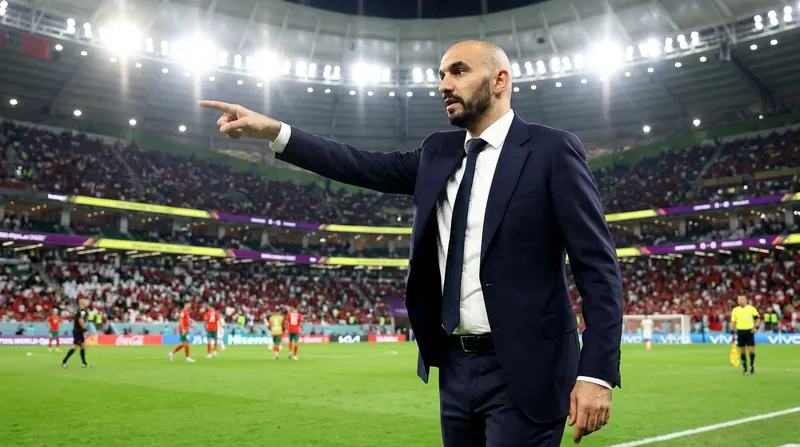
The Pochettino Press: How the United States Forged a High-Octane Identity for the 2026 World Cup
5 sources
Tactics
The Dutch Hybrid: How Ronald Koeman Reengineered the Netherlands' Tactical DNA
2 sources
Tactics
The Hybrid Engine: How Hajime Moriyasu Transformed Japan from Counter-Attackers to Possession Architects
4 sources
Tactics
The Art of Suffering: How Zlatko Dalić Built Croatia’s Unbreakable World Cup Midfield
2 sources

Comments
Every angle. Every day.
Get Sports stories with full source coverage and perspective breakdowns, free every day.