
Ireland Establishes Free Dispute Body to Target AI Deepfakes and Social Media Bans
A new independent appeals service allows EU users to challenge content moderation decisions on major social platforms without cost.
By Tara Reddy

Share this story
The European Union is home to roughly 450 million people, and nearly all of them carry a device that tethers their digital lives to the moderation algorithms of a handful of tech giants. When those algorithms fail—when a malicious AI deepfake goes viral, or a legitimate business account is suddenly erased—the recourse for an ordinary user has historically been a black box of automated appeals.
As of September 8, 2026, that scale of digital disenfranchisement has a new counterweight. A Dublin-based body called Impress Dispute Resolutions (IDR) has officially launched a free, independent appeals service, giving those citizens a direct mechanism to challenge the content decisions of the world's largest social platforms.[1][2]
The new service operates as an Out-of-Court Dispute Settlement (ODS) body, a specific regulatory designation created under the EU's Digital Services Act (DSA). IDR is a subsidiary of Impress, the United Kingdom's sole independent press regulator, which has spent the last decade arbitrating media disputes. Now, the organization is pivoting its expertise toward the internet's dominant networks. Certified earlier this year by Ireland's media regulator, Coimisiún na Meán, IDR has been granted a five-year mandate to adjudicate conflicts between users and platforms.[2][3][5]
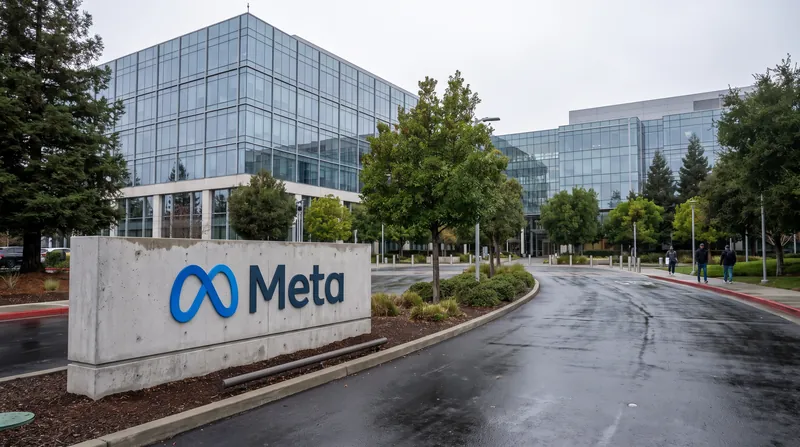
The scope of the new body covers the platforms where the vast majority of digital culture is consumed: Meta's Facebook and Instagram, ByteDance's TikTok, and Alphabet's YouTube. Users across the EU can bring cases involving illegal or harmful speech, electoral misinformation, data protection breaches, and the increasingly pervasive threat of AI-generated deepfakes.
Crucially, the service works in both directions. It allows users to demand the removal of harmful material that a platform has refused to take down, while also providing a lifeline for creators whose accounts or content have been wrongfully suspended or demonetized.[1][4]
The financial architecture of the IDR scheme is designed to remove the traditional barriers to legal redress. Filing a dispute is entirely free for the user. If the independent adjudicators rule in the user's favor, the social media platform is required to bear the costs of the process. This structure addresses a longstanding imbalance in digital rights, where victims of online defamation or synthetic media manipulation previously faced the prospect of funding expensive, cross-border High Court injunctions just to get a photograph removed.[2][4]
"When your identity is deepfaked or your account is wrongly banned, it's not just frustrating — it can be devastating," said IDR co-founder Gia Thom, announcing the launch. "For the first time, individual people can challenge illegal content decisions without cost, complexity, or fear. ODS is a world first and the missing piece of online safety — real redress for real people."[2]
While the determinations reached by IDR are technically non-binding, the tech platforms cannot simply ignore them. Under Article 21 of the Digital Services Act, designated platforms are legally bound to participate in certified out-of-court settlement processes in good faith. A systematic refusal to engage with the body, or a pattern of ignoring its recommendations, exposes the companies to severe regulatory sanctions from Coimisiún na Meán and the European Commission, which monitor compliance across the single market.[4][5]
The launch cements Ireland's position as the primary operational frontier for continental digital safety regulation. Because many of the world's largest tech companies base their European headquarters in Dublin, Coimisiún na Meán serves as the lead enforcer for much of the DSA's mandate.
The regulator authorized IDR's certification on May 14, 2026, following a rigorous vetting process to ensure the body's financial independence and legal expertise. To maintain that impartiality, IDR has partnered with the Chartered Institute of Arbitrators to appoint a panel of expert lawyers in Ireland who sit independently of the organization to handle the claims.[2][3]
Beyond resolving individual grievances, the IDR service is engineered to function as an early warning system for systemic platform failures. The body will aggregate anonymized case data from every completed hearing, creating an empirical record of how platforms are enforcing their own community standards. This data pipeline will be fed directly to the European Commission, ensuring that individual disputes contribute to broader investigations into systemic risk—investigations that can ultimately trigger monumental fines for non-compliant tech giants.[2][4]
"Impress has delivered independent and effective redress for the public harmed by the media for over a decade, and we are very pleased to extend our proven service to those harmed by decisions of tech platforms," said Impress CEO Lexie Kirkconnell-Kawana. The transition from regulating traditional print media to policing algorithmic content moderation marks a significant evolution in how digital speech is governed, moving away from the era of self-regulation and into a formalized legal framework.[1]
The establishment of independent dispute bodies like IDR introduces a layer of external friction to the automated moderation systems built in Silicon Valley. By attaching a financial cost to inaccurate algorithmic decisions, the European regulatory framework is forcing platforms to treat the right to participate safely in digital spaces not as a privilege granted by a company, but as a consumer right protected by law.[3][4]
Open questions
- It is not yet clear how quickly social media platforms will implement the non-binding decisions issued by IDR.
- The exact volume of disputes IDR will be able to process annually remains untested.
- Digital Rights Advocates
- Advocates view the new dispute body as a critical equalizer for ordinary users against automated moderation.
- Regulatory Authorities
- Regulators see the dispute data as a vital tool for enforcing systemic compliance across the EU.
- Tech Platforms
- Platforms face increased operational friction and financial liability for moderation errors.
Sources
Source coverage
5 outlets
3 viewpoints surfaced





- [1]Silicon RepublicTech Platforms
New Irish dispute body to tackle illegal online content
Read on Silicon Republic → - [2]Irish Legal NewsDigital Rights Advocates
IDR launches free service giving users new power to fight online harm
Read on Irish Legal News → - [3]Law SocietyRegulatory Authorities
Service to settle online-content disputes
Read on Law Society → - [4]claimsservice.ieDigital Rights Advocates
New Free Dispute Body to Challenge Social Media in Ireland
Read on claimsservice.ie → - [5]WikipediaRegulatory Authorities
Digital Services Act
Read on Wikipedia →

More in Culture
See all →Digital Linguistics
Line Breaks and Speech Bubbles Mark Utterance Boundaries: Why Sentence-Final Full Stops in Text Messages Convey Hostility
3 sources

Network Sociology
The Distribution of Individual Thresholds: Why Similar Groups Produce Vastly Different Collective Outcomes
9 sources

Digital Psychology
The Six Factors: How Dissociative Anonymity, Invisibility, and Asynchronicity Drive Online Disinhibition
8 sources

AI Safeguards
Meta Ordered to Remove Deepfakes as Oversight Board Mandates Sweeping AI Policy Overhaul
7 sources
Comments
Every angle. Every day.
Get Culture stories with full source coverage and perspective breakdowns, free every day.