
Silicon vs. Graphite: The Trade-Offs Defining Next-Generation EV Battery Anodes
Automakers are weighing the proven durability of graphite against the massive energy density gains of silicon-dominant anodes. The choice dictates whether future EVs prioritize million-mile lifespans or 10-minute charging times.
By Marina Lopez

Share this story
In short
- Graphite anodes offer proven stability and 800+ cycle lifespans but are capped at 372 mAh/g capacity.
- Silicon anodes can theoretically hold ten times more lithium, enabling smaller packs and faster charging.
- Silicon swells by up to 300 percent during charging, causing mechanical stress and rapid capacity fade.
Graphite advocates argue that an electric vehicle battery must outlast the chassis it powers, pointing to carbon-based anodes that reliably deliver thousands of charge cycles with minimal degradation. Silicon proponents counter that carrying heavy, low-capacity carbon is an engineering dead end, arguing that a material capable of holding ten times more lithium is the only path to 500-mile ranges and ten-minute charging.[5]
The physical reality of lithium intercalation forces the trade-off. Graphite provides a stable, honeycomb-like matrix that accepts lithium ions with only a 10 percent expansion in volume. Silicon, by contrast, alloys with lithium to form Li3.75Si, swelling by up to 300 percent during a full charge.[1][2]
That expansion creates a destructive mechanical cycle. As the silicon particles swell and contract, the solid electrolyte interphase (SEI) layer cracks and reforms, consuming active lithium and increasing internal resistance. In-situ testing of pouch cells with just a 5 percent silicon loading shows cumulative cell swelling of 11.2 percent after 50 cycles, directly correlating with accelerated capacity fade.[2]
The mechanical stress does not just consume lithium; it physically destroys the electrode. Repeated volume fluctuations cause particle pulverization, where the silicon fragments lose electrical contact with the current collector. Once isolated, these fragments become dead weight inside the cell, contributing to impedance without storing energy.[2]
To harness silicon's 3,580 mAh/g theoretical capacity without destroying the cell, materials companies are engineering silicon-carbon composites. Firms encapsulate nano-silicon within a carbon scaffold, buffering the expansion. "Because the way silicon interacts with the lithium ions fundamentally differently than how graphite interacts... you can get much faster charge and discharge," notes Rick Costantino, CTO of Group14 Technologies. "Whereas your normal battery based on graphite might take tens of minutes or hours even to charge, you can charge in less than 20 minutes, less than 10 minutes."[1][4]
This composite approach yields a 20 to 40 percent increase in volumetric energy density over pure graphite. Automakers are now dividing their architectures based on these metrics for their 2026 and 2027 model years. Mercedes-Benz and Porsche are integrating silicon-dominant cells into premium 800-volt platforms, prioritizing rapid charging and acceleration. Meanwhile, mass-market fleet operators continue to rely on traditional graphite, where predictable cycle life supersedes peak energy density.[3]
Crucially, the latest silicon-carbon composites are designed as drop-in replacements. Battery manufacturers do not need to build entirely new gigafactories to adopt the chemistry; the composite powders integrate directly into existing roll-to-roll electrode coating lines. This compatibility minimizes capital expenditure and accelerates the timeline for commercial deployment.[3]
The supply chain introduces a secondary variable. Graphite processing is heavily concentrated in China, prompting Western manufacturers to view silicon as an industrial hedge. Facilities in Washington State and across Europe, including sites operated by LeydenJar and NorcSi, are scaling domestic anode production, decoupling performance gains from geopolitical bottlenecks.[3][4]
The transition is not a wholesale replacement but a sliding scale. Current cell designs blend small percentages of silicon oxide into graphite to balance capacity and longevity. As binder systems and electrolyte additives improve, the silicon ratio will climb, shifting the baseline economics of automotive energy storage.
The deciding factor for future vehicle programs will be the intersection of warranty requirements and charging infrastructure. If a manufacturer must guarantee 250,000 miles of minimal degradation, the chemical stability of carbon remains difficult to displace. If the market demands parity with internal combustion refueling times, the mechanical challenges of silicon must be solved.[5]
Competing readings
Traditional Graphite Architecture
Prioritizes structural stability, predictable degradation, and million-mile cycle life over peak capacity.
For: Unmatched mechanical stability. Graphite’s rigid lattice accommodates lithium ions with minimal physical distortion (roughly 10 percent volume expansion), allowing cells to comfortably exceed 800 full charge-discharge cycles while retaining 80 percent of their original capacity. Against: A hard theoretical ceiling. At 372 mAh/g, graphite cannot store enough energy to push vehicle ranges past 400 miles without adding prohibitive weight and volume to the chassis. Evidence: Historical field data confirms that graphite anodes routinely outlast the vehicle's operational life, forming the backbone of every mass-market EV deployed over the last decade. Fits well when: The application demands high cycle life, such as commercial fleets, grid storage, and mass-market vehicles where longevity outweighs peak performance. Does not fit when: The vehicle architecture requires ultra-fast 10-minute charging or extended range within a constrained physical footprint.
Silicon-Dominant Architecture
Prioritizes maximum volumetric energy density, reduced pack weight, and ultra-fast charging capabilities.
For: Transformative capacity. Silicon can bond with four lithium ions per atom, delivering a theoretical capacity of 3,580 mAh/g. This allows automakers to shrink the battery pack by 20 percent while maintaining range, or utilize the same footprint to push ranges past 500 miles. Against: Severe mechanical degradation. Unconstrained silicon swells by up to 300 percent during charging, pulverizing the electrode and rapidly consuming active lithium, which can cripple cycle life if not heavily engineered with carbon scaffolding. Evidence: Silicon-carbon composites from suppliers like Group14 and Sila are demonstrating 20 to 40 percent volumetric energy density gains in commercial cells, enabling 10-to-80 percent charge times in under 15 minutes for 2026 model-year vehicles. Fits well when: Premium consumer vehicles prioritize rapid charging, acceleration, and maximum range, and where buyers are willing to absorb the higher cost of advanced composite materials. Does not fit when: The primary requirement is thousands of deep discharge cycles over a multi-decade lifespan without complex and expensive binder systems.
- Incumbent Cell Manufacturers
- Focus on scaling proven graphite chemistries to drive down cost per kilowatt-hour and ensure predictable cycle life.
- Advanced Materials Developers
- Argue that silicon-carbon composites are the only way to break the energy density plateau and achieve parity with combustion refueling times.
- Supply Chain Strategists
- View the anode transition primarily as a geopolitical decoupling from concentrated graphite processing.
Perspectives this story doesn't cover
- Battery Recycling Facilities
- Raw Material Mining Operators
Sources
Source coverage
5 outlets
3 viewpoints surfaced





- [1]SNS InsiderSupply Chain Strategists
Silicon Anode Battery Market Insights
Read on SNS Insider → - [2]IEST BatteryIncumbent Cell Manufacturers
What is the silicon anode swelling percentage in lithium-ion batteries?
Read on IEST Battery → - [3]Carbon CreditsAdvanced Materials Developers
Group14 Technologies: The Silicon Breakthrough Powering Longer-Range EVs
Read on Carbon Credits → - [4]VoltsAdvanced Materials Developers
A conversation with Rick Costantino of Group14
Read on Volts → - [5]Factlen Editorial TeamSupply Chain Strategists
Synthesis by Factlen editorial team
Read on Factlen Editorial Team →
More in Transportation
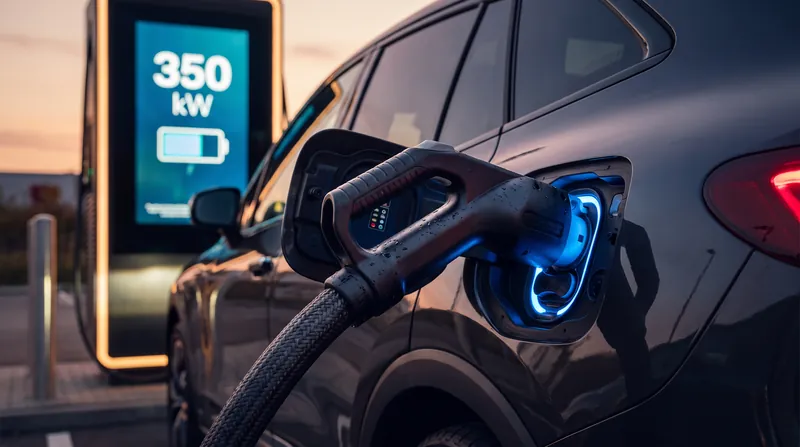
See all →EV Charging Tech
The Onboard Charger's Bypass: Why AC Charging is Limited by the Car and DC Charging is Not
5 sources
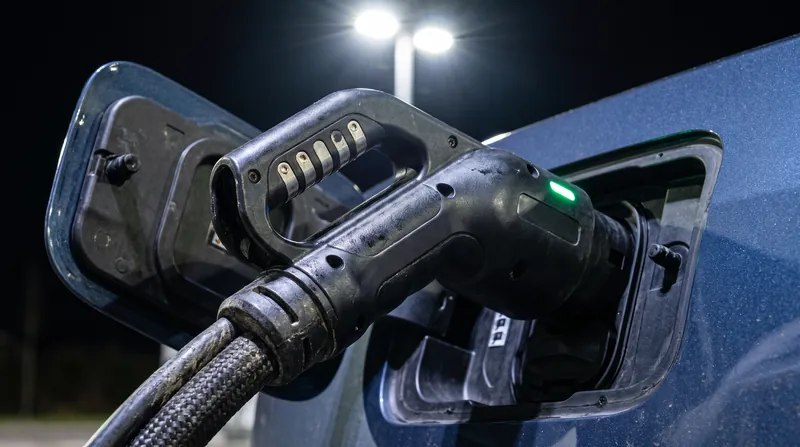
Battery Management
The State of Charge and Temperature Limits: How EV Battery Management Systems Cap Regenerative Braking Power
7 sources
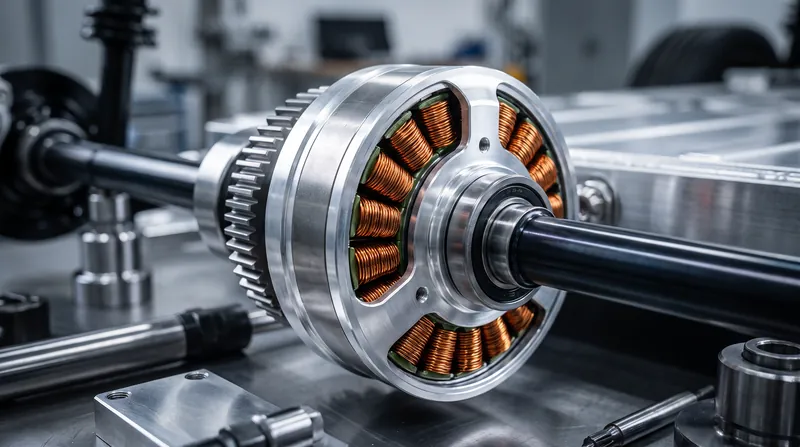
Motor Architecture
Axial Flux vs. Radial Flux Motors: The Trade-Offs Defining Next-Generation EV Performance
7 sources
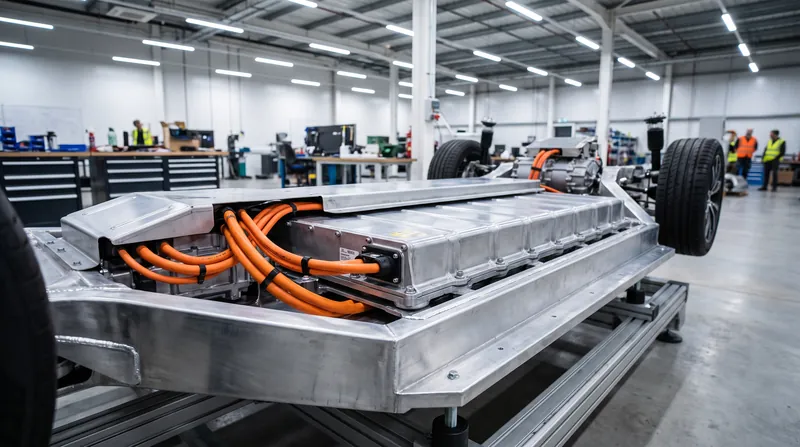
Urban EV Infrastructure
Curbside Level 2 vs. Centralized DC Fast Hubs: How Cities Are Resolving the Urban EV Charging Bottleneck
7 sources

Comments
Every angle. Every day.
Get Transportation stories with full source coverage and perspective breakdowns, free every day.