
Solid-State Batteries: How 2026 Factory Production Aims to Double EV Range
After decades of research, solid-state batteries are moving from the lab to the factory floor. Here is how the technology works, why it promises to double EV range, and the timeline for mass-market rollout.
By Hunter Cole

Share this story
For decades, solid-state batteries have been the elusive 'holy grail' of the electric vehicle industry—a revolutionary technology perpetually promised to be five years away. But in 2026, the narrative has fundamentally shifted. The technology is finally crossing the treacherous chasm from isolated laboratory prototypes to scalable factory floors, marking the beginning of a new era in global energy storage. Automakers and battery startups are no longer just publishing research papers; they are cutting ribbons on gigawatt-hour production lines and signing binding integration contracts.
The stakes for this transition are massive, representing a complete architectural overhaul of how the world powers transportation. Automakers and battery startups are racing to commercialize cells that promise to double EV driving range, cut charging times to under 15 minutes, and completely eliminate the fire risks associated with current lithium-ion packs.
With billions in capital deployed by the world's largest automotive conglomerates, the timeline for consumer availability has crystallized. This is no longer a speculative venture; it is a definitive shift in the global automotive landscape that will dictate market dominance for the next decade.
To understand the magnitude of this breakthrough, one must first look at the internal architecture of a standard lithium-ion battery. Current cells rely on a liquid electrolyte—a volatile, highly flammable chemical solvent that acts as a highway, shuttling lithium ions back and forth between the battery's anode and cathode during charging and discharging.
While this liquid design has successfully powered everything from smartphones to the first generation of mass-market EVs, it comes with inherent physical limitations regarding how much energy it can safely store and how quickly it can absorb a charge.[3]
Solid-state technology completely reimagines this internal highway by replacing the liquid solvent with a stable, non-flammable solid material, such as advanced ceramics, polymers, or sulfides. This fundamental material swap solves the most dangerous flaw of lithium-ion cells: the formation of 'dendrites.' Dendrites are microscopic, needle-like metallic spikes that can grow inside a liquid battery over thousands of charge cycles. If these spikes grow long enough to pierce the internal separator, they cause catastrophic short circuits and thermal runaway. A solid separator physically blocks dendrite growth, rendering the battery virtually fireproof.
Beyond safety, the true prize of the solid-state architecture is the unprecedented performance leap it enables. By utilizing a rigid solid electrolyte that blocks dendrites, manufacturers can safely incorporate a pure lithium-metal anode into the cell. This single component change unlocks a massive leap in energy density—the metric that dictates how much power a battery holds relative to its weight. While today's absolute best lithium-ion cells hover around 200 to 260 watt-hours per kilogram, solid-state targets range from 400 to 500 watt-hours per kilogram, effectively doubling the energy ceiling.
In practical, real-world terms, this energy density leap means an electric vehicle could travel well over 600 miles on a single charge without requiring a larger or heavier battery pack. Furthermore, the solid architecture allows ions to move with incredible efficiency during high-voltage charging.
Companies like QuantumScape report their latest prototype cells can fast-charge from 10% to 80% capacity in just 12.2 minutes. This effectively reduces the EV charging experience to the time it takes to pump a tank of gas and grab a coffee, eliminating one of the final psychological barriers to mass EV adoption.
Despite these clear and overwhelming advantages, scaling solid-state production has been notoriously difficult, which is why the technology has faced years of delays. Solid materials are highly sensitive to ambient moisture and require immense precision to manufacture. Furthermore, the battery layers naturally expand and contract as they breathe during charging cycles. Maintaining perfect, microscopic contact between rigid solid layers during this expansion—without the flexible forgiveness of a liquid—requires extraordinary engineering and entirely new manufacturing paradigms.
However, 2026 has seen major manufacturing breakthroughs that directly address these historical bottlenecks. In February, QuantumScape inaugurated its highly anticipated 'Eagle Line' facility in California. This plant utilizes a proprietary, highly automated process to manufacture ceramic separators at a gigawatt-hour scale, proving the technology can be mass-produced. This operational milestone immediately paved the way for a major joint research agreement with Honda in June, signaling that legacy automakers now trust the manufacturing blueprint enough to begin integrating the technology into their future vehicle platforms.
Meanwhile, Nissan is tackling the critical cost equation through a UK-funded partnership with Gelion and Oxford University. Their approach utilizes nano-encapsulated sulfur cathodes, completely eliminating the need for expensive, supply-constrained rare-earth metals like cobalt and nickel. Combined with a revolutionary 'dry electrode' manufacturing process that removes the need for massive, energy-intensive drying ovens, Nissan is drastically shrinking the factory footprint. By driving down capital expenditures and material costs simultaneously, Nissan aims to achieve mass-market affordability for solid-state EVs by 2028.[3]
While fully solid-state vehicles from legacy automakers like Toyota and Nissan are slated for the 2027 to 2028 window, a transitional technology is hitting the roads right now. 'Semi-solid' batteries, which use a hybrid architecture of mostly solid electrolytes mixed with a small percentage of liquid, are bridging the gap. This pragmatic approach allows battery companies to utilize existing lithium-ion manufacturing infrastructure while still delivering immediate and highly marketable performance bumps to consumers today.
In Europe, MG is leading this transitional wave by launching the MG4 EV Urban in 2026, featuring a 'SolidCore' battery that utilizes a 95% solid electrolyte. The company claims this hybrid architecture allows for 15% faster low-temperature charging and significantly better power delivery. More importantly, the semi-solid environment enables the use of new, cheaper cell chemistries that were previously unfeasible with purely liquid systems, allowing automakers to push boundaries without waiting for fully solid-state perfection.[1]
In China, the rollout of these next-generation cells is even more aggressive. Automakers like NIO already have 150-kilowatt-hour semi-solid packs actively on the road, delivering nearly 600 miles of real-world range. Pushing the envelope further, Dongfeng Motor announced plans to begin mass production of a fully solid-state battery capable of 620 miles per charge by late 2026. Dongfeng has successfully tested these cells against extreme physical deformation and 338-degree Fahrenheit heat, proving the inherent safety of the solid architecture under severe duress.[2]
The transition to this new global standard will not be instantaneous, nor will it be cheap initially. Early solid-state battery packs will be expensive to produce due to the immense capital required to build entirely new gigafactories. As a result, the technology will likely debut exclusively in high-end luxury vehicles, flagship performance models, and commercial fleets before economies of scale eventually bring the price down for everyday commuters.
Yet, the engineering and manufacturing milestones achieved in 2026 confirm that the solid-state era is no longer a theoretical exercise. As production bottlenecks are cleared, pilot lines scale up, and major automakers lock in their supply chains, the automotive industry is standing on the precipice of its most significant technological leap since the invention of the lithium-ion cell. The race to build the ultimate electric vehicle battery has officially moved from the laboratory to the assembly line.
Key points
- Solid-state batteries replace flammable liquid electrolytes with stable solid materials, eliminating the risk of thermal runaway.
- The technology enables the use of pure lithium-metal anodes, which can push energy density to 500 Wh/kg and double EV driving range.
- QuantumScape and Honda signed a major joint research agreement in 2026 following the successful launch of a gigawatt-scale separator production line.
- Automakers like NIO and MG are bridging the gap by releasing 'semi-solid' batteries in 2026, offering immediate performance bumps.
Unanswered questions
- Exactly how quickly manufacturing costs will fall to make fully solid-state EVs competitive with internal combustion engine vehicles.
- Whether solid-state cells can maintain their rapid charging capabilities over hundreds of thousands of miles without long-term degradation.
- Which specific solid electrolyte material—ceramics, polymers, or sulfides—will ultimately dominate the mass market.
How we got here
2025
Toyota and Nissan launch pilot solid-state production lines in Japan.
Feb 2026
QuantumScape inaugurates its 'Eagle Line' for gigawatt-hour scale separator manufacturing.
June 2026
Honda and QuantumScape sign a joint research agreement for solid-state integration.
Late 2026
MG launches the MG4 EV Urban in Europe with a semi-solid battery; Dongfeng targets mass production.
2027–2028
Toyota and Nissan target the launch of their first fully solid-state consumer vehicles.
- Battery Innovators
- Focused on rapid commercialization, breakthrough metrics, and licensing next-generation technology to automakers.
- Legacy Automakers
- Prioritize rigorous safety testing and scaling up in-house manufacturing for a measured 2027–2028 rollout.
- Chinese EV Manufacturers
- Pursue aggressive, immediate deployment using semi-solid stepping stones to capture early market share.
- Industry Analysts
- Track the realistic timelines of commercialization, noting that mass-market affordability remains years away.
Perspectives this story doesn't cover
- Lithium-ion battery manufacturers heavily invested in current liquid-electrolyte gigafactories.
- Consumers waiting to purchase EVs who may delay adoption until solid-state technology becomes affordable.
Sources
Source coverage
3 outlets
4 viewpoints surfaced



- [1]ForbesChinese EV Manufacturers
LEGO Kicks Off ‘KPop Demon Hunters’ Offerings With First Building Set
Read on Forbes → - [2]ArenaEVChinese EV Manufacturers
Dongfeng targets late 2026 for mass production of long-range solid-state batteries
Read on ArenaEV → - [3]SAE InternationalLegacy Automakers
Nissan details solid-state battery plans and sulfur cathode tech
Read on SAE International →
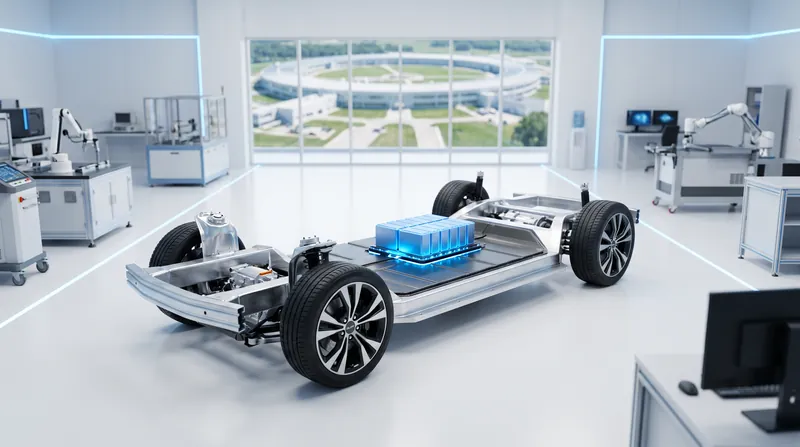
More in Transportation
See all →Battery Chemistry
How Reversible Lithium Loss in Cathode Lattices Drives Calendar Aging in Parked EVs
3 sources
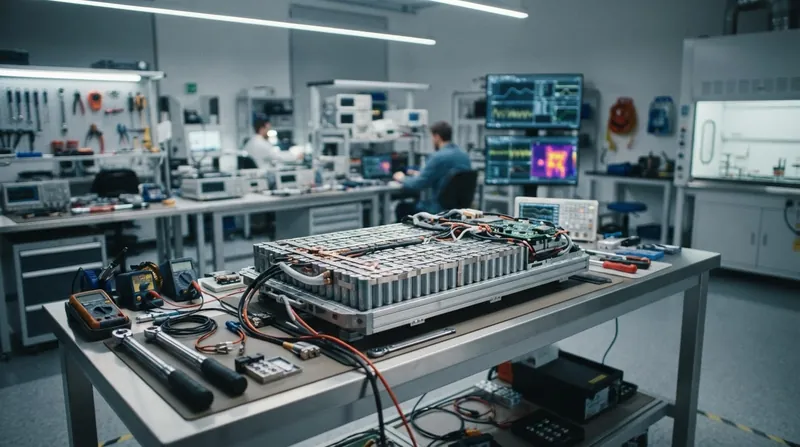
Tire Wear
Instant Torque and Battery Weight Accelerate Electric Vehicle Tire Wear by 20 to 30 Percent
5 sources

EV Transition
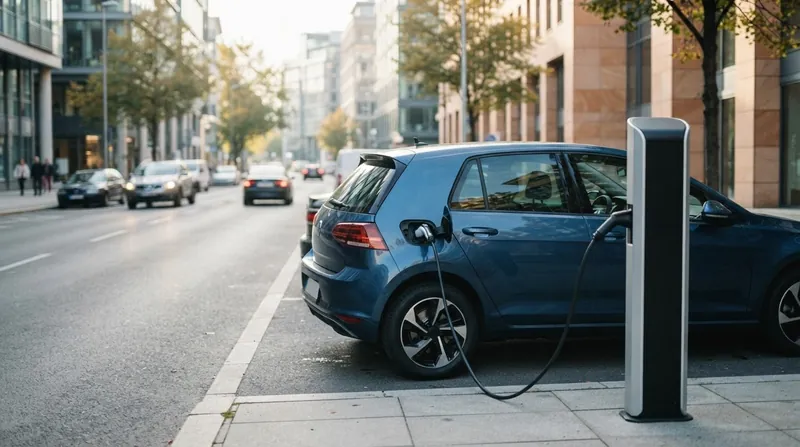
Gasoline-Only Cars Drop Below 50% of Global Sales for First Time as EVs and Hybrids Surge
4 sources
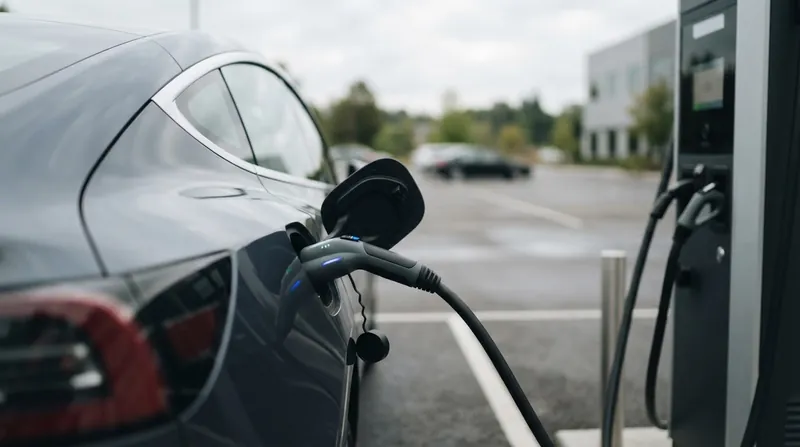
Battery Tech
Flat Open-Circuit Voltage Curves Accumulate Coulomb Drift: Why LFP Electric Vehicles Require Regular 100 Percent Charges
4 sources
Comments
Every angle. Every day.
Get Transportation stories with full source coverage and perspective breakdowns, free every day.