
Gasoline-Only Cars Drop Below 50% of Global Sales for First Time as EVs and Hybrids Surge
Pure-gasoline vehicles accounted for 49 percent of global new-car sales in the first half of 2026, marking the first time the traditional internal combustion engine has lost its market majority. The 24-point drop over five years was driven by surging hybrid and battery-electric adoption in China and Europe, accelerated by volatile global fuel prices.
By Hao Li

At the dealership desk where buyers calculate their monthly running costs against volatile pump prices, the traditional internal combustion engine has lost its mathematical advantage. That shift in consumer arithmetic has now pushed pure-gasoline vehicles below half of all global new-car sales for the first time in a century.
Gasoline-only vehicles accounted for exactly 49 percent of global new-vehicle sales between January and June 2026, totaling 20.25 million units. The data, compiled by Mobility Global and first reported by Nikkei Asia, marks a 10 percent year-over-year decline for pure-gasoline models, which fell twice as fast as the broader automotive market.[1][2]
The milestone caps a remarkably rapid structural reshaping of global transportation. As recently as 2021, gasoline-only vehicles commanded 73 percent of the global market. The subsequent 24-point slide over five years reflects a market where buyers are actively seeking alternatives to unassisted combustion engines, permanently altering the demand curve.[2]
The Rise of the Hybrid Compromise
The vehicles replacing pure-gasoline cars are largely split between fully electric models and conventional hybrids. Battery-electric vehicles grew 12 percent in the first half of 2026 to reach 6.87 million units, capturing a 17 percent global market share as infrastructure slowly improves across major economic zones.[2]
Conventional hybrids, however, outpaced fully electric models in total volume. Hybrid sales rose 10 percent to 7.27 million units, securing an 18 percent share. Japanese automakers, particularly Toyota and Honda, have heavily backed this architecture, offering improved fuel economy without requiring customers to rely entirely on public charging networks.[2]
When those hybrid figures are combined with diesel and plug-in hybrid models, roughly 83 percent of all new vehicles sold globally still carry an internal combustion engine in some capacity. The transition is moving away from pure gasoline, but the traditional engine block remains heavily involved in the market.[2]
“Gas-only cars went from 73 percent to 49 percent of the market in less than five years, and nothing in the data suggests they’re getting that share back,” noted Fred Lambert, Editor-in-Chief at Electrek. He emphasized that while the United States market has shown slower adoption, the rest of the world is accelerating.[2]
Regional Divergence and Fuel Shocks
The global average masks severe regional divergences in powertrain adoption. China led the departure from pure gasoline, with internal-combustion sales plunging 26 percent in the first half of the year. Europe followed with a 13 percent decline, driven by tightening emissions regulations and expanding charging infrastructure across the continent.[1][2]
European registration data through August 2026 shows battery-electric vehicles capturing 21.7 percent of the market, while hybrids surged to a 36.6 percent share. Meanwhile, emerging markets are also pivoting; battery-electric sales jumped 81 percent in Southeast Asia to reach 350,000 units, and volumes more than doubled across Oceania.
Market analysts attribute the recent acceleration directly to geopolitical instability. Renewed conflict in the Middle East disrupted oil markets, pushing gasoline and diesel prices sharply higher. The resulting fuel shock gave buyers an immediate financial incentive to prioritize running costs over familiar technology when signing a new lease.[3]
The International Energy Agency reported that global electric vehicle sales rebounded by a massive 35 percent in the second quarter of 2026 compared to the first quarter. That surge occurred even as overall global car sales contracted by about 5 percent, indicating that electrified vehicles are cannibalizing combustion sales.[2][4]
The Supply Chain Consequence
For legacy automakers, the 49 percent threshold represents a critical tipping point in capital allocation. Manufacturers can no longer rely on pure-gasoline models to subsidize their electrified divisions indefinitely, as the revenue pool for traditional engines is shrinking faster than internal forecasts anticipated just three years ago.[1][3]
The transition now hinges on battery supply chains and grid capacity rather than consumer persuasion. With pure-gasoline cars permanently relegated to a minority share, the automotive industry's century-long baseline has officially been rewritten, forcing a rapid realignment of global manufacturing priorities.
Unanswered questions
- Whether the sub-50 percent share will hold through the end of 2026, as sales patterns can shift with seasonal incentives and fuel price fluctuations.
- How the removal of EV subsidies in key North American and European markets will affect the growth rate of battery-electric models in 2027.
- The exact breakdown of the remaining 16 percent of the market, which includes diesels, plug-in hybrids, and alternative fuels.
- Electrification Advocates
- View the sub-50 percent milestone as proof that the transition away from fossil fuels has reached an irreversible tipping point.
- Pragmatic Transitionists
- Emphasize that the internal combustion engine remains heavily involved in the market through the surging popularity of hybrids.
Sources
Source coverage
4 outlets
2 viewpoints surfaced




- [1]Motor1.comPragmatic Transitionists
Gasoline Cars Lose Global Market Majority As Sales Fall To 49 Percent
Read on Motor1.com → - [2]ElectrekElectrification Advocates
Gas cars fall below 50% of global new car sales for the first time
Read on Electrek → - [3]CarBuzzPragmatic Transitionists
It's A Historic Moment For ICEs, But Not In A Good Way
Read on CarBuzz → - [4]International Energy AgencyPragmatic Transitionists
Global EV Outlook 2026
Read on International Energy Agency →
More in Transportation
See all →Freight Electrification
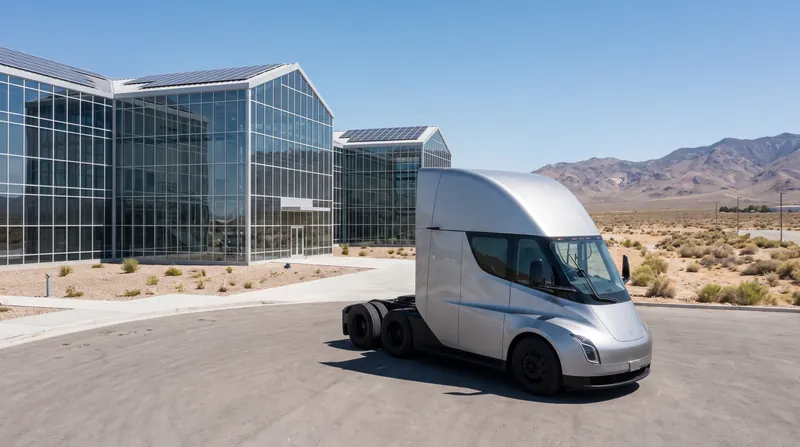
Germany Begins Construction on €1 Billion National Fast-Charging Network for Electric Trucks
4 sources
Battery Safety Tech
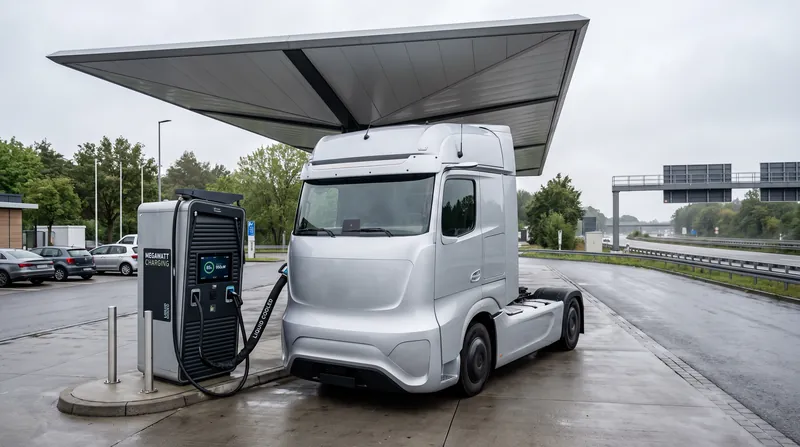
How Thermal Barriers and Venting Systems Prevent EV Battery Pack Failure
5 sources
Battery Physics
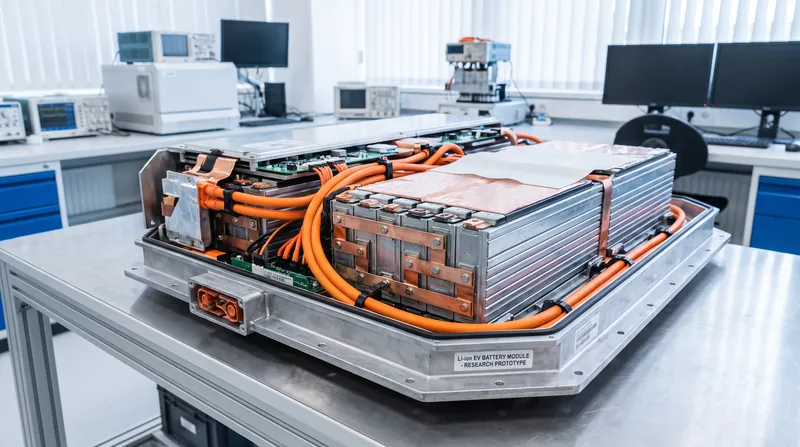
The C-Rate, Temperature, and State of Charge Limits That Define an EV's DC Fast Charging Curve
5 sources
Battery Supply Chain
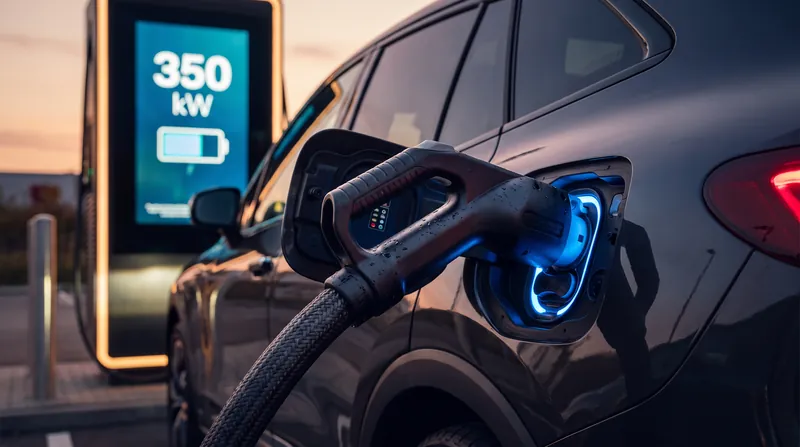
Pyrometallurgy vs. Hydrometallurgy: The Trade-Offs Defining EV Battery Recycling Economics
7 sources
Comments
Every angle. Every day.
Get Transportation stories with full source coverage and perspective breakdowns, free every day.