
Inside the SpaceX IPO: How the Market's Biggest Debut Will Actually Work
SpaceX is preparing for a historic initial public offering that will open the world's most valuable private company to public markets. Here is a breakdown of the mechanics, the space economy context, and the risks driving the hype.
By Factlen Editorial Team
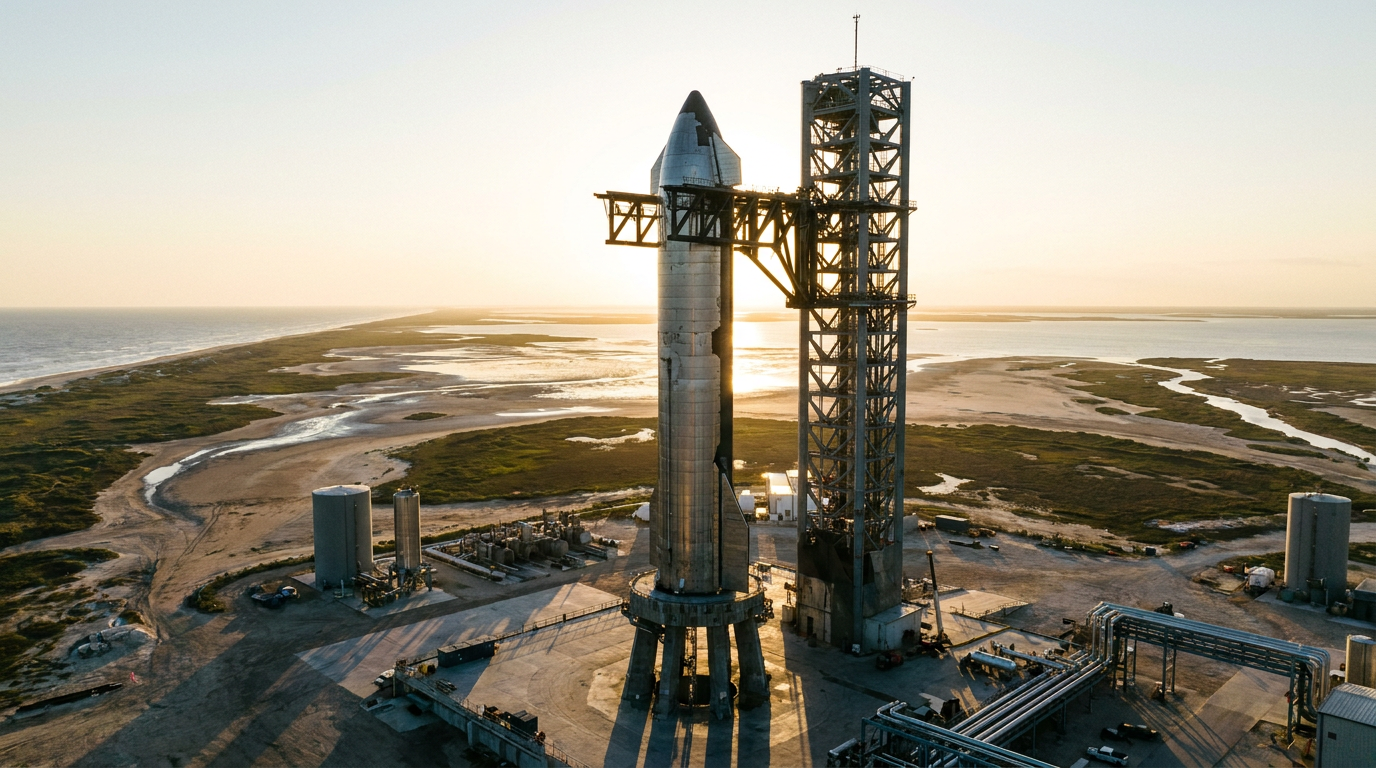
- Retail & Momentum Traders
- Views the IPO as a generational buying opportunity driven by brand loyalty, the 'Musk Premium,' and leveraged ETF products.
- Fundamental Analysts
- Focuses on the company's SEC filings, Starlink cash flow projections, and the capital expenditure required to maintain launch dominance.
- Market Skeptics
- Warns of extreme volatility, overvaluation risks, and the dangers of retail FOMO distorting initial price discovery.
What's not represented
- · Early SpaceX Employees
- · Legacy Aerospace Competitors
Why this matters
The SpaceX IPO represents a rare opportunity for public investors to gain direct exposure to the rapidly growing space economy. However, the unprecedented hype and complex financial engineering surrounding the debut mean retail investors must carefully navigate severe volatility risks.
Key points
- SpaceX has filed its S-1, initiating the process for a highly anticipated IPO.
- The valuation relies on Starlink's revenue and the company's dominance in commercial launch services.
- Financial firms are already creating leveraged ETFs to capitalize on expected retail trading volume.
- Foreign investors are showing historic demand, though utilizing currency hedges to avoid dollar risk.
- Analysts warn that retail FOMO could create extreme volatility in the stock's early trading days.
SpaceX's impending initial public offering has become the most anticipated market event of the decade, promising to transition the world's most valuable private aerospace company into the public domain. After years of speculation, the company has formally initiated the process to list its shares, setting the stage for what analysts expect to be a record-breaking valuation. [2][2]
For years, retail investors have watched from the sidelines as venture capital and private equity captured the upside of the commercial space race. Now, the opening of SpaceX's books marks a fundamental shift in who gets to own a piece of the orbital economy, democratizing access to a sector previously walled off from everyday portfolios. [6][6]
But an IPO of this magnitude brings unprecedented mechanical complexity. The sheer scale of the offering is testing the limits of traditional underwriting, drawing intense scrutiny from regulators, analysts, and institutional gatekeepers who must price a company that builds both consumer internet hardware and interplanetary rockets. [2, 6][2][6]
The core mechanism of the public debut relies on the company's Form S-1 filing with the Securities and Exchange Commission, which outlines the financial architecture of the offering. [3] This document reveals the dual engines of SpaceX's valuation: the steady, high-margin revenue of the Starlink satellite internet constellation, and the capital-intensive, high-risk development of the Starship launch vehicle.[3]

Unlike traditional tech IPOs that rely on software margins, SpaceX operates in a realm of massive physical infrastructure. The company's transition requires investors to underwrite billions in ongoing capital expenditures while trusting the long-term profitability of global satellite broadband and government defense contracts. [3, 4][3][4]
Demand for the stock is already reshaping market behavior before a single share has traded. The exchange-traded fund (ETF) industry is rapidly structuring new leveraged products designed to offer traders amplified bullish and bearish exposure to the stock immediately upon its debut, a highly unusual move for a newly listed equity. [1][1]
This preemptive financial engineering highlights a unique dynamic: the "Musk Premium." Analysts note that SpaceX's stock is likely to follow a trading pattern similar to Tesla, where share prices frequently decouple from traditional fundamental analysis and instead trade on retail sentiment and the CEO's public persona. [6][6]
Academic research into mega-cap technology IPOs demonstrates that this kind of retail "fear of missing out" (FOMO) can create extreme volatility in the initial weeks of trading. [5] When a company with massive cultural cachet goes public, the initial price discovery phase is often distorted by non-institutional buying pressure, leading to wild intraday swings.[5]
Interestingly, the hype extends far beyond domestic borders. Foreign investors are demonstrating historic demand for the upcoming offering, eager to gain exposure to the U.S. commercial space sector which is widely viewed as a generational growth engine. [1][1]
Interestingly, the hype extends far beyond domestic borders.
However, foreign exchange analysts caution that this international appetite for SpaceX equity will not necessarily translate into a macroeconomic "dollar-buying frenzy." [1] Institutional buyers are utilizing complex currency hedging strategies to isolate their exposure to the company's performance without taking on U.S. dollar risk.[1]
The broader context for this financial maneuver is the rapidly expanding global space economy, which the Space Foundation projects will cross the $1 trillion threshold by the end of the decade. [4] SpaceX currently acts as the foundational logistics provider for this entire ecosystem, launching the majority of the world's commercial payload.[4]

By controlling the majority of global launch capacity through its reusable Falcon 9 fleet, the company effectively sets the baseline cost of access to orbit for competitors, governments, and scientific institutions alike. [4, 6] This infrastructure dominance is the primary reason institutional investors are willing to overlook short-term profitability concerns.[4][6]
This near-monopoly on reliable, low-cost launch services presents both the primary bull case for the stock and its most significant regulatory risk. The SEC filing details the company's reliance on government contracts and the potential for antitrust scrutiny as the commercial space sector matures and competitors struggle to match SpaceX's cadence. [3][3]
For retail investors, the challenge will be separating the genuine technological achievements from the market hysteria. Financial advisors are already warning that while a volatile stock might be a blip for a younger trader, heavy exposure to an unpredictable IPO can be disastrous for portfolios nearing retirement. [5, 6][5][6]

Ultimately, the SpaceX IPO is more than just a liquidity event for early employees and venture capitalists. It is a stress test for the public market's ability to value deep-tech infrastructure companies that operate on multi-decade timelines and require immense capital to achieve their ultimate goals. [6][6]
How we got here
2002
SpaceX is founded with the goal of reducing space transportation costs.
2008
Falcon 1 becomes the first privately developed liquid-fueled rocket to reach orbit.
2019
The first batch of Starlink internet satellites is launched into low Earth orbit.
2026
SpaceX files its S-1 registration statement with the SEC to become a public company.
Viewpoints in depth
Institutional Underwriters
Focused on the fundamental math of the space economy and infrastructure monopolies.
For institutional investors and underwriters, the excitement around SpaceX is grounded in cold mathematics. They view the company not just as a rocket manufacturer, but as a logistics monopoly that controls the toll road to low Earth orbit. Their primary focus is on the cash flow generated by Starlink subscriptions, which they believe will fund the massive capital expenditures required to finalize the Starship program. These analysts are less concerned with the daily stock price and more focused on the company's ability to maintain its technological lead over legacy aerospace competitors and sovereign space agencies.
Retail Enthusiasts
Driven by belief in the company's long-term mission and the leadership of its CEO.
The retail trading community largely views the SpaceX IPO as a generational opportunity to invest in the future of human civilization. Driven by a strong belief in the company's ultimate goal of Mars colonization, this camp is highly insensitive to traditional valuation metrics like price-to-earnings ratios. They are the primary drivers of the 'Musk Premium,' willing to buy and hold the stock through extreme volatility. This enthusiasm is also what fuels the creation of aggressive financial products like leveraged ETFs, as retail traders look to maximize their exposure to the company's milestones.
Regulatory & Market Skeptics
Concerned about antitrust issues, extreme volatility, and the risks of retail FOMO.
Market skeptics and regulatory analysts warn that the hype surrounding the IPO masks significant structural risks. They point out that SpaceX's near-monopoly on U.S. launch services makes it a prime target for future antitrust scrutiny, especially as it competes directly with other satellite internet providers while also launching their hardware. Furthermore, financial academics caution that the unprecedented retail demand will likely distort the stock's initial price discovery, creating a dangerous environment for older investors who might be drawn in by the hype but cannot afford the inevitable drawdowns associated with mega-cap tech debuts.
What we don't know
- The exact date the stock will begin trading on the open market.
- The final valuation target SpaceX will seek in its roadshow.
- How aggressively regulators will scrutinize the company's launch monopoly post-IPO.
Key terms
- Form S-1
- The initial registration form required by the SEC for U.S. companies planning to go public, detailing their business model, financials, and risks.
- Capital Expenditure (CapEx)
- Funds used by a company to acquire, upgrade, and maintain physical assets such as property, industrial buildings, or equipment like rockets.
- Price Discovery
- The process by which the open market determines the price of an asset through the continuous interactions of buyers and sellers.
- Leveraged ETF
- A specialized exchange-traded fund that uses financial derivatives and debt to amplify the returns of an underlying index or stock.
Frequently asked
Can anyone buy SpaceX stock on the first day?
Yes, once the stock officially begins trading on the open market, retail investors can purchase shares through standard brokerage accounts. However, the initial IPO allocation is typically reserved for institutional investors.
Does the IPO include Starlink?
Yes. Based on the S-1 filing, SpaceX is going public as a single entity, meaning investors will gain exposure to both its launch services and the Starlink satellite internet business.
Why are leveraged ETFs being created?
Financial institutions anticipate massive trading volume and volatility around the stock. Leveraged ETFs are designed for short-term traders looking to amplify their bets on the stock's daily price movements.
What is the 'Musk Premium'?
It refers to the phenomenon where companies led by Elon Musk often trade at higher valuations than traditional fundamentals would suggest, driven by strong retail investor loyalty and sentiment.
Sources
Source coverage
6 outlets
3 viewpoints surfaced






[1]MarketWatchRetail & Momentum Traders
The SpaceX IPO is drawing historic demand from foreign investors. But don’t expect a dollar-buying frenzy.
Read on MarketWatch →[2]CNBCRetail & Momentum Traders
SpaceX officially files for IPO, targeting record valuation
Read on CNBC →[3]U.S. Securities and Exchange CommissionFundamental Analysts
Form S-1 Registration Statement: Space Exploration Technologies Corp.
Read on U.S. Securities and Exchange Commission →[4]Space FoundationFundamental Analysts
The Space Report 2026: Commercial Revenue Growth and Orbital Infrastructure
Read on Space Foundation →[5]Journal of Financial EconomicsMarket Skeptics
Retail FOMO and Pricing Dynamics in Mega-Cap Technology IPOs
Read on Journal of Financial Economics →[6]Factlen Editorial TeamMarket Skeptics
Synthesis by Factlen editorial team
Read on Factlen Editorial Team →
Every angle. Every day.
Get finance stories with full source coverage and perspective breakdowns delivered to your inbox.