
Inside the Sleep Tourism Boom: How Hotels Are Engineering the Perfect Night's Rest
Driven by a global epidemic of burnout, the hospitality industry is transforming hotel rooms into clinical-grade sleep sanctuaries equipped with AI beds and circadian lighting.
By Factlen Editorial Team
- Hospitality Brands & Analysts
- Views sleep tourism as a highly profitable, rapidly growing market segment that meets modern consumer demand for wellness.
- Wellness & Sleep Scientists
- Focuses on the clinical benefits of circadian alignment, thermal regulation, and acoustic engineering in combating chronic sleep deprivation.
- Lifestyle & Travel Media
- Frames the trend as a luxurious, necessary antidote to digital fatigue and burnout, shifting vacations from sightseeing to pure restoration.
What's not represented
- · Budget Travelers
- · Night-Shift Workers
- · Local Residents in Tourism Hotspots
Why this matters
Chronic sleep deprivation is linked to numerous long-term health issues, from cognitive decline to cardiovascular disease. By destigmatizing rest and investing heavily in sleep science, the travel industry is providing travelers with the tools and environments needed to reset their circadian rhythms and improve their daily lives.
Key points
- Sleep tourism is a rapidly growing hospitality segment focused entirely on optimizing guest rest.
- Hotels are installing circadian lighting, acoustic soundproofing, and AI-powered smart beds.
- Major brands are partnering with neuroscientists to design clinical-grade sleep environments.
- The trend reflects a broader cultural shift away from exhausting travel itineraries toward wellness and recovery.
The traditional vacation is undergoing a radical quietening. For decades, the travel industry sold exhaustion: packed itineraries, red-eye flights, and the relentless pressure to maximize every waking hour. But in 2026, the ultimate luxury is simply shutting down.[2][6]
Enter "sleep tourism," a rapidly expanding hospitality sector where the hotel room is no longer just a place to crash between excursions, but a clinical-grade sanctuary engineered for deep rest.[1][7]
The shift is driven by a global epidemic of burnout and digital fatigue. According to recent hospitality trend reports, the number one reason people across all generations are traveling this year is to "rest and recharge."[5][6]
In response, major brands and boutique resorts alike are transforming their offerings. The global sleep tourism market, valued at over $75 billion, is projected to see massive growth as properties invest heavily in sleep architecture.[1][6]

This goes far beyond high-thread-count sheets and a pillow menu at check-in. Modern sleep tourism relies on the precise manipulation of environmental variables, starting with light.[2][4]
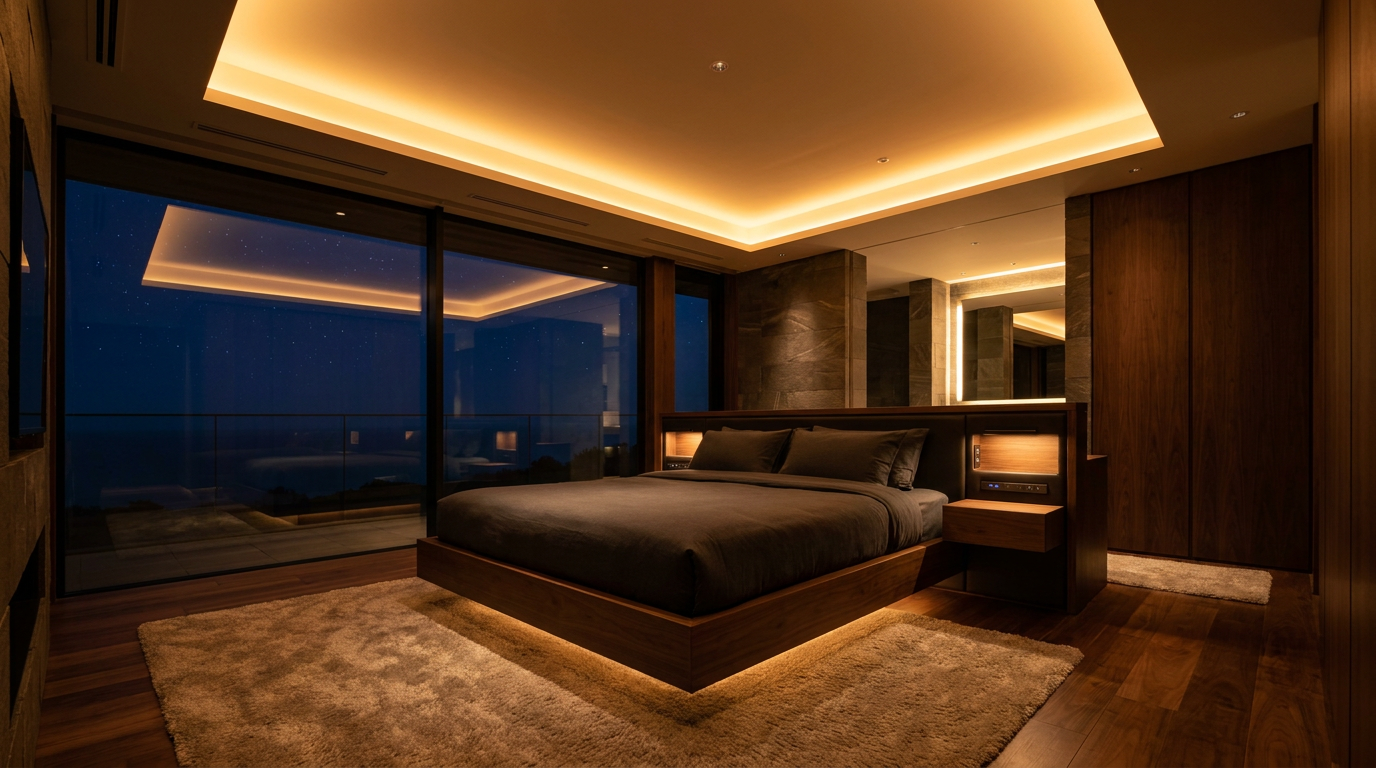
Circadian lighting systems are becoming standard in premium sleep suites. These automated fixtures mirror the natural progression of the sun, blasting bright, blue-enriched light in the morning to halt melatonin production, and transitioning to warm, amber hues in the evening.[4][6]
Acoustic engineering is equally critical. Properties are utilizing advanced Sound Transmission Classification (STC) systems to decouple walls and eliminate ambient noise, ensuring that elevator dings and street traffic never reach the guest.[1][6]
Then there is the bed itself. The integration of AI-powered smart mattresses allows the bed to actively adjust its firmness and temperature throughout the night.[6]

The integration of AI-powered smart mattresses allows the bed to actively adjust its firmness and temperature throughout the night.
These beds monitor biometric data—including heart rate, respiration, and movement—and make micro-adjustments to keep the sleeper in the restorative stages of deep and REM sleep.[4][6]
To validate these high-tech interventions, hospitality brands are partnering directly with leading neuroscientists and sleep researchers.[4][5]
Equinox Hotels, for example, recently launched a "Sleep Lab" in collaboration with Dr. Matthew Walker, the renowned sleep scientist. Their specialized rooms feature contrast therapy showers, adaptive mattresses, and guided audio-visual breathwork rituals.[3][4]
Similarly, Hilton has teamed up with sleep expert Dr. Rebecca Robbins to host dedicated "Sleep Retreats." These multi-day programs combine lectures on sleep mechanics with spa treatments designed to mitigate jet lag and stimulate sleep-enhancing hormones.[5][7]
The culinary side of hospitality is also adapting. "Dopamine menus" and sleep-promoting room service are replacing heavy, late-night dining.[1][7]
Guests can order melatonin-boosting cherry juice, magnesium-rich snacks, and specialized herbal teas designed to lower core body temperature and prepare the nervous system for rest.[6][7]

Some properties even offer sleep IV drips and cryotherapy sessions, which aim to reduce cortisol levels and increase oxygen flow before bedtime.[3]
However, the gamification of rest carries its own risks. Sleep experts warn of "orthosomnia"—a condition where the obsessive tracking of sleep metrics via smart rings and biometric beds actually induces anxiety and causes insomnia.[1][2]
Furthermore, the rise of sleep tourism highlights a growing "sleep divide." As industry analysts note, if the most advanced sleep environments exist only within high-end resorts, the profound health benefits of optimal rest remain concentrated among those who can afford luxury travel.[1]
How we got here
2023
Sleep tourism begins gaining mainstream traction as a post-pandemic wellness trend.
March 2024
Hilton launches dedicated 'Sleep Retreats' in Maui in partnership with sleep scientists.
July 2025
Equinox Hotels debuts 'The Sleep Lab' in New York, featuring biometric tracking and AI-adaptive mattresses.
2026
The global sleep tourism market surpasses $75 billion, with circadian lighting and soundproofing becoming standard in luxury hospitality.
Viewpoints in depth
Hospitality Innovators
Hotels view sleep as the ultimate luxury amenity and a major revenue driver.
Brands like Hilton and Equinox are moving beyond traditional spa services to offer clinical-grade sleep interventions. By partnering with neuroscientists and installing AI-driven hardware, they are transforming the hotel room into a high-performance recovery chamber, catering to a demographic that values wellness over sightseeing.
Wellness & Sleep Scientists
Researchers emphasize the biological necessity of circadian alignment and environmental control.
Scientists applaud the focus on acoustic engineering, light regulation, and thermal control, noting that modern life severely disrupts natural sleep cycles. However, some warn that the hyper-quantification of sleep through biometric tracking can lead to "orthosomnia"—an unhealthy obsession with sleep data that paradoxically causes anxiety and insomnia.
Public Health Advocates
Critics point out the growing inequality in access to restorative environments.
While luxury sleep retreats offer profound benefits, organizations like the Global Wellness Institute highlight a widening "sleep divide." They argue that if quiet, dark, and temperature-controlled environments become premium commodities, the foundational health benefits of good sleep will be increasingly restricted to the wealthy, leaving the broader population to struggle with environmental noise and light pollution.
What we don't know
- Whether the high-tech gamification of sleep provides long-term benefits or primarily induces 'orthosomnia' (sleep anxiety).
- How quickly these clinical-grade sleep technologies will trickle down from ultra-luxury resorts to mid-tier and budget hotel chains.
- If short-term sleep retreats can permanently reset a guest's circadian rhythm once they return to their normal, high-stress home environment.
Key terms
- Circadian Rhythm
- The body's internal 24-hour clock that regulates the sleep-wake cycle, heavily influenced by light exposure.
- Orthosomnia
- An obsession with achieving perfect sleep metrics, often triggered by wearable trackers, which paradoxically leads to anxiety and insomnia.
- Sound Transmission Class (STC)
- A rating system used to measure how well a building partition, like a hotel wall or window, attenuates airborne sound.
- Melatonin
- A hormone produced by the brain in response to darkness that helps regulate sleep cycles.
- Contrast Therapy
- The practice of alternating between hot and cold environments (like a steam room and an ice shower) to reduce cortisol and prepare the body for rest.
Frequently asked
What exactly is sleep tourism?
It is a growing travel trend where the primary purpose of the trip is to improve rest, utilizing specialized hotel rooms engineered for optimal sleep.
How do circadian lighting systems work in hotels?
These systems automatically adjust the color and intensity of room lights throughout the day, using bright blue light in the morning to wake guests and warm amber light at night to encourage melatonin production.
What is an AI-powered smart bed?
A smart bed uses sensors to track a sleeper's heart rate, breathing, and movement, automatically adjusting its firmness and temperature to keep the user in deep, restorative sleep.
Can tracking my sleep actually make it worse?
Yes. Experts warn of "orthosomnia," a condition where obsessing over sleep metrics and biometric data causes anxiety, which in turn makes it harder to fall asleep.
Sources
Source coverage
7 outlets
3 viewpoints surfaced






[1]Global Wellness InstituteWellness & Sleep Scientists
TREND 1: Sleep Tourism and the Growing Sleep Divide
Read on Global Wellness Institute →[2]US MagazineLifestyle & Travel Media
Sleep Tourism Is One of 2026's Biggest Travel Trends
Read on US Magazine →[3]Equinox HotelsHospitality Brands & Analysts
The Art + Science of Sleep by Equinox Hotels
Read on Equinox Hotels →[4]European Spa MagazineWellness & Sleep Scientists
Equinox Hotels launches the Sleep Lab
Read on European Spa Magazine →[5]HiltonHospitality Brands & Analysts
Hilton Partners with Sleep Expert Dr. Rebecca Robbins
Read on Hilton →[6]Hotelier MagazineHospitality Brands & Analysts
The Rise of Sleep Tourism
Read on Hotelier Magazine →[7]Hotel DiveHospitality Brands & Analysts
Hilton launches sleep retreats to cater to wellness travelers
Read on Hotel Dive →
Every angle. Every day.
Get travel stories with full source coverage and perspective breakdowns delivered to your inbox.