
Indian Police Detain Hundreds as Protests Erupt Over Deletion of 130 Million Voters
Authorities in New Delhi and Mumbai arrested more than 700 demonstrators demanding the resignation of the chief election commissioner over a nationwide voter verification drive. The youth-led Cockroach movement and opposition parties allege the removal of 130 million names from the electoral rolls is a systematic effort to disenfranchise legitimate voters.
By Anaya Sharma

The fundamental requirement of any democratic election is an agreed-upon ledger of who is allowed to vote. In India, that consensus has fractured following the deletion of approximately 130 million names from the national electoral rolls. The mass removals have triggered a crisis of legitimacy for the Election Commission of India and ignited nationwide demonstrations.
Police detained more than 700 protesters in New Delhi on Friday as thousands gathered to demand the resignation of Chief Election Commissioner Gyanesh Kumar. Authorities barricaded Jantar Mantar, a designated protest site, and forced demonstrators into police buses. The crackdown extended to Mumbai, where large crowds assembled at Shivaji Park despite police denying permission for the rally.[2]
Among those detained in the capital were senior figures from the Aam Aadmi Party, including former Chief Minister Atishi and Saurabh Bharadwaj. Neha Bora, national president of the All India Students' Association, was also taken into custody but managed to release a statement urging supporters to return to the protest site. The heavy police presence included the closure of 12 metro stations in central Delhi to prevent further crowds from assembling.[2]
The unrest centers on the Special Intensive Revision, a nationwide verification drive that the Election Commission initiated to clean up the voter registry. Officials maintain the exercise is a routine administrative effort to remove duplicate, deceased, or otherwise ineligible entries. However, opposition parties and civil society groups allege the process is systematically disenfranchising legitimate voters.[4]
The Cockroach Movement Returns
The demonstrations are being spearheaded by the Cockroach Janta Party, a youth-led movement that began as a satirical online campaign earlier this year. The group adopted its name after a Supreme Court justice referred to individuals with fake degrees as "cockroaches." They previously organized mass protests over examination paper leaks, forcing the resignation of India's education minister in July.[4]
Abhijeet Dipke, the founder of the movement, addressed the crowds in Mumbai, accusing the ruling Bharatiya Janata Party of manipulating the rolls to secure electoral victories.
"After vote deletion, BJP won states it had not won even during the peak Modi wave," Dipke said. He argued that the government's incompetence has forced young people back onto the streets just months after their last campaign.
The youth activists have found common cause with the INDIA opposition alliance, bringing together two distinct political forces. Leaders from around 20 opposition parties have rallied against the revised voter rolls. The main opposition Congress Party has escalated the demands, calling for Prime Minister Narendra Modi and Home Minister Amit Shah to resign alongside the election chief.[4]
Internal Commission Dissent
The Election Commission's credibility suffered a severe blow following an investigative report by The Indian Express last month. The newspaper revealed that two of the three election commissioners, Sukhbir Singh Sandhu and Vivek Joshi, formally objected to Kumar's decisions on at least 14 occasions over a 10-month period. These internal disputes covered the mass deletion of names and the security of the voter register.[2]
The Election Commission has publicly rejected suggestions of an internal crisis, stating that all three commissioners ultimately approved the changes. The body characterized the differing views as a normal part of its deliberative process. Despite these assurances, the revelation of high-level dissent has fueled accusations that the institution is no longer acting independently.[4]
The scale of the deletions has raised alarms among human rights organizations and international observers. Amnesty International condemned the police response to the protests, noting the imposition of prohibitory orders and the suspension of internet services in parts of Delhi. The organization emphasized that the right to peaceful assembly is protected under both the Indian Constitution and international law.[3]
Electoral Consequences
Critics point to recent state elections as evidence of the revision's political impact. In West Bengal, approximately 2.7 million voters were removed from the rolls shortly before polling day, preceding a historic electoral victory for the BJP. Opposition figures argue that the documentation required to establish voter eligibility is confusing and disproportionately affects marginalized communities.
The Election Commission data indicates that voter lists in some regions could shrink by as much as 30 percent due to the Special Intensive Revision. The process, which began last year in the eastern state of Bihar, has since expanded to most states and federally administered territories. Protesters are demanding that the 2025 electoral rolls be frozen and used for upcoming elections instead.[1]
In Lucknow, Uttar Pradesh police detained hundreds of social activists and students who had organized a citizens' march to mark Gandhi Jayanti. The protesters carried placards demanding Kumar's resignation and raised slogans against alleged vote theft. Uttar Pradesh recorded the second-highest net deletions in the country, with approximately 20 million names removed from the draft rolls.[5]
A Test of Institutional Independence
The convergence of youth activists and established political parties presents a complex challenge for the Modi government. While the Cockroach movement has demonstrated its ability to mobilize young voters, analysts note that extracting further concessions from the ruling party will be difficult. The government has consistently denied any political interference in the Election Commission's operations.[4]
Opposition lawmakers are reportedly preparing a motion in both houses of Parliament to remove Kumar from his position as Chief Election Commissioner. If successful, it would mark a rare instance of a constitutional officer being ousted through parliamentary procedure. However, the ruling coalition's majority makes the passage of such a motion highly unlikely without significant defections.
The protests have drawn support from prominent figures in Indian civil society and the entertainment industry. Actors Naseeruddin Shah and Shabana Azmi, along with filmmaker Vishal Bharadwaj, joined the demonstrations in Mumbai. Tushar Gandhi, the great-grandson of Mahatma Gandhi, was also in attendance, lending historical weight to the movement's demands for democratic integrity.
For many young demonstrators, the issue extends beyond partisan politics to the fundamental right of political participation.
"My motivation is our future," said Nidhi Sharma, a 19-year-old Delhi University student who attended the Jantar Mantar protest. "I have to vote."
The Election Commission has directed officials to expedite the registration of newly eligible voters and those who claim to have been wrongly omitted. This move appears aimed at easing tensions and addressing the backlog of complaints. However, the underlying dispute over the Special Intensive Revision's methodology and the commission's leadership remains unresolved.[2]
The Cockroach Janta Party has announced plans to expand its agitation to Kolkata and Goa in the coming weeks, aiming to sustain the momentum generated in Mumbai and Delhi. Meanwhile, opposition lawmakers are finalizing the draft of their parliamentary motion against Kumar. The immediate test for the Election Commission will be whether it releases the algorithms and criteria used to flag the 130 million deleted entries before the next round of state elections.
Key points
- Indian police detained more than 700 people in New Delhi and Mumbai during protests against the Election Commission.
- Demonstrators are demanding the resignation of Chief Election Commissioner Gyanesh Kumar over the deletion of 130 million voters.
- The youth-led Cockroach Janta Party and opposition leaders allege the voter roll revision is a targeted suppression effort favoring the ruling BJP.
- The Election Commission defends the mass removals as a routine administrative cleanup to eliminate duplicate and ineligible entries.
What we don’t know
- It remains unclear exactly what algorithms and criteria the National Informatics Centre used to flag the 130 million voters for deletion.
- The specific demographic breakdown of the removed voters has not been publicly released, making it difficult to verify claims of targeted suppression.
- It is unknown whether opposition lawmakers will secure enough support to formally introduce a parliamentary motion to remove the chief election commissioner.
How we got here
2025
The Election Commission of India announces the Special Intensive Revision to clean up national electoral rolls.
May 2026
The Cockroach Janta Party emerges as an online movement after a Supreme Court justice refers to people with fake degrees as 'cockroaches.'
July 2026
Nationwide street protests led by the Cockroach movement force the resignation of India's education minister over examination paper leaks.
September 2026
Investigative reports reveal that two election commissioners formally objected to Chief Election Commissioner Gyanesh Kumar's decisions 14 times over 10 months.
October 2, 2026
Police detain hundreds of protesters in New Delhi and Mumbai as demonstrations erupt over the deletion of 130 million voters.
- Youth Activists & Opposition
- Argue the voter roll revisions are a targeted suppression tactic designed to disenfranchise millions and secure victories for the ruling party.
- Election Commission
- Maintains the Special Intensive Revision is a necessary administrative exercise to remove duplicate and ineligible voters from the registry.
- Civil Rights Observers
- Focus on the government's heavy-handed response to the protests, condemning mass detentions and internet blackouts as human rights violations.
Perspectives this story doesn't cover
- Voters who were successfully reinstated after appealing their deletion
- Technical engineers from the National Informatics Centre who designed the deletion algorithm
Sources
Source coverage
5 outlets
3 viewpoints surfaced





- [1]The HinduElection Commission
If Gyanesh Kumar goes, Modi will have to follow suit: Dipke
Read on The Hindu → - [2]The GuardianElection Commission
India's Cockroach movement launches new protests over changes to voter roll
Read on The Guardian → - [3]Amnesty InternationalCivil Rights Observers
India: Authorities trampling on human rights in crackdown on electoral roll protests
Read on Amnesty International → - [4]South China Morning PostYouth Activists & Opposition
India's opposition parties and the youth-led “cockroach” movement took to the streets on Friday
Read on South China Morning Post → - [5]The WireYouth Activists & Opposition
Lucknow: Hundreds Detained During Citizens' March Against Mass Deletion of Voters
Read on The Wire →
More in News & Politics
See all →Indus Waters Treaty
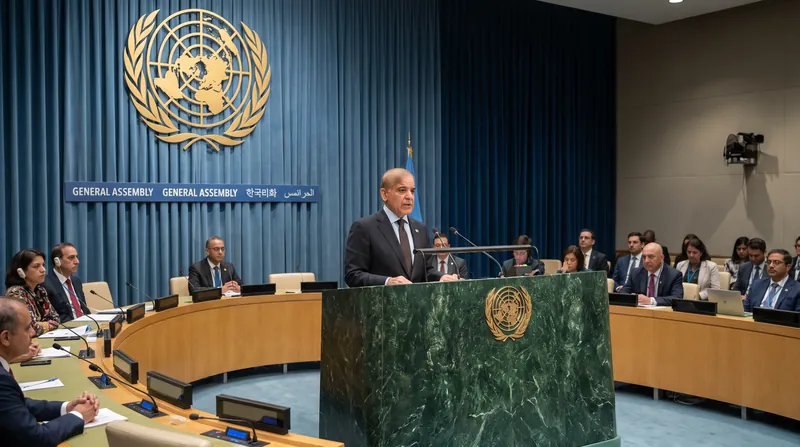
Pakistan Declares Indian Diversion of Indus Waters an 'Act of War' at UN General Assembly
6 sources
Maritime Law
UN Report Finds US Strikes on Ecuadorian Fishing Boats Plausibly Constitute Crimes Against Humanity
7 sources
Climate Diplomacy
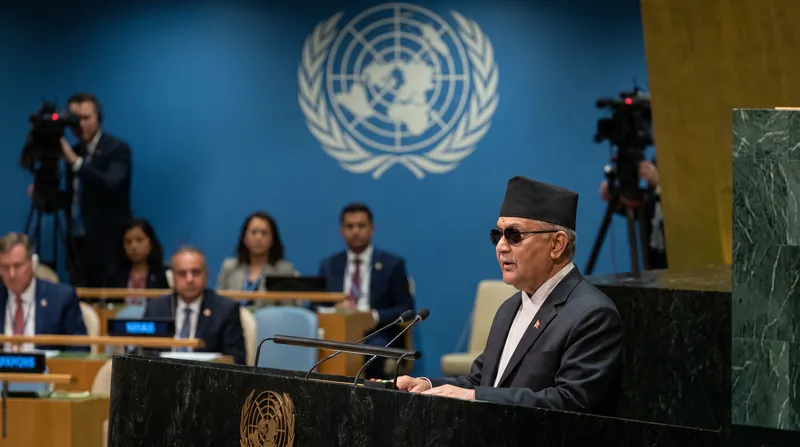
Nepal PM Demands Climate Justice at UN After Floods Kill 1,400, Calls Disaster a 'Warning'
5 sources
Mediterranean Security
CIA Warns Europe of Russian Plot to Launch Attack Drones from Mediterranean Cargo Ships
5 sources

Comments
Every angle. Every day.
Get News & Politics stories with full source coverage and perspective breakdowns, free every day.