
Huawei Launches Mate 90 Series with Kirin 9050 Pro Chips and Steep Price Increases
Huawei has officially launched its Mate 90 flagship smartphone series in China, featuring the new Kirin 9050 Pro processor and a modular camera system. The devices arrive with significant price increases, testing the limits of domestic demand for homegrown technology.
By Lila Morgan

The outcome of a flagship smartphone launch is not determined on the presentation stage, but in the silicon fabrication facilities where its core processors are etched. For Huawei's new Mate 90 series, that determining step happened months ago when Chinese foundries reportedly produced the Kirin 9050 Pro chip. This manufacturing milestone dictates whether Huawei can genuinely compete with Western-aligned tech giants under strict United States trade sanctions.[1][2]
Huawei officially launched the Mate 90 series in China on October 1, 2026, introducing four models that range from the standard Mate 90 to the ultra-premium Mate 90 RS Ultimate Design. The lineup serves as the company's latest technological statement, heavily emphasizing homegrown components. The devices arrive nearly two months earlier in the calendar year than the previous Mate 80 generation.[1][5]
The early release window gives Huawei a full fourth quarter to capitalize on domestic holiday sales. Market analysts note that this timing is crucial for the company's volume targets. The previous generation shipped over eight million units by mid-2026, setting a high bar for the new flagship family.[5]
Silicon reality beneath the marketing
The marketing materials for the Mate 90 series lean heavily into proprietary branding, boasting about a "LogicFolding Tau Architecture" and hardware ray tracing capable of 55 million rays per second. Huawei claims these advancements deliver a 31 percent performance increase for the Pro Max model. However, independent testing reveals a more grounded reality behind the promotional language.[6]
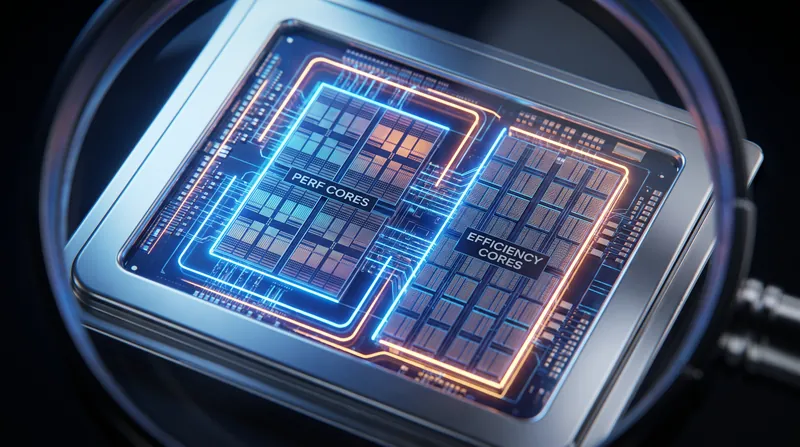
Early benchmark results from Geekbench 7 provide the first objective look at the Kirin 9050 Pro's actual capabilities. The chipset features a nine-core processor, led by a prime core clocked at 3.1 gigahertz. The testing places the chip's performance roughly between Qualcomm's 2021 Snapdragon 8 Gen 1 and the 2022 Snapdragon 8 Gen 2.[2][3]
While the silicon represents a significant achievement for a sanctioned company, it remains several generations behind the current cutting edge. Industry reports suggest the Kirin 9050 Pro is fabricated on a seven-nanometer-class process node. This indicates that Chinese foundries are successfully refining older manufacturing techniques, even if they cannot yet access extreme ultraviolet lithography machines.[2]
The standard Mate 90 and the Mate 90 Pro utilize slightly scaled-down processors, designated as the Kirin 9030 and Kirin 9035. These chips power 6.75-inch displays and rely on the same HarmonyOS 7 operating system as the premium models. The software vertically integrates Huawei's hardware and cloud services, entirely bypassing Google's Android ecosystem.[1][4]
Pushing mobile photography boundaries
Beyond the silicon, Huawei is positioning the Mate 90 series as a major leap in mobile photography. The Pro Max and RS models feature a massive 6.9-inch dual-layer OLED display and a complex triple-camera array. The built-in system includes a 50-megapixel main sensor with variable aperture, a 40-megapixel ultrawide lens, and a 200-megapixel periscope telephoto camera.[1][4]
The most unusual addition to the lineup is not built into the phone at all. Huawei introduced the Ruiying Z10, a clip-on camera module that physically attaches to the back of the device. This accessory covers the phone's native lenses and replaces them with a dedicated one-inch sensor and a 10x continuous optical zoom lens.[4]
The modular approach allows Huawei to offer professional-grade imaging capabilities without making the base smartphone impractically thick. The Z10 accessory features a 24-millimeter to 240-millimeter focal length and a maximum aperture of f/2.0 to f/4.5. However, this level of photographic flexibility comes with a steep additional cost for consumers.[4]
The Ruiying Z10 module is priced at 5,999 yuan, which translates to roughly $900. This accessory alone costs as much as the base model of the standard Mate 90 smartphone. It represents a distinct shift toward targeting wealthy photography enthusiasts who are willing to invest heavily in a modular mobile ecosystem.[4]
Strategic price increases and market risks
The entire Mate 90 series carries a significantly higher price tag than its predecessor. The base Mate 90 starts at 5,999 yuan, while the Pro Max model demands 9,499 yuan. The top-tier RS Ultimate Design pushes the ceiling even higher, retailing for 18,999 yuan, or more than $2,800.[5]
These figures represent a price hike of roughly 1,000 to 2,000 yuan across comparable configurations when measured against the Mate 80 generation. Market analysts attribute the increase to the rising costs of advanced memory components and the expensive domestic fabrication of the Kirin processors.[5]
The aggressive pricing strategy introduces a new risk for Huawei's domestic dominance. While the company successfully held its prices steady during the previous product cycle, asking consumers to pay substantially more for the Mate 90 could dampen demand. Some premium configurations even offer less memory than their predecessors despite the higher cost.[5]
"The Mate 90 series' substantially higher pricing could make it more difficult to replicate the Mate 80's lifecycle success," notes a report from Smart Analytics Global.[5]
The firm suggests that Huawei may need to rely on its mass-market models and the mid-range Nova series to drive incremental volume growth in 2026. The flagship Mate line is increasingly positioned as a luxury status symbol rather than a mainstream consumer device.[5]
Navigating the global technology divide
The launch of the Mate 90 series further cements the technological divergence between China and the West. Because the devices lack Google services and rely entirely on HarmonyOS, their appeal outside of the domestic market remains severely limited. Huawei is effectively building an isolated ecosystem that serves a single, massive user base.[1]
The company claims that HarmonyOS now powers over 90 million devices and is supported by a community of 11 million registered developers. This scale demonstrates that a proprietary operating system can survive, provided it has the backing of a massive domestic market and state-aligned strategic priorities.[6]
The true test for the Mate 90 series will arrive when the initial launch enthusiasm fades. If domestic consumers accept the steep price increases for a device running on older-generation processing power, Huawei will have proven its isolated ecosystem is financially sustainable. If sales stall, the company may be forced to absorb the rising costs of its independent supply chain.
Key points
- Huawei introduced four models in the Mate 90 series, launching nearly two months earlier than the previous generation.
- The premium models are powered by the Kirin 9050 Pro, a homegrown chip that benchmarks roughly on par with 2022-era flagship processors.
- The company debuted a $900 clip-on camera accessory featuring a one-inch sensor and 10x optical zoom.
- Prices across the lineup have increased by 1,000 to 2,000 yuan compared to the Mate 80 series.
What we don’t know
- Whether the Kirin 9050 Pro is manufactured on a genuinely new process node or is simply a highly optimized version of SMIC's existing 7nm technology.
- How the substantial price increases will affect consumer demand in a Chinese smartphone market that has seen intense price competition.
- If Huawei plans to release any version of the Mate 90 series in international markets, given the complete absence of Google services.
How we got here
August 2023
Huawei surprises the industry by launching the Mate 60 Pro with the 7nm Kirin 9000s, marking its return to custom silicon despite US sanctions.
September 2024
The Mate 70 series debuts, refining the 7nm process and introducing satellite calling capabilities.
November 2025
Huawei releases the Mate 80 generation, which goes on to ship over 8 million units domestically by mid-2026.
October 1, 2026
The Mate 90 series officially launches in China, featuring the Kirin 9050 Pro and a significant price increase across the lineup.
- Market Analysts
- Evaluate the launch through the lens of pricing strategy, component costs, and domestic sales volume.
- Hardware Reviewers
- Assess the devices based on raw silicon performance, benchmark scores, and camera capabilities.
Perspectives this story doesn't cover
- International consumers unable to access the devices
- US trade regulators monitoring semiconductor advancements
Sources
Source coverage
6 outlets
2 viewpoints surfaced






- [1]TechNodeHardware Reviewers
Huawei launches Mate 90 series with new Kirin chips across the lineup
Read on TechNode → - [2]GSMArenaHardware Reviewers
Huawei Mate 90 Pro Max runs Geekbench, revealing Kirin 9050 Pro performance - GSMArena.com news
Read on GSMArena → - [3]NotebookcheckHardware Reviewers
New Kirin 9050 Pro flagship chipset makes Geekbench 7 debut aboard Huawei Mate 90 Pro Max - Notebookcheck News
Read on Notebookcheck → - [4]PetaPixelHardware Reviewers
Huawei Mate 90 Pro RS
Read on PetaPixel → - [5]Smart Analytics GlobalMarket Analysts
Huawei officially launched the Mate 90 series in China on October 1, 2026
Read on Smart Analytics Global → - [6]Access NewswireHardware Reviewers
Huawei today officially launched its next-generation flagship HUAWEI Mate 90 Series
Read on Access Newswire →
More in Technology
See all →OxygenOS Flaw
OnePlus and Oppo Face Legal Warning Over Unpatched Zero-Permission Root Vulnerability
5 sources

Hardware Security
The Hardware Isolation Boundary: How a Dedicated Coprocessor Secures Biometric Data Against OS-Level Compromise
7 sources
OLED Technology
The Mechanism of OLED Displays: Why Dark Pixels Save Power but Accelerate Burn-In
6 sources

Device Lifecycles
Samsung Ends Guaranteed Security Updates for Galaxy Z Fold 3 and Z Flip 3 After Five Years
5 sources
Comments
Every angle. Every day.
Get Technology stories with full source coverage and perspective breakdowns, free every day.