
Pakistan Declares Indian Diversion of Indus Waters an 'Act of War' at UN General Assembly
Prime Minister Shehbaz Sharif used his UN address to warn that any unilateral move by New Delhi to restrict river flows would trigger a military response, a claim India rejected as a deflection from cross-border terrorism.

How this story has developed
This report is part of a developing story — read the earlier chapters below.
- Explainer: The Mechanics of the Indus Waters Treaty and the Stakes of Its Suspension
- Pakistan Declares Indian Diversion of Indus Waters an 'Act of War' at UN General Assembly (this article)
- Pakistani Administration
- Views the uninterrupted flow of the western rivers as an existential requirement for its agricultural economy.
- Indian Administration
- Maintains it is strictly adhering to the treaty while maximizing its permitted usage of the river system.
Perspectives this story doesn't cover
- Kashmiri civilians dependent on the river system
- World Bank arbitrators
Why it matters
The Indus river system sustains agriculture for over 200 million people across the subcontinent. The collapse of the 66-year-old water-sharing framework would directly threaten food security and establish a new tripwire for armed conflict between two nuclear-armed nations.
Pakistan asserts that any unilateral alteration to the flow of the Indus river system constitutes a direct threat requiring a military response, while India maintains it has the sovereign right to maximize its allocated water usage and modify a 1960 treaty it says Islamabad has persistently violated.[1][4]
Prime Minister Shehbaz Sharif delivered the ultimatum on Friday during the 81st United Nations General Assembly in New York. Addressing the chamber, Sharif stated that Pakistan would treat any Indian attempt to divert the shared waters as an "act of war," telling the assembly that New Delhi "must make no mistake about it."[1][3][5][6]
India immediately rejected the premise of the warning. Exercising its right of reply, the Indian delegation dismissed Sharif's address as a deflection, stating that a nation with a documented history of cross-border terrorism cannot dictate the terms of bilateral agreements or use the UN to mask its own internal failures.[4]
The dispute centers on the 1960 Indus Waters Treaty, brokered by the World Bank. The agreement grants India control over the three eastern rivers—the Beas, Ravi, and Sutlej—while allocating the western rivers—the Indus, Chenab, and Jhelum—to Pakistan. Tensions escalated after India issued a formal notice to Pakistan in August 2026 demanding the modification of the treaty, citing Islamabad's "intransigence" over Indian hydroelectric projects on the western rivers.[3][4]
The dispute centers on the 1960 Indus Waters Treaty, brokered by the World Bank.
Sharif also used the UN platform to reiterate Pakistan's stance on Kashmir, describing the disputed territory as Pakistan's "jugular vein." Broadening his geopolitical focus, the Prime Minister called for the Straits of Hormuz and Bab al-Mandab to remain open amid escalating regional conflicts in the Middle East, emphasizing the fragility of global supply lines.[2][3]
The diplomatic standoff leaves the World Bank's arbitration mechanism paralyzed. With India accelerating dam construction in Jammu and Kashmir and Pakistan explicitly tying water security to armed conflict, the threshold for military escalation between the two neighbors now rests on the physical flow of the Chenab and Jhelum rivers.[1][4]
The immediate question is whether New Delhi will proceed with the Kishenganga and Ratle hydroelectric projects under the existing framework or formally suspend its participation in the treaty. A formal withdrawal by India would remove the only remaining institutional guardrail managing resource competition on the subcontinent.[4]
What to know
- Pakistan's Prime Minister warned the UN General Assembly that diverting the Indus waters would be treated as an act of war.
- India rejected the ultimatum, accusing Pakistan of using the international forum to distract from its record on terrorism.
- The dispute centers on the 1960 Indus Waters Treaty, which allocates the western rivers to Pakistan and the eastern rivers to India.
- Tensions escalated after India issued a formal notice demanding modifications to the 66-year-old treaty.
Where opinion splits
Islamabad's Red Line
Pakistan views the uninterrupted flow of the western rivers as an existential requirement for its agricultural economy.
Pakistani officials argue that India's accelerated construction of run-of-the-river hydroelectric projects on the Chenab and Jhelum rivers violates the spirit of the 1960 agreement. By framing water diversion as a casus belli, Islamabad is attempting to internationalize the dispute and force the World Bank or other global powers to intervene before India can establish physical control over the flow.
New Delhi's Sovereign Right
India maintains it is strictly adhering to the treaty while maximizing its permitted usage of the river system.
The Indian government asserts that the treaty explicitly allows for specific hydroelectric and agricultural uses on the western rivers. New Delhi views Pakistan's objections as a bad-faith effort to stall Indian infrastructure development in Jammu and Kashmir. Indian diplomats argue that Pakistan's refusal to resolve technical disputes bilaterally has forced India to seek formal modifications to the 66-year-old framework.
Sources
Source coverage
6 outlets
2 viewpoints surfaced






- [1]DawnPakistani Administration
Any attempt to divert Pakistan's water to be treated as act of war, India 'must make no mistake about it': PM at UNGA - World - Dawn
Read on Dawn → - [2]TRT WorldPakistani Administration
Straits of Hormuz, Bab al Mandab 'must remain open' Pakistan tells UN - TRT World
Read on TRT World → - [3]Outlook IndiaIndian Administration
'Kashmir Is Pakistan's Jugular Vein': Shehbaz Sharif Warns Indus Water Diversion 'Act Of War'
Read on Outlook India → - [4]The Indian ExpressIndian Administration
Shehbaz Sharif's 'act of war' warning over Indus waters at UN; India hits back over terrorism
Read on The Indian Express → - [5]Business RecorderPakistani Administration
PM Shehbaz warns India against water diversion at UNGA - Pakistan - Business Recorder
Read on Business Recorder → - [6]MathrubhumiIndian Administration
Shehbaz Sharif at UN: Any diversion of Indus waters will be 'act of war'
Read on Mathrubhumi →
Comments

More in News & Politics
See all →Coalition Withdrawal
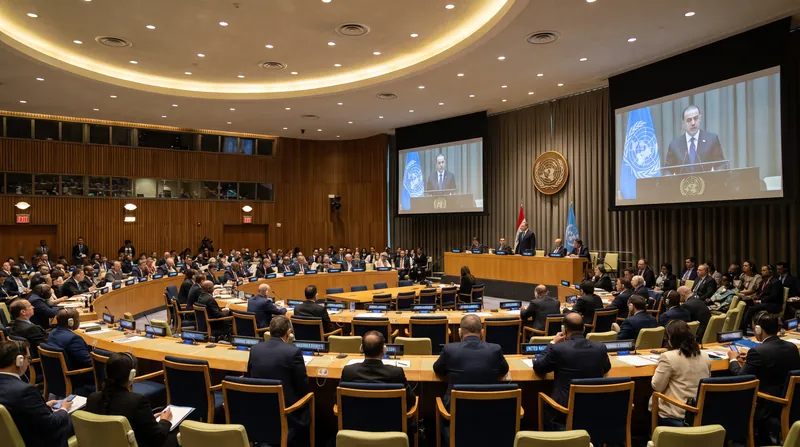
Iraq Announces End of US-Led Military Coalition at UN General Assembly
6 sources
UN General Assembly
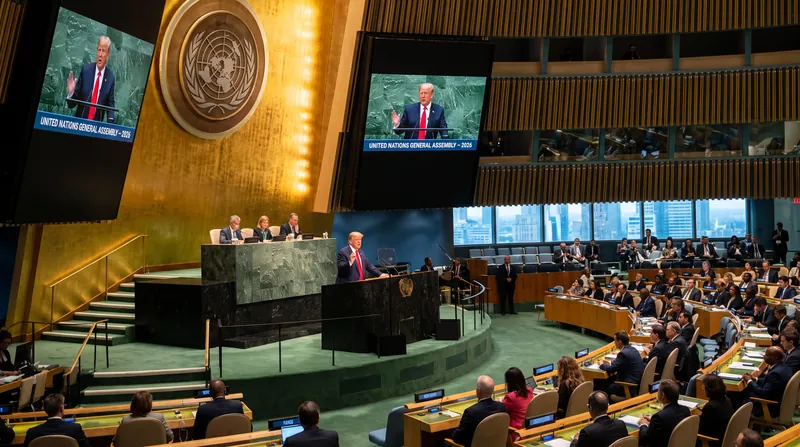
Trump Calls on All Nations to Resign from International Criminal Court at UN General Assembly
4 sources
Indo-Pacific Defense
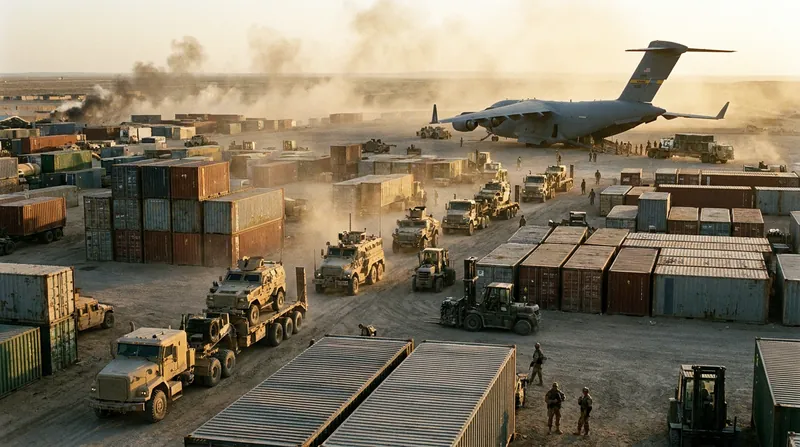
US Military to Build Permanent War-Ready Weapons Stockpile in Australia
5 sources
Climate Litigation
Trump Administration's Supreme Court Brief Clashes With EPA Climate Rollback
4 sources

Every angle. Every day.
Get News & Politics stories with full source coverage and perspective breakdowns delivered to your inbox.