
Fire Engulfs Albanian Supreme Court as Anti-Government Protests Enter Fifth Day
Demonstrations in Tirana escalated sharply on Sunday as protesters set fire to the Supreme Court and central bank buildings. Police responded with rubber bullets to disperse crowds demanding the resignation of the prime minister.
By Javier Cruz

Share this story
Five consecutive days of street mobilization in a capital of half a million people culminated on Sunday in the burning of Albania’s highest judicial building. Protesters breached the perimeter of the Supreme Court in Tirana, igniting fires that quickly engulfed the ground-floor offices and spread toward the central bank.[1][3]
The escalation marks a severe structural breakdown in the standoff between the ruling Socialist Party and opposition supporters. What began earlier this week as localized rallies against corruption allegations has now transitioned into direct attacks on state institutions.[4][5]
Security forces deployed tear gas and fired rubber bullets into the crowds as the unrest entered its fifth day. Riot police established cordons around the parliament building and the prime minister's office, attempting to push demonstrators back from the burning judicial complex.[4][6]
The government immediately denounced the sudden escalation as a direct assault on the constitutional order. Albania's Justice Minister issued a public statement condemning the violence after the fires hit key institutions across the capital city.[2]
"This is no longer a political protest, but a coordinated attack on the foundations of our justice system," the Justice Minister said in a public statement released as the fires burned.[2]
The ministry confirmed that emergency services struggled to access the Supreme Court due to the density of the crowds blocking the surrounding boulevards. Firefighters eventually required police tactical escorts to reach the burning structure.[1][2]
Institutional targets
The choice of targets reflects the opposition's central grievance regarding the independence of the judiciary. Demonstrators have repeatedly accused the government of capturing the courts and using the justice system to shield allied politicians from corruption inquiries.[3][6]
The fires near the central bank add an economic dimension to the political crisis. Protesters gathered outside the financial institution, throwing incendiary devices at the facade before police tactical units arrived to secure the perimeter.[3]
The violence follows a steady deterioration of public order since the protests began on Wednesday. Earlier demonstrations saw thousands of citizens marching peacefully through Tirana, demanding the immediate resignation of the prime minister and the formation of a technocratic caretaker government.[4]
International observers are monitoring the situation closely, as the instability threatens Albania's ongoing integration processes with the European Union. The destruction of the Supreme Court specifically undermines years of internationally backed judicial reforms aimed at rooting out systemic corruption.[1][5]
Opposition demands
Opposition leaders have refused to call off the demonstrations, arguing that the government has lost its democratic mandate. They maintain that the ruling party has consolidated power through electoral manipulation and illicit financial networks, leaving citizens with no institutional recourse.[3][6]
The crowds in Tirana draw heavily from the Democratic Party's base, but have expanded to include unaffiliated citizens frustrated by the rising cost of living. Independent monitors estimate that tens of thousands of people participated in Sunday's mobilization before the violence erupted.[4][5]
Law enforcement agencies have escalated their crowd-control tactics in response to the incendiary devices. The use of rubber bullets on Sunday represents a significant shift from the water cannons and barricades relied upon during the first four days of the unrest.[4]
Local hospitals reported a surge in admissions as the clashes intensified throughout the afternoon. Medical personnel treated dozens of protesters for blunt force trauma and tear gas exposure, while several police officers sustained burns and concussions from thrown objects.[4][6]
Political deadlock
The prime minister has categorically rejected demands for his resignation, describing the protests as a desperate attempt by a marginalized opposition to seize power outside the ballot box. He insists his administration will serve out its full electoral term.[2][5]
The political deadlock is compounded by the opposition's ongoing boycott of parliamentary sessions. Without a functioning legislative forum, the dispute has entirely relocated to the streets, stripping the country of its primary mechanism for resolving political conflict.[3][6]
Firefighters eventually managed to contain the blaze at the Supreme Court by late Sunday evening. Preliminary assessments indicate extensive damage to the ground-floor registry and administrative offices, raising concerns about the potential destruction of active case files and legal records.[1][3]
The Supreme Court has been the focal point of a comprehensive vetting process initiated in 2016 to purge corrupt judges. The fire threatens to derail this fragile transition, as the court was only recently repopulated after operating without a quorum for several years.[1][3]
The attack on the central bank also signals a shift toward targeting the state's economic infrastructure. Demonstrators argue that the country's financial institutions have facilitated money laundering for organized crime syndicates connected to the ruling political elite.[3][6]
Regional implications
The unrest in Tirana carries significant implications for the broader stability of the Western Balkans. Neighboring states are watching the crisis closely, concerned that a prolonged political collapse in Albania could embolden anti-government movements across the region.[4][5]
Albania opened formal accession negotiations with the European Union in 2022, a milestone predicated heavily on the success of its justice reforms. European diplomats in Tirana have warned that political violence and the destruction of state property could freeze the accession timeline indefinitely.[1][2]
The Ministry of Interior has mobilized reserve units from surrounding districts to reinforce the capital's exhausted police force. Convoys of armored personnel carriers were seen entering Tirana on Sunday night, establishing checkpoints along the main arterial roads leading to the government quarter.[4][6]
The prime minister addressed the nation via a televised broadcast, framing the opposition's tactics as an assault on the state itself. He warned that anyone identified participating in the arson attacks would face severe terrorism charges rather than standard public order offenses.[2][5]
Key points
- Protesters in Tirana set fire to the Supreme Court and targeted the central bank as anti-government demonstrations escalated on their fifth day.
- Police deployed tear gas and rubber bullets to disperse crowds demanding the immediate resignation of the prime minister.
- The Justice Ministry condemned the arson as a coordinated attack on the constitutional order and the justice system.
- The destruction of judicial infrastructure threatens to derail years of internationally backed reforms tied to Albania's EU accession.
What we don’t know
- The extent of the damage to active case files and legal records inside the Supreme Court registry.
- Whether the opposition coalition will remain unified following the shift toward violent tactics and arson.
- How the European Union will formally respond to the destruction of institutions tied to its mandated justice reforms.
How we got here
2016
Albania initiates a comprehensive, internationally backed vetting process to reform the Supreme Court and purge corrupt judges.
2022
The European Union formally opens accession negotiations with Albania, heavily conditioning progress on judicial stability.
Wednesday
Thousands of citizens begin marching in Tirana to demand the prime minister's resignation over corruption allegations.
Saturday
Protests escalate as demonstrators clash with police cordons outside the parliament building.
Sunday
Crowds breach the perimeter of the Supreme Court and central bank, setting fires and prompting police to fire rubber bullets.
- Ruling Government
- The administration views the protests as an illegal attempt to seize power through violence.
- Opposition Demonstrators
- Protesters argue that the government has captured state institutions and must be replaced by a technocratic administration.
- International Observers
- Foreign diplomats and regional analysts focus on the threat to Albania's European integration.
Perspectives this story doesn't cover
- Judicial Officials
- Local Business Owners
Sources
Source coverage
6 outlets
3 viewpoints surfaced





- [1]Albanian Daily NewsRuling Government
Fire Reported at Albania's High Court as Protest Escalates in Tirana
Read on Albanian Daily News → - [2]Albanian Daily NewsRuling Government
Justice Minister Condemns Violence After Fires Hit Key Institutions in Tirana
Read on Albanian Daily News → - [3]Gazeta TemaOpposition Demonstrators
Protesters set fires near Supreme Court and central bank
Read on Gazeta Tema → - [4]Türkiye TodayInternational Observers
Albanian police fire rubber bullets as Tirana protests enter 5th day
Read on Türkiye Today → - [5]NDTVInternational Observers
Albania News
Read on NDTV → - [6]DemócrataOpposition Demonstrators
Riots in Albania: they set fire to the Supreme Court in Tirana
Read on Demócrata →
More in News & Politics
See all →Vatican Affairs
Pope Leo XIV Delivers First Angelus Address Following Lung Cancer Surgery
4 sources
US-Israel Relations
US President Donald Trump Endorses Benjamin Netanyahu Nine Days Before Israeli Election
6 sources
Defense Leadership
Iran Parliament Approves Mehrdad Akhlaqi as Defense Minister
5 sources
Free Trade
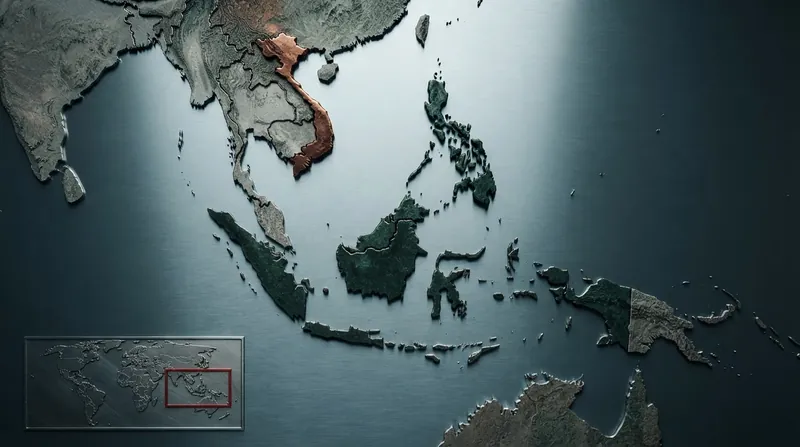
Vietnam and EFTA Sign Landmark Free Trade Agreement After 14 Years of Negotiations
6 sources
Comments
Every angle. Every day.
Get News & Politics stories with full source coverage and perspective breakdowns, free every day.