
UN Nuclear Watchdog Inspectors Arrive in Tehran for Facility Visit Amid Succession Crisis
IAEA inspectors have landed in Iran to verify the country's nuclear stockpile under the terms of a fragile peace pact. Their arrival coincides with a tense domestic transition, highlighted by the new Supreme Leader's absence from his father's public funeral.

Share this story
International Atomic Energy Agency (IAEA) inspectors have touched down in Tehran, marking the first on-the-ground international monitoring of Iran's nuclear program since a devastating US-Israeli air campaign earlier this year. The delegation's arrival initiates a critical verification phase mandated by the June 18 memorandum of understanding between Washington and Tehran, which paused the months-long war.[1][3]
The inspectors' primary mandate is to locate and verify the status of Iran's estimated 440-kilogram stockpile of uranium enriched to 60% purity—a technical hair's breadth away from weapons-grade material. Much of this inventory is believed to be buried beneath the rubble of facilities struck during the allied bombing campaign.[1][5]
However, the UN team faces an immediate and severe diplomatic roadblock. Iranian Parliament Speaker Mohammad Bagher Qalibaf has explicitly declared that international monitors will be barred from accessing bombed enrichment sites, such as the subterranean Fordow complex and the Natanz facility. According to Qalibaf, a newly passed parliamentary law restricts IAEA access strictly to the Bushehr nuclear power plant and the Tehran research reactor.[3][4]
IAEA Director General Rafael Grossi has consistently pushed back against these limitations, asserting that physical verification of all nuclear material is non-negotiable. "Intentions are not enough," Grossi stated recently, emphasizing that the agency must examine seals and confirm that no highly enriched uranium has been diverted from the damaged sites.[1][6]
The inspectors' arrival unfolds against the backdrop of a highly volatile domestic transition. Tehran is currently in the midst of a week-long state funeral for former Supreme Leader Ayatollah Ali Khamenei, who was killed in a February 28 US-Israeli airstrike. The capital is swarming with foreign delegations and mourning crowds, creating a tense security environment for the visiting UN officials.[2][3]
Adding to the atmosphere of instability, Iran's new Supreme Leader, Ayatollah Mojtaba Khamenei, was glaringly absent from his father's public funeral ceremonies on Sunday. While state television broadcast images of his three brothers—Mostafa, Meysam, and Masoud—praying behind the coffins in the vast courtyard of Tehran's Imam Khomeini Mosalla, Mojtaba did not make an appearance.[2]
The absence of the newly elevated leader at such a pivotal public event has fueled intense speculation regarding a deepening succession crisis and profound security fears. Analysts suggest that Mojtaba's isolation may be driven by credible concerns of further Israeli assassination attempts, or by internal fractures within the highest echelons of the theocratic establishment as he attempts to consolidate power.[2]
This domestic fragility is directly complicating the nuclear negotiations. Hardline factions and conservative Iranian media outlets have launched a fierce campaign against the IAEA's return, accusing the UN watchdog of acting as an intelligence-gathering arm for Israel. Critics within Tehran argue that allowing inspectors into damaged military and nuclear sites will merely help the US and Israel build a "target bank" for future strikes.[4]
For the United States, the stakes of the IAEA visit are existential to the peace process. The Trump administration has firmly tied the unfreezing of billions of dollars in Iranian assets and the lifting of crippling energy sanctions to verifiable nuclear transparency. US officials have warned that any refusal to grant inspectors full access will be viewed as a violation of the June 18 ceasefire agreement.[5][6]
With the 60-day window established by the peace memorandum rapidly ticking down, the IAEA delegation has a narrow timeframe to establish a baseline of Iran's nuclear capabilities. Whether the inspectors can navigate the hardline restrictions and the chaotic succession dynamics will likely determine if the fragile truce holds, or if the region plunges back into open conflict.[1][3]
Viewpoints in depth
The UN Watchdog's Stance
The IAEA insists that physical verification of all nuclear material is a non-negotiable requirement.
International Atomic Energy Agency leadership argues that diplomatic promises and political memorandums are insufficient without on-the-ground verification. Director General Rafael Grossi has maintained that the agency must account for the 440 kilograms of highly enriched uranium that Iran possessed prior to the allied bombing campaign. From the IAEA's perspective, failing to inspect the damaged sites like Fordow and Natanz leaves a dangerous blind spot that undermines the integrity of the global non-proliferation framework and the current ceasefire.
Iranian Hardliners
Conservative factions view the inspections as a Trojan horse for Western intelligence gathering.
Within Iran's political and military establishment, there is deep-seated suspicion regarding the UN inspectors' true motives. Hardline lawmakers and state media outlets argue that granting access to bombed military and nuclear installations will simply allow the US and Israel to assess the battle damage and build a 'target bank' for future strikes. This faction, which recently codified access restrictions into parliamentary law, believes that yielding to IAEA demands compromises national security during a highly vulnerable leadership transition.
US & Allied Negotiators
Washington ties all economic relief and the durability of the peace pact to total nuclear transparency.
For the United States and its regional allies, the June 18 memorandum of understanding is entirely contingent on Iran proving it is not reconstituting its nuclear weapons program. US officials have made it clear that the unfreezing of billions in Iranian assets and the lifting of energy sanctions will not proceed without a clean bill of health from the IAEA. Allied security advocates warn that if Tehran successfully uses the succession crisis to stonewall inspectors, the US may be forced to abandon the diplomatic track and resume military posturing.
Key points
- IAEA inspectors have arrived in Tehran to verify Iran's nuclear stockpile following the June 18 US-Iran peace memorandum.
- Iranian officials insist inspectors will be barred from accessing bombed nuclear sites like Fordow and Natanz.
- The IAEA maintains that physical verification of all nuclear material is mandatory.
- The arrival coincides with the state funeral of former Supreme Leader Ali Khamenei.
What we don’t know
- Whether the IAEA will ultimately be granted access to the bombed Fordow and Natanz facilities.
- The exact status and location of Iran's 440-kilogram stockpile of 60% enriched uranium.
- The specific reasons behind Mojtaba Khamenei's absence from his father's public funeral ceremonies.
How we got here
Feb 28, 2026
Supreme Leader Ali Khamenei is killed in a US-Israeli airstrike, triggering a succession crisis.
June 18, 2026
The US and Iran sign a memorandum of understanding to pause the war, contingent on nuclear verification.
July 2, 2026
Iran's parliament speaker declares that UN inspectors will be barred from accessing bombed nuclear sites.
July 5, 2026
IAEA inspectors arrive in Tehran as the new Supreme Leader skips public funeral ceremonies.
- International Monitors
- Argue that comprehensive, on-site verification of all nuclear material is non-negotiable for sanctions relief.
- Iranian Establishment
- Maintain that bombed facilities are off-limits and view expanded inspections as a security threat.
- US & Israeli Security Advocates
- Demand total transparency to ensure Iran cannot reconstitute its nuclear weapons capabilities under the guise of a ceasefire.
Perspectives this story doesn't cover
- Iranian civilian population suffering under sanctions
- Regional Gulf states vulnerable to renewed conflict
Sources
Source coverage
6 outlets
3 viewpoints surfaced






- [1]ReutersInternational Monitors
IAEA inspectors arrive in Tehran to test fragile US-Iran peace accord
Read on Reuters → - [2]The Guardian
Iran’s supreme leader absent from funeral of father Ali Khamenei
Read on The Guardian → - [3]Al JazeeraIranian Establishment
Millions mourn Iran’s Ali Khamenei amid historic funeral procession
Read on Al Jazeera → - [4]ISNAIranian Establishment
IAEA delegation arrives in Tehran for limited facility tours
Read on ISNA → - [5]Fox NewsUS & Israeli Security Advocates
Iran nuclear deal hinges on IAEA access to long-blocked atomic weapon sites, experts say
Read on Fox News → - [6]BBCInternational Monitors
Iran says no new commitments on nuclear sites after Vance says inspectors to be invited back
Read on BBC →

More in News & Politics
See all →Abortion Rights
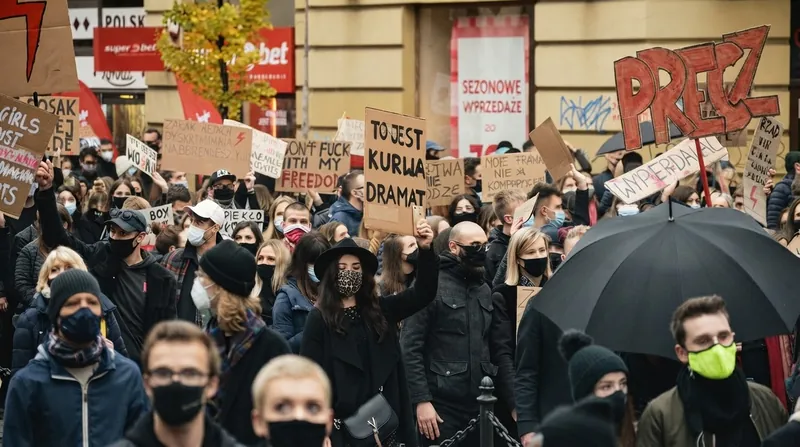
Thousands Rally Across Polish Cities Demanding Restoration of Legal Abortion Access
7 sources
Tibet Earthquake
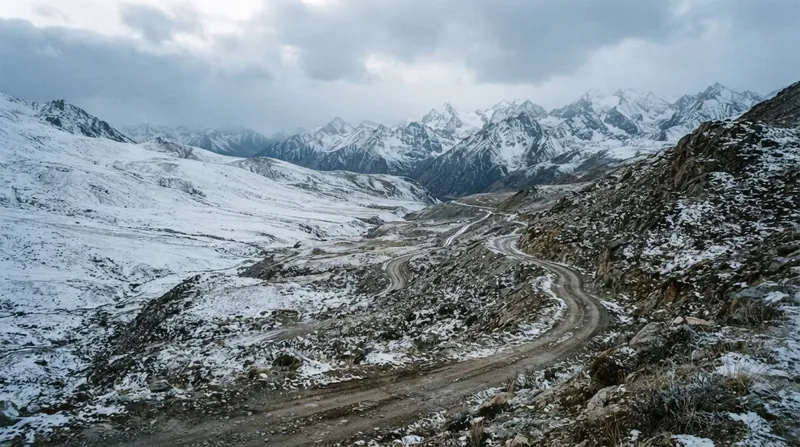
Magnitude 7.0 Earthquake Strikes Tibet, Leaving at Least 16 Dead and Dozens Injured
5 sources
Sahel Security
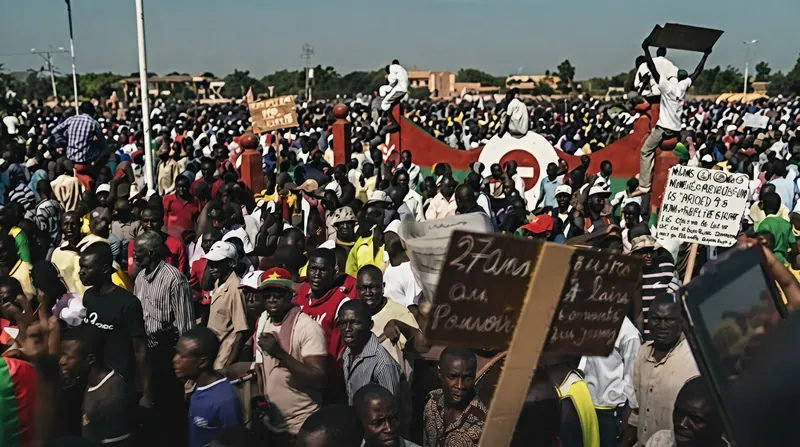
Burkina Faso Reinstates Death Penalty for Terrorism and Treason Six Years After Abolition
7 sources
High Seas Jurisdiction
Flag State Jurisdiction Prevents Coastal Interceptions of Foreign Vessels Under UNCLOS Article 92
3 sources

Comments
Every angle. Every day.
Get News & Politics stories with full source coverage and perspective breakdowns, free every day.