
Explosions Strike Central Damascus Near Hotel Housing French President Macron
Multiple explosions rocked central Damascus early Wednesday near the hotel where French President Emmanuel Macron is staying during a diplomatic visit. French officials confirmed Macron is safe, while Syrian authorities are investigating the blasts as a potential targeted attack.
Share this story
Two powerful explosions shook central Damascus early Wednesday morning, striking less than 500 meters from the luxury hotel housing French President Emmanuel Macron and his diplomatic delegation. The blasts shattered windows across the upscale Abu Rummaneh district and sent plumes of thick black smoke into the pre-dawn sky, jolting awake a city that had been heavily fortified for the historic visit.[1][3]
The Élysée Palace immediately confirmed that President Macron and all members of the French delegation are safe and secure within a fortified bunker beneath the hotel. French special forces, who accompanied the president on the trip, rapidly locked down the immediate perimeter alongside Syrian Republican Guard units, establishing a heavily armed cordon around the facility.[2][7]
Initial reports from Syrian state media indicate that the explosions targeted a security checkpoint on the main avenue leading to the hotel complex. At least four Syrian security personnel were killed in the blasts, and more than a dozen bystanders were injured by flying shrapnel and glass. Emergency responders struggled to reach the site initially due to the intense security lockdown imposed immediately after the detonations.[3]
Macron's visit to Damascus is the first by a Western head of state in over a decade, marking a highly controversial attempt to re-engage with the new Syrian transitional government following the recent regime change. The diplomatic mission was intended to focus on reconstruction aid, the safe return of refugees, and stabilizing the broader Levantine region.[4][6]
Syrian authorities quickly labeled the incident a cowardly terrorist attack designed to sabotage the country's diplomatic rehabilitation. State news agency SANA broadcast footage of emergency crews extinguishing vehicle fires and cordoning off a large blast crater, while military helicopters circled overhead to scan for secondary threats. Officials vowed a swift and severe response against those responsible.
No group has immediately claimed responsibility for the attack. However, regional security analysts point to remnant factions of ISIS or hardline militias opposed to the transitional government's outreach to Western nations. The sophisticated nature of the explosives, which managed to bypass outer security rings, suggests a coordinated operational cell with deep knowledge of the capital's security apparatus.[3][5]
The international community reacted with swift condemnation and alarm. In London and Washington, officials expressed solidarity with France and offered intelligence support to track down the perpetrators. The US State Department, which recently revoked its terror designation for the new Syrian regime, stated it is monitoring the situation with extreme urgency, noting the severe implications for regional stability.[4][5]
It remains unclear whether Macron will continue his scheduled itinerary, which included a highly anticipated address to the Syrian parliament and a tour of a French-funded hospital. French diplomatic sources suggest the trip may be cut short, with evacuation protocols already being reviewed by military commanders in coordination with allied air assets in the Mediterranean.[2][6]
The security breach underscores the fragile reality of post-war Syria. Despite the transitional government's assurances that Damascus is safe for international investment and diplomacy, the blasts vividly demonstrate that violent non-state actors retain the capacity to strike at the heart of the capital, casting a long shadow over the nation's path to recovery.[6][7]
Viewpoints in depth
French Diplomatic Corps
Prioritizes the safety of the delegation while attempting to salvage the strategic mission.
French officials are balancing the immediate security needs of their head of state with the broader geopolitical goals of the visit. While the Élysée Palace has projected calm and resilience, military commanders are actively reviewing evacuation protocols. The diplomatic corps views the attack as a stark reminder of the risks involved in re-engaging with a post-conflict state, but maintains that abandoning the mission entirely would hand a victory to extremist factions seeking to isolate Syria.
Syrian State Authorities
Frames the attack as a desperate attempt to halt Syria's return to the international community.
The Syrian transitional government is treating the incident as a direct assault on its legitimacy and its efforts to attract foreign investment and aid. State media has heavily emphasized the swift response of security forces and the martyrdom of the checkpoint guards. Authorities are keen to project control and stability, arguing that such isolated terrorist acts should not deter Western nations from continuing the normalization process.
Western Security Analysts
Questions the intelligence failures that allowed explosives so close to a visiting world leader.
Security experts and intelligence analysts are highly critical of the breach, noting that the Abu Rummaneh district is one of the most heavily fortified areas in the Middle East. The ability of attackers to bypass outer security rings suggests either severe intelligence gaps or potential insider complicity within the Syrian security apparatus. Analysts warn that this incident exposes the limits of the transitional government's control over the capital and may force Western nations to drastically scale back their physical presence in the country.
Key points
- Two explosions struck central Damascus near the hotel of French President Emmanuel Macron.
- The Élysée Palace confirmed Macron and his delegation are safe in a secure bunker.
- At least four Syrian security personnel were killed at a checkpoint targeted by the blasts.
- The attack disrupts the first visit by a Western head of state to Syria in over a decade.
What we don’t know
- Which specific militant group orchestrated the attack.
- Whether the French delegation was the explicit target or if the checkpoint was the primary objective.
- If President Macron will cut his historic diplomatic visit short due to the security threat.
How we got here
2011-2025
Western nations sever diplomatic ties with Syria during the prolonged civil war.
Early 2026
A new transitional government takes power in Damascus, prompting tentative Western re-engagement.
July 7, 2026
President Macron arrives in Damascus for a historic diplomatic visit focused on reconstruction.
July 8, 2026
Twin explosions strike a security checkpoint near Macron's hotel in central Damascus.
- Western Security Analysts
- Highlights the severe security vulnerabilities in Damascus and questions the wisdom of high-level diplomatic visits to the volatile capital.
- French Diplomatic Corps
- Focuses on the safety of the delegation and the continuation of France's strategic goals in the Levant despite the security risks.
- Syrian State Authorities
- Emphasizes the attack as a desperate attempt by enemies of the state to derail Syria's international rehabilitation and economic recovery.
Perspectives this story doesn't cover
- Syrian civilians living in the targeted Abu Rummaneh district
- Domestic opposition groups critical of the transitional government
Sources
Source coverage
7 outlets
3 viewpoints surfaced







- [1]ReutersWestern Security Analysts
Explosions hit central Damascus near French President Macron's hotel
Read on Reuters → - [2]Le MondeFrench Diplomatic Corps
Emmanuel Macron en sécurité après des explosions près de son hôtel à Damas
Read on Le Monde → - [3]Al JazeeraSyrian State Authorities
Syria says one killed, 36 wounded after Damascus blasts during Macron visit
Read on Al Jazeera → - [4]BBC NewsWestern Security Analysts
Macron safe after explosions in Syrian capital during French president's visit
Read on BBC News → - [5]Fox NewsWestern Security Analysts
Video shows bomb rock Damascus hotel where French President Macron is staying during Syrian state visit
Read on Fox News → - [6]The New York TimesWestern Security Analysts
Macron's High-Stakes Syria Visit Disrupted by Deadly Blasts
Read on The New York Times → - [7]France 24French Diplomatic Corps
French delegation secure following Damascus explosions, Elysee confirms
Read on France 24 →

More in News & Politics
See all →Abortion Rights
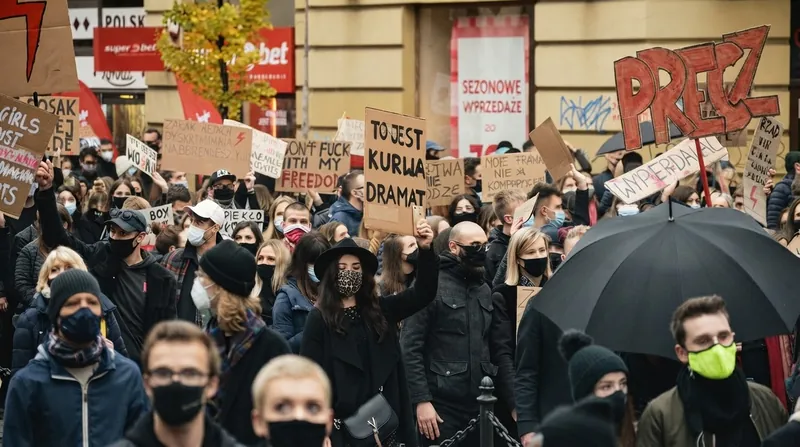
Thousands Rally Across Polish Cities Demanding Restoration of Legal Abortion Access
7 sources
Tibet Earthquake
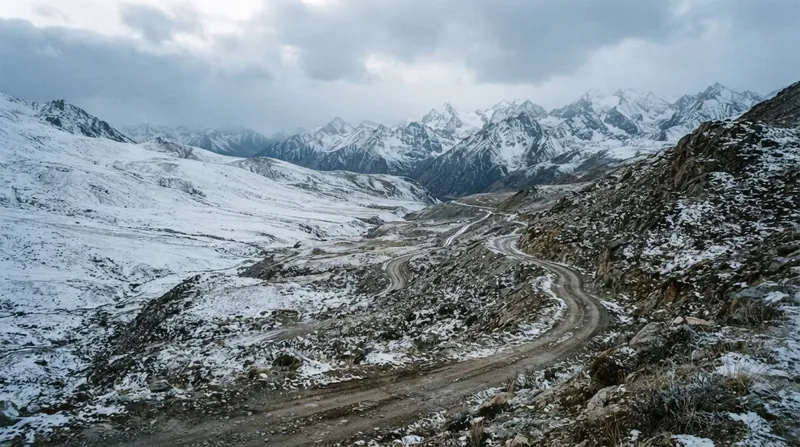
Magnitude 7.0 Earthquake Strikes Tibet, Leaving at Least 16 Dead and Dozens Injured
5 sources
Sahel Security
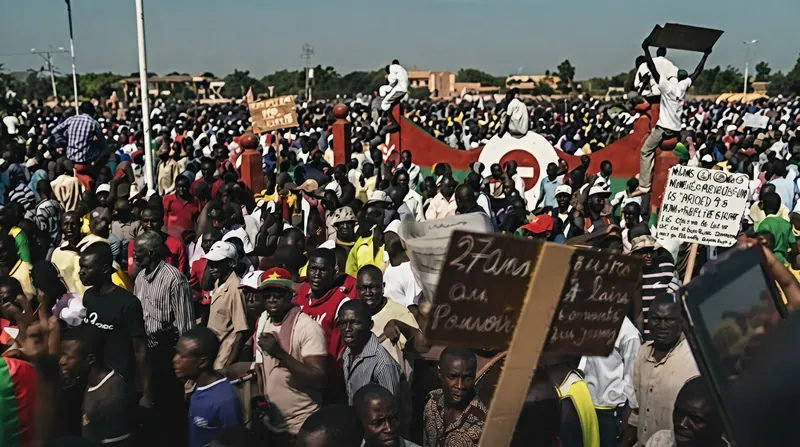
Burkina Faso Reinstates Death Penalty for Terrorism and Treason Six Years After Abolition
7 sources
High Seas Jurisdiction
Flag State Jurisdiction Prevents Coastal Interceptions of Foreign Vessels Under UNCLOS Article 92
3 sources
Comments
Every angle. Every day.
Get News & Politics stories with full source coverage and perspective breakdowns, free every day.