
Germany Condemns Reports of Russian Soldiers Training in China as a 'Deeply Disturbing' Escalation
German officials have issued a stark warning following intelligence reports that Russian military personnel are actively training at Chinese defense facilities. The development marks a significant deepening of the Moscow-Beijing security pact and has triggered urgent consultations among NATO allies.

Share this story
German officials have publicly condemned newly surfaced intelligence indicating that Russian military personnel are actively training at defense facilities inside China, calling the development a "deeply disturbing" escalation that threatens global stability. The unprecedented public rebuke from Berlin—traditionally one of Beijing’s most cautious European partners—marks a severe deterioration in European-Chinese relations and signals a potential turning point in international security dynamics.
For years, Western capitals have warned China against providing direct lethal aid to Moscow, but the physical hosting and training of Russian combat forces represents a new, highly provocative phase of the "no limits" partnership declared by the two nations.[1]
According to classified intelligence briefings recently shared among NATO allies, up to 15,000 Russian soldiers have been rotating through three specialized training centers located in China's western Xinjiang and northern Inner Mongolia regions over the past two months. The comprehensive training regimens reportedly focus heavily on drone warfare integration, advanced electronic countermeasures, and joint command-and-control operations—areas where the Russian military has sought to rapidly modernize its capabilities. Satellite imagery and intercepted communications have allegedly corroborated the presence of Russian battalions utilizing Chinese military infrastructure, prompting alarm across Western intelligence agencies.[2]
Speaking at a hastily convened press conference in Berlin on Saturday, the German Defense Minister stated that if the intelligence reports are fully verified, the training constitutes direct material support for Russia's military apparatus.
"This is no longer just diplomatic cover, political alignment, or the export of dual-use civilian components; this is the active, deliberate enhancement of combat capabilities," the minister said. The official warned that Europe can no longer treat Beijing as a neutral mediator or a passive observer under these circumstances, signaling a dramatic hardening of Germany's foreign policy posture.[1][3]
The revelation has triggered emergency diplomatic consultations in Brussels and Washington, as Western leaders scramble to formulate a unified response. US defense officials noted that while China and Russia have conducted joint naval patrols and strategic bomber flights for several years, hosting thousands of Russian ground forces for specialized combat training on Chinese soil crosses a critical, previously unbreached threshold.
The development forces the Pentagon and NATO planners to reevaluate their strategic assumptions, as the prospect of a fully interoperable Sino-Russian military alliance presents a formidable challenge across multiple theaters of operation.[2]
Beijing has fiercely rejected the Western characterization of the military deployments, framing the international outcry as an orchestrated smear campaign. Chinese state media and foreign ministry spokespeople dismissed the German concerns as a manifestation of an outdated "Cold War mentality," asserting that the military exchanges are entirely routine. According to official statements from Beijing, the scheduled bilateral exercises are designed solely to enhance regional stability and counter-terrorism capabilities, explicitly insisting that the drills do not target any third party and are not linked to ongoing global conflicts.
Editorials prominently featured in state-aligned Chinese outlets argued that sovereign nations possess the absolute right to conduct joint military drills within their own borders. These publications accused NATO of glaring hypocrisy, pointing to the Western alliance's own rapidly expanding military footprint and joint exercises in the Asia-Pacific region. From Beijing's perspective, the deepening military cooperation with Moscow is a necessary defensive measure against what it perceives as an aggressive, US-led strategy of containment and encirclement aimed at stifling China's peaceful rise on the global stage.
The diplomatic rupture threatens to spill over rapidly into the global economy, imperiling hundreds of billions of dollars in bilateral trade. Germany remains China's largest trading partner in Europe, and Berlin has historically been the loudest voice advocating against sweeping economic decoupling. However, the direct military training of Russian forces has fundamentally altered the political calculus, potentially forcing the European Union to implement severe secondary sanctions against Chinese defense contractors, technology firms, and financial institutions that facilitate the military cooperation.[3]
European diplomats are reportedly already drafting a preliminary framework for these targeted sanctions, though achieving the required unanimous consensus among all 27 EU member states remains a formidable political hurdle. The mere threat of such sweeping economic measures has already caused tremors in global financial markets, with European manufacturing and automotive sectors bracing for potential retaliatory export controls from Beijing. Industry leaders are quietly warning that a full-scale trade war triggered by geopolitical sanctions could severely disrupt supply chains for critical minerals, green technology, and consumer electronics.[3][4]
Security analysts view this unprecedented military cooperation as the stark crystallization of a bifurcated global order. By openly enhancing Russian military capabilities and hosting foreign troops, Beijing appears willing to absorb significant economic friction with the West in exchange for cementing a formidable Eurasian security bloc. This strategic calculus suggests that Chinese leadership prioritizes the creation of a multipolar world order—capable of directly challenging US and NATO dominance—over maintaining frictionless access to Western consumer markets and technology sectors.[4]
All eyes are now fixed on the upcoming NATO summit, where member states are expected to formally address the deepening China-Russia military nexus in their joint communiqués. Western leaders face an incredibly delicate and high-stakes balancing act: they must find a way to effectively deter further military integration between Moscow and Beijing without triggering a catastrophic economic rupture or inadvertently accelerating the formation of the very military alliance they are desperately seeking to prevent.
Key points
- Germany condemned reports of Russian troops training in China as a 'deeply disturbing' escalation.
- Intelligence suggests up to 15,000 Russian soldiers are receiving specialized combat training at Chinese facilities.
- Beijing dismissed the concerns, calling the activities routine bilateral military exchanges.
- The development has triggered emergency NATO consultations and threats of EU secondary sanctions.
What we don’t know
- Whether the training involves the transfer of specific Chinese military hardware to Russian forces.
- If the European Union can achieve the unanimous consensus required to impose secondary sanctions on China.
- How the US will formally respond to the intelligence during the upcoming NATO summit.
How we got here
Feb 2022
China and Russia declare a 'no limits' partnership shortly before the invasion of Ukraine.
2023-2024
Western intelligence repeatedly warns China against providing lethal military aid to Russia.
May 2026
Intelligence agencies detect unusual movements of Russian ground personnel into western China.
July 2026
Germany publicly confirms and condemns the reports of active Russian military training on Chinese soil.
- NATO & European Allies
- Argues the training crosses a red line from dual-use economic support to direct military enhancement, requiring a unified sanctions response.
- Beijing's Strategic Establishment
- Views the exercises as sovereign bilateral cooperation, rejecting Western attempts to dictate China's foreign policy or military partnerships.
- US Security Establishment
- Sees the development as proof of a hardening Eurasian military bloc that fundamentally challenges American strategic dominance.
- Global South Observers
- Highlights the broader risks of a new Cold War and the potential economic fallout for developing nations caught in the crossfire.
Perspectives this story doesn't cover
- Russian military command's official rationale for the deployments
- Voices from Central Asian nations bordering the training regions
Sources
Source coverage
4 outlets
4 viewpoints surfaced




- [1]ReutersNATO & European Allies
Germany calls reports of Russian troops training in China 'deeply disturbing'
Read on Reuters → - [2]Fox NewsUS Security Establishment
Waltz warns of Chinese, Russian-fueled ‘national security threat’ looming close to US shores
Read on Fox News → - [3]The GuardianNATO & European Allies
Xi Jinping arrives in Pyongyang on trip to revitalise China-North Korea ties
Read on The Guardian → - [4]Al JazeeraGlobal South Observers
China and Russia to hold annual joint naval drills
Read on Al Jazeera →

More in News & Politics
See all →Abortion Rights
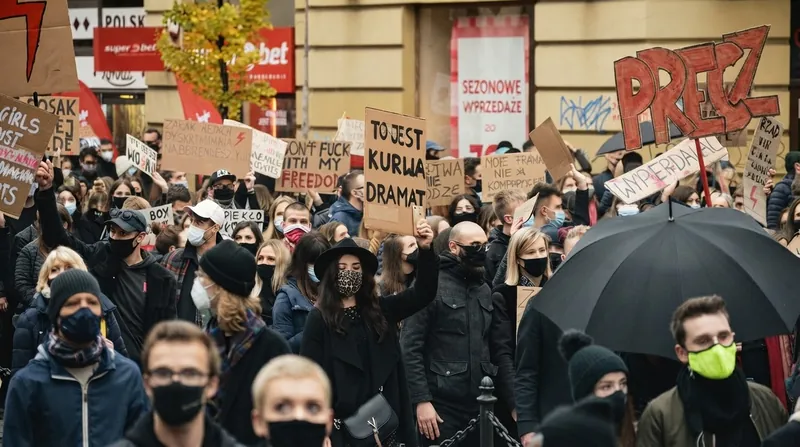
Thousands Rally Across Polish Cities Demanding Restoration of Legal Abortion Access
7 sources
Tibet Earthquake
Magnitude 7.0 Earthquake Strikes Tibet, Leaving at Least 16 Dead and Dozens Injured
5 sources

Sahel Security
Burkina Faso Reinstates Death Penalty for Terrorism and Treason Six Years After Abolition
7 sources

High Seas Jurisdiction
Flag State Jurisdiction Prevents Coastal Interceptions of Foreign Vessels Under UNCLOS Article 92
3 sources
Comments
Every angle. Every day.
Get News & Politics stories with full source coverage and perspective breakdowns, free every day.