
IMAX vs. Dolby Cinema vs. ScreenX: The Ultimate Premium Theater Comparison
As premium large formats dominate the theatrical landscape, choosing between IMAX's massive scale, Dolby Cinema's perfect contrast, and 4DX's sensory immersion is crucial. Here is how to match the right theater technology to the right movie.
By Factlen Editorial Team
- Audiovisual Fidelity Enthusiasts
- Cinephiles who prioritize perfect contrast, true blacks, and pinpoint audio accuracy over raw screen height.
- Scale & Spectacle Purists
- Advocates who believe the ultimate theatrical experience is defined by sheer screen size and expanded aspect ratios.
- Sensory Immersion Seekers
- Moviegoers who view the theater as an active, physical ride rather than a passive viewing experience.
What's not represented
- · Independent Filmmakers
- · Budget-Conscious Consumers
Why this matters
With premium movie tickets often exceeding $20, understanding the technological differences between IMAX, Dolby Cinema, and other formats ensures you don't waste money on the wrong screen. Matching the right theater to the right movie guarantees you experience the film exactly as the director intended.
Key points
- Premium Large Formats (PLFs) like IMAX and Dolby Cinema dominate the modern theatrical experience by offering technology impossible to replicate at home.
- IMAX with Laser excels in sheer scale, utilizing expanded aspect ratios to show up to 26% more image for specially filmed movies.
- Dolby Cinema prioritizes audiovisual fidelity, offering unmatched 1,000,000:1 contrast ratios and 64-channel object-based surround sound.
- Experiential formats like ScreenX and 4DX trade traditional picture quality for theme-park-style physical immersion and panoramic visuals.
- Choosing the right format requires matching the theater's technical strengths to the specific creative intent of the film.
The modern theatrical landscape in 2026 demands significantly more than just a dark room and a standard digital projector. As home entertainment setups become increasingly sophisticated—boasting massive 4K OLED televisions and robust surround sound systems—cinemas have escalated the technological arms race by leaning heavily into Premium Large Formats (PLFs). Audiences are no longer just asking what movie to see on a Friday night; they are asking what specific technological format they should see it in. The choice between the towering scale of IMAX, the pristine fidelity of Dolby Cinema, and experiential formats like ScreenX fundamentally alters the viewing experience. This shift has turned a simple ticket purchase into a strategic decision about audiovisual trade-offs, where the theater itself becomes a vital component of the storytelling.[1][4]
The stakes for this decision are both financial and experiential for the modern moviegoer. Premium tickets carry a noticeable surcharge, often adding anywhere from five to ten dollars to the base price of admission depending on the market. In exchange for this premium, theaters promise unparalleled immersion that cannot be replicated in a living room. However, because each format utilizes entirely different proprietary technology, there is no single objective "best" screen for every single movie. Instead, audiences must weigh the arguments for sheer physical scale against the arguments for surgical audiovisual fidelity. It is about matching the specific technical strengths of a given theater to the creative intent of the film they are about to watch, ensuring the premium price tag actually delivers a premium experience.[1][3]
The argument for IMAX with Laser centers entirely on unrivaled, towering physical scale. As the undisputed king of sheer size in the theatrical exhibition space, purpose-built IMAX Grand Theater (GT) screens can reach up to 75 feet tall, physically enveloping the viewer's entire field of vision from floor to ceiling. Upgraded from older, dimmer xenon bulbs, modern IMAX locations utilize state-of-the-art dual 4K laser projectors that deliver exceptional brightness and sharpness across these massive canvases. For theatrical purists who believe that bigger is inherently better, IMAX remains the absolute gold standard for blockbuster spectacle, providing a larger-than-life canvas that makes standard multiplex screens feel like postage stamps by comparison.[2][5][8]
The most compelling evidence for choosing IMAX lies in its proprietary aspect ratios and camera partnerships. Most standard cinemas project films in a 2.40:1 widescreen format, which is relatively wide and short. However, when a movie is explicitly marketed as "Filmed for IMAX" using certified high-resolution cameras, the projection expands vertically to either 1.90:1 or the massive 1.43:1 ratio. This vertical expansion provides up to 26 percent more image on the top and bottom of the frame. For sweeping space epics, towering cityscapes, or massive battle sequences, this extra vertical real estate creates a visceral sense of immersion that no other format can replicate, showing the audience exactly what the director captured through the lens.[2][3][8]

Conversely, the case against IMAX involves a lack of consistency across theater locations and the issue of letterboxing. Not all IMAX theaters are created equal; many local multiplexes feature retrofitted digital screens—colloquially dubbed "LieMAX" by cinema enthusiasts—that lack the towering, multi-story height of true GT locations. Furthermore, if a film was not shot with IMAX-certified cameras, it will not utilize the expanded aspect ratio. In these cases, the standard widescreen image is projected with heavy black bars on the top and bottom of the screen. This letterboxing negates the format's primary advantage, leaving viewers paying a premium ticket price for unused screen space and a less immersive overall presentation.[5][8]
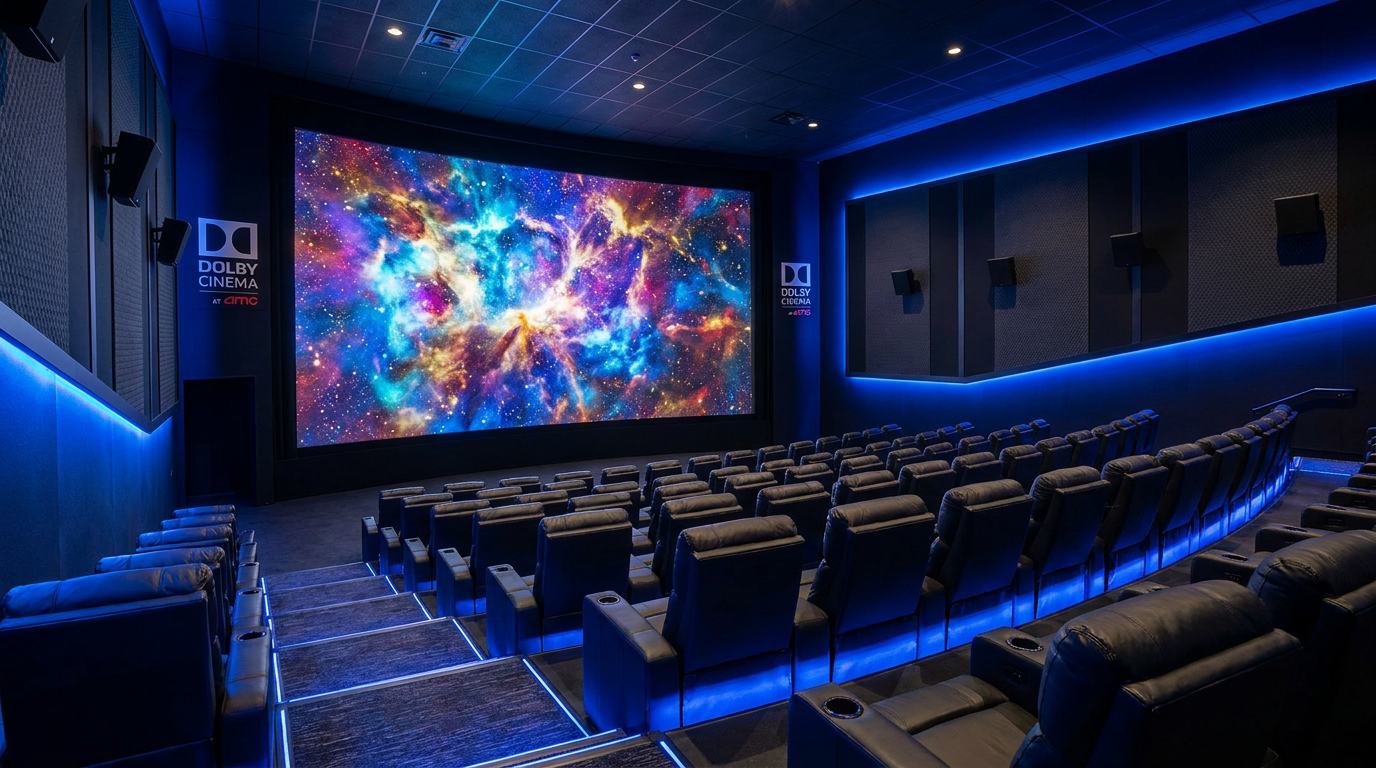
The argument for Dolby Cinema pivots entirely away from raw physical size and focuses obsessively on absolute audiovisual fidelity. While Dolby screens are undeniably large and impressive, their primary weapon is Dolby Vision HDR (High Dynamic Range) projection technology. This advanced system boasts a staggering 1,000,000:1 contrast ratio, allowing the dual 4K projectors to display true, inky blacks rather than the dark, milky gray wash often seen in standard digital theaters. For discerning cinephiles who prioritize perfect color accuracy, vibrant highlights, and incredibly deep shadows, Dolby Cinema offers the most pristine, lifelike picture quality currently available on the commercial theatrical market.[2][6]
The evidence for Dolby's superiority extends seamlessly into its acoustic engineering and auditorium design. Dolby Cinema auditoriums are exclusively equipped with Dolby Atmos, a 64-channel object-based 3D sound system that revolutionizes theatrical audio. Instead of simply pushing audio to a general "left" or "right" channel, Atmos allows sound designers to place individual audio objects precisely within a three-dimensional space. Viewers can hear a helicopter pan seamlessly across the ceiling or footsteps creeping directly behind their plush, vibrating leather recliner seats. This creates a hyper-precise auditory environment that matches the flawless visual presentation, resulting in a deeply luxurious moviegoing experience.[3][6]
The evidence for Dolby's superiority extends seamlessly into its acoustic engineering and auditorium design.
The primary drawback to Dolby Cinema is its strict adherence to standard widescreen dimensions. Dolby screens utilize the traditional 2.40:1 aspect ratio, meaning they physically cannot expand vertically to show the extra footage captured by IMAX cameras. If a director specifically framed a shot to take advantage of a towering 70mm or 1.43:1 IMAX canvas, Dolby Cinema viewers will simply not see the top and bottom of that original image. It fundamentally trades the overwhelming physical scale and vertical immersion of IMAX for surgical audiovisual precision, meaning viewers must choose whether they value seeing more of the picture or seeing a better-quality picture.[2][6]

Beyond the traditional heavyweights of IMAX and Dolby, the argument for experimental formats like ScreenX and 4DX appeals to audiences seeking sensory immersion over pure technical fidelity. ScreenX utilizes specialized multi-projection technology to extend the film's central image onto the left and right walls of the auditorium, creating a massive 270-degree panoramic view. This unique setup actively engages the viewer's peripheral vision, making them feel as though they are sitting directly inside the movie's environment rather than simply looking at a flat window into it. It is a format explicitly designed to break the boundaries of the traditional rectangular screen and surround the audience with the world of the film.[4][7]
Similarly, 4DX transforms the traditional cinema into an interactive, theme-park-style ride. The format synchronizes the on-screen action with motion-controlled seating and over 20 distinct environmental effects, including wind gusts, water sprays, theatrical fog, and even specific scents piped into the auditorium. The evidence supporting the success of these formats is their massive popularity for highly kinetic, action-packed films. A high-speed car chase, a turbulent flight through a storm, or a massive monster battle becomes a physical, tactile experience that completely breaks the fourth wall of traditional moviegoing, offering a level of physical engagement that standard theaters simply cannot match.[4][7]
However, the case against these experiential formats is their high potential to distract from the actual filmmaking. ScreenX side-projections are often noticeably lower in resolution than the main screen, and the visible seams between the walls can pull viewers out of the narrative immersion. Likewise, the jostling seats, flashing strobe lights, and sudden water effects of 4DX can be actively detrimental to dialogue-heavy scenes or nuanced emotional moments. These formats are highly specialized tools that require exactly the right type of chaotic, fast-paced film to succeed; otherwise, the environmental effects feel like an intrusive gimmick rather than an enhancement.[4][7]

For those seeking a reliable middle ground, mid-tier Premium Large Formats like Cinemark XD, Regal RPX, and AMC Prime offer a highly balanced compromise. These proprietary theater chains provide screens that are significantly larger than standard multiplex auditoriums, paired with upgraded 4K digital projection and robust, uncompressed surround sound systems. While they lack the proprietary expanded aspect ratios of IMAX or the extreme 1,000,000:1 contrast of Dolby Vision, they generally cost slightly less than the top-tier formats. This makes them a consistently high-value upgrade for everyday moviegoing, ensuring a great presentation without the absolute highest premium price tag.[4][7]
Ultimately, choosing the right format requires matching the specific technology to the film you plan to watch. IMAX with Laser fits perfectly when a movie is explicitly marketed as "Filmed for IMAX" or relies heavily on massive, towering visual scale. It is the definitive, undisputed choice for sprawling sci-fi epics, sweeping historical dramas, and massive action films where the sheer size of the environment is a central character. Conversely, it does not fit well for intimate indie films, dialogue-driven comedies, or standard widescreen releases that will simply be letterboxed and fail to utilize the massive screen.[1][3][6]
Dolby Cinema fits perfectly when a film prioritizes rich cinematography, vibrant colors, deep shadows, and intricate, layered sound design. It is the ultimate all-rounder for standard widescreen blockbusters, atmospheric thrillers, and animated features where absolute color accuracy and perfect contrast elevate the art style. The luxurious seating and flawless presentation make it a premium experience for almost any release. It does not fit well only when a viewer explicitly wants the towering vertical immersion of a true 1.43:1 IMAX presentation, as Dolby's standard widescreen ratio will crop the top and bottom of those specific native IMAX shots.[1][2][6]
Experiential formats like ScreenX and 4DX fit perfectly for high-octane, theme-park-style entertainment—monster movies, disaster films, and family-friendly animated adventures where physical engagement and panoramic visuals actively elevate the fun. They are designed for movies where you want to feel the action as much as see it. They do not fit well when a viewer wants to seriously analyze a film's artistic merits, appreciate subtle acting performances, or enjoy a quiet, narrative-driven drama. By understanding these distinct technological trade-offs, modern audiences can curate their own perfect cinematic experience, ensuring that the theater itself enhances the magic of the movies.[1][4][7]
How we got here
Late 1960s
IMAX Corporation is founded in Canada, developing the first giant-screen projection standards using 70mm film.
2008
IMAX introduces its digital projection system, allowing the brand to expand rapidly into retrofitted multiplexes worldwide.
2012
Dolby Atmos is introduced, revolutionizing cinema audio with object-based 3D sound placement.
2014
IMAX rolls out its 'IMAX with Laser' dual 4K projection system to replace aging xenon bulbs and improve contrast.
2015
Dolby Cinema officially launches, combining Dolby Vision HDR projection with Atmos sound to compete directly with IMAX.
2020
IMAX launches the 'Filmed for IMAX' program, certifying digital cameras from ARRI, RED, and Sony to shoot in the expanded aspect ratio.
Viewpoints in depth
Scale & Spectacle Purists
Advocates who believe the ultimate theatrical experience is defined by sheer screen size and expanded aspect ratios.
For this camp, the cinema is fundamentally about overwhelming the senses with scale. They argue that a true 1.43:1 IMAX Grand Theater screen offers an experience that is physically impossible to replicate in a home theater, no matter how expensive the television. They prioritize seeking out films shot natively on 70mm or IMAX-certified digital cameras, viewing the 26 percent increase in vertical image as the definitive way a director's vision should be consumed. To them, standard widescreen formats feel constrained and letterboxed by comparison.
Audiovisual Fidelity Enthusiasts
Cinephiles who prioritize perfect contrast, true blacks, and pinpoint audio accuracy over raw screen height.
This perspective argues that sheer size is meaningless if the picture quality is washed out. They champion Dolby Cinema for its Dolby Vision HDR, which delivers a 1,000,000:1 contrast ratio that makes colors pop and shadows genuinely dark. Furthermore, they emphasize the superiority of Dolby Atmos's 64-channel object-based audio, which places sound with surgical precision around the auditorium. For these viewers, the luxury recliners and flawless technical presentation of Dolby Cinema make it the superior choice for the vast majority of standard widescreen releases.
Sensory Immersion Seekers
Moviegoers who view the theater as an active, physical ride rather than a passive viewing experience.
Rather than debating contrast ratios or aspect ratios, this camp values formats that break the fourth wall. They are the primary audience for ScreenX's 270-degree panoramic projections and 4DX's motion-controlled seating. They argue that for high-octane blockbusters, horror films, and family adventures, adding wind, water, and physical movement elevates a standard movie into a memorable, theme-park-style event. They acknowledge the gimmicky nature of the technology but embrace it as a unique form of pure entertainment.
What we don't know
- Whether the high costs of installing dual 4K laser projectors will eventually phase out all older, lower-resolution IMAX xenon screens.
- How rapidly mid-tier formats like Cinemark XD will adopt HDR technology to close the contrast gap with Dolby Cinema.
- Whether experimental formats like ScreenX will secure enough dedicated filming from major studios to avoid looking like stretched, lower-resolution afterthoughts.
Key terms
- Aspect Ratio
- The proportional relationship between the width and height of an image; standard theaters use a wide 2.40:1, while IMAX uses taller 1.90:1 or 1.43:1 ratios.
- High Dynamic Range (HDR)
- A display technology that significantly increases the contrast between the brightest whites and the darkest blacks, resulting in more vibrant and lifelike colors.
- Object-Based Audio
- A sound engineering technique, like Dolby Atmos, where individual sounds are programmed to exist in a specific 3D space rather than just playing through a general left or right speaker.
- Letterboxing
- The practice of transferring widescreen films to standard formats while preserving the original aspect ratio, resulting in black bars at the top and bottom of the screen.
Frequently asked
What does 'Filmed for IMAX' actually mean?
It means the movie was shot using IMAX-certified high-resolution cameras. When projected in an IMAX theater, these films expand vertically to fill the massive screen, showing up to 26% more image than a standard theater.
Is Dolby Cinema louder than IMAX?
Not necessarily louder, but more precise. IMAX uses a powerful 12-channel system known for deep, seat-shaking bass. Dolby Cinema uses a 64-channel Atmos system that places individual sounds precisely around and above the audience.
What is a 'LieMAX' theater?
It is a colloquial term used by movie enthusiasts for standard multiplex auditoriums that were retrofitted with IMAX branding. While they offer better projection than standard screens, they lack the towering, multi-story height of purpose-built IMAX Grand Theaters.
Are premium large formats worth the extra ticket cost?
Yes, but it depends on the movie. Blockbusters, sci-fi epics, and visually rich films benefit massively from the upgraded projection and sound. However, dialogue-heavy indie dramas may not need the premium upgrade.
Sources
Source coverage
8 outlets
3 viewpoints surfaced








[1]Factlen Editorial TeamAudiovisual Fidelity Enthusiasts
Synthesis by Factlen editorial team
Read on Factlen Editorial Team →[2]AWOL VisionAudiovisual Fidelity Enthusiasts
Dolby vs. IMAX: What's the Real Difference
Read on AWOL Vision →[3]The Product AnalystAudiovisual Fidelity Enthusiasts
Dolby Cinema vs IMAX: Image and Audio Comparison
Read on The Product Analyst →[4]Bridging the GeekdomsSensory Immersion Seekers
Choosing the Best Premium Theater Format for Your Next Movie
Read on Bridging the Geekdoms →[5]ForbesScale & Spectacle Purists
The Top 10 Cinema Formats For 'Wicked: For Good'—Which Will You Choose?
Read on Forbes →[6]TrueSidesAudiovisual Fidelity Enthusiasts
IMAX vs. Dolby Cinema: The 2025 Showdown - A Detailed Review
Read on TrueSides →[7]Regal TheatresSensory Immersion Seekers
What is a Premium Large Format Movie?
Read on Regal Theatres →[8]WikipediaScale & Spectacle Purists
IMAX
Read on Wikipedia →

Every angle. Every day.
Get entertainment stories with full source coverage and perspective breakdowns delivered to your inbox.