
HUD Finalizes Most Extensive Overhaul of Manufactured Home Code in 30 Years, Allowing Multi-Unit Homes
A sweeping update to federal building standards allows factory-built duplexes and quadplexes for the first time, aiming to lower housing costs by cutting red tape and spreading land expenses.
By Noor Saidi

In short
- HUD finalized the first major update to the Manufactured Home Construction and Safety Standards in over 30 years.
- The new rules allow up to four dwelling units in a single manufactured structure, enabling factory-built duplexes and quadplexes.
- Manufacturers no longer need special waivers to include modern features like ridge roofs, open floor plans, and tankless water heaters.
For a prospective homebuyer staring down a $400,000 median price tag for a traditional site-built house, the math of homeownership often feels broken. A manufactured home, built entirely inside a factory, can roll off the assembly line for under $100,000. Yet, because of the high cost of urban land and decades-old federal regulations, those factory-built savings rarely reach the city renters and suburban buyers who need them most.[2]
That equation is finally beginning to shift. The U.S. Department of Housing and Urban Development has finalized the most extensive overhaul of the Manufactured Home Construction and Safety Standards—commonly known as the HUD Code—in more than three decades.[4]
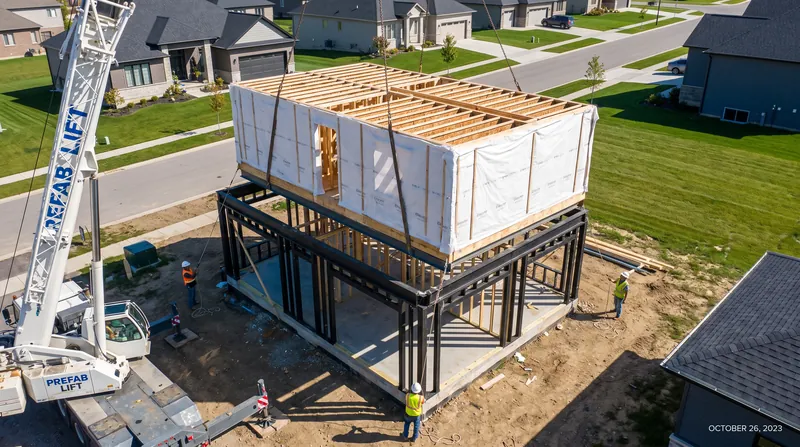
The centerpiece of the new rule fundamentally changes what a manufactured home can be. For the first time, the federal government is allowing multi-unit structures to be built under the HUD Code. Manufacturers can now produce duplexes, triplexes, and quadplexes straight from the factory floor, delivering them to neighborhoods as fully finished multi-family properties.[1]
To understand why this matters to a local buyer, you have to understand how the HUD Code works. Established in 1976, it serves as the only nationally preemptive building code in the United States. If a home is built to this federal standard, local building departments cannot force the developer to adhere to a different set of structural rules, ensuring that factory efficiencies aren't erased by a patchwork of local construction mandates.
The multi-unit allowance directly attacks the land-cost barrier that keeps affordable housing out of cities. A $90,000 single-section home placed on a $500,000 urban lot still results in an expensive property. But by allowing up to four units in a single structure, developers can distribute that half-million-dollar land cost across four different renting or buying families.[2]
Housing analysts view this as a critical lever for urban infill. The Niskanen Center notes that setting the cap at exactly four units allows a traditional double-section manufactured home to naturally divide into a quadplex. This makes factory-built housing financially viable in denser, higher-cost markets where single-family footprints no longer make economic sense.[2]
Beyond the multi-unit structures, the overhaul aggressively cuts the red tape that has historically limited a buyer's design choices. Previously, if a manufacturer wanted to implement modern architectural features, they had to apply to the federal government for an 'alternative construction' letter—a cumbersome waiver process that slowed down production and inflated the final purchase price.[1][4]
Those waivers are no longer necessary for a wide range of common features. The updated code automatically permits ridge roof designs, specifications for attics, and the open floor plans that modern buyers demand, allowing factory-built homes to seamlessly blend into neighborhoods alongside traditional site-built properties.[4]
The modernization extends to the mechanical systems hidden behind the drywall. The new standards explicitly allow for modern, energy-saving appliances, including gas-fired tankless water heaters. For the homeowner, this means lower monthly utility bills and a smaller environmental footprint without requiring special federal permission.[4]
Accessibility also receives a major, long-overdue upgrade. The revised code modifies the structural standards for accessible showers, bringing manufactured housing into compliance with contemporary national disability guidelines. This ensures that aging-in-place populations and buyers with mobility needs can purchase a home that works for them right off the lot.[4]
While the final rule officially takes effect in March 2025, the federal government recognized the immediate urgency of the housing shortage. To prevent delays, the agency issued an industry-wide alternative construction letter that allows manufacturers to begin building to the new multi-unit and design standards immediately.
Despite these sweeping changes, one major physical constraint remains for buyers and builders alike: the chassis. The HUD Code still requires all manufactured homes to be built on a permanent steel frame, a structural relic from the era when these properties were legally classified as 'mobile homes.'[3]
Policy researchers argue that this lingering requirement forces buyers to absorb unnecessary costs. The Pew Charitable Trusts estimates that removing the chassis mandate could save builders between $5,000 and $10,000 per home, as they would no longer need to purchase, transport, and bury a massive steel frame on the permanent site.[3]
Legislative efforts are currently attempting to address this final hurdle at the congressional level. Proposals like the ROAD to Housing Act suggest a voluntary opt-in for off-chassis construction, which would allow homes to sit closer to the ground, accommodate traditional basements, and qualify more easily for standard mortgage financing.[2]
Ultimately, the success of this federal overhaul will be decided at the local level. While Washington has cleared the way for modern, factory-built quadplexes, local zoning boards must still update their neighborhood maps to allow these multi-unit structures. For the renter hoping to buy their first home, the factory is ready—now the local municipality just has to let it through the gates.[2][5]
Definitions
- HUD Code
- The nationally preemptive federal building standards established in 1976 that govern the construction of manufactured homes.
- Alternative Construction Letter
- A special permission previously required by HUD for manufacturers to use designs or materials not explicitly covered in the standard code.
- Manufactured Home
- A home built entirely in a factory according to the federal HUD Code and transported on a permanent steel chassis.
- Preemptive Standard
- A federal regulation that overrides or supersedes any conflicting state or local building codes.
- Urban Infill
- The process of developing vacant or underused parcels of land within existing urban areas.
Questions & answers
What is the HUD Code?
The HUD Code is the federal building standard that regulates the design, construction, and safety of manufactured homes in the U.S., superseding local building codes.
How many units can now be built in a single manufactured home?
Under the new rules, manufacturers can build up to four dwelling units—such as a quadplex—in a single structure.
Do these homes still require a steel chassis?
Yes, the HUD Code currently still mandates a permanent steel chassis, though legislative efforts are underway to make this optional.
Can I put a multi-unit manufactured home anywhere?
No. While the federal government approves the construction, local zoning laws still dictate where multi-unit structures can be placed.
Analysis by camp
Housing Affordability Advocates
Argue that multi-unit factory construction is the key to solving the urban housing shortage.
Think tanks like the Niskanen Center emphasize that the primary barrier to affordable housing in metropolitan areas is the cost of land, not just construction. By allowing up to four units in a single manufactured structure, developers can distribute a half-million-dollar lot cost across four households. These advocates view the HUD Code update as a necessary first step, but stress that local municipalities must now dismantle exclusionary zoning laws that ban multi-unit manufactured homes from residential neighborhoods.
Federal Regulators
Focus on modernizing safety standards while eliminating bureaucratic bottlenecks.
For the Department of Housing and Urban Development, the overhaul is about aligning a 1970s-era regulatory framework with modern consumer demands and construction realities. By writing features like ridge roofs, open floor plans, and tankless water heaters directly into the code, regulators eliminate the need for manufacturers to seek individual 'alternative construction' approvals. This reduces administrative overhead, speeds up factory production lines, and ensures that the resulting homes meet contemporary fire safety and accessibility benchmarks.
Industry Manufacturers
Emphasize the operational efficiencies and expanded market reach enabled by the new rules.
Factory builders have long argued that the rigid HUD Code stifled innovation and forced them to build homes that looked distinctly different from site-built housing. With the new ability to incorporate modern aesthetics and multi-unit configurations without waiting months for federal waivers, manufacturers can now compete directly with traditional builders in suburban and urban infill markets. However, industry leaders continue to push for the removal of the permanent steel chassis requirement, which they argue adds thousands of dollars in unnecessary transportation and installation costs.
- Federal Regulators
- Focus on modernizing safety standards while eliminating bureaucratic bottlenecks to increase housing supply.
- Housing Affordability Advocates
- Argue that multi-unit factory construction is the key to solving the urban housing shortage by spreading land costs.
- Industry Manufacturers
- Emphasize the operational efficiencies and expanded market reach enabled by the new rules.
- Independent Analysts
- Provide neutral synthesis of the regulatory changes and their broader market implications.
Perspectives this story doesn't cover
- Local Zoning Boards
- Site-Built Home Builders
Sources
Source coverage
5 outlets
4 viewpoints surfaced





- [1]Federal RegisterFederal Regulators
Manufactured Home Construction and Safety Standards
Read on Federal Register → - [2]Niskanen CenterHousing Affordability Advocates
Two big developments in manufactured housing reform: New rules, new bill
Read on Niskanen Center → - [3]Pew Charitable TrustsHousing Affordability Advocates
Removing chassis can reduce cost and increase design flexibility
Read on Pew Charitable Trusts → - [4]Rent ManagerIndustry Manufacturers
HUD Code Updates for Manufactured Housing
Read on Rent Manager → - [5]Factlen Editorial TeamIndependent Analysts
Synthesis by Factlen editorial team
Read on Factlen Editorial Team →
More in Home
See all →HVAC Wiring
The Continuous 24-Volt Supply: Why Wi-Fi Smart Thermostats Require a C-Wire for Constant Power
6 sources
Aging in Place
The Mechanics of the 2026 Smart Home: How Wellness Gadgets and Segmented Floor Plans Are Redefining Aging in Place
8 sources
Smart Plumbing
The Mechanics of Ultrasonic Flow Sensors: How Smart Water Valves Actually Distinguish Between a Running Toilet and a Burst Pipe
6 sources

Home Electrification
How Smart Electrical Panels Actually Prevent $5,000 Service Upgrades During Home Electrification
6 sources
Comments
Every angle. Every day.
Get Home stories with full source coverage and perspective breakdowns, free every day.