
How Two Rival Leagues Finally Made Professional Women's Volleyball Work in the US
After decades of American stars being forced to play overseas, the successful 2026 seasons of LOVB and MLV have proven that domestic professional volleyball is a viable, multi-million dollar business.
By Factlen Editorial Team
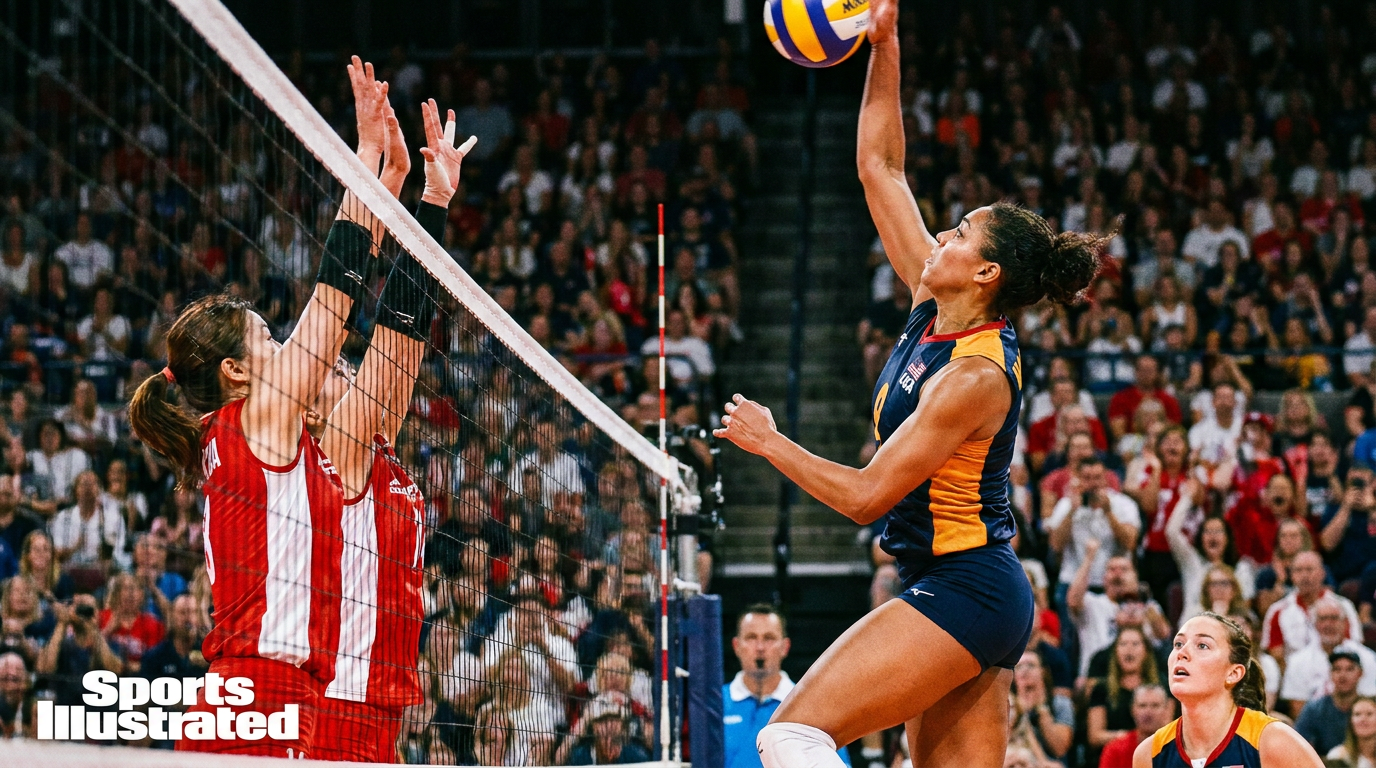
- League Executives
- Focused on sustainable growth, broadcast deals, and tapping into the massive youth participation base.
- The Athletes
- Value the ability to play domestically, earn a livable wage, and build local legacies without going overseas.
- Sports Business Analysts
- Optimistic about the capital influx but question whether two competing leagues can survive long-term without a merger.
What's not represented
- · European club owners losing American talent
- · NCAA programs adapting to the pro pipeline
Why this matters
For the first time, the millions of young athletes who play volleyball in the US have a domestic professional pathway. The stabilization of these leagues represents a massive shift in the economics of women's sports, keeping top-tier talent at home and creating new opportunities for fans and host cities.
Key points
- The US now hosts two fully capitalized professional women's volleyball leagues: LOVB and MLV.
- LOVB Austin won the 2026 championship in a league built heavily on youth club integration and ESPN broadcasts.
- MLV, backed by a $100 million investment, saw the Dallas Pulse win its 2026 title and announced major 2027 expansion.
- The domestic boom is perfectly timed ahead of the 2027 FIVB World Cup in North America and the 2028 LA Olympics.
For decades, the United States produced the world's best women's volleyball players, only to watch them board flights to Italy, Turkey, and Brazil the moment they graduated college.[1]
The paradox was glaring: volleyball is the most popular team sport for high school girls in America. In 2023, 92,003 fans packed a Nebraska football stadium just to watch a college match, setting a global attendance record for women's sports. Yet, a domestic professional league never managed to stick.[3]
By the summer of 2026, that narrative has completely inverted. The United States is now home to two thriving, fully capitalized professional women's volleyball leagues: League One Volleyball (LOVB) and Major League Volleyball (MLV).[1][5]
The stakes are unprecedented for the sport. Millions of dollars in broadcast deals, celebrity ownership groups, and competitive salaries are finally allowing American stars to play in their home time zones, transforming the economics of women's volleyball.[3][4]

The two leagues have taken distinctly different paths to viability. League One Volleyball (LOVB) engineered a bottom-up approach. Instead of simply launching professional teams in a vacuum, LOVB acquired youth volleyball clubs across the country to build a captive audience and a grassroots pipeline.[2]
That community-first model paid dividends in LOVB's 2026 season. The league secured a 28-match broadcast distribution deal with ESPN, placing matches on ESPN2 and ESPN+ to capitalize on the surging viewership of the college game.[2]
In April 2026, LOVB concluded its season with a dramatic postseason. LOVB Austin defended their title, winning their second consecutive championship in a thrilling golden set—a 15-point tiebreaker—against Salt Lake in front of a packed arena in Long Beach, California.[6]
Meanwhile, Major League Volleyball (MLV) took the traditional top-down franchise approach, but its journey to the 2026 season was marked by high-stakes corporate maneuvering.[5]

Originally launched as the Pro Volleyball Federation (PVF) in 2024, the league faced a potential schism in 2025 when the Omaha Supernovas—the league's attendance juggernaut—threatened to break away and form a rival competition.[4][5]
Instead of fracturing the market, a $100 million peace deal merged the factions into the newly rebranded MLV. The league now boasts heavy-hitting investors, including Sacramento Kings owner Vivek Ranadivé, Olympic gold medalist Kerri Walsh Jennings, and musician Jason Derulo.[3][4]
Instead of fracturing the market, a $100 million peace deal merged the factions into the newly rebranded MLV.
MLV's 2026 campaign proved the merger's worth. The Dallas Pulse captured the 2026 championship, and the league's postseason broadcasts on ION and Scripps reached nearly three million unique viewers.[1][5]
Capitalizing on that momentum, MLV announced aggressive expansion plans for 2027, adding franchises in Los Angeles, Washington D.C., Minnesota, and Northern California to reach a 12-team footprint.[1][5]

How are these leagues surviving where past iterations failed? The answer lies in a combination of media rights, corporate sponsorships, and a cultural shift in how broadcasters value women's sports.[1][3]
Player compensation reflects this new reality. Salaries in MLV range from $60,000 to $175,000, supplemented by revenue-sharing agreements and benefits. While it may not rival NBA contracts, it is a livable domestic wage that prevents athletes from having to spend ten months a year overseas.[5]
The timing of this domestic boom is not accidental. The global volleyball ecosystem is heavily targeting the North American market over the next two years.[7]
The United States and Canada are slated to host the 2027 FIVB Women's Volleyball World Cup, an event that will feature the world's top 32 national teams and serve as a primary Olympic qualifier.[7]

With the 2028 Summer Olympics scheduled for Los Angeles, the US market is entering a golden window for volleyball visibility. Both LOVB and MLV are positioning themselves to capture the surge of interest that follows the Olympic cycle.[1][7]
The looming question for sports business analysts is whether the American ecosystem can sustain two competing professional volleyball leagues indefinitely.[4]
LOVB and MLV currently operate with slightly different calendars and philosophies, but history suggests that rival leagues in emerging sports eventually face pressure to consolidate resources.[4]
How we got here
August 2023
A world-record 92,003 fans attend a Nebraska college volleyball match, proving the sport's massive US draw.
January 2024
The Pro Volleyball Federation (PVF) launches its inaugural season.
August 2025
PVF merges with a rival faction to form Major League Volleyball (MLV), backed by $100 million in funding.
April 2026
LOVB Austin wins the 2026 League One Volleyball championship in a dramatic golden set.
May 2026
The Dallas Pulse capture the 2026 MLV Championship as the league announces expansion into Los Angeles and D.C.
Viewpoints in depth
League Executives
Focused on sustainable growth, broadcast deals, and tapping into the massive youth participation base.
League commissioners and team owners argue that the current boom is built on much firmer ground than past attempts. By securing linear television deals with ESPN and CBS Sports, and tying professional teams to local youth clubs, they believe they have solved the visibility and pipeline issues that doomed previous leagues. They point to the $100 million capitalization of MLV as proof that institutional investors finally see women's volleyball as a tier-one asset.
The Athletes
Value the ability to play domestically, earn a livable wage, and build local legacies without going overseas.
For generations, American players had to choose between retiring after college or spending ten months a year in Europe or Asia. Players emphasize that the new leagues offer more than just a paycheck; they offer a quality of life. The ability to play in front of family, secure domestic endorsements, and rest during the off-season is fundamentally changing career longevity and athlete well-being.
Sports Business Analysts
Optimistic about the capital influx but question whether two competing leagues can survive long-term without a merger.
While analysts praise the rapid growth and viewership numbers, they caution that the US market may not be able to support 20+ professional volleyball teams across two distinct leagues. They draw parallels to the early days of the NBA/ABA or NFL/AFL, suggesting that competition for the top tier of talent will eventually drive up costs, likely forcing LOVB and MLV to explore a merger to consolidate the sport's fan base.
What we don't know
- Whether the US market can sustain two competing professional volleyball leagues long-term, or if a merger is inevitable.
- How the rise of lucrative domestic leagues will impact the dominance of traditional European powerhouses in club volleyball.
Key terms
- Golden Set
- A tie-breaking set played to 15 points to determine the winner of a two-match postseason series if the teams split the initial matches.
- LOVB
- League One Volleyball, a US professional league that integrates youth club programs with its professional teams to build a grassroots audience.
- MLV
- Major League Volleyball, a traditional franchise-based US professional league that evolved from the Pro Volleyball Federation following a $100 million investment.
- FIVB
- The International Volleyball Federation, the global governing body for the sport.
Frequently asked
Why did American volleyball players traditionally play overseas?
Historically, the US lacked a sustainable domestic professional league. This forced top college stars and Olympians to sign with clubs in Europe, Asia, or South America to earn a living.
What is the difference between LOVB and MLV?
LOVB (League One Volleyball) is built from the youth club level up, integrating local club programs with its professional teams. MLV (Major League Volleyball) uses a traditional city-based franchise ownership model.
How much do professional volleyball players make in the US?
In MLV, base salaries range from $60,000 to $175,000, which is supplemented by revenue-sharing agreements and additional league benefits.
When is the next major international volleyball event in the US?
The United States and Canada will co-host the 2027 FIVB Women's Volleyball World Cup, which serves as a major lead-up to the 2028 Los Angeles Olympics.
Sources
Source coverage
7 outlets
3 viewpoints surfaced







[1]ForbesLeague Executives
Major League Volleyball Ends Year Three With Record Growth
Read on Forbes →[2]ESPNThe Athletes
ESPN presents LOVB's 2026 professional volleyball season
Read on ESPN →[3]SportsProLeague Executives
New US$100m women's volleyball league to launch in 2026
Read on SportsPro →[4]Sports Business JournalSports Business Analysts
Pro Volleyball Federation, Major League Volleyball to merge, expand
Read on Sports Business Journal →[5]WikipediaSports Business Analysts
Major League Volleyball (2026)
Read on Wikipedia →[6]League One VolleyballThe Athletes
LOVB Austin Repeats as League One Volleyball Champions in Golden Set Thriller
Read on League One Volleyball →[7]FIVBLeague Executives
The 2027 FIVB Women's Volleyball World Cup Selects Horizon Sports & Experiences
Read on FIVB →
Every angle. Every day.
Get sports stories with full source coverage and perspective breakdowns delivered to your inbox.