
How Two Rival Leagues Finally Built a Pro Women's Volleyball Empire in the US
After decades of top American talent playing overseas, a massive influx of capital has established two thriving domestic professional volleyball leagues. League One Volleyball (LOVB) and Major League Volleyball (MLV) are now competing for dominance, driving up salaries and keeping Olympic stars at home.
By Factlen Editorial Team
- League Executives
- Focusing on sustainable growth and capturing the booming women's sports market.
- Professional Athletes
- Prioritizing domestic stability, fair compensation, and playing close to home.
- Global Club Managers
- Concerned about the sudden talent drain from established European and Asian leagues.
What's not represented
- · Collegiate coaches navigating the new pro pipeline
- · Youth club parents integrated into the LOVB model
Why this matters
For years, America's best volleyball players had to move overseas to make a living. Now, a massive influx of capital and fan interest is creating lucrative domestic careers, transforming the global talent pipeline ahead of the 2028 LA Olympics.
Key points
- The US now hosts two major professional women's volleyball leagues: LOVB and MLV.
- LOVB utilizes a single-entity model built on a network of over 70 youth clubs.
- MLV operates on a traditional franchise model, offering salaries up to $175,000.
- Both leagues are expanding to 10 teams by 2027, including head-to-head markets like Los Angeles.
- The domestic boom is keeping elite American Olympians from having to play overseas.
Despite winning Olympic gold and boasting the most robust collegiate pipeline in the world, the United States lacked a sustainable professional women's volleyball league for decades. Elite American athletes faced a difficult ultimatum upon graduation: abandon their professional athletic dreams, or move thousands of miles away to compete in established leagues across Italy, Turkey, or Brazil. This historic anomaly meant that American fans could only watch their homegrown stars during the Olympics or via obscure international streams, while the domestic market remained entirely untapped.
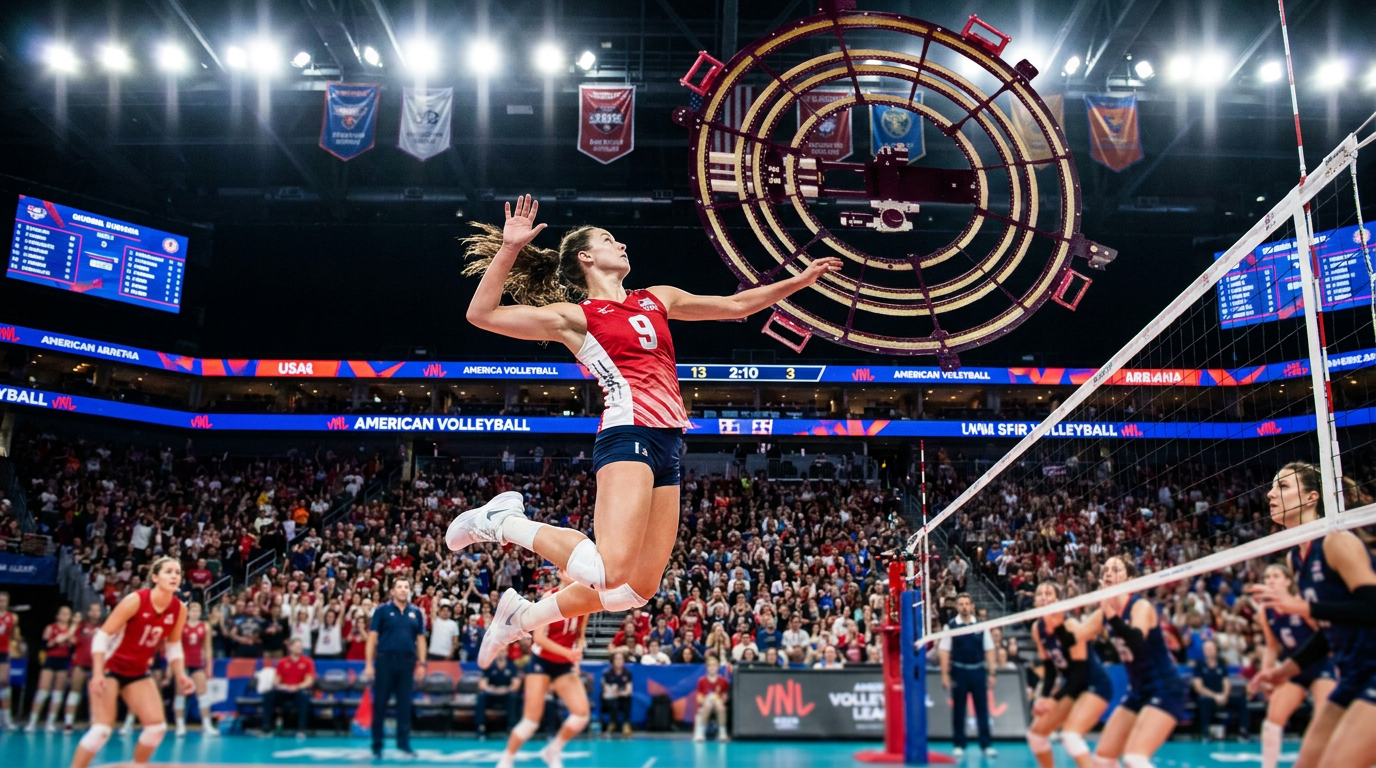
That paradigm has officially shattered. By the summer of 2026, the American professional volleyball landscape has not just arrived—it has exploded into a lucrative, dual-league ecosystem [1]. Fueled by record-breaking NCAA viewership and massive private equity investment, the sport is experiencing unprecedented commercial momentum [1]. Investors who previously overlooked the sport have realized that the massive grassroots participation numbers translate directly into ticket sales and broadcast viewership, transforming volleyball into the fastest-growing professional women's sport in the country.[1]
The current boom is driven by two distinct organizations racing to capture the American market: League One Volleyball (LOVB) and Major League Volleyball (MLV) [5]. Both leagues launched their 2026 seasons with national broadcast deals, Olympian-heavy rosters, and aggressive expansion plans [5]. Rather than cautiously testing the waters, both entities have deployed tens of millions of dollars to secure top-tier arenas, elite coaching staffs, and prime-time television slots. This dual-league approach has created an immediate, highly competitive marketplace for talent, signaling a permanent shift in the global volleyball economy and proving that domestic fans are eager to support the sport beyond the collegiate level.[5]
LOVB, pronounced "love," operates on a unique "community-up" model designed to guarantee a loyal audience from day one [2]. Before launching its professional tier in 2025, the organization spent years acquiring and partnering with youth volleyball clubs across the country. Today, LOVB's network includes over 70 youth clubs, creating a built-in fanbase for its pro teams [1]. When a LOVB professional team plays, the stands are packed with thousands of local youth players who already wear the organization's logo on their own jerseys.[1][2]

Backed by over $100 million in funding from high-profile investors like Kevin Durant and Lindsey Vonn, LOVB utilizes a single-entity structure [2]. The league owns all the teams, which helps control costs, ensure competitive parity, and streamline league-wide sponsorships. For its upcoming 2027 season, LOVB is expanding to 10 teams, recently adding a Miami franchise to its new Eastern and Western conference alignment to foster regional rivalries [2]. This centralized approach allows the league to meticulously plan its growth without relying on the financial health of individual owners.[2]
Backed by over $100 million in funding from high-profile investors like Kevin Durant and Lindsey Vonn, LOVB utilizes a single-entity structure [2].
On the other side of the net is Major League Volleyball (MLV). MLV is the evolution of the Pro Volleyball Federation (PVF), which rebranded after a high-stakes consolidation and a $100 million capital injection in late 2025 [6]. Unlike LOVB's centralized structure, MLV relies on a traditional independent franchise model [4]. Wealthy ownership groups, including NBA owners and international pop stars, purchase territorial rights and operate their teams independently, bringing a distinctly traditional American sports flavor to the league's operations and marketing.[4][6]
MLV's financial incentives are aggressively designed to keep top talent stateside and even poach international stars from European clubs. The league offers base salaries ranging from $60,000 to $175,000, plus revenue sharing agreements and comprehensive medical benefits [3]. In the 2026 season, the Dallas Pulse captured the MLV championship, taking home a massive $1 million team prize—a figure entirely unheard of in previous American volleyball iterations [3]. These compensation packages finally offer athletes a genuine, sustainable living without requiring a passport, fundamentally altering the career calculus for graduating college seniors.[3]

The broadcast battleground between the two leagues is equally competitive, ensuring the sport remains highly visible. LOVB matches are distributed across USA Network, ESPN, and the Victory+ streaming platform, capturing both traditional cable viewers and cord-cutters [5]. Meanwhile, MLV has secured partnerships with CBS Sports Network, Vice TV, and YouTube, ensuring that professional volleyball is accessible on both linear television and digital platforms multiple nights a week [6]. This media saturation is crucial for attracting non-endemic sponsors and building household names out of the sport's top performers.[5][6]
For the athletes, this dual-league era is nothing short of life-changing. Players no longer have to choose between pursuing their professional dreams and staying close to their families and support systems. The ability to train in world-class American facilities, play in front of home crowds, and earn a sustainable living is reversing the decades-old talent drain [4]. Veterans who spent a decade overseas are returning home for the twilight of their careers, while rookies are signing domestic contracts immediately after their final NCAA tournament matches.[4]
The international impact of this domestic boom is already being felt across the Atlantic. European and Asian club managers are facing unprecedented competition for American stars, forcing overseas leagues to reevaluate their own compensation packages and player treatment standards. The gravitational pull of the US market is shifting the global epicenter of the sport [1]. If the American leagues continue to scale, international clubs may soon find themselves relegated to secondary status, unable to match the salaries and lifestyle benefits offered in the United States.[1]

As both leagues look toward 2027, the expansion race is heating up, and they are increasingly going head-to-head in major media markets. Both LOVB and MLV have announced new franchises in Los Angeles and Minnesota for the 2027 season, setting the stage for fierce regional rivalries and bidding wars over free agents [1][3]. The Los Angeles market, in particular, is viewed as a crown jewel ahead of the 2028 Olympics, with both leagues eager to establish a dominant foothold in Southern California.[1][3]
The ultimate question is whether the American market can sustainably support two competing professional leagues in the long term. While executives from both LOVB and MLV insist there are no current plans for a merger, their parallel growth trajectories and overlapping expansion cities suggest a looming commercial showdown [1]. For now, however, the intense competition is entirely beneficial for the sport. It is driving player salaries up, expanding the national fanbase, and cementing indoor volleyball as the most successful new professional women's sports venture in the country [3].[1][3]
How we got here
Aug 2023
Nebraska sets a global women's sports attendance record (92,003), proving the massive US appetite for volleyball.
Jan 2024
The Pro Volleyball Federation (PVF) launches its inaugural season.
Jan 2025
League One Volleyball (LOVB) launches its professional tier, backed by over $100 million in funding.
Late 2025
PVF consolidates with new investors and rebrands as Major League Volleyball (MLV).
Jan 2026
Both LOVB and MLV kick off their competing seasons with national broadcast deals.
May 2026
Both leagues announce aggressive expansion plans for 2027, targeting major markets like Los Angeles.
Viewpoints in depth
League Executives
Focusing on sustainable growth and capturing the booming women's sports market.
Leaders of both LOVB and MLV view the current landscape as a land grab. They point to the massive collegiate viewership as proof of concept, arguing that the US market is large enough to support rapid expansion. Their primary goal is building long-term infrastructure—whether through LOVB's youth club pipeline or MLV's traditional franchise model—to ensure the sport doesn't suffer the financial collapse that doomed previous US leagues.
Professional Athletes
Prioritizing domestic stability, fair compensation, and playing close to home.
For the players, the dual-league era is a massive labor victory. Athletes who previously spent 8 to 10 months a year in Europe or Asia are now signing lucrative domestic contracts. They emphasize the physical and mental health benefits of playing in their home country, alongside the financial security provided by six-figure salaries and million-dollar championship purses.
Global Club Managers
Concerned about the sudden talent drain from established European and Asian leagues.
Overseas leagues in Italy, Turkey, and Brazil are feeling the squeeze. For decades, they relied on a steady pipeline of elite American college graduates to anchor their rosters. With top US talent now staying home, international club managers are being forced to increase their own salary offers and scout alternative markets to maintain their competitive edge.
What we don't know
- Whether the US market can sustainably support two competing leagues in the long term.
- If a merger between LOVB and MLV will eventually become necessary to avoid market cannibalization.
- How international leagues will adjust their financial models to compete for American talent.
Key terms
- LOVB
- League One Volleyball, a professional league built on a network of youth clubs and operating under a single-entity model.
- MLV
- Major League Volleyball, a professional league utilizing a traditional independent franchise model, evolved from the Pro Volleyball Federation.
- Single-entity model
- A sports league structure where the league itself owns all the teams and player contracts, rather than independent owners.
- Franchise model
- A traditional sports structure where individual owners purchase and operate distinct teams within the league's framework.
Frequently asked
Why didn't the US have a pro volleyball league before?
Despite international success, previous attempts lacked the necessary capital, broadcast partnerships, and grassroots integration to survive financially.
What is the difference between LOVB and MLV?
LOVB owns all its teams and is tied to a massive youth club network, while MLV uses independent team owners and a traditional franchise structure.
How much do professional volleyball players make in the US?
In MLV, base salaries range from $60,000 to $175,000, with additional opportunities for revenue sharing and a $1 million championship team prize.
Sources
Source coverage
6 outlets
3 viewpoints surfaced






[1]Sports Business JournalLeague Executives
Capitalizing on popularity: Volleyball might have more momentum than any other women's sport
Read on Sports Business Journal →[2]AP NewsGlobal Club Managers
League One Volleyball expands to Miami, adding 10th team for 2026-27
Read on AP News →[3]ForbesLeague Executives
Major League Volleyball Enters Fourth Season With Expansion And Momentum
Read on Forbes →[4]USA VolleyballProfessional Athletes
Major League Volleyball Women's Pro League to Launch
Read on USA Volleyball →[5]Just Women's SportsProfessional Athletes
Pro volleyball is back, with both LOVB and MLV kicking off their 2026 seasons
Read on Just Women's Sports →[6]SportsProLeague Executives
New US$100m women's volleyball league to launch in 2026
Read on SportsPro →

Every angle. Every day.
Get sports stories with full source coverage and perspective breakdowns delivered to your inbox.