
How Thomas Tuchel Rebuilt England's Tactical Identity for the 2026 World Cup
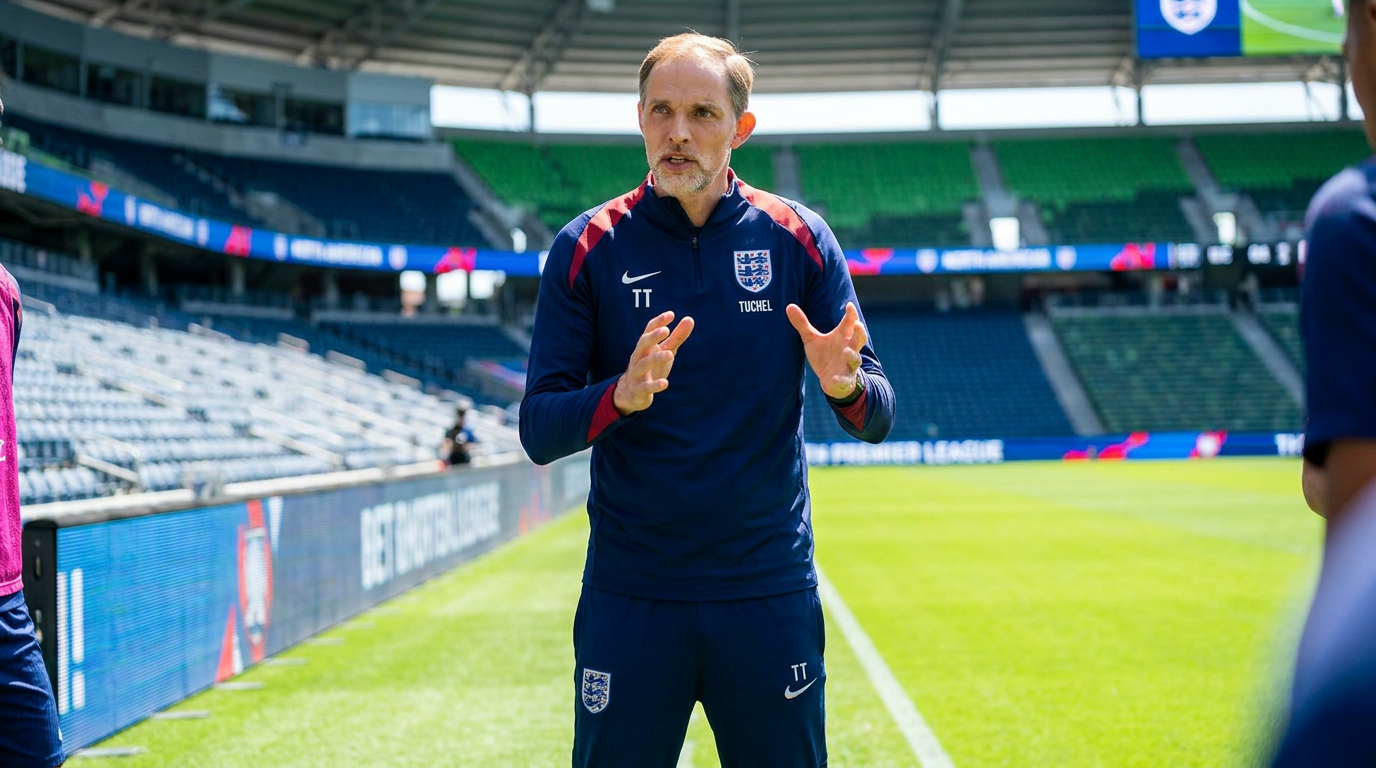
England enters the 2026 World Cup with a fundamentally retooled 3-4-2-1 system under Thomas Tuchel, designed to maximize a generational attacking squad. The tactical shift moves away from conservative pragmatism toward fluid possession and targeted pressing.
By Factlen Editorial Team
- Tactical Analysts
- Praise the structural shift to a 3-4-2-1, noting it solves the spatial issues that plagued previous England squads.
- Attacking Purists
- Celebrate the liberation of England's creative talents, eager to see Foden and Bellingham unleashed centrally.
- Pragmatic Skeptics
- Question whether such a complex, demanding system can be flawlessly executed with limited international training time.
What's not represented
- · Opposition Managers
- · Domestic Club Managers
Why this matters
England possesses one of the most talented squads in world football, but tactical disjointedness has historically held them back. Understanding Tuchel's new system reveals how the team plans to finally unlock its attacking potential and challenge for the trophy on the global stage.
Key points
- Thomas Tuchel has transitioned England from a conservative 4-2-3-1 to a fluid, possession-heavy 3-4-2-1 system.
- The 'dual 10' setup allows Jude Bellingham and Phil Foden to operate centrally in the half-spaces.
- Attacking width is now provided entirely by aggressive wing-backs, stretching opposition defenses.
- The system relies on a strategic mid-block and targeted pressing triggers rather than relentless high pressing.
The 2026 FIFA World Cup is officially underway across North America, and one of the tournament's most scrutinized contenders arrives with a fundamentally retooled identity. England, long defined by the cautious pragmatism of the Gareth Southgate era, has spent the last 18 months undergoing a comprehensive tactical revolution under Thomas Tuchel. Appointed in early 2025 with a singular mandate to deliver a major international trophy, the German tactician has systematically dismantled the old, conservative framework. In its place, he has built a dynamic, possession-oriented system explicitly designed to maximize a generational crop of attacking talent that had previously struggled to harmonize on the pitch.[1][2]
The defining challenge for the England national team in recent major tournaments was a structural inability to get the best out of its brightest stars simultaneously. Throughout the Euro 2024 campaign, the team frequently looked disjointed in possession, with elite playmakers operating in isolated pockets and struggling to break down stubborn low blocks. Tuchel’s diagnosis upon taking the prestigious job was swift and decisive: the squad did not lack technical quality or desire, but rather a cohesive spatial map that allowed players to occupy their preferred zones without stepping on each other's toes or crowding the central channels.[1][3]
The primary solution to this spatial puzzle has been a decisive shift toward a fluid 3-4-2-1 formation, a structural shape Tuchel previously used to orchestrate Chelsea's 2021 Champions League triumph. In possession, this system provides a highly stable base of three central defenders, allowing the midfield pivot to push higher and dictate the tempo of the match. It represents a stark departure from the traditional back four that England relied upon for years, demanding intense tactical discipline from the center-backs but offering vastly superior passing angles when building out from the back under heavy opposition pressure.[4][5]

At the absolute heart of this tactical transformation is the implementation of the "dual 10" system, designed specifically to solve the long-standing conundrum of fielding Jude Bellingham and Phil Foden simultaneously. Instead of marooning one of these elite creators on the left wing—a frequent and frustrating compromise in previous regimes—Tuchel deploys both as inverted attacking midfielders operating exclusively in the half-spaces. This structural tweak allows them to receive the ball on the half-turn in the most dangerous areas of the pitch, directly behind the opposition's midfield line where they can immediately threaten the defense.[2][4]
With the primary playmakers tucked inside to overload the center, the responsibility for providing attacking width falls entirely on the shoulders of the wing-backs. Players like Trent Alexander-Arnold and Bukayo Saka have been tasked with hugging the touchline, stretching the opposition horizontally, and delivering high-quality service into the penalty area from advanced positions. This dynamic forces opposing defenses to make an impossible choice: spread wide to cover the advancing wing-backs and leave glaring gaps for Bellingham and Foden, or stay compact centrally and concede dangerous crossing opportunities from the flanks.[1][3]
With the primary playmakers tucked inside to overload the center, the responsibility for providing attacking width falls entirely on the shoulders of the wing-backs.
Anchoring this expansive and aggressive shape is a carefully retooled midfield engine room that prioritizes both stability and progression. Declan Rice remains the undisputed physical presence in the center of the park, but his role has been refined into a more disciplined holding position to protect the back three. Alongside him, Tuchel has prioritized fielding a progressive passer—often utilizing the vision of Kobbie Mainoo or Adam Wharton—who can break defensive lines with vertical passes rather than safely cycling possession sideways. This double pivot acts as the team's metronome, ensuring that the attacking quartet receives the ball quickly during rapid transitions.[4][6]
Up front, Harry Kane’s role has evolved to perfectly complement the dynamic runners operating around him. While he remains the focal point of the attack and the primary goalscoring threat, Kane is actively encouraged to drop deep into the midfield, dragging opposing central defenders with him out of position. When Kane vacates the traditional number nine space, it serves as an immediate, rehearsed trigger for Bellingham or an advancing wing-back to make penetrating, diagonal runs in behind the defensive line, creating a fluid front three that is notoriously difficult for static defenses to mark.[2][5]

Out of possession, Tuchel has introduced a highly coordinated pressing structure, though he has pragmatically adapted his usual club philosophy for the international stage. Recognizing that national teams lack the daily training time required to perfect a relentless, 90-minute gegenpress, England now employs a strategic and patient mid-block. The team stays compact near the halfway line, waiting for specific tactical triggers—such as a poor touch from an opponent or a lateral pass to a vulnerable center-back—before springing into a ferocious, collective press designed to win the ball back in dangerous areas.[1][6]
This newfound defensive solidity is further reinforced by the inherent security of the back three structure. By keeping three natural center-backs on the pitch at all times, England ensures numerical superiority against opposition counter-attacks, serving as a critical insurance policy when the wing-backs are heavily committed forward in the attacking third. This structural adjustment has significantly reduced the number of high-quality chances conceded in transition, directly addressing a glaring vulnerability that haunted the team in the latter stages of previous knockout campaigns.[3][4]
However, the ambitious system is certainly not without its inherent risks and potential vulnerabilities. The 3-4-2-1 places an extraordinary physical and tactical burden on the wing-backs, requiring them to operate simultaneously as elite attacking wingers and reliable wide defenders for a full 90 minutes. Any drop in fitness, momentary lapse in concentration, or positional indiscipline in these wide areas can leave the outer center-backs exposed to dangerous two-on-one overloads, a structural weakness that elite South American or European opposition will actively look to exploit.[5][6]

Furthermore, the sheer complexity of Tuchel's tactical automatisms requires a level of subconscious synchronization that is notoriously difficult to maintain during the chaotic, condensed schedule of a World Cup tournament. If the pressing triggers are mistimed by even a fraction of a second, or if the intricate spacing between the dual 10s breaks down under pressure, the system can quickly look disjointed, leaving the midfield pivot isolated and vulnerable to being overrun by technically proficient opponents.[1][2]
Despite these acknowledged risks, the mood surrounding the England camp as they navigate the North American venues is one of immense, albeit cautious, optimism. By providing a clear, modern tactical blueprint, Tuchel has successfully removed the ambiguity and hesitation that often clouded England's major tournament preparations in the past. If the players can consistently execute this demanding system under the intense pressure of the global stage, they possess both the structural rigor and the individual brilliance required to finally end their decades-long wait for international glory.[3][6]
How we got here
July 2024
Gareth Southgate resigns as England manager following the conclusion of Euro 2024.
January 2025
Thomas Tuchel officially takes charge of the England national team with a mandate to win the 2026 World Cup.
Late 2025
England fully transitions to the 3-4-2-1 formation during the World Cup qualification campaign.
June 2026
The expanded 48-team FIFA World Cup kicks off across the United States, Canada, and Mexico.
Viewpoints in depth
Tactical Analysts' View
Focus on the structural elegance of the 3-4-2-1 and its ability to solve England's spatial issues.
Tactics writers and data analysts view Tuchel's structural overhaul as a necessary evolution. By moving to a back three, England naturally creates numerical superiorities in the first phase of build-up play, making them highly resistant to opposition pressing. More importantly, analysts highlight how the 'dual 10' system mathematically optimizes the pitch geography for England's best players, ensuring that creators like Foden and Bellingham receive the ball in the high-value half-spaces rather than being isolated on the touchline.
Attacking Purists' View
Celebrate the shift away from pragmatism, eager to see the squad's attacking potential fully unleashed.
For years, traditional supporters and attacking purists felt that England's generational talent was being shackled by a conservative, safety-first philosophy. This camp views Tuchel's appointment as a liberation. They argue that by actively encouraging risk-taking in possession and committing wing-backs high up the pitch, England is finally playing a brand of football that matches the pedigree of its Champions League-winning roster. The focus here is less on defensive solidity and more on the sheer entertainment value of overwhelming opponents.
Pragmatic Skeptics' View
Express concern over the complexity of the system and the physical demands placed on the wing-backs.
Skeptics, often including former international defenders and pragmatic pundits, worry that Tuchel is attempting to play elite club football on an international schedule. They argue that the intricate automatisms and pressing triggers required for the 3-4-2-1 to function cannot be adequately drilled during brief, sporadic international breaks. Furthermore, this camp frequently highlights the immense physical burden placed on the wing-backs, warning that an injury to a key player like Trent Alexander-Arnold or Bukayo Saka could cause the entire structural house of cards to collapse against elite opposition.
What we don't know
- How the complex 3-4-2-1 system will hold up under the intense pressure of elite South American or European pressing in the knockout stages.
- Whether England has sufficient depth at the wing-back positions to sustain the physical demands of a deep tournament run.
- How the squad will react if they fall behind early and are forced to chase a game within this structured framework.
Key terms
- Double Pivot
- Two central defensive midfielders playing alongside each other to shield the defense, dictate play, and initiate attacks.
- Half-spaces
- The vertical channels on the pitch between the wide wing areas and the direct center, often exploited by attacking midfielders to find pockets of space.
- Mid-block
- A defensive strategy where a team concedes possession in the opponent's half but defends compactly near the halfway line to deny space.
- Automatisms
- Pre-rehearsed passing patterns and tactical movements that players execute instinctively during a match.
Frequently asked
Why did England change managers before 2026?
Gareth Southgate stepped down following Euro 2024, leading the FA to appoint Thomas Tuchel in early 2025 to maximize the current 'golden generation' of attacking talent.
What formation is England using at the World Cup?
Thomas Tuchel primarily utilizes a flexible 3-4-2-1 system, which provides defensive stability while allowing multiple playmakers to operate centrally.
How does Tuchel fit both Foden and Bellingham into the team?
Both players operate as 'dual 10s' in the half-spaces behind the striker, rather than being forced out wide as traditional wingers.
Sources
Source coverage
6 outlets
3 viewpoints surfaced






[1]The AthleticTactical Analysts
How Thomas Tuchel transformed England's tactical identity for the 2026 World Cup
Read on The Athletic →[2]ESPNAttacking Purists
England's World Cup 2026 tactical preview: The Tuchel effect
Read on ESPN →[3]The GuardianPragmatic Skeptics
From Southgate to Tuchel: The evolution of England's midfield
Read on The Guardian →[4]Sky SportsAttacking Purists
Jude Bellingham's new role in Thomas Tuchel's England system
Read on Sky Sports →[5]KickerTactical Analysts
Tuchels England: Pragmatismus trifft auf offensive Weltklasse
Read on Kicker →[6]Factlen Editorial TeamTactical Analysts
Synthesis by Factlen editorial team
Read on Factlen Editorial Team →

More in sports
See all 13 stories →Olympic Sustainability
How the LA 2028 Olympics Will Run Entirely on Existing Stadiums
0 sources

NBA Finals
New York Knicks Win 2026 NBA Finals, Ending 53-Year Championship Drought
0 sources
NBA Finals
New York Knicks Capture First NBA Championship Since 1973
0 sources

Hockey Strategy
How the PWHL's 'Jailbreak' and 'No Escape' Rules Are Rewriting Hockey Strategy
0 sources
Every angle. Every day.
Get sports stories with full source coverage and perspective breakdowns delivered to your inbox.