
How Synthetic E-Fuels Are Saving the V12 Supercar from Extinction
Automakers like Porsche, Ferrari, and Lamborghini are investing heavily in carbon-neutral synthetic fuels to keep the internal combustion engine alive past the EU's 2035 emissions ban.
By Factlen Editorial Team
- Supercar Manufacturers
- Preserving brand identity and emotional engagement through combustion.
- E-Fuel Pioneers
- Scaling carbon-neutral liquid fuels using abundant renewable energy.
- Regulatory Bodies
- Balancing strict zero-emission mandates with economic and technological realities.
- EV Purists
- Questioning the thermodynamic efficiency and scalability of synthetic fuels.
What's not represented
- · Mainstream Commuters
- · Battery Supply Chain Executives
Why this matters
The transition to electric vehicles threatened to erase the mechanical heritage and emotional appeal of high-performance sports cars. Synthetic e-fuels offer a technological breakthrough that allows combustion engines to achieve net-zero emissions, preserving automotive history while still meeting strict global climate goals.
Key points
- The EU's 2035 ban on combustion engines includes a loophole for cars running exclusively on carbon-neutral synthetic fuels.
- E-fuels are made by combining green hydrogen with carbon dioxide captured directly from the atmosphere.
- Because the CO2 emitted equals the CO2 captured during production, the fuel achieves net-zero emissions.
- Porsche has pioneered the technology with a wind-powered pilot plant in Chile.
- Ferrari recently reversed its EV targets, promising 40% of its 2030 lineup will remain pure combustion.
- Formula 1 will switch to 100% sustainable synthetic fuels starting in the 2026 season.
The sound of a naturally aspirated V12 engine bouncing off a canyon wall is one of the defining emotional experiences of the automotive world. For decades, that mechanical symphony has been the ultimate status symbol for driving enthusiasts. But in recent years, that sound has been on a direct collision course with global climate legislation. With the European Union firmly mandating an end to the sale of new carbon-emitting vehicles by 2035, the internal combustion engine appeared destined to be relegated to museums and private collections, replaced entirely by silent, battery-powered motors.[8]
For historic performance brands like Ferrari, Lamborghini, and Porsche, this legislative cliff presented an existential crisis. While modern electric vehicles can easily match or even exceed the straight-line acceleration of a traditional hypercar, they fundamentally struggle to replicate the visceral, mechanical drama that justifies a half-million-dollar price tag. The vibration of the chassis, the crescendo of the rev counter, and the tactile feedback of a perfectly timed gear shift are core to the brand identity of these Italian and German marques. Without combustion, they risked losing their very soul.
Now, a technological lifeline has emerged from the wind-swept plains of South America, offering a way to keep pistons firing without destroying the climate. Synthetic e-fuels—which are chemically identical to traditional high-octane gasoline but manufactured without pulling a single drop of crude oil from the ground—are poised to save the combustion engine. By leveraging renewable energy to create a closed-loop carbon cycle, these engineered fuels promise to deliver the exact same explosive performance and auditory thrill, but with a net-zero impact on the atmosphere.
The regulatory door for this technology officially opened when Germany and Italy, home to the world's most storied performance brands and massive automotive supply chains, successfully lobbied the European Commission. Recognizing the economic and cultural importance of their automotive sectors, they secured a crucial loophole in the impending 2035 ban. Under the drafted framework, new combustion-engine cars can still be legally sold and registered in Europe after the deadline, provided they are equipped with software blockers ensuring they run exclusively on carbon-neutral synthetic fuels.[8]

To understand exactly how a liquid fuel can be considered carbon-neutral, one has to look at the Haru Oni pilot plant located in Punta Arenas, Chile. Initiated by Porsche with a massive $75 million investment in the e-fuel development company HIF Global, the facility was strategically built in one of the most hostile but energy-rich environments on Earth. The plant relies on the Magallanes region's fierce, near-constant winds to generate abundant renewable electricity, which serves as the foundational energy source for the entire synthetic process.[4]
The actual production mechanism begins with nothing more than water and wind. Using the electricity generated by the massive turbines, industrial-scale electrolysers split H2O molecules into oxygen and 'green' hydrogen. This initial step is entirely emission-free, relying solely on the renewable energy harnessed from the Chilean atmosphere. This green hydrogen forms the highly combustible base of the future fuel, but to make it compatible with existing engines, it needs to be transformed into a stable hydrocarbon liquid.[4][5]
Simultaneously, the facility utilizes advanced direct air capture technology, which acts like a giant mechanical forest. Massive fans pull ambient air through chemical filters to extract carbon dioxide directly from the atmosphere. The green hydrogen and the captured CO2 are then combined in a complex synthesis process to create synthetic methanol. Through further refinement, this methanol is converted into high-octane e-gasoline that looks, smells, and burns exactly like the premium unleaded fuel found at any local gas station.[4][5]
Simultaneously, the facility utilizes advanced direct air capture technology, which acts like a giant mechanical forest.
Because the resulting liquid is chemically identical to fossil fuels, it can be pumped into any existing combustion engine—from a classic 1960s Ferrari to a brand-new Porsche 911—without requiring a single mechanical modification. When the car burns the e-fuel, it still releases carbon dioxide out of the tailpipe. But crucially, it only releases the exact same amount of CO2 that the direct air capture machines pulled from the atmosphere to create the fuel in the first place. The carbon cycle is perfectly closed, resulting in net-zero emissions.[4][8]
For supercar executives who have been quietly dreading the electric transition, this mathematical reality is a revelation. Lamborghini Chief Technical Officer Rouven Mohr recently went on record calling synthetic fuel 'the savior of the combustion engine.' Lamborghini CEO Stephan Winkelmann has been equally candid about the brand's hesitation toward full electrification, noting that current electric vehicles simply lack the 'emotional aspects' and visceral engagement demanded by their ultra-wealthy clientele. He emphasized that while EVs are incredibly fast, they have not yet proven they can deliver the sustained excitement required for a true supercar experience.[3][5][7]
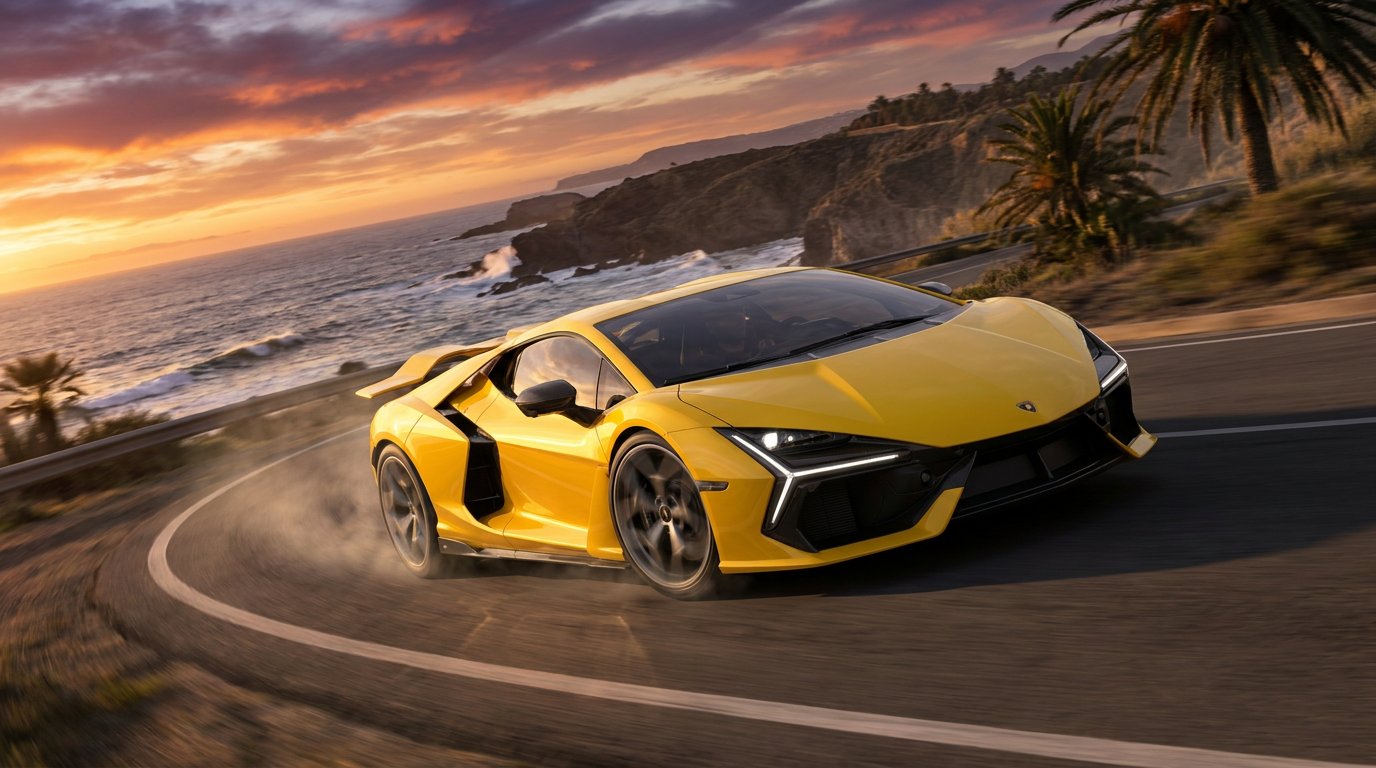
While Lamborghini is currently utilizing plug-in hybrid systems—such as the electrified V12 setup found in their new flagship Revuelto—to bridge the immediate regulatory gap, they are banking heavily on e-fuels for the long term. The hybrid systems allow the cars to navigate zero-emission city zones on battery power, but the synthetic fuel ensures that the screaming twelve-cylinder engine can remain the heart of the vehicle well past the 2030s, preserving the brand's core identity.[3][7]

Rival Ferrari is making an even bolder pivot based on the promise of this technology. After previously projecting that only 20 percent of its lineup would be pure combustion by the end of the decade, the company recently reversed course. Recognizing the immense customer demand for traditional engines, Maranello now promises that 40 percent of its 2030 fleet will remain pure internal combustion, with another 40 percent utilizing hybrid powertrains. Only 20 percent of their output is currently slated for full electrification.[6]
Ferrari CEO Benedetto Vigna confirmed that this aggressive combustion strategy is directly supported by the rapid development of carbon-neutral fuels. To accelerate the technology and prove its viability under extreme conditions, Ferrari is working closely with partners like Saudi Aramco. Their immediate goal is to prepare for Formula 1's massive rule change in 2026, when the entire racing grid will switch to 100 percent sustainable e-fuels, effectively turning the world's premier motorsport into a high-speed research and development lab for synthetic gasoline.[1][2]
However, the e-fuel revolution carries significant uncertainties and fierce critics. The primary hurdle is the sheer amount of energy required to manufacture the fuel. Environmental advocates and EV purists point out that using renewable electricity to make liquid fuel, only to burn it in an engine that loses 70 percent of its energy to heat and friction, is wildly inefficient. They argue it is vastly more practical to simply put that renewable electricity directly into an EV battery, which utilizes over 80 percent of its stored energy for forward motion.[3][8]

Because of this inherent thermodynamic inefficiency, synthetic fuels are currently exorbitant to produce, costing several times more per gallon than traditional fossil fuels. Even as production scales up globally with new plants planned in the United States and Australia, e-fuels are expected to remain a premium, boutique product. They are highly unlikely to be the cheap, abundant fuel that powers the average family commuter car or commercial delivery van in 2040, leaving battery-electric vehicles as the undisputed solution for mass transit.[3][5]
But for the ultra-luxury automotive sector, the cost at the pump is entirely irrelevant. Buyers spending upwards of $400,000 on a bespoke Italian hypercar will gladly pay a premium for carbon-neutral fuel if it means they get to keep the soul-stirring shriek of a V12 engine. In the end, synthetic e-fuels may not save the everyday gas station, but they have almost certainly saved the supercar, offering a technological triumph that preserves automotive heritage while respecting global climate goals.[3][8]
How we got here
2022
Porsche invests $75 million in HIF Global and opens the Haru Oni e-fuel pilot plant in Chile.
March 2023
Germany and Italy successfully lobby the EU to draft an exemption for e-fuel combustion engines in the 2035 ban.
July 2024
Ferrari CEO Benedetto Vigna confirms the brand is developing carbon-neutral fuel solutions for its future supercars.
June 2025
Lamborghini CTO Rouven Mohr publicly declares synthetic fuels the 'savior of the combustion engine.'
2026
Formula 1 is scheduled to switch entirely to 100% sustainable synthetic fuels.
2035
The European Union's ban on traditional fossil-fuel vehicle sales takes effect.
Viewpoints in depth
Supercar Manufacturers
Preserving brand identity and emotional engagement through combustion.
For legacy performance brands like Ferrari, Lamborghini, and Porsche, the internal combustion engine is not just a propulsion method; it is the core of their brand identity. Executives argue that while electric motors provide unmatched straight-line speed, they lack the acoustic drama, vibration, and mechanical engagement that justify a supercar's exorbitant price tag. By investing heavily in synthetic fuels, these manufacturers believe they can meet strict climate goals without sacrificing the soul of their vehicles, ensuring that the V12 engine survives well into the future.
E-Fuel Pioneers
Scaling carbon-neutral liquid fuels using abundant renewable energy.
Companies like HIF Global and energy giants like Aramco view e-fuels as a necessary parallel track to electrification. They argue that with billions of combustion-engine vehicles currently on the road, replacing them all with EVs will take decades and strain global battery supply chains. By utilizing stranded renewable energy—like the fierce winds of southern Chile—to manufacture drop-in synthetic fuels, they believe they can decarbonize existing fleets immediately while providing a sustainable fuel source for aviation, shipping, and high-performance motorsports.
Environmental Regulators
Balancing strict zero-emission mandates with economic and technological realities.
The European Commission's primary objective is achieving net-zero emissions by 2050, which drove the initial mandate to ban new fossil-fuel cars by 2035. However, regulators have shown a willingness to compromise when presented with closed-loop carbon solutions. By drafting an exemption for vehicles running exclusively on e-fuels, regulators are attempting to appease powerful automotive lobbying blocks in Germany and Italy while maintaining the integrity of their climate goals, provided the math on carbon neutrality holds up to independent scrutiny.
EV Advocates
Questioning the thermodynamic efficiency and scalability of synthetic fuels.
Proponents of full electrification argue that synthetic fuels are a massive distraction and a thermodynamically inefficient use of renewable energy. They point out that using green electricity to manufacture a liquid fuel, only to burn it in an engine that loses the majority of its energy to heat, makes little sense when that same electricity could charge an EV battery directly. From this perspective, e-fuels are viewed as an expensive playground for the ultra-rich to keep their noisy toys, rather than a viable climate solution for the masses.
What we don't know
- Whether the cost of synthetic e-fuels will ever drop low enough for mass-market adoption.
- If the global supply of renewable energy can scale fast enough to support widespread e-fuel production without cannibalizing the EV grid.
- How strictly the European Union will enforce the software blockers required to ensure cars only run on e-fuels.
Key terms
- Synthetic E-Fuel
- A drop-in replacement liquid fuel made by combining green hydrogen with captured carbon dioxide, resulting in net-zero emissions.
- Electrolysis
- The industrial process of using electricity to split water molecules into hydrogen and oxygen.
- Direct Air Capture (DAC)
- Technology that uses massive fans and chemical filters to extract carbon dioxide directly from the ambient atmosphere.
- Carbon Neutral
- A state where the carbon emissions produced by burning a fuel are exactly offset by the carbon removed from the atmosphere to create it.
- Internal Combustion Engine (ICE)
- A traditional engine that generates power by burning a mixture of fuel and air inside a cylinder.
Frequently asked
Can existing cars run on synthetic e-fuels?
Yes. Synthetic e-fuels are chemically identical to traditional fossil fuels, meaning they can be pumped into any existing internal combustion engine without requiring mechanical modifications.
Are e-fuels completely emission-free?
They are net-zero, not emission-free. Burning e-fuel still releases carbon dioxide from the tailpipe, but it only releases the exact amount of CO2 that was pulled from the atmosphere to manufacture the fuel, resulting in a closed carbon cycle.
Why aren't we using e-fuels for all cars?
Producing e-fuels requires massive amounts of renewable energy, making the process highly inefficient and expensive compared to charging an EV battery directly. They are expected to remain a premium product for the foreseeable future.
Will e-fuels save manual transmissions?
Because e-fuels allow the internal combustion engine to survive, they also preserve the mechanical possibility of manual transmissions in future sports cars, which are incompatible with most EV architectures.
Sources
Source coverage
8 outlets
4 viewpoints surfaced








[1]AutocarSupercar Manufacturers
Ferrari boss Benedetto Vigna believes e-fuels could save ICE cars
Read on Autocar →[2]Motor AuthoritySupercar Manufacturers
Ferrari sees synthetic fuel as savior of ICE supercars
Read on Motor Authority →[3]AutoblogSupercar Manufacturers
Lamborghini's plan to keep ICE alive with synthetic fuels
Read on Autoblog →[4]GreenCarsE-Fuel Pioneers
What is E-Fuel? Porsche's Haru Oni project explained
Read on GreenCars →[5]CarBuzzEV Purists
Synthetic Fuels Are How Lamborghini Can Save Its Combustion Cars
Read on CarBuzz →[6]F1rstMotorsSupercar Manufacturers
Ferrari is Doubling Down on V12s, Reversing EV Course
Read on F1rstMotors →[7]CarScoopsSupercar Manufacturers
Lamborghini CEO Says It's Too Early For Fully Electric Supercars
Read on CarScoops →[8]CarsalesRegulatory Bodies
Europe looks to allow e-fuel in new cars after 2035
Read on Carsales →
Every angle. Every day.
Get automotive stories with full source coverage and perspective breakdowns delivered to your inbox.