
How SpaceX Executed the Largest IPO in History (And What It Means for Investors)
SpaceX recently raised a record-breaking $75 billion in its public market debut by bypassing traditional Wall Street underwriting norms. This explainer breaks down the mechanics of the historic offering, the valuation of the space economy, and the implications for everyday investors.
By Factlen Editorial Team
- Retail Investment Advocates
- View the hybrid IPO model as a necessary democratization of finance that stops Wall Street insiders from hoarding early gains.
- Traditional Underwriters
- Argue that while SpaceX succeeded due to its unique brand power, traditional underwriting remains necessary for most companies to ensure price stability.
- Aerospace Analysts
- Focus less on the financial mechanics and more on the sheer volume of capital unlocked for deep-space infrastructure.
What's not represented
- · Early private equity investors who held illiquid shares for over a decade
- · Competitors in the aerospace sector reacting to SpaceX's new capital advantage
Why this matters
The SpaceX IPO not only opens up the rapidly growing space economy to everyday retail investors for the first time, but it also fundamentally disrupts how massive technology companies raise capital, potentially lowering fees and democratizing access for future public offerings.
Key points
- SpaceX raised a record-breaking $75 billion in its public market debut.
- The company bypassed traditional Wall Street underwriting, utilizing a hybrid model to reduce fees.
- Retail investors were granted unprecedented early access to the initial offering price.
- The capital will primarily fund the expansion of the Starship program and launch infrastructure.
- SpaceX must now adhere to strict SEC transparency and quarterly reporting requirements.
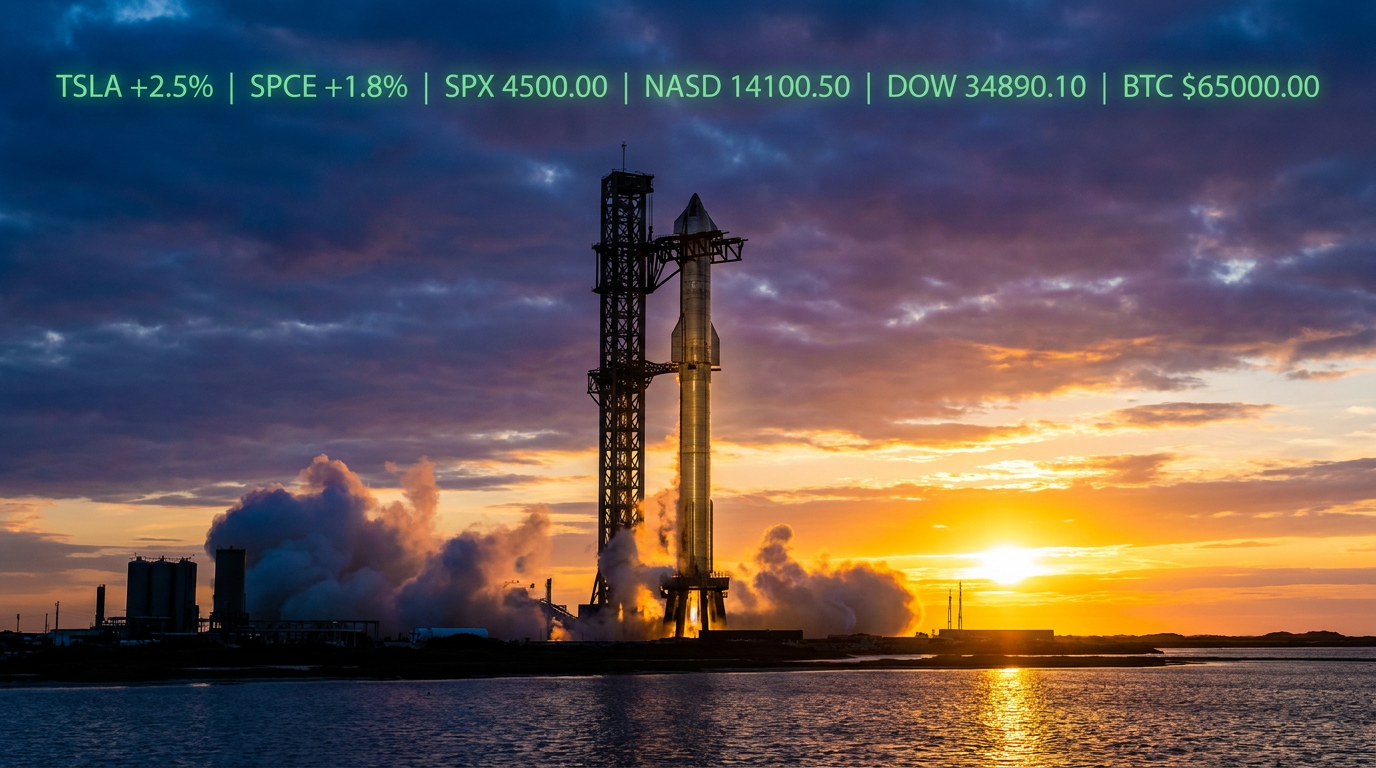
The financial world witnessed a historic milestone this week as SpaceX executed the largest Initial Public Offering (IPO) in market history, raising a staggering $75 billion. For years, the aerospace manufacturer and satellite internet provider remained the most coveted private company in the world, relying on private funding rounds to fuel its ambitious Starship and Starlink programs. The decision to finally enter the public markets was highly anticipated, but the mechanics of the offering caught Wall Street off guard.[1][2]
Instead of relying entirely on the traditional underwriting process—where major investment banks dictate the initial share price and allocate blocks primarily to institutional clients—SpaceX utilized a hybrid direct-access model. To understand the magnitude of this shift, it is essential to examine how public offerings typically function.[1][4]
Under standard U.S. Securities and Exchange Commission (SEC) frameworks, companies hire underwriters who go on a "roadshow" to pitch the stock to large funds, often underpricing the shares to guarantee a first-day "pop." This traditional model has long been criticized for leaving money on the table for the issuing company while rewarding institutional insiders with immediate, low-risk gains.[3][4]

By bucking these norms, SpaceX managed to retain significantly more capital while democratizing early access for retail investors. The company leveraged digital brokerage platforms to allow everyday investors to participate at the initial offering price, a move that bypassed hundreds of millions of dollars in traditional banking fees.[1][6]
The sheer scale of the $75 billion capital raise dwarfs previous mega-IPOs, including Alibaba and Saudi Aramco. Market analysts note that the offering was heavily oversubscribed, reflecting immense pent-up demand for pure-play space exploration assets. Investors were eager to gain exposure to a company that effectively holds a monopoly on heavy-lift orbital logistics.[2][6]
A major driver of this demand is the underlying economics of the broader space sector. According to the Space Foundation, the global space economy is rapidly expanding, driven by satellite broadband, orbital logistics, and government defense contracts. The commercialization of low-Earth orbit has transitioned from a theoretical concept to a highly lucrative reality.[5]

A major driver of this demand is the underlying economics of the broader space sector.
Starlink, SpaceX's satellite internet constellation, serves as the immediate financial engine for the newly public entity. With millions of active subscribers globally, Starlink provides the recurring, high-margin revenue necessary to offset the massive research and development costs of deep-space exploration. Analysts view Starlink as the stabilizing floor for the company's valuation.[2][5]
However, the long-term thesis for investors hinges on Starship, the fully reusable super-heavy lift launch vehicle. Starship is designed to radically reduce the cost of delivering payload to orbit, which aerospace analysts view as the critical bottleneck for a self-sustaining lunar and Martian economy. The influx of $75 billion provides SpaceX with a war chest to accelerate the mass production of Starship vehicles.[5][6]
This capital will also fund the expansion of launch infrastructure at Starbase in Texas and the Kennedy Space Center in Florida. Building out the physical footprint required to launch multiple Starships per day is an infrastructure project on the scale of national highway systems, requiring unprecedented upfront investment.[2][6]

Despite the overwhelming success of the debut, the public transition introduces new layers of scrutiny. As a publicly traded company, SpaceX must now adhere to strict SEC reporting requirements, providing quarterly updates on its financial health, launch margins, and operational risks. The days of operating behind closed doors are officially over.[3][6]
This transparency is a double-edged sword for a company known for its rapid, iterative testing methodology. SpaceX's engineering culture is characterized by spectacular prototype explosions that are viewed internally as data-gathering successes. In the public markets, however, such visible setbacks might trigger short-term volatility and spook traditional shareholders.[4][6]
Furthermore, the retail enthusiasm surrounding the stock draws comparisons to the early days of Tesla's public journey. While retail investors celebrate the opportunity to own a piece of the Mars colonization effort, financial advisors caution that aerospace remains a highly capital-intensive and inherently risky sector, subject to regulatory hurdles and extreme engineering challenges.[1][4]
Ultimately, the SpaceX IPO represents more than just a massive liquidity event; it is a structural challenge to how Silicon Valley giants transition to the public sphere. By proving that a company can raise unprecedented capital on its own terms, SpaceX has likely rewritten the playbook for future mega-unicorns.[1][6]
As the dust settles on the largest public offering in history, the focus now shifts from financial engineering back to aerospace engineering. With $75 billion in fresh capital, the market has placed a historic bet on humanity's expansion into the solar system, fundamentally altering the landscape of both Wall Street and the space economy.[2][6]

How we got here
2002
SpaceX is founded with the long-term goal of reducing space transportation costs to enable the colonization of Mars.
2008
The company successfully launches Falcon 1, becoming the first privately developed liquid-fueled rocket to reach orbit.
2020
SpaceX successfully launches NASA astronauts to the International Space Station, cementing its dominance in orbital logistics.
2024
The Starship program achieves full orbital reusability, significantly de-risking the company's long-term technological roadmap.
June 2026
SpaceX executes the largest IPO in history, raising $75 billion via a hybrid direct-access model.
Viewpoints in depth
Retail Investment Advocates
View the hybrid IPO model as a necessary democratization of finance.
Advocates for retail investors argue that the traditional IPO process is inherently flawed, designed to enrich institutional insiders at the expense of everyday people. By utilizing a hybrid direct-access model, SpaceX allowed retail investors to buy in at the ground floor, rather than forcing them to purchase shares at a massive premium after the institutional 'pop.' This camp views the SpaceX offering as a blueprint for how future tech giants should go public.
Traditional Underwriters
Argue that traditional underwriting remains necessary for most companies to ensure price stability.
While acknowledging the success of the SpaceX offering, traditional financial institutions caution against viewing it as a universal model. They argue that SpaceX is a unique anomaly with unprecedented brand power and a cult-like following. For the vast majority of companies going public, underwriters provide essential price discovery, regulatory guidance, and market stabilization that prevents the stock from collapsing on its first day of trading.
Aerospace Analysts
Focus on the sheer volume of capital unlocked for deep-space infrastructure.
For industry experts, the financial mechanics of the IPO are secondary to the operational implications of a $75 billion cash infusion. Aerospace analysts emphasize that building a self-sustaining city on Mars requires capital on the scale of a nation-state's GDP. This public offering provides SpaceX with the financial runway to mass-produce Starships, build out multiple global spaceports, and weather the inevitable engineering setbacks that come with deep-space exploration.
What we don't know
- How public market shareholders will react to the inevitable explosive test failures inherent to SpaceX's rapid iteration engineering model.
- Whether other massive private unicorns will successfully replicate SpaceX's hybrid IPO model to bypass traditional investment banks.
Key terms
- Initial Public Offering (IPO)
- The process of offering shares of a private corporation to the public in a new stock issuance, allowing the company to raise capital from public investors.
- Underwriting
- The traditional process where investment banks raise investment capital from investors on behalf of corporations issuing securities, often taking a significant fee.
- Oversubscribed
- A situation in which the demand for a new issue of stock is greater than the number of shares available.
- Pure-play
- A company that focuses exclusively on a particular product or service, such as SpaceX focusing entirely on aerospace and satellite technology.
Frequently asked
How much did SpaceX raise in its IPO?
SpaceX raised $75 billion in its public market debut, making it the largest Initial Public Offering in history.
Why didn't SpaceX use a traditional IPO?
SpaceX opted for a hybrid direct-access model to bypass hefty investment banking fees and allow retail investors to participate at the initial offering price, rather than reserving early access solely for institutional funds.
What will SpaceX do with the $75 billion?
The capital is earmarked for accelerating the mass production of the Starship launch vehicle and expanding launch infrastructure in Texas and Florida.
Does SpaceX's public status change how it operates?
Yes. As a public company, SpaceX must now comply with SEC regulations, requiring transparent quarterly reporting on its financials and operational risks.
Sources
Source coverage
6 outlets
3 viewpoints surfaced






[1]MarketWatchRetail Investment Advocates
How Elon Musk nailed the SpaceX IPO: ‘I’m not sure that this could have gone much better’
Read on MarketWatch →[2]CNBCAerospace Analysts
SpaceX raises record $75 billion in public market debut
Read on CNBC →[3]U.S. Securities and Exchange Commission
Understanding Initial Public Offerings (IPOs)
Read on U.S. Securities and Exchange Commission →[4]Harvard Business ReviewTraditional Underwriters
The Evolution of the Mega-IPO and Alternative Listing Models
Read on Harvard Business Review →[5]Space FoundationAerospace Analysts
The Global Space Economy Report 2026
Read on Space Foundation →[6]Factlen Editorial Team
Synthesis by Factlen editorial team
Read on Factlen Editorial Team →
Every angle. Every day.
Get finance stories with full source coverage and perspective breakdowns delivered to your inbox.