
How Solid-State Batteries Are Rewriting the Rules of Luxury Electric Vehicles
After years of laboratory development, solid-state batteries are finally entering real-world production in 2026. Promising 1,000-kilometer ranges and 10-minute charging times, the technology is set to debut in ultra-luxury vehicles before scaling to the mass market.
By Dev Anand

The electric vehicle industry has been chasing a holy grail for over a decade: a battery that charges in minutes, never catches fire, and drives over 1,000 kilometers on a single charge. In 2026, that technology is finally moving from the laboratory to the highway.
The breakthrough moment arrived when a lightly modified Mercedes-Benz EQS equipped with a solid-state battery completed a 1,205-kilometer journey from Stuttgart, Germany, to Malmö, Sweden, without a single charging stop. The vehicle arrived with 137 kilometers of range still remaining, proving that the technology can deliver on its massive promises in real-world conditions.[1]
This milestone has triggered an industry-wide arms race. Automakers from Toyota to Nissan are aggressively accelerating their timelines, aiming to put solid-state batteries into production vehicles between 2027 and 2028. The stakes are existential; industry analysts suggest that whoever masters this technology first will dominate the next generation of automotive manufacturing. Billions of dollars are pouring into research and development as legacy automakers and nimble battery startups race to scale production lines and secure the necessary raw materials for mass manufacturing.
To understand why this shift is so monumental, one must look at the mechanism inside the cells. Traditional lithium-ion batteries rely on a liquid or gel electrolyte to shuttle ions between the anode and cathode during charging and discharging. While effective, this liquid is inherently flammable and limits how densely energy can be packed into a given physical space. For an industry that has spent years battling the public perception of battery fires, the shift away from liquid electrolytes represents a massive leap forward in consumer safety and vehicle reliability.
Solid-state batteries replace that liquid with a solid conductive material, typically a ceramic, sulfide, or polymer. This fundamental architectural change eliminates the risk of thermal runaway, meaning the batteries will not explode or catch fire even if punctured or exposed to extreme heat. Beyond safety, the solid electrolyte allows manufacturers to use a pure lithium-metal anode instead of the heavier graphite used today. This substitution dramatically increases the battery's energy density, fundamentally altering the physics of electric vehicle design.[3]
Current top-tier lithium-ion cells max out around 250 to 300 watt-hours per kilogram. In contrast, the new generation of solid-state cells is targeting 400 to 500 watt-hours per kilogram, effectively doubling the amount of energy stored in the exact same physical footprint.
For the consumer, this translates to a vehicle that weighs the same as today's electric cars but travels twice as far. The Mercedes EQS test vehicle achieved its record-breaking range using a battery pack that was identical in size and weight to its standard lithium-ion counterpart, yet contained 25 percent more usable energy.[1][3]
Charging speeds are also poised for a revolution. Because solid electrolytes are vastly more stable at high temperatures, they can accept electrical current at much higher rates without degrading the internal chemistry. Toyota's upcoming high-performance solid-state vehicle is being engineered to charge from 10 percent to 80 percent in under ten minutes. This refueling time finally rivals the convenience of a traditional gas station pump, effectively eliminating the long highway charging stops that have deterred many consumers from adopting electric vehicles.
However, the transition to solid-state is not without significant hurdles, the largest of which is manufacturing cost. Producing these advanced cells requires entirely new supply chains, specialized dry rooms, and complex hermetic sealing processes. This is particularly true for sulfide-based electrolytes, which are highly sensitive to ambient moisture and require pristine manufacturing environments. The capital expenditure required to retool existing battery factories or build entirely new solid-state facilities is staggering, creating a massive barrier to entry for smaller automakers.
As a result of these complex manufacturing requirements, market analysts project that early solid-state batteries will cost between $400 and $800 per kilowatt-hour to produce in 2026. This stands in stark contrast to the roughly $132 per kilowatt-hour cost of conventional lithium-ion packs. This immense price premium means the technology will be strictly confined to the upper echelons of the automotive market for the foreseeable future. The first wave of solid-state vehicles arriving in 2026 and 2027 will not be budget-friendly commuter cars.
Instead, they will be positioned as ultra-luxury flagships and high-performance supercars, where affluent buyers are willing to absorb a massive technological premium. It may take until the early 2030s for economies of scale to bring solid-state technology down to mass-market price points. Recognizing the need for standardization as the technology matures, regulatory bodies are stepping in to govern the transition. In 2026, China is set to introduce the world's first official standard for solid-state electric vehicle batteries.[2]
This new regulatory framework will clearly define the terminology for liquid, semi-solid, and all-solid-state batteries, preventing manufacturers from marketing hybrid technologies as true solid-state breakthroughs. As the industry races toward commercialization, alternative chemistries are emerging to challenge the dominant solid-state narrative. Some researchers are pushing the boundaries of what solid-state can be by exploring entirely new material combinations that avoid the most expensive raw materials currently dominating the global battery supply chain. These alternative approaches aim to democratize the technology much faster than the current sulfide-based roadmaps suggest.[2]
In the United Kingdom, a new partnership between Gelion, Nissan, and the University of Oxford is developing solid-state lithium-sulfur batteries. This approach aims to replace expensive metals like nickel and cobalt with abundant sulfur, potentially solving the cost crisis while maintaining the safety and energy density benefits of a solid electrolyte.
If successful, it could drastically shorten the timeline for affordable solid-state vehicles. Despite the engineering challenges and exorbitant initial costs, the momentum behind solid-state batteries is now unstoppable. The technology has proven it can work outside the laboratory, surviving freezing temperatures and delivering unprecedented range.[1][2]
As production lines spin up and the first commercial vehicles prepare to hit showroom floors, the automotive industry stands on the precipice of its most significant transformation since the invention of the internal combustion engine. The electric vehicle is about to shed its final compromises—range anxiety, long charging stops, and thermal safety concerns.
While the average consumer may have to wait a few more years to park a solid-state vehicle in their driveway, the luxury market is about to experience a paradigm shift. The era of the thousand-kilometer electric vehicle has officially arrived, setting a new benchmark for what is possible in modern transportation.
Key points
- Solid-state batteries replace flammable liquid electrolytes with stable solid materials.
- The technology allows for pure lithium-metal anodes, doubling energy density.
- Mercedes-Benz recently drove an EQS 1,205 kilometers on a single charge using the new cells.
- Early production costs remain high, restricting the technology to luxury vehicles until the 2030s.
What we don’t know
- Exactly how quickly manufacturing costs will fall to mass-market levels.
- Whether alternative chemistries like sodium-ion will undercut solid-state adoption in cheaper vehicles.
How we got here
2020–2024
Extensive laboratory testing and prototype cell development by battery startups.
August 2025
Mercedes-Benz completes a 1,205-kilometer real-world test drive with a solid-state EQS.
February 2026
China finalizes the first regulatory standards defining solid-state battery classifications.
2027–2028
Major automakers including Toyota and Nissan plan to launch their first commercial solid-state vehicles.
- Legacy Automakers
- View solid-state as the ultimate differentiator for their upcoming luxury flagships.
- Battery Innovators
- Focus on scaling production and overcoming the immense manufacturing hurdles of solid electrolytes.
- Cost Skeptics
- Argue that solid-state is too expensive and that alternative chemistries are the real future.
Perspectives this story doesn't cover
- Mass-market consumers priced out of early adoption
- Raw material mining communities affected by the shift from graphite to pure lithium
Sources
Source coverage
3 outlets
3 viewpoints surfaced



- [1]Mercedes-Benz GroupLegacy Automakers
EQS with solid-state battery covers 1205 km on a single charge
Read on Mercedes-Benz Group → - [2]ElectrekCost Skeptics
A solid-state EV battery standard will be introduced in China as real-world tests begin
Read on Electrek → - [3]InsightAce AnalyticBattery Innovators
Solid-State Battery Market Size, Share and Scope to 2034
Read on InsightAce Analytic →
More in Automotive & Transportation
See all →Flagship Refresh
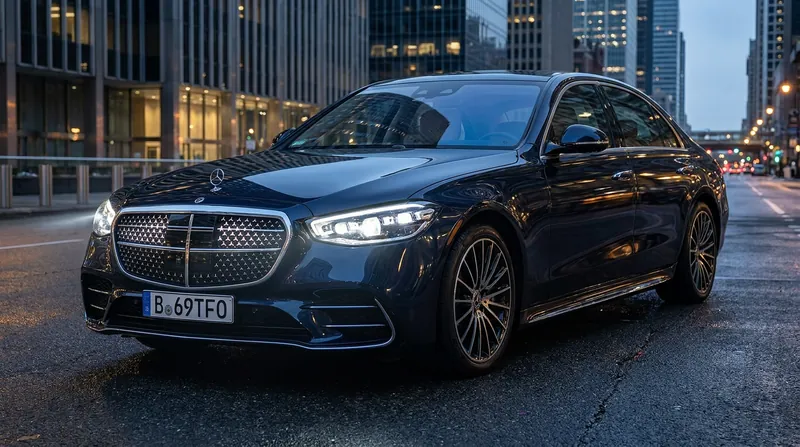
Mercedes-Benz S-Class Facelift Unveils 'Superscreen' Cockpit and 70-Mile PHEV Range
3 sources
Electric Supercars
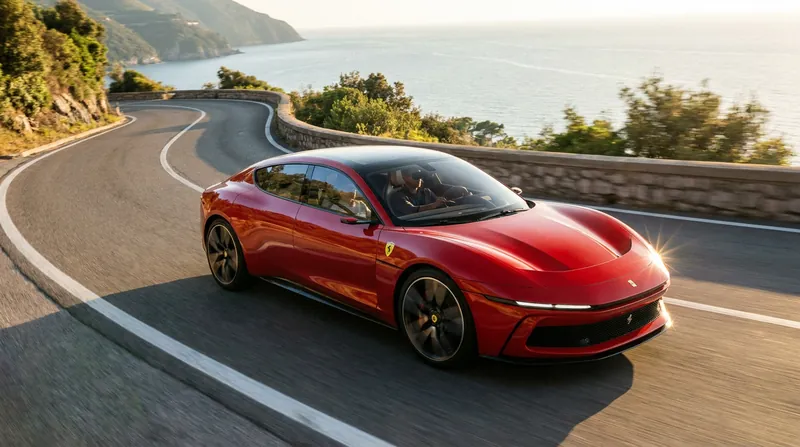
Ferrari Unveils 1,035 HP Luce EV, Featuring Jony Ive Design and Modular Battery Architecture
2 sources
EV Market Shift
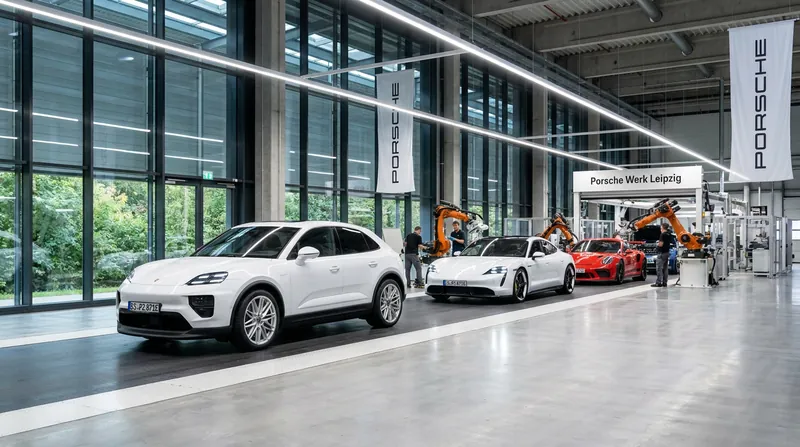
Porsche Scales Back EV Targets and Divests Bugatti Rimac Stake Amid Market Recalibration
4 sources
Chassis Tech
How Next-Generation Active Suspension is Redefining Luxury Cars
4 sources
Comments
Every angle. Every day.
Get Automotive & Transportation stories with full source coverage and perspective breakdowns, free every day.