
How Precision Fermentation is Rewriting the Climate Math of Dairy
By programming microbes to brew bioidentical animal proteins in stainless-steel tanks, food scientists are creating real dairy without the cows. The technology promises massive environmental benefits, but scaling it up requires overcoming steep energy and regulatory hurdles.
By Factlen Editorial Team
- Food Technology Innovators
- Advocate for precision fermentation as a necessary, scalable solution to decarbonize the food system without sacrificing consumer experience.
- Environmental Pragmatists
- Acknowledge the massive land and water savings but caution that the climate benefits depend entirely on transitioning bioreactors to renewable energy.
- Regulatory & Safety Analysts
- Focus on the frameworks required to bring novel proteins to market safely, highlighting the tension between rapid innovation and stringent pre-market testing.
What's not represented
- · Traditional Dairy Farmers
- · Consumer Advocacy Groups
Why this matters
Precision fermentation offers a way to decouple our favorite foods from the massive environmental footprint of traditional agriculture. By brewing bioidentical dairy and meat proteins in tanks, this technology could drastically reduce global greenhouse gas emissions while securing the food supply against climate-driven disruptions.
Key points
- Precision fermentation uses programmed microbes to produce exact molecular replicas of animal proteins like whey and casein.
- The process bypasses traditional livestock farming, eliminating the methane emissions and vast land requirements associated with dairy cows.
- Recent Life Cycle Assessments show the technology can reduce greenhouse gas emissions by up to 97% and land use by 99%.
- The climate benefits are highly dependent on powering the energy-intensive bioreactors with renewable electricity.
- While the U.S. has rapidly cleared these ingredients for sale, the European Union's strict Novel Foods regulations have delayed market entry.
For decades, the food industry has wrestled with a stubborn climate equation: traditional dairy is a massive driver of greenhouse gas emissions, yet global demand for cheese, yogurt, and milk continues to climb. While plant-based alternatives made from oats, almonds, and soy have captured significant market share, they often fall short for consumers seeking the exact melting properties of mozzarella or the precise nutritional profile of cow's milk. Now, a rapidly maturing biotechnology known as precision fermentation is offering a compelling third option. By bypassing the animal entirely, food scientists are brewing bioidentical dairy proteins in stainless-steel tanks. The resulting ingredients are not approximations; they are molecularly identical to the whey and casein produced by a cow, promising the exact same taste and texture with a fraction of the environmental footprint.[4][7]
While the application to consumer dairy is relatively new, the underlying science of precision fermentation is well-established. For over thirty years, the cheese industry has relied on the technology to produce vegetarian rennet, replacing the enzymes traditionally harvested from calf stomachs. The pharmaceutical industry similarly uses it to manufacture human insulin. In scientific terms, precision fermentation is a specialized branch of engineering biology that harnesses the natural metabolic processes of microorganisms—such as yeast, fungi, or microalgae—reprogramming them to act as microscopic cellular factories.[6][7]
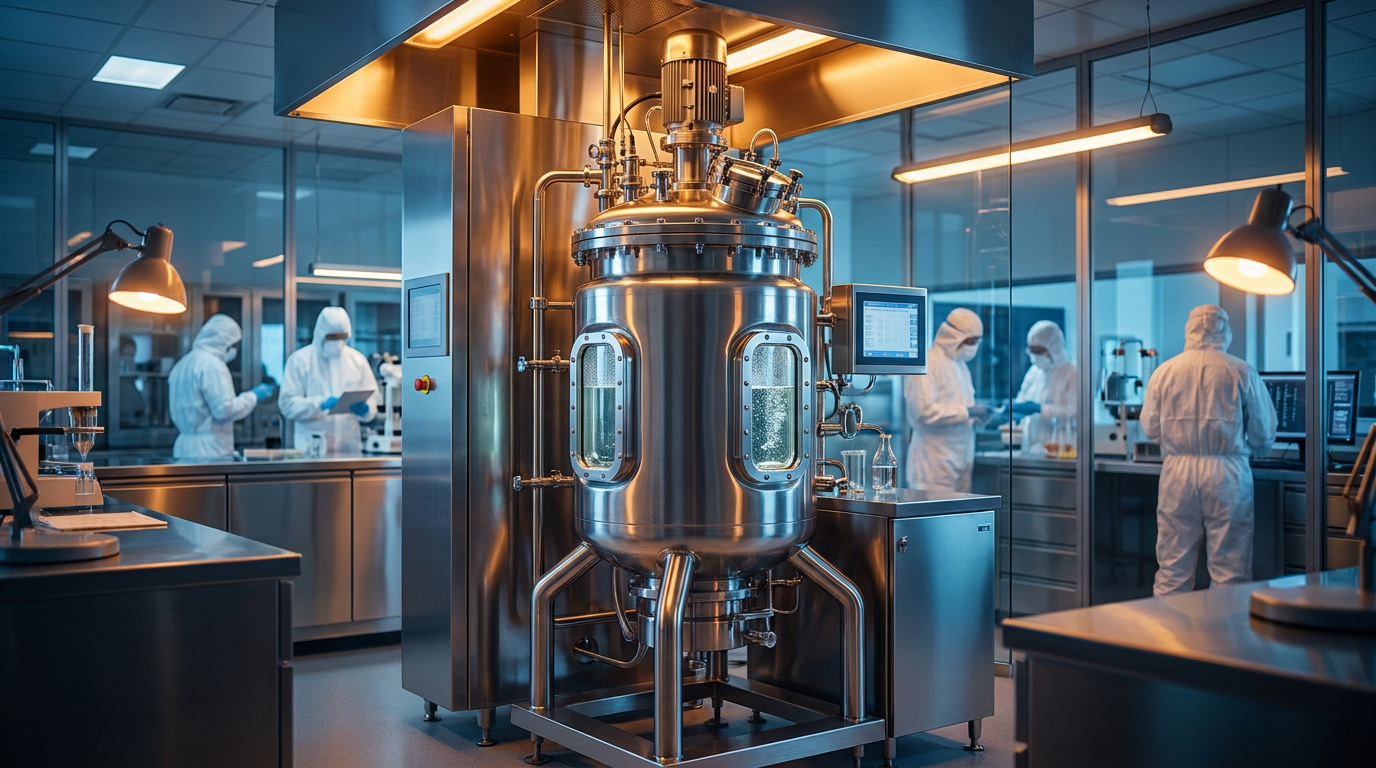
The mechanism begins at the genetic level. Scientists first identify the specific DNA sequence that codes for a desired animal compound, such as beta-lactoglobulin, the primary protein in cow's milk whey. This genetic instruction is then inserted into the DNA of a host microorganism. Once programmed, these microbes are placed into large fermentation tanks—similar to those used in beer brewing—and fed a steady diet of sugars, water, and basic nutrients. As the microbes consume the sugars and multiply, they naturally express the target protein as a byproduct of their metabolism.[6][7]

Once the fermentation cycle is complete, the mixture undergoes a rigorous purification process. The target proteins are separated from the host microorganisms, resulting in a highly pure, bioidentical ingredient. Because the genetically engineered microbes are entirely filtered out of the final product, the resulting proteins are not classified as genetically modified organisms (GMOs) in most jurisdictions. As one industry explainer aptly summarized the distinction: it is akin to being served a drink by a robotic bartender; the bartender is modified, but the drink itself remains exactly the same.[6]
The primary driver behind the billions of dollars flowing into precision fermentation is its staggering environmental potential. Traditional dairy farming requires vast expanses of arable land for grazing and feed production, consumes immense volumes of water, and generates significant quantities of methane—a greenhouse gas roughly 30 times more potent than carbon dioxide over a century. By shifting protein production from the pasture to the bioreactor, precision fermentation effectively severs the link between dairy and deforestation, while eliminating enteric methane emissions entirely.[1][4]
Recent peer-reviewed Life Cycle Assessments (LCAs) have begun to quantify these benefits at a commercial scale. A comprehensive LCA conducted for the French biotechnology firm Bon Vivant revealed that producing dairy proteins via precision fermentation cuts greenhouse gas emissions by 72% compared to conventional dairy. The same study found an 81% decrease in water usage and a remarkable 99% reduction in arable land requirements. Similarly, an ISO-standardized assessment of Perfect Day's animal-free whey reported up to a 97% reduction in carbon emissions and a 99% drop in water consumption.[1][3]

Recent peer-reviewed Life Cycle Assessments (LCAs) have begun to quantify these benefits at a commercial scale.
However, the environmental math carries a critical caveat: precision fermentation is highly energy-intensive. Maintaining exact temperatures, stirring massive volumes of liquid, and powering the downstream purification processes requires substantial electricity. Independent researchers have noted that if a fermentation facility draws its power from a coal-heavy electrical grid, the climate benefits rapidly evaporate, potentially resulting in a carbon footprint similar to that of traditional extracted milk proteins. For precision fermentation to fulfill its promise as a climate solution, the industry must scale its infrastructure in tandem with renewable energy grids.[2][4]
Beyond energy sourcing, the feedstock used to fuel the microbes presents another sustainability challenge. Currently, most commercial bioreactors rely on refined agricultural sugars, which themselves require land, water, and fertilizer to produce. To further drive down the ecological footprint and prevent competition with human food crops, researchers are actively exploring next-generation feedstocks. Future iterations of the technology aim to utilize agricultural waste streams, industrial byproducts, or even captured carbon dioxide as the primary energy source for the microbes, creating a truly circular production model that leaves traditional agriculture entirely out of the equation.[2][3]
As the science matures, a stark regulatory divide has emerged between global markets, dictating where these novel foods can actually be sold. In the United States, precision-fermented ingredients typically enter the market through the FDA's "Generally Recognized as Safe" (GRAS) pathway. Companies compile extensive safety and toxicology data, which is reviewed by an expert panel. If the FDA issues a "no questions" letter, the ingredient is cleared for commercial use. This relatively streamlined process, which generally takes about a year, has allowed the U.S. to become the global epicenter for precision fermentation products.[5][8]
The European Union, by contrast, classifies precision-fermented proteins under its stringent Novel Foods regulation. This framework requires a comprehensive pre-market authorization process that evaluates both the safety of the production organism and the final ingredient. The procedural complexities and extensive data requirements mean that EU approval can take anywhere from two and a half to four years. As a result, while European startups are pioneering much of the underlying science, as of early 2026, not a single precision-fermented animal protein has received full approval for consumer sale within the EU.[5][8]
Despite the regulatory hurdles abroad, American consumers are already eating precision-fermented foods, even if they don't always realize it due to complex labeling standards. The most famous application is Impossible Foods' "heme"—the iron-rich molecule that gives their plant-based burgers a distinctly meaty flavor and causes them to "bleed" like real beef. Impossible's soy leghemoglobin, produced via precision fermentation, received FDA GRAS status in 2018 and is now ubiquitous in grocery stores and fast-food chains nationwide, proving that consumers will embrace lab-brewed proteins if the taste and texture deliver on their promises.[5]

In the dairy aisle, the footprint is expanding rapidly. Perfect Day's animal-free whey protein is currently featured in commercial ice creams from brands like Graeter's and Nick's, as well as in specialized protein powders and cream cheeses. More recently, the Australian biotechnology company All G Foods secured FDA clearance for a precision-fermented version of bovine lactoferrin. Lactoferrin is a highly prized, immune-boosting protein found in trace amounts in cow's milk; producing it via fermentation bypasses the immense cost and inefficiency of extracting it from traditional dairy, opening new avenues for infant formula and functional nutrition.[3][5]
The ultimate barrier to mass adoption is no longer the science, but the economics of scale. In 2026, producing a kilogram of protein via precision fermentation remains significantly more expensive than traditional agricultural methods. Bridging this price gap requires a massive build-out of industrial infrastructure. Constructing a single commercial-scale fermentation facility can cost hundreds of millions of dollars, and global bioreactor capacity is currently bottlenecked. Until production scales to a level where these bioidentical proteins can achieve price parity with conventional dairy, they will likely remain premium ingredients rather than wholesale replacements.[4][6]
Ultimately, the goal of precision fermentation is not to eradicate traditional farming, but to alleviate the immense pressure on the global food system. As climate change exacerbates droughts and heat stress—both of which severely depress conventional milk yields—fermentation offers a decentralized, climate-resilient method of protein production. By decoupling our favorite foods from the constraints of arable land and livestock, precision fermentation provides a vital tool for feeding a growing population without pushing the planet's ecosystems past their breaking point.[4][6]
How we got here
1990s
Precision fermentation is first used commercially to produce vegetarian rennet for cheesemaking, replacing calf stomach enzymes.
2018
Impossible Foods receives FDA GRAS status for its precision-fermented 'heme', bringing the technology to the mass market.
2020
Perfect Day receives an FDA 'no questions' letter for its animal-free whey protein, paving the way for bioidentical dairy ice creams.
2024
Peer-reviewed Life Cycle Assessments confirm that precision-fermented dairy proteins can cut greenhouse gas emissions by over 70%.
Early 2026
All G Foods secures FDA clearance for precision-fermented lactoferrin, expanding the technology into high-value functional nutrition.
Viewpoints in depth
Food Technology Innovators
Advocates argue that precision fermentation is the only viable way to decarbonize dairy without asking consumers to compromise on taste.
Proponents of the technology, including major biotechnology startups and alternative protein advocates, view precision fermentation as a necessary evolution of agriculture. They point to the staggering inefficiencies of using a 1,500-pound animal to produce a few grams of protein. By moving production into controlled bioreactors, they argue, the food system can decouple itself from the unpredictable shocks of climate change, such as droughts that decimate feed crops and heatwaves that depress milk yields. For this camp, the immediate priority is securing regulatory approval and scaling up manufacturing capacity to reach price parity with conventional dairy.
Environmental Pragmatists
Sustainability researchers caution that the technology's climate benefits are highly dependent on the energy grid and feedstock sources.
While acknowledging the dramatic reductions in land and water use, environmental pragmatists warn against treating precision fermentation as an automatic climate panacea. They highlight that bioreactors are incredibly energy-intensive to operate, requiring constant power for temperature control, aeration, and downstream purification. If a fermentation facility is powered by a fossil-fuel-heavy electrical grid, its carbon footprint can rival or even exceed that of traditional dairy. Furthermore, this camp emphasizes the need to transition away from refined agricultural sugars as a feedstock, advocating for the use of agricultural waste streams or captured carbon to create a truly circular and sustainable production model.
Traditional Dairy Sector
Conventional producers raise concerns about the socioeconomic impact on rural farming communities and the transparency of novel food labeling.
Though not always explicitly opposed to the technology, representatives of the traditional agricultural sector express deep concerns about the socioeconomic fallout of shifting protein production from rural farms to urban laboratories. They argue that dairy farming supports millions of livelihoods globally and manages vast tracts of pastureland that cannot be easily repurposed. Additionally, this camp strongly advocates for strict labeling laws, insisting that precision-fermented products must be clearly distinguished from traditional dairy so that consumers are not misled, and so that the cultural heritage of conventional cheesemaking and dairy production is preserved.
What we don't know
- Whether the industry can secure the billions of dollars in infrastructure investment needed to build enough bioreactors to reach price parity with conventional dairy.
- How quickly the industry can transition from using refined agricultural sugars as a feedstock to more sustainable inputs like agricultural waste.
- How mainstream consumers will react to bioidentical animal proteins produced in laboratories once they become widely available in everyday grocery items.
Key terms
- Precision Fermentation
- A biotechnology process that programs microorganisms to produce specific complex molecules, such as animal proteins or fats, without the need for traditional agriculture.
- Bioreactor
- A large, controlled stainless-steel tank where engineered microbes are fed nutrients and sugars to multiply and produce target proteins.
- Bioidentical
- A substance created in a laboratory or via fermentation that is molecularly exactly the same as its naturally occurring counterpart.
- Life Cycle Assessment (LCA)
- A comprehensive scientific analysis that measures the total environmental impact of a product from raw material extraction through production and disposal.
- GRAS (Generally Recognized as Safe)
- A U.S. FDA regulatory pathway that allows ingredients to enter the market if expert consensus determines they are safe under their intended conditions of use.
Frequently asked
Is precision-fermented dairy considered a GMO?
No. While the microbes used to produce the proteins are genetically modified, they are completely filtered out during the purification process. The final protein is bioidentical to cow's milk and contains no genetically modified organisms.
Is it safe for people with dairy allergies?
No. Because precision fermentation creates exact molecular replicas of animal proteins like whey and casein, they will trigger the exact same allergic reactions as traditional dairy products.
Is precision-fermented food vegan?
Yes, in the sense that it is produced entirely without animals. However, because the proteins are identical to animal proteins, some strict vegans debate whether it fits their dietary philosophy, though it involves no animal exploitation.
Why is it better for the environment?
It eliminates the need for vast tracts of grazing land, drastically reduces water consumption, and completely bypasses the methane emissions produced by cows' digestive systems.
Sources
Source coverage
8 outlets
3 viewpoints surfaced








[1]PPTI NewsFood Technology Innovators
Bon Vivant's peer-reviewed LCA confirms precision fermentation's environmental edge over dairy
Read on PPTI News →[2]Sustainable Nutrition InitiativeEnvironmental Pragmatists
Do the environmental impacts of fermentation-produced protein outweigh those of conventional protein sources?
Read on Sustainable Nutrition Initiative →[3]Green QueenFood Technology Innovators
Animal-Free Milk: What Precision Fermentation Dairy LCAs Tell Us
Read on Green Queen →[4]Earth911Environmental Pragmatists
How Precision Fermentation Could Rewrite Milk's Climate Equation
Read on Earth911 →[5]IngrediCheckRegulatory & Safety Analysts
The Rise of Precision Fermentation: How to Read the Labels
Read on IngrediCheck →[6]FoodUnfoldedRegulatory & Safety Analysts
Precision fermentation: the technology that could transform our food system
Read on FoodUnfolded →[7]Good Food InstituteRegulatory & Safety Analysts
State of the Industry: Fermentation for meat, seafood, eggs, dairy, and ingredients
Read on Good Food Institute →[8]BiosafeRegulatory & Safety Analysts
Precision fermentation is ready. EU novel food approval isn't.
Read on Biosafe →

Every angle. Every day.
Get lifestyle stories with full source coverage and perspective breakdowns delivered to your inbox.