
How Political Bias is Costing Investors Money (and How to Fix It)
Retail and wealthy investors alike are increasingly letting partisan politics dictate their portfolios, a behavioral flaw that routinely destroys wealth. By separating their ballots from their asset allocation, individuals can reclaim their financial objectivity and boost long-term returns.
By Factlen Editorial Team
- Behavioral Economists
- Focus on the data showing partisan portfolio divergence and its macroeconomic risks.
- Wealth Managers
- Focus on the practical impact on client returns and advising a politically neutral approach.
- Factlen Editorial Board
- Synthesizes the data to argue that acknowledging one's own partisan blind spots is the most effective strategy for improving returns.
What's not represented
- · Retail investors actively trading based on political beliefs
- · Politically-themed ETF managers
Why this matters
Your political beliefs might be secretly sabotaging your retirement account. Understanding how partisan bias distorts your perception of financial risk is the first step to securing better long-term returns.
Key points
- Retail and wealthy investors are increasingly allowing their political beliefs to dictate their asset allocation.
- Investors tend to buy stocks when their preferred party is in power and flee to cash when the opposing party wins.
- This behavioral bias routinely causes investors to miss out on significant market rallies, destroying long-term wealth.
- Historical data proves the stock market trends upward under every combination of political control in Washington.
- Financial advisors recommend actively engaging with opposing viewpoints to ground economic expectations in reality.
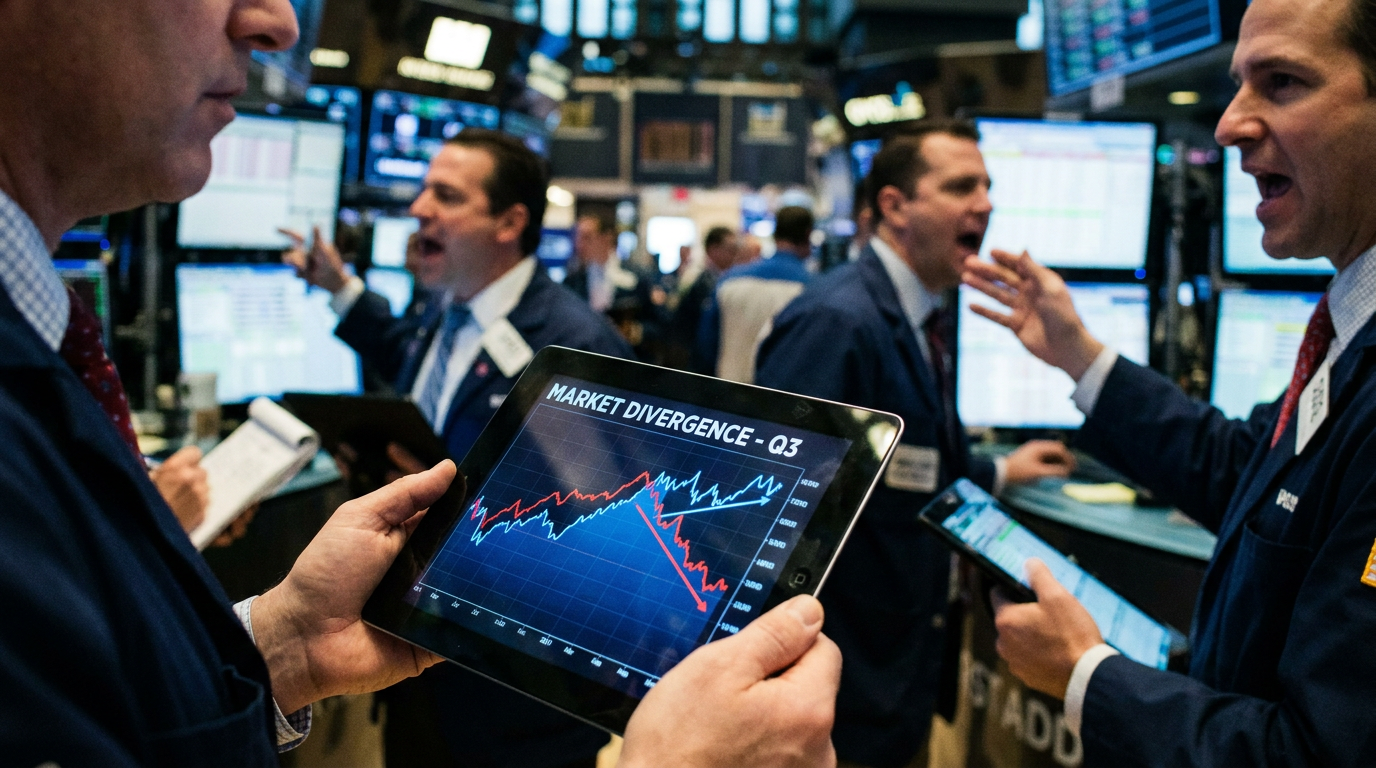
The stock market is famously indifferent to political outrage, yet millions of retail investors are letting their partisan beliefs dictate their financial futures. As political polarization deepens across the United States, a growing body of evidence suggests that investors are increasingly treating their portfolios as extensions of their ballot boxes. This behavioral quirk is not merely a psychological curiosity; it is a measurable financial flaw that is actively costing individuals money. According to recent analysis, insisting on a portfolio that aligns strictly with "red" or "blue" ideologies often results in forfeiting significant "green" returns.[1]
The mechanism behind this wealth destruction is rooted in behavioral finance, specifically how political alignment distorts an investor's perception of macroeconomic risk. When an individual's preferred political party holds power, they tend to view the economy as inherently more stable and the stock market as undervalued. Conversely, when the opposing party takes control, that same investor suddenly perceives heightened uncertainty and systematic risk, regardless of the actual underlying corporate fundamentals or economic data.[5]
This distorted perception translates directly into asset allocation decisions. A landmark study by the National Bureau of Economic Research (NBER) quantified this phenomenon following recent presidential transitions. The researchers found that when a Republican administration takes office, Republican-leaning investors systematically increase their exposure to the U.S. stock market. In the exact same macroeconomic environment, Democratic-leaning investors decrease their equity holdings, fleeing toward the perceived safety of bonds and cash-like securities.[3]

By retreating to cash during periods of political disappointment, investors routinely miss out on substantial market rallies. Wealth management firm Spectrem Group tracked this exact behavior during the highly polarized environment of late 2018 and early 2019. Following a volatile fourth quarter, Republican investors expressed high optimism and increased their stock investments, while Democratic investors remained deeply pessimistic and decreased their equity exposure.[5]
The financial consequences of that divergence were immediate and severe. The S&P 500 went on to return 8.0% in January 2019 alone, continuing a rally that pushed returns to nearly 11% by mid-February. Republican investors significantly outperformed their Democratic counterparts during this window—not because they possessed superior financial acumen or better stock-picking skills, but simply because their political optimism kept them invested in a rising market while political pessimism drove others to the sidelines.[5]
It is tempting to assume that this emotional, politically driven investing is limited to amateur retail traders, but academic research indicates otherwise. A recent study from the UBC Sauder School of Business examined the holdings of high-net-worth investors and local investment advisors. The researchers found that wealthy individuals—who are typically presumed to be highly rational actors focused solely on maximizing returns—are increasingly allowing their political leanings to dictate their stock selections.[2]
It is tempting to assume that this emotional, politically driven investing is limited to amateur retail traders, but academic research indicates otherwise.
The UBC Sauder study calculated the "political distance" between various regions and correlated it with investment choices, finding that politics was the single biggest difference-maker in how portfolios were constructed. Wealthy investors are actively avoiding companies headquartered in regions dominated by the opposing political party, or shunning industries that conflict with their partisan values. By artificially restricting their investment universe, these high-net-worth individuals are sacrificing crucial portfolio diversification and exposing themselves to unnecessary idiosyncratic risk.[2]
The danger of this trend extends beyond individual underperformance. Behavioral economists warn that if capital allocation becomes entirely dictated by partisan loyalty, it could lead to the balkanization of the broader financial system. The separation of the U.S. financial system into distinct "red" and "blue" economies would inevitably create massive inefficiencies, distort corporate valuations, and potentially drag down overall future economic growth.[2]

To combat this bias, financial advisors emphasize the importance of historical perspective. Data compiled by Edward Jones demonstrates that the U.S. stock market has consistently trended upward over the long term, regardless of which political party controls the White House or Congress. Since 1970, the market has provided an average annual return of over 11%, powering through unified governments, divided governments, and countless geopolitical crises.[4]
The reality is that market forces—driven by corporate earnings, technological innovation, and consumer demand—are vastly more powerful than political forces over a multi-decade investing horizon. While politicians frequently make sweeping promises or outline dramatic policy shifts during election years, the system of checks and balances usually moderates these proposals before they become law. Consequently, the actual economic impact of a new administration is rarely as extreme as partisans on either side anticipate.[4]
Recognizing and neutralizing this bias requires deliberate effort. One highly effective, albeit uncomfortable, strategy is to actively seek out and engage with the financial perspectives of political opponents. By stepping outside of partisan media echo chambers, investors can ground their economic expectations in a more balanced reality, preventing the kind of information segregation that leads to panic selling or irrational exuberance.[1][6]

The psychological comfort of aligning one's money with one's morals is undeniable, but the financial markets operate on a fundamentally different axis. Corporate earnings, technological breakthroughs, and demographic shifts do not pause for midterm elections. Companies continue to innovate, sell products, and generate cash flow regardless of the partisan makeup of the federal government.[4][6]
Ultimately, the most successful long-term investors are those who can successfully compartmentalize their civic passions from their financial planning. Voting, lobbying, and political activism are the appropriate avenues for shaping the country's direction. But when it comes to managing a retirement account or building generational wealth, the data is unequivocal: the stock market does not care about your politics, and letting your ballot dictate your portfolio is a guaranteed way to leave money on the table.[1][6]
For the retail investor, the path forward requires a conscious decoupling of identity from asset management. A well-constructed, diversified portfolio is designed to weather all political climates, capturing the broad upward trajectory of human economic progress. By recognizing the hidden tax of political bias, investors can reclaim their financial objectivity and secure the returns they deserve.[6]
How we got here
Nov 2016
Following the presidential election, Republican investors increase equity exposure while Democrats retreat to bonds.
Dec 2018
The S&P 500 experiences a volatile 13.5% drop, prompting highly polarized reactions from retail investors.
Jan 2019
The stock market rebounds with an 8.0% monthly gain, rewarding investors who remained optimistic and punishing those who fled to cash.
Feb 2025
UBC Sauder School of Business publishes research showing high-net-worth individuals are increasingly matching their stock picks to their politics.
Viewpoints in depth
Behavioral Economists
Academic researchers focused on how human psychology distorts financial decision-making.
Behavioral economists argue that political polarization is increasingly bleeding into financial decisions, causing investors to sacrifice diversification and returns. By analyzing massive datasets of retail and high-net-worth trading behavior, they have demonstrated that individuals systematically misjudge macroeconomic risk based on which party holds power. Their primary concern is that if this trend continues, it could lead to a balkanized financial system where capital is allocated based on partisan loyalty rather than corporate efficiency.
Wealth Managers
Financial advisors and industry professionals focused on maximizing client returns.
Wealth managers emphasize that the stock market historically rises under all political combinations, urging clients to separate their ballots from their portfolios. They point to decades of historical data showing that corporate earnings and technological innovation drive long-term growth, far outweighing the impact of any single administration. From their perspective, the biggest risk to a client's retirement is not a change in government, but the client's own emotional urge to sell during periods of political disappointment.
What we don't know
- It remains unclear whether the rising trend of partisan investing will eventually force publicly traded companies to explicitly align with a political party to secure capital.
- Researchers are still studying exactly how much total wealth has been forfeited by retail investors due to politically motivated market timing over the last decade.
Key terms
- Behavioral Finance
- The study of how psychological influences and cognitive biases affect the financial behaviors and decisions of investors.
- Systematic Risk
- The inherent, unavoidable risk of investing in the broader market, which cannot be eliminated through diversification.
- Asset Allocation
- The strategy of dividing an investment portfolio among different asset categories, such as stocks, bonds, and cash, to balance risk and reward.
- Idiosyncratic Risk
- The specific risk associated with a single company or industry, which can be mitigated by diversifying a portfolio across many different sectors.
- Information Segregation
- A phenomenon where individuals only consume news and data that confirm their existing beliefs, leading to divergent and often inaccurate worldviews.
Frequently asked
Does the stock market perform better under Democrats or Republicans?
Historical data shows the stock market has generally trended upward under every combination of political control in Washington, making long-term participation more important than the party in power.
How does political bias actually cost investors money?
Investors tend to pull money out of equities and into cash when their preferred party loses power, causing them to miss out on broader market rallies due to perceived, rather than actual, risk.
Are wealthy investors better at avoiding this bias?
No. Recent academic research shows that high-net-worth individuals are increasingly aligning their stock picks with their political beliefs, sacrificing diversification and exposing themselves to unnecessary risk.
How can I fix political bias in my own portfolio?
Financial advisors recommend maintaining a strictly diversified, long-term asset allocation and actively engaging with the financial perspectives of political opponents to ground your economic expectations in reality.
Sources
Source coverage
6 outlets
3 viewpoints surfaced






[1]MarketWatchWealth Managers
This hidden investing flaw is costing you money. Talking to political opponents fixes it.
Read on MarketWatch →[2]UBC Sauder School of BusinessBehavioral Economists
Political Divide and Partisan Portfolio Disagreement
Read on UBC Sauder School of Business →[3]National Bureau of Economic ResearchBehavioral Economists
Political Beliefs and Asset Allocation
Read on National Bureau of Economic Research →[4]Edward JonesWealth Managers
Don't play politics with your portfolio
Read on Edward Jones →[5]Spectrem GroupWealth Managers
Investor Sentiment and Political Affiliation
Read on Spectrem Group →[6]Factlen Editorial TeamFactlen Editorial Board
Synthesis by Factlen editorial team
Read on Factlen Editorial Team →


Every angle. Every day.
Get finance stories with full source coverage and perspective breakdowns delivered to your inbox.